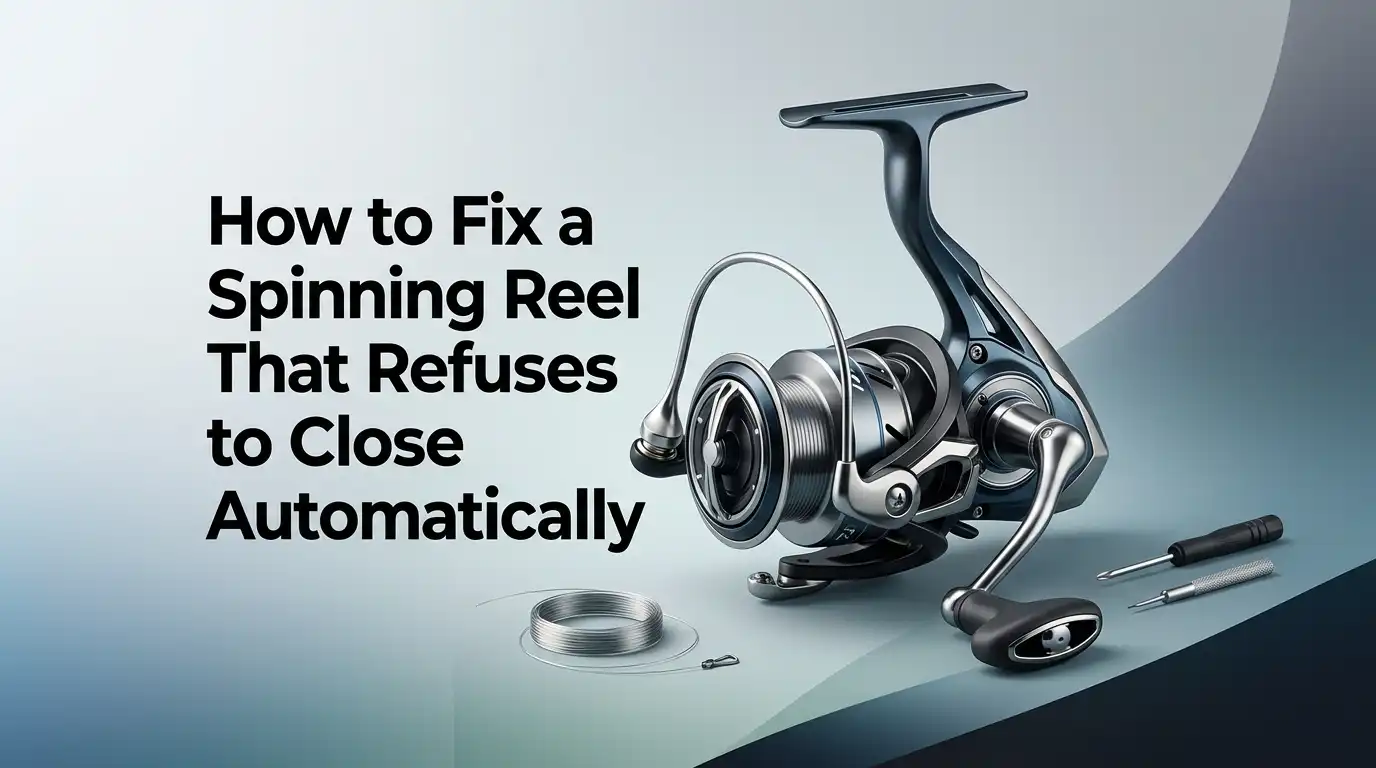
How to Fix a Spinning Reel Bail That Refuses to Close Automatically?
A spinning reel bail that stays open can ruin a cast, waste time, and test your patience fast. The good news is that this problem usually comes from a small group of causes, and many of them are easy to fix at home with simple tools.
In most cases, the trouble comes from dirt, dried grease, a bent bail wire, a weak spring, or a part that went back together in the wrong position after cleaning. This guide walks you through clear fixes in a friendly and simple way.
You will learn what to check first, what to clean, what to adjust, and when to stop and replace a part. If your reel used to snap shut and now feels lazy, rough, or dead, this post will help you bring it back.
In a Nutshell
- Most spinning reel bail problems come from a few simple causes. Dirt, corrosion, old grease, a bent bail wire, loose screws, or a weak spring can stop the bail from closing on its own. That means you should start with the easy checks before you open the whole reel.
- Cleaning solves more bail issues than most anglers expect. If the bail arm pivots and line roller feel stiff, the reel may only need a careful wipe down and a tiny amount of proper oil or grease. Too much lube can make things worse.
- A bent bail wire is very common after drops and knocks. The bail may look fine at first, but even a small bend can add side pressure and stop the snap shut action. A careful adjustment can fix it, but too much force can damage it.
- The bail spring and trip lever matter more than people think. If the spring is weak, broken, or seated in the wrong hole, the reel may refuse to close automatically. This fix works well, but it needs patience and close attention.
- Manual bail closing is often the smarter habit. Many anglers close the bail by hand after every cast because it reduces wear and can help control line twist. The pro is longer reel life. The con is that it does not repair a failed auto close system.
- Work one fix at a time and test after each step. That simple method helps you find the real cause without creating new problems. A calm, clean, and slow repair usually beats a fast full tear down.
Why the bail stops closing automatically
A spinning reel bail closes by a mix of spring force, alignment, and contact with the reel’s trip parts. If one part drags, binds, or misses its contact point, the bail stays open. That is why the problem often feels sudden even when wear built up over time.
The most common causes are dirt in the pivot points, dried grease, corrosion, a weak spring, or a bail wire that is slightly bent. A reel can also fail after partial cleaning if the spring or trip lever goes back in the wrong spot. One small mistake in assembly can stop the whole action.
A useful clue is the way the bail behaves. If it feels rough, stiff, or slow, look for dirt or bad lube first. If it feels loose or dead, the spring or trip lever may be the real issue. Knowing the feel helps you choose the right fix faster.
Do a quick symptom check before opening the reel
Before you remove a single screw, open and close the bail by hand several times. Feel for rough spots, side pressure, uneven snap, or a dead spot where the bail moves but does not fire. That quick test can save you a lot of guesswork.
Look closely at both bail arms and the line roller side. If one side sits higher, wider, or tighter than the other, the bail wire may be bent. Spin the rotor slowly and watch whether the bail trip seems to meet its contact point. A miss there points to alignment or internal trip trouble.
Pros of this quick check are speed, no cost, and low risk. Cons are that it only shows surface clues and may miss a hidden spring or trip problem. Still, this is the best first step because it helps you avoid opening parts that are already fine.
Clean the bail arm pivots and line roller
A sticky bail often comes from dirt or dried grease at the pivot points. Salt, sand, and old oil turn into drag, and drag kills that fast snap shut motion. Start by wiping the outside of both bail arms, the pivot screws, and the line roller area with a soft cloth.
If the reel is dirty, remove the bail arm covers and inspect the moving points. Clean away old grease, grit, and any signs of white corrosion. Then add a very small amount of reel safe oil on metal contact points and a light grease where the maker calls for grease. Less is better here.
Pros of cleaning are that it is cheap, simple, and often enough to solve the problem. Cons are that cleaning will not fix a bent wire or broken spring. Even so, this step is practical because a dirty bail can feel broken when it only needs smooth movement restored.
Tighten screws and remove side pressure
Loose screws can change the angle of the bail arms and stop the trip action from working. Check the main bail screws on both sides and the line roller screw. Do not overtighten, but make sure nothing is backing out or wobbling. A little play can create a big problem.
Next, look for side pressure. If the bail wire feels forced into place rather than sitting naturally, the wire may be pushing against one arm. That extra tension makes the bail bind instead of snapping shut. The reel should look square and relaxed when open and closed.
Pros of this method are that it is fast and easy to test. Cons are that it only helps if looseness or pressure is the actual cause. Still, this step matters because many anglers overlook simple alignment issues and jump too quickly to spring replacement.
Straighten a bent bail wire carefully
A bent bail wire is one of the most common causes of a spinning reel bail that refuses to close automatically. The bend may come from a drop, a bump in the car, or pressure in storage. Even a small change can stop the wire from lining up with the bail arm hole cleanly.
To check it, loosen one side and see whether the wire sits flush without force. If it looks twisted, squeezed in, or spread too wide, make a small and careful correction by hand or with padded pliers. Move a little, then test. Do not rush this part.
Pros of straightening the original wire are low cost and quick results. Cons are the risk of overbending or weakening the wire if you force it. If the wire needs heavy correction, replacement may be safer. Small changes are the smart path here.
Check the bail spring for wear or damage
If the bail opens fine but does not snap closed with strength, the spring deserves a close look. A tired spring can lose force over time. A broken spring can leave the bail feeling dead, loose, or uneven. In some reels, the spring may still be good but seated wrong.
Open the spring side cover carefully and inspect the spring ends, the pocket, and the arm that the spring drives. Look for cracks, rust, or a spring leg that slipped out of place. If the bail suddenly failed after cleaning, the spring may simply not be sitting where it should.
Pros of checking the spring are that it targets one of the most common real failures. Cons are that the small parts can jump, and reassembly takes patience. If you work on a clean table and take a photo first, this job becomes much easier and far less stressful.
Reseat the spring and trip lever in the right position
Sometimes the spring is fine, but the bail still will not auto close because the trip lever is not sitting where it should. The spring, lever, and cover need to line up in a very exact way. If one end misses its hole or slot, the bail may move but never fire.
Take your time during reassembly. Fit the spring into its correct hole, hold the lever in place, and make sure the bail arm can move through its full range without binding. Test the action before tightening everything fully. That small pause can save you from repeating the whole job.
Pros of reseating parts are that you may fix the reel without buying anything. Cons are that the work is fiddly and easy to do wrong if you rush. If the reel only failed after you cleaned it, this section is often where the real answer sits.
Inspect the rotor trip points and internal cam
The bail usually closes when the reel handle turns and a trip part meets a ramp or cam inside the rotor area. If that contact point is worn, dirty, blocked, or missed by a misaligned lever, the bail will stay open even if the spring is healthy.
Remove the spool and inspect the rotor area closely. Turn the handle slowly and watch where the trip parts should meet. If you see wear, grime, or a lever that does not swing out far enough, clean the area first. If a part looks rounded off or badly worn, replacement may be needed.
Pros of checking the trip points are better diagnosis and fewer wrong repairs. Cons are that some reels hide these parts deep inside, and wear can be hard to judge without a parts diagram. Still, this is the key step when the spring seems fine but the auto close still fails.
Lubricate the reel with a light hand
Lubrication helps, but too much can create its own problems. A thick blob of grease can slow the trip lever, trap grit, and make the bail feel sluggish. Some reel makers also warn against spraying oil into places where it can harm sealed parts or push dirt deeper inside.
Use oil on light moving points such as the bail pivots and roller spindle if the reel design calls for it. Use grease only where the maker uses grease. Keep it thin and neat. If you can see a heavy smear, you probably used too much. Wipe away the extra before testing.
Pros of correct lube are smoother action and less wear. Cons are that wrong lube or too much lube can make the reel worse. This method works best after cleaning, not before. Clean first, then lube lightly is the rule that saves most reels from repeat trouble.
Reassemble and test one fix at a time
One of the best repair habits is to test after each change. Clean the pivots, then test. Adjust the wire, then test. Reseat the spring, then test again. That slow method tells you which fix mattered and stops you from stacking mistakes on top of each other.
When you reassemble, keep screws grouped by side and order. Tighten parts evenly and do not force covers that do not sit flat. If a cover resists, a spring or lever may be out of place. Resistance is a clue, not a challenge. Stop and check before you strip a screw.
Pros of one step testing are clear diagnosis and lower risk. Cons are that it takes more time than a fast full rebuild. But that extra time pays off because you learn the reel better and avoid turning a small bail problem into a bigger repair.
Manual closing versus handle closing
Even after you fix the auto close, many anglers still close the bail by hand after the cast. That habit can reduce shock on the trip parts and help you lay the line more neatly on the spool. It also gives you a moment to pull the line tight before you start reeling.
Pros of manual closing are less wear on the spring and trip parts, better line control, and often less line twist. Cons are that it adds one more step to every cast and may feel slow at first. Still, many experienced anglers see it as good reel care.
Handle closing is convenient and fast. But if you use it hard on every cast, the trip system takes more stress over time. Think of manual closing as prevention, not a cure. It will help protect the reel, but it will not fix a broken or misaligned bail.
Keep the bail working well in the future
A little care keeps this issue from coming back. Wipe the reel after each trip, especially if you fish saltwater or sandy banks. Use a gentle fresh water rinse on the outside only when needed, then dry the reel well. Avoid hard sprays that can push grime inside.
Check the bail wire and line roller often. If the reel falls, inspect the bail before the next trip. A tiny bend is easier to fix early than after weeks of forced use. Add light lubrication at proper intervals, but do not flood the reel with spray products.
Store the reel where the bail will not get crushed by rods, bags, or boxes. Pros of simple care are longer reel life and fewer mid trip surprises. Cons are only a few extra minutes of routine work. That small habit saves money, time, and frustration later.
FAQs
Why does my spinning reel bail close by hand but not with the handle
That usually means the spring still has some strength, but the trip system is not doing its job. The cause is often a misaligned trip lever, worn cam contact point, bent bail wire, or dirt in the rotor area. Check alignment and trip contact before you replace the spring.
Can I keep fishing if the bail will not close automatically
Yes, you can often keep fishing by closing the bail by hand. In fact, many anglers do that by choice. But if the reel feels rough or loose, keep the trip light and fix the root cause soon, because continued use can wear the spring, wire, or trip parts faster.
Should I replace the spring first
Not always. A weak or broken spring is common, but it is not the only cause. Start with cleaning, screw checks, wire alignment, and spring seating. Replace the spring only after you confirm it is damaged, weak, rusty, or no longer able to drive the bail with a crisp snap.
Is it safe to spray oil all over the reel
No. Too much spray can wash grease out of places that need it, collect grit, and reach parts that should stay mostly dry. Use only a small amount in the right places. A careful drop on a pivot is useful. A full soaking is usually a mistake.
When should I stop and take the reel to a repair shop
Stop if the reel has badly worn trip parts, stripped screws, a cracked bail arm, or a spring system that you cannot reassemble with confidence. A shop is also a smart choice for expensive reels or sealed designs. If the repair starts to feel uncertain, expert help is worth it.

Hi, I’m Ivy Webb, the passionate angler and creator behind BaitHookVault.com. I spend my days out on the water personally testing and reviewing a wide variety of fishing tools and gear.