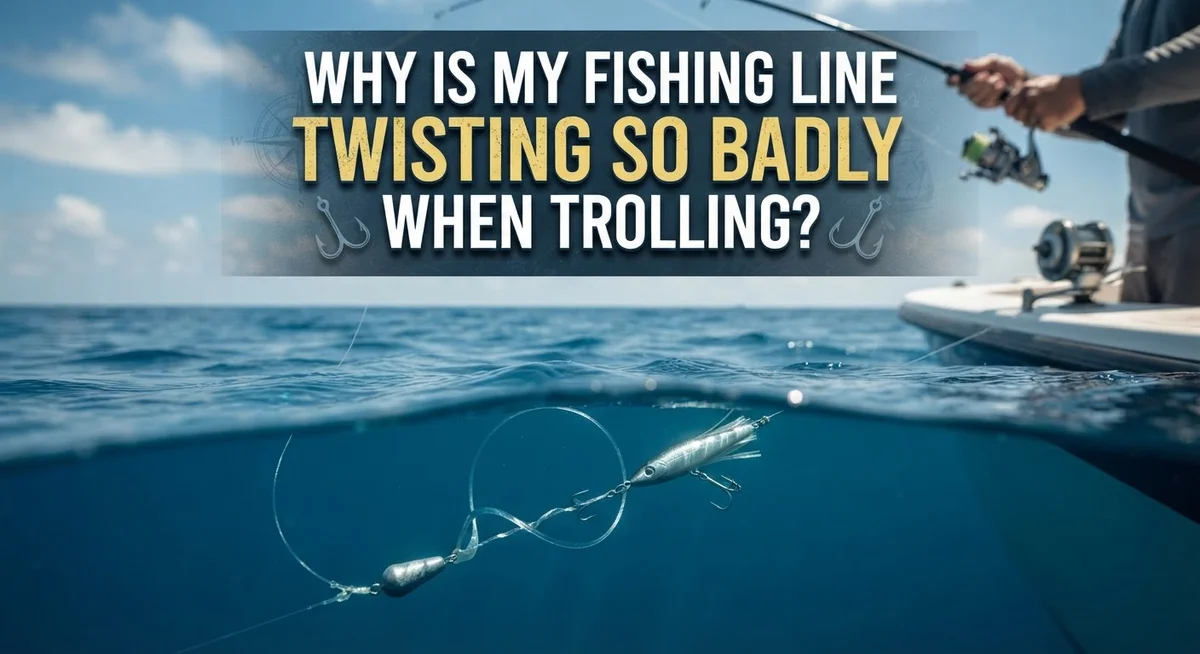
Why Is My Fishing Line Twisting So Badly When Trolling?
Do you feel like your line twists into a tangled mess every time you troll? You are not alone.
This problem frustrates anglers everywhere. It ruins good fishing trips and wastes precious time on the water.
Line twist usually happens because of a few simple reasons. Bad spooling technique is often the main culprit.
Overspooling your reel also causes major twisting problems. So does using low quality monofilament line.
Sometimes the issue starts before you even leave the dock. Improper tension during spooling sets you up for trouble later.
In a Nutshell
- Spooling mistakes cause most twisting problems. Too much tension or overspooling your reel creates twists before you even cast your line.
- Low quality monofilament twists easier than premium line. Switching to braided line can solve this issue for good.
- Proper spooling technique matters a lot. Fill your reel to about 1/8 to 1/4 inch below the lip for best results.
- Fixing existing twists is simple. Cut the twisted section, then reel in slowly while pinching the line with your fingers.
- Reel defects sometimes cause twisting too. Check your equipment if the problem keeps happening even after you fix your spooling habits.
- Lure design can add to the twist. Some lures spin more than others, so pay attention to what you use.
Understanding Line Twist: What’s Actually Happening on Your Reel
Line twist happens when your fishing line rotates around its own axis instead of staying straight. Think of it like a telephone cord that gets kinked. When you troll, this twist builds up and creates those frustrating tangles you see on your reel.
Here’s what actually occurs inside your reel during trolling. Your line unwinds as the lure moves through the water. If your reel has any mechanical issues or if the line wasn’t spooled correctly, it rotates in the wrong direction. This backward rotation adds twist to the line instead of removing it.
The twist accumulates because monofilament has memory. Once your line twists, it wants to stay twisted. Each cast and retrieve can add more rotations to the problem. Over time, small twists become big knots.
Tension plays a huge role here. When you spool your reel with too much pressure using an eyelet tool, you force the line onto the spool under extreme stress. The line remembers this tight wrapping. Later, when the line relaxes during trolling, it tries to unwind and creates twist.
Overspooling makes this worse. When your reel is too full, the line can’t lay properly on the spool. It bunches up and rotates incorrectly as it leaves the reel. This mechanical issue directly causes twist to build up faster.
The lure itself contributes too. Heavy lures or those with poor balance can spin as they move through water. This spinning transfers directly to your line, adding rotations with every troll.
Understanding these mechanics helps you see why prevention matters so much. Your line twist isn’t random. It comes from specific problems during spooling, reel setup, or how your equipment works together. Once you know what causes the twist, you can stop it before it starts.
Top Causes of Line Twist While Trolling
Line twist while trolling stems from several specific problems that happen during setup and use. Understanding each cause helps you prevent frustration on the water.
Excessive tension during spooling ranks as the top culprit. When you use an eyelet tool to spool your reel, applying too much pressure forces the line to wrap under stress. This stress remains trapped in the monofilament fibers. Later, when you troll, that stored tension releases and causes twisting.
Overspooling your reel creates another major issue. When line sits too close to or above the spool lip, it has nowhere to go during casting or trolling. The line bunches up and rotates around itself. This rotation becomes visible as ugly twists that worsen throughout your fishing day.
Poor spooling technique during initial setup matters more than most anglers realize. If you don’t maintain consistent, moderate tension while filling the spool, the line layers unevenly. Uneven layers don’t release smoothly during trolling. Instead, they bind and twist.
Low quality monofilament twists far more easily than premium line. Cheap monofilament lacks the structural integrity to resist twist formation. The material itself has poor memory and doesn’t hold its shape well.
Reel defects sometimes cause twisting too. A bent bail, misaligned spool, or worn bearings can make line twist during normal use. These mechanical problems force the line to rotate unnaturally as it leaves the reel.
Lure design plays a supporting role. Heavy lures or those with poor balance spin as they move through water. This spinning transfers directly back to your line, creating twist at the connection point.
The good news? Most of these causes are preventable. Proper spooling technique, correct line tension, and using quality monofilament eliminate the majority of twist problems. You control these factors completely.
How Improper Spooling Technique Creates Twist Problems
When you spool your reel incorrectly, you set yourself up for serious line twist problems. The spooling process is where most anglers make mistakes that cause frustration later on the water.
Excessive tension during spooling is the biggest culprit. When you use an eyelet tool to guide line onto your reel, applying too much pressure forces the monofilament into an unnatural state. The line remembers this forced tension and wants to rotate back to its original position. This memory creates twist that builds up over time.
Overspooling your reel compounds the problem significantly. Filling your reel too full means the line sits under constant pressure against the spool lip. This pressure increases tension on every wrap of line you lay down. The result? Your line develops twist before you even leave the dock.
Here’s what happens during improper spooling: you apply uneven tension as line goes onto the reel. Some wraps get tight while others stay loose. This inconsistency causes the line to want to rotate and straighten itself out. Once you start trolling, that desire to rotate becomes actual twist.
The correct approach uses light, consistent tension throughout the spooling process. You want your line snug but not tight. Think of it like tying your shoes, not like wringing out a wet towel.
Fill your reel only 1/8 to 1/4 inch below the lip. This prevents excessive pressure on the line while still giving you adequate capacity. Leave a small gap so your line can breathe.
Apply steady, moderate pressure with your fingers as line feeds onto the reel. Keep tension the same from the first wrap to the last. This consistency prevents the line from developing memory twist during setup.
Bad spooling technique creates a foundation of problems that multiply during trolling. Fix your spooling method and you eliminate the source of most twist issues before they start.
Step-by-Step: How to Remove Existing Line Twist
If your line already has twist, you can fix it without replacing everything. The process is straightforward and takes just a few minutes.
Start by cutting off the twisted section. Identify where the twist begins on your line. Use scissors or a line cutter to remove the damaged portion. This removes the memory problem that twisted line carries. Don’t try to straighten twisted line by hand—the damage is permanent once it sets in.
Walk back toward your rod while holding the line. This gives you distance and slack. The extra space lets the line naturally straighten out as it hangs. This simple step makes the next part much more effective.
Now reel in slowly while pinching the line with your fingers. Use your thumb and index finger to hold the line gently as it enters your reel. The key word here is gently. You’re not squeezing hard. You’re just maintaining light contact as the line feeds back onto the spool.
This pinching technique works because it allows the line to rotate freely around its own axis. As you reel, any remaining twist can unwind naturally. The line corrects itself instead of getting locked into a twisted pattern again. Keep steady pressure and reel at a normal speed.
Repeat this process if needed. Sometimes one pass isn’t enough, especially if the twist was severe. Walk back again, let the line hang, and reel in while pinching. Most anglers see major improvement after two or three cycles.
This method prevents you from creating new twist while removing old twist. Unlike other techniques, you’re working with the line’s natural properties instead of against them. The result is line that behaves properly during your next trolling trip.
Best Practices to Prevent Line Twist Before It Starts
Line twist starts before you ever cast your rod. Proper setup prevents most twisting problems from happening in the first place. You need to focus on three critical areas during preparation.
First, spool your reel correctly from the start. Fill the reel only 1/8 to 1/4 inch below the lip. Overfilled reels cause line to peel off unevenly, introducing twist immediately. Apply steady, moderate pressure with your fingers as line feeds onto the spool. Uneven tension creates weak points where twist develops later.
Second, use an eyelet tool carefully if you use one. Excessive tension while spooling is the biggest culprit behind line twist. Keep your pressure light and consistent. Think of guiding the line rather than forcing it. Heavy-handed tension gets locked into the line and stays there.
Third, upgrade your line quality. Low quality monofilament twists far more easily than premium options. Better line holds its shape better and resists memory problems. Braided line offers another advantage since it resists twist naturally.
Check your reel for defects before spooling. A bent bail or damaged guide can introduce twist during normal operation. Spin the bail by hand and watch for wobbling or grinding sounds.
Store your reel properly too. Reels stored in damp conditions can develop issues that cause twist. Keep them dry and cool when not in use.
These prevention steps take just minutes but save hours of frustration on the water. Most anglers skip these basics and pay the price later. Start with correct spooling technique, use quality line, and maintain your equipment. You’ll notice dramatically less twist during trolling sessions. Prevention truly beats fixing problems after they develop.
Common Mistakes Anglers Make That Worsen Line Twist
Most anglers make the same mistakes repeatedly, and these errors directly cause worse line twist. Understanding what NOT to do is just as important as knowing the right technique.
Overspooling your reel is the number one mistake. When you fill the spool too full, line sits under extreme pressure. This packed line creates internal stress that converts to twist during trolling. The solution is simple: stop filling when you reach 1/8 to 1/4 inch below the lip. Your reel will work better and your line will behave better.
Many anglers grip the eyelet tool way too hard during spooling. This excessive tension doesn’t just feel secure. It actually forces twist into the line as it winds onto the reel. You want firm control, not a death grip. Light to moderate pressure keeps tension consistent without introducing problems.
Choosing cheap monofilament sets you up for failure. Low quality line has inconsistent diameter and poor memory. These lines are prone to twist naturally, even before you start fishing. Better quality line resists twist much more effectively. The difference becomes obvious after your first day on the water.
Starting with twisted line makes everything worse. If you don’t check your line before spooling, you’re building problems into your foundation. Inspect your line carefully. Look for visible spiraling or coiling before it goes on the reel.
Another common error happens during storage. Leaving your reel in hot vehicles or direct sunlight causes line memory issues. Line that’s been stressed by heat becomes more prone to twist. Store your reel in cool, dry places whenever possible.
Finally, some anglers ignore reel maintenance. A reel with worn parts or misalignment creates twist automatically. Check your reel mechanism before blaming your line. Small defects compound quickly during trolling.
These mistakes are totally preventable. Fix them one at a time, and your line twist problems will disappear.
Troubleshooting Persistent Twist Issues During Trolling
Line twist during trolling happens for specific reasons, and most of them are fixable. The key is understanding what causes the problem so you can address it directly.
Excessive tension during spooling is a major culprit. When you use an eyelet tool to apply line tension, gripping too hard forces the line onto the reel under pressure that creates permanent twists. The line remembers this stress and releases it later while trolling. Release your grip and let the tool do the work with light pressure instead.
Overspilling your reel is another persistent issue. When line sits too close to the spool lip, it creates pressure points that trap twists. Fill your spool only 1/8 to 1/4 inch below the lip. This simple adjustment removes a major source of twist formation.
Low quality monofilament causes twist problems that won’t go away. Cheap line has inconsistent diameter and poor memory, meaning it holds twists longer. Switching to higher quality monofilament or braided line eliminates this variable entirely.
Check your reel for mechanical defects before assuming the line is the problem. A bent bail or damaged line guide creates friction that twists line as it moves through the system. Spin the bail by hand and watch for wobbling or grinding sounds.
Pinching your line while reeling removes existing twists effectively. After cutting off the worst twisted section, walk backward while holding the line, then reel in slowly with your thumb and index finger pinching gently. This lets the line rotate freely around its own axis and self correct. One pass often isn’t enough for severe twist, so repeat as needed.
These troubleshooting steps address the real causes of twist during trolling. Start with the simplest fixes first, then move to line replacement if problems persist.
Final Thoughts
Line twist feels frustrating when you troll for hours. But now you know the real causes behind it.
Overspooling and excessive tension create most twist problems anglers face. Fix these two issues first.
Spool your reel correctly from day one. Leave that small gap below the lip every time.
Watch your grip when you use an eyelet tool. Light pressure keeps line tension even and prevents unwanted twist.
Quality line matters more than most anglers realize. Cheap monofilament creates problems that better line simply avoids.
Check your reel before you blame the line. Sometimes the reel itself causes your twist issues.
When twist happens anyway, you have a fix. Cut the damaged section, then pinch and reel to straighten things out.
This simple technique works because it lets the line rotate naturally. Old twists disappear as new line stays clean.
Trolling puts extra strain on your line compared to casting. The constant pull and lure movement can expose weak spots in your setup.
That’s why prevention matters so much here. A few minutes of careful spooling saves you hours of untangling later.
Think about your whole system too. Your reel, line, and lures all work together during trolling.
Get one part wrong and twist becomes almost guaranteed. Get them all right and you’ll troll smoothly all day.
Most twist problems trace back to setup mistakes. Fix your spooling habits and you fix most future headaches.
Keep your line tension steady. Keep your spool at the right level. Choose good line from the start.
Follow these steps and trolling becomes enjoyable again. You’ll spend less time untangling and more time actually fishing.
That’s the real goal here. Simple habits lead to smooth line and better days on the water.
Frequently Asked Questions
Why does my fishing line twist when I troll but not when I cast?
Trolling creates continuous tension on your line for extended periods. When you cast, the line releases quickly and tension drops. During trolling, your line stays under constant pressure, which means any small twist gets magnified over time. The lure’s rotation also contributes to the problem. Casting doesn’t expose your line to this same rotational force.
Can a defective reel cause line twist even with good technique?
Yes, it can. Reel defects sometimes create line twist that has nothing to do with your spooling method. Check your reel’s bail and roller for damage or misalignment. A worn bail can cause uneven line distribution on the spool. Spin your empty reel by hand and listen for grinding sounds or feel for rough spots. If something feels wrong, your reel may need professional inspection before you blame your line.
What’s the fastest way to fix line twist that’s already happening?
Cut off the worst twisted section first. Then walk back toward the rod while keeping your line tight. Reel in slowly while pinching the line between your fingers. This simple technique lets the line rotate naturally and removes existing twists. The pressure from your fingers prevents backlashes while the line corrects itself. This method works better than trying to straighten the line without removing tension.
Does the type of lure I use affect how much my line twists?
Absolutely. Some lures spin more aggressively than others. Heavy spoons and inline spinners create more rotation. If your lure spins excessively, try switching to a model that tracks straighter. You can also add a barrel swivel between your line and lure to reduce rotational transfer. However, a swivel won’t fix problems caused by overspooling or poor spooling technique.

Hi, I’m Ivy Webb, the passionate angler and creator behind BaitHookVault.com. I spend my days out on the water personally testing and reviewing a wide variety of fishing tools and gear.