How To Connect Braided Mainline To A Fluorocarbon Leader Properly?
Every angler knows the pain of a weak knot failing at the worst moment. Your braid snaps free from your fluorocarbon leader. The big fish swims away with your lure.
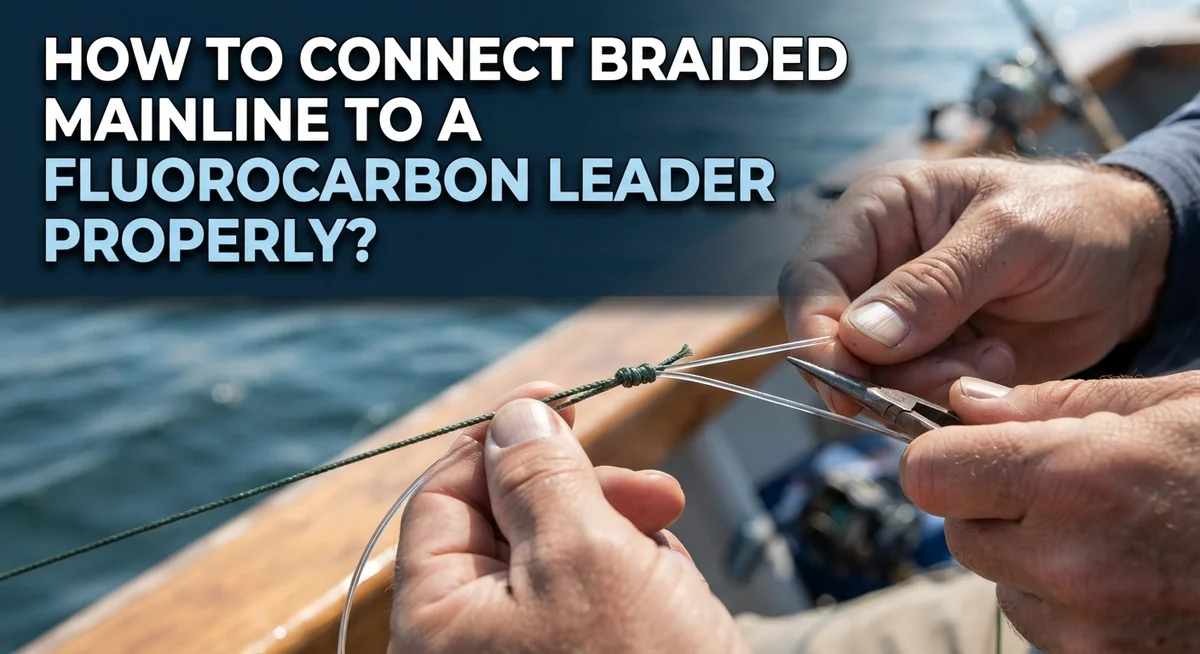
Connecting braided mainline to a fluorocarbon leader is a skill every angler needs. It gives you the strength of braid and the invisibility of fluorocarbon. But get the connection wrong, and you lose both benefits fast.
This guide walks you through the best methods to join these two lines properly. We cover the FG Knot, known for being the strongest and most reliable choice on the water. We also explain the Albright Knot, a simpler option for beginners still building confidence.
In a Nutshell
- The FG Knot is the top choice for strength. It creates a slim, reliable connection between braid and fluorocarbon.
- The Albright Knot works well for beginners. It is simpler to tie but still holds up under pressure.
- Keep light, steady tension on your braid while tying. This keeps the coils tight and even.
- Always wrap enough coils around both lines. Too few wraps can cause the knot to fail.
- Space your wraps evenly. Loose or uneven coils often slip when a fish pulls hard.
- Practice each knot before you hit the water. Confidence in your knot means confidence in your catch.
Why Connecting Braid To Fluorocarbon Correctly Matters
A weak connection between your braided mainline and fluorocarbon leader creates real problems on the water. When these two lines fail to join properly, your knot can slip under load. This means you lose fish, waste lures, and damage your confidence.
Braided line and fluorocarbon have different properties. Braid is thin, slippery, and strong. Fluorocarbon is stiffer and more visible to fish. When you tie them together incorrectly, the slick braid simply slides through loose coils. Your knot fails exactly when you need it most.
Proper connection matters because it ensures reliability. A strong knot holds under sudden jerks and constant pressure. This becomes critical when you fight a large fish or work heavy cover. Your line must stay intact from the reel all the way to your lure.
Even spacing of your wraps prevents slippage. Loose or bunched coils create weak points. These weak spots fail first when tension increases. Uneven wrapping also looks messy and performs worse than clean, organized coils.
The number of wraps you use directly affects knot strength. Too few wraps and your knot unravels. Too many wraps waste time and line. The right amount depends on your knot type, but the principle stays the same: sufficient wraps create a secure connection.
Tension control during tying makes a huge difference. You need light, steady pressure on your braid while wrapping. This keeps coils tight and organized. Loose tension during tying produces loose wraps that slip when wet.
Learning to connect these lines correctly saves you money and frustration. You keep more fish. You avoid losing expensive lures. Most importantly, you develop the skill that separates successful anglers from those who struggle with equipment failure. Practice this connection before you need it on the water.
Choosing The Right Knot: FG, Albright, And Double Uni Compared
The FG Knot stands out as the strongest option for connecting braided mainline to fluorocarbon leader. It creates a secure connection that holds under extreme pressure and sudden jerks. Most experienced anglers trust this knot because it rarely fails when tied correctly.
The Albright Knot offers a solid alternative, especially if you are just starting out. This knot is easier to learn and still provides excellent strength for most fishing situations. Many beginners find success with the Albright because it requires fewer steps than the FG.
The Double Uni Knot works as another option in your arsenal. This knot ties quickly and handles the connection well. However, it creates a slightly bulkier connection point compared to the other two methods.
When comparing these three knots, strength rankings matter. The FG Knot typically holds the highest breaking strength. The Albright Knot comes in a close second with reliable performance. The Double Uni ranks third but still performs adequately for most fishing scenarios.
Your choice depends on your experience level and fishing conditions. Beginners should start with the Albright Knot because it builds confidence quickly. Once you master the basics, practice the FG Knot for maximum strength.
The key difference between these knots lies in how they distribute pressure. The FG wraps tightly around both lines, spreading force evenly. The Albright uses a loop system that also disperses tension effectively. The Double Uni relies on two separate uni knots working together.
Practice matters more than which knot you choose initially. Spend time tying each one at home before fishing. Your hands need to develop muscle memory for smooth, consistent wraps. Test your finished knots by pulling hard to verify they hold before heading to the water.
Tools And Setup: Preparing Your Lines Before Tying
Before you tie any knot, your lines need proper preparation. This step takes just a few minutes but makes a huge difference in connection strength.
Start by inspecting both your braided mainline and fluorocarbon leader. Look for any fraying, damage, or weak spots on the braid. Run your fingers along the braid to feel for rough areas. If you find damage, trim back 6 to 12 inches of line and start fresh.
Cut your fluorocarbon leader to the length you need for your fishing situation. Most anglers use leaders between 24 and 48 inches long. Use sharp scissors or a line cutter to make a clean, straight cut. Jagged cuts weaken your leader right at the connection point.
Wet both lines with water or saliva before tying. Moisture reduces friction heat when you cinch the knot tight. Heat damages both line types and causes premature failure under load.
Set up your workspace so you can control tension easily. Hold your braided mainline steady using your teeth, a line clip, or by wrapping it around a rod guide. This keeps light, constant tension on the braid while you work. Position your fluorocarbon leader vertically so you can wrap it cleanly around the braid.
Check that you have enough working length on both lines. You need at least 12 inches of each line to tie most knots properly. If your lines are too short, you won’t have room to create even wraps.
Proper setup prevents mistakes that cause knot failure later. Take time now to organize your lines, maintain good tension, and keep everything clean and dry until you start wrapping. This foundation makes tying your knot much easier and more reliable.
Step-By-Step Guide To Tying The FG Knot
The FG knot requires a specific sequence of steps to work properly. Start by holding your braided mainline with light, steady tension. You can grip it between your teeth, hold it with your hand, or clip it to your rod for consistent pressure.
Position your fluorocarbon leader vertically so it stands straight up. This vertical position makes wrapping much easier and helps you maintain control throughout the process.
Begin wrapping your fluorocarbon leader around the braided mainline in smooth, even coils. Each wrap should sit directly next to the previous one without gaps or overlaps. Consistent spacing is critical because uneven wraps create weak points that slip under load.
Continue wrapping for the recommended number of passes. Most anglers use 8 to 10 wraps as a solid starting point, though conditions and line weights may require adjustments. Each wrap should feel snug but not so tight that you crush the line.
After completing your wraps, thread the end of your fluorocarbon leader back through the coils you just created. This locking step prevents the knot from unraveling when you apply pressure.
Pull the standing end of your fluorocarbon leader slowly and steadily to tighten the knot. Avoid jerking or yanking because sudden movements can slip the wraps before they fully lock together.
Trim the tag end of your fluorocarbon leader, leaving a small amount for safety. The finished knot should sit compactly without loose strands sticking out.
Test your completed knot with steady hand pressure before fishing. A properly tied FG knot feels solid and resists movement when you pull firmly on both lines. Practice this sequence several times on the ground before trying it on the water, and your hands will develop the muscle memory needed for quick, reliable knots every time.
Tying The Albright Knot As A Simpler Alternative
The Albright knot serves as an excellent choice if you find the FG knot intimidating. This knot is simpler to learn and requires fewer hand movements to complete successfully.
Here’s how the Albright knot works. You create a loop with your braided mainline by folding it back on itself. Your fluorocarbon leader then passes through this loop from underneath. You wrap the fluorocarbon leader around both strands of the braid loop multiple times, working from the loop opening toward the closed end.
The wrapping motion matters more than speed. Make each wrap tight and keep them stacked neatly against each other. Loose or uneven wraps will slip under pressure and cause your knot to fail on the water. Aim for at least 8 to 10 wraps around the braid loop for adequate strength.
After completing your wraps, thread the fluorocarbon leader back through the original loop opening. This threading step locks everything in place. Pull the standing end of your fluorocarbon leader firmly while holding the braid steady. The knot should cinch down smoothly without bunching or twisting.
The Albright knot’s main advantage is speed and simplicity. You don’t need special hand techniques or unusual positioning. Most anglers master this knot after just a few practice attempts.
One drawback exists compared to the FG knot. The Albright knot is slightly less strong under extreme loads. However, for most fishing situations and line weights, this knot performs reliably and holds securely.
Practice this knot at home before fishing. Tie it several times using old line so you build muscle memory. When you reach the water, you’ll tie it confidently without fumbling. The Albright knot proves that simpler methods can work just as well when you execute them properly.
Testing Knot Strength And Trimming For A Clean Finish
Testing your knot strength matters before you hit the water. A strong connection between your braided mainline and fluorocarbon leader prevents lost fish and broken lines during critical moments.
Start by holding your completed knot firmly in both hands. Apply steady, increasing pressure to see how the knot responds. You should feel the knot tighten rather than slip. If the knot slides under tension, you likely have uneven wrap spacing or insufficient wraps around the lines.
Pull with consistent force to test the knot’s integrity. The knot should hold solid without any movement between the braided and fluorocarbon sections. If you feel any give, the connection isn’t ready for fishing. Retie the knot with more wraps or better spacing.
A reliable test involves tying the knot, then attaching one end to a fixed object like a dock cleat or tree. Pull the other end with moderate force to see if the knot holds. This mimics real fishing pressure without risking your tackle.
Once you confirm the knot holds strong, trim the tag ends carefully. Leave about one quarter inch of fluorocarbon protruding from the knot for safety. This small amount prevents the knot from completely unraveling if it experiences extreme stress.
Use sharp scissors or line clippers to make clean cuts. Ragged edges can weaken the knot slightly, so precise trimming matters. Never pull the tag end hard before cutting, as this can loosen the wraps you worked to create.
After trimming, give the knot one final gentle tug. The connection should feel solid and permanent. Your knot is now ready for actual fishing conditions. This testing step takes only minutes but prevents frustration and lost fish later on the water.
Common Mistakes And How To Avoid Knot Failure
Knot failure happens when you rush or skip important details. Understanding these mistakes helps you avoid losing fish and wasting line. Let’s break down what goes wrong and how to prevent it.
Uneven coil spacing causes most failures. When you wrap your fluorocarbon leader around the braid, each coil must sit tight against the previous one. Loose or scattered wraps create weak points where the knot slips under pressure. Your line will break at the connection instead of holding firm.
Insufficient wraps represent another common problem. The number of coils matters more than you might think. Too few wraps mean the knot doesn’t distribute tension properly across the connection. Check your specific knot’s requirements and always meet that minimum. More wraps generally provide extra security.
Improper tension during tying destroys knot reliability. Hold your braided mainline with consistent, light pressure. You can grip it gently in your teeth or clip it to your rod guide. This steady tension keeps everything aligned while you work. Slack line or jerky movements create gaps in your wraps.
Rushing the process leads to careless mistakes. Take your time positioning the leader vertically. Make each wrap deliberately and smoothly. Hurried tying produces sloppy coils that fail when you set the hook.
Trimming too short leaves no safety margin. Always leave a small tag end after tightening. This prevents the knot from unraveling if it experiences extreme stress. A quarter inch of remaining line provides good protection.
Test your knot before fishing. Pull steadily with both hands to check for slippage. If the knot slides or feels loose, untie and try again. This simple check saves you from losing fish at critical moments.
Practice tying at home without pressure. Build muscle memory so you execute the knot correctly every time you’re on the water. Confidence comes from repetition and attention to these details.
Final Thoughts
Connecting braided mainline to a fluorocarbon leader does not need to feel hard. With practice, your hands learn the rhythm of each wrap and pull.
The FG knot gives you the strongest connection. It stays thin and slides through rod guides smoothly.
The Albright knot offers a simpler path. Beginners often start here before moving to the FG knot.
Both knots share one truth. Patience matters more than speed when you tie them.
Take your time with each coil. Rushing causes gaps that weaken your connection.
Check your tension throughout the process. Loose coils slip apart under pressure from fish or casting.
Testing your knot before fishing saves you frustration later. A quick pull test shows you if your work holds strong.
Practice builds confidence over time. Tie these knots at home during quiet moments.
Your fingers memorize the steps without water splashing around you. This makes real fishing trips less stressful.
Remember that every angler struggles with these knots at first. Even experienced fishers had to learn through trial and error.
Do not give up if your first attempts fail. Each failed knot teaches you something about tension or wrap count.
Choose the knot that fits your comfort level. The FG knot rewards patience with superior strength.
The Albright knot rewards those wanting a faster tie. Both connections work well when tied correctly.
Focus on clean technique over speed. Consistent practice turns these knots into second nature.
Your fishing line connection affects your entire day on the water. A strong knot means fewer break offs and more time enjoying your catch.
Master these skills once. Use them for years of successful fishing trips ahead.
Frequently Asked Questions
Which knot should a beginner choose for connecting braid to fluorocarbon?
Start with the Albright knot if you want something faster to learn. It requires fewer wraps and feels more forgiving as you practice. The FG knot works better if you have patience and want maximum strength from day one.
Both knots hold well once tied correctly. Pick whichever one feels less frustrating during your first attempts at home.
How many wraps do I need around both lines?
The FG knot typically needs 7 to 10 wraps for solid reliability. Space each wrap evenly so they sit tight against each other without gaps.
Fewer wraps risk failure under sudden load. More wraps only improve strength, so err on the generous side when learning.
Why does my knot slip or fail under tension?
Uneven coil spacing causes most failures. When wraps sit loosely or bunch together, the knot slides apart when you set the hook or fight a fish.
Insufficient wraps also weaken your connection. Make sure you wrap enough times and keep tension light on the braid while wrapping.
Can I use the same knot for all line types?
The FG and Albright knots work with most braid to leader combinations. Fluorocarbon, monofilament, and other materials all work fine with these knots.
Test your specific line combination at home first. Different line brands sometimes behave slightly differently, so practice removes surprises on the water.
What’s the main difference between FG and Albright knots?
The FG knot creates a stronger, more reliable connection but takes longer to tie. The Albright knot ties faster and works well for most fishing situations.
Choose based on how much time you want to spend versus how much strength you need for your target fish.

Hi, I’m Ivy Webb, the passionate angler and creator behind BaitHookVault.com. I spend my days out on the water personally testing and reviewing a wide variety of fishing tools and gear.