Why Does My Fly Reel Clicker Sound Muffled?
A crisp fly reel clicker sound feels right. It tells you the reel is working, the pawl is meeting the gear, and the spool is turning as it should. So when that sound turns dull, weak, or soft, it can be annoying and a little worrying.
The good news is that a muffled clicker usually comes from a small issue, not a ruined reel. Dirt, old grease, light corrosion, too much oil, weak spring tension, or a loose part can all soften the sound.
In many cases, you can fix it at home with a careful check, a basic cleaning, and the right amount of lube. This guide will show you exactly what to look for, what to avoid, and how to bring back that clean, sharp click without making the reel worse.
In a Nutshell
- A muffled clicker usually means friction or weak contact. The sound comes from the pawl touching the gear teeth. If dirt, old grease, or too much oil sits in that area, the click loses its snap. If the spring pressure drops, the pawl may touch the gear too softly. That soft contact makes a soft sound.
- Start with the easy checks first. Remove the spool. Look for grit, line debris, salt, loose screws, or a clicker set to a quieter position. Many anglers jump into full disassembly too soon. A simple inspection often finds the problem in minutes.
- Cleaning solves more muffled clickers than part replacement does. Warm water, mild soap, a soft brush, and full drying can restore sound fast. If the reel manual allows lube, use a very small amount. Too much lube can mute the clicker again.
- Different fixes have clear pros and cons. A quick rinse is fast, but it may miss hidden grit. A full clean is more effective, but it takes time and care. Small part replacement can restore sound well, but it only helps if the spring or pawl is truly worn. Choose the fix that matches the real cause.
- Do not guess with lubrication. Some reels want light oil on a few moving points. Some modern reels need very little, and some areas should stay dry. Heavy grease near the clicker can deaden sound. A quiet reel is often an over lubed reel.
- Prevention is easier than repair. Rinse after use, dry the reel fully, store it with the drag relaxed if your model uses drag pressure, and keep sand and salt away from the clicker side. Good care keeps the sound clean and keeps the reel reliable.
What a Muffled Fly Reel Clicker Usually Means
A muffled clicker sound usually points to one basic problem. The moving parts are still working, but they are no longer meeting cleanly. The pawl may be touching the gear with less pressure, or some film of dirt, oil, or old grease may be dulling the contact.
In plain terms, the reel is still talking, but it is talking through a blanket. That is why the sound feels soft instead of crisp. A reel can still turn and fight fish even when the clicker sounds weak. Still, the sound change is a useful warning.
This matters because small problems grow. Grit can wear the gear teeth. Salt can start corrosion. A weak spring can become a failed spring. The pros of checking early are simple. You catch the issue before it gets worse, and the repair is often cheap. The cons are minor. You need a little time and patience. That trade is worth it every time.
How the Clicker Makes Sound in the First Place
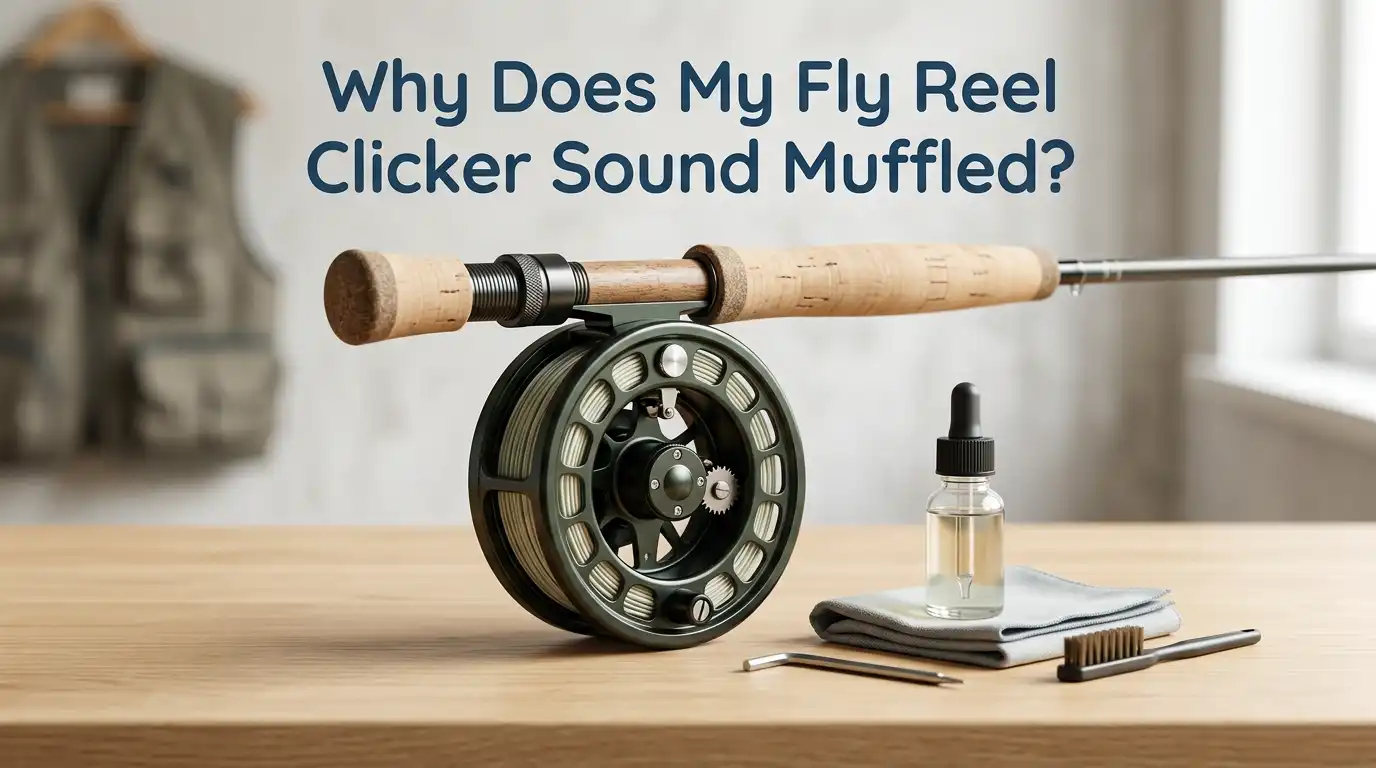
A click and pawl reel makes sound through contact. The spool carries a toothed gear. A small metal pawl sits against that gear under spring pressure. As the spool turns, the pawl rides over the teeth and creates the familiar click.
If either part loses clean contact, the sound changes. A weak spring gives less pressure. Thick grease fills the tiny gaps. Fine grit blocks smooth movement. Even a small amount of buildup can change the tone.
This simple design is one reason many anglers like click and pawl reels. The pros are clear. The system is easy to understand, easy to service, and usually easy to inspect. The cons are just as real. It is exposed, it can collect dirt, and small changes in tension can affect both sound and feel. Once you understand this basic contact point, the muffled sound becomes much easier to fix.
Dirt, Sand, and Old Grease Are the Most Common Causes
The most common cause of a muffled clicker is simple buildup. Fine sand, dried mud, lint, old grease, and line dust can collect around the pawl, spring, spindle, and spool gear. That buildup acts like a cushion. It reduces the sharp metal to metal contact that gives the reel its clean sound.
Old grease causes trouble too. Fresh lube can help the right parts. Old lube does the opposite. It traps grit, thickens with time, and slows small moving parts. That is why a reel that sat unused for months can sound worse than one that sees steady care.
The pros of a dirt related problem are obvious. It is usually easy to fix with cleaning. You often do not need new parts. The cons are that hidden grit can scratch parts if you keep using the reel without checking it. If the sound changed after a dusty trip, a sandy bank session, or long storage, start here first.
Water, Salt, and Corrosion Can Soften the Click
Fresh water is usually not the main enemy. Salt and trapped moisture are. When water stays inside the reel, it leaves residue behind. In salt use, that residue can start corrosion on small parts such as the spring, pawl, screws, and spindle area. Even light corrosion can change the clicker sound.
A corroded spring may lose some tension. A corroded pawl may not move freely. A rough gear edge can create a scratchy or dead sounding click. Sometimes the reel still works, but the sound loses life.
The pros of catching moisture damage early are strong. A rinse, full drying, and careful cleaning may stop the issue before parts need replacement. The cons appear if you wait too long. Corrosion can pit metal and turn a simple service job into a parts hunt. If your reel sounds dull after saltwater use or wet storage, check for moisture damage before doing anything else.
Too Much Lubrication Can Mute the Sound
Many anglers try to help a reel by adding more oil or grease. That often makes the clicker sound worse. Heavy lube around the pawl and gear can soften the impact between those parts. Instead of a bright click, you get a dull tick or a mushy sound.
This is a classic case of good intent causing a new problem. More lube is not better. A reel only needs the right lube in the right spot and in a very small amount. Some manufacturers even advise very light lubrication and stress cleaning more than coating parts.
The pros of light lubrication are smoother motion and some rust protection. The cons of over lubrication are trapped grit, muted sound, and a messy reel. If you see wet, shiny buildup around the clicker area, that is a clue. Before you buy parts, wipe the excess away and clean the area. Many muffled clickers come back to life right there.
Weak Spring Tension or a Worn Pawl Can Change the Tone
If cleaning does not restore the sound, check the spring and pawl. The spring pushes the pawl into the gear teeth. If that spring weakens, bends, or sits out of place, the pawl can still touch the gear but not with enough force to make a strong click. The same goes for a worn pawl tip.
A worn pawl may slide too smoothly over the gear. A weak spring may let the pawl bounce too softly. Both issues make the click less sharp and less confident. Some reels also change sound after a left hand or right hand conversion if the pawl is not seated correctly.
The pros of fixing a spring or pawl problem are excellent. You solve the cause at the source. The cons are that small parts are easy to lose, and some reels need an exact replacement. If the reel is clean but still soft sounding, this is the next place to inspect.
Loose Screws, Spool Fit, and Alignment Issues Matter Too
A muffled clicker is not always a dirty clicker. Sometimes the spool sits a little off. Sometimes a cover screw loosens. Sometimes a part shifts just enough to change how the pawl meets the gear. That tiny change can affect sound more than you expect.
Check the spool release, frame screws, handle screw, and any clicker side screws your reel uses. Spin the spool slowly by hand and look for wobble. Listen for spots where the sound gets softer or rougher during one full turn. An uneven sound often points to alignment trouble.
The pros of this check are speed and safety. You do not need deep disassembly. The cons are that overtightening can strip threads or crush small parts. Tighten only to snug, not to force. If the reel became quiet after a bump, a drop, or recent service, alignment and screw tension deserve a close look.
Do This Simple Inspection Before You Take the Reel Apart
Before full disassembly, do a calm and simple inspection. Remove the spool. Look at the pawl, spring, gear teeth, spindle, and frame interior. Check for grit, dried lube, salt marks, line fibers, bent parts, and loose screws. Turn the spool in your hand and compare the sound off the frame and on the frame if your model allows that check.
This step saves time. It also protects you from fixing the wrong problem. The pros are huge. You reduce risk, you learn how the reel fits together, and you may spot an easy fix right away. The cons are small. You might need good light and reading glasses if the parts are tiny.
Use a soft cloth, a cotton swab, and a small brush. Do not poke hard at springs or pry parts just to see what happens. A careful look often tells you whether you need cleaning, lube correction, or a new part.
How to Clean the Clicker Without Damaging the Reel
Start with the least aggressive method. Wipe away surface dirt with a soft cloth. Use a small brush to lift sand and dried grime from the clicker area. If the reel can handle a gentle wash, use warm water and mild soap on the spool and frame. Rinse lightly, then dry every part very well.
For stubborn grime, use a toothbrush with light pressure. Do not use steel wool, harsh abrasives, or random shop chemicals. Those can scar the finish and make the reel collect dirt even faster. If your reel has a drag housing or sealed section, avoid soaking areas the maker wants kept dry.
The pros of basic cleaning are low cost and high success. The cons are that hidden corrosion or worn parts may remain after the dirt is gone. Let the reel dry fully before you judge the sound. A damp reel can still sound soft until all trapped moisture leaves the tight spaces.
How to Lubricate the Right Way and Keep the Click Sharp
After cleaning, only lubricate if your reel design calls for it. Put a very small amount of reel safe oil or light lubricant on the points the maker allows, such as the spindle or handle area. Keep heavy grease away from the clicker contact area unless the manual clearly says to use it there.
The goal is smooth movement without muting the sound. Think thin and controlled. One drop can be enough. Then wipe away any visible extra. If the pawl and gear need to stay mostly clean and dry for a crisp click, respect that.
The pros of correct lubrication are smooth operation and less wear. The cons are easy to see if you overdo it. Extra oil attracts grit and softens sound. If the click gets worse right after lubrication, that is useful information. Clean off the excess and test again. In many reels, less really is more.
When Small Part Replacement Is the Best Fix
Sometimes cleaning and light service do not solve the issue. That is when part replacement makes sense. Common wear parts include the pawl, spring, small screws, and in some reels the clicker retainer or gear related parts. If the spring looks bent, cracked, rusted, or weak, replacement is often the cleanest fix.
A fresh pawl can also help if the tip is rounded or worn. That small edge matters more than most anglers think. The contact between pawl and gear must stay firm and clean to make a bright sound.
The pros of replacement are strong. You restore proper tension and part shape. The cons are cost, part availability, and the chance of ordering the wrong piece. If your reel is valuable, vintage, or hard to source, slow down and confirm the exact part before buying. One right part beats three wrong guesses.
When to Stop and Send the Reel to a Repair Shop
Some reels ask for a professional touch. If the reel has hidden internals, a sealed drag, damaged screws, worn gear teeth, broken springs, or heavy corrosion, a repair shop may save you money and stress. The same goes for older reels with rare parts or collectible value.
A shop can also help if you already cleaned and inspected the reel but the sound still changed with no clear reason. That usually means the problem sits deeper than surface dirt. A trained tech can measure fit, inspect wear, and source correct parts.
The pros of pro service are accuracy and lower risk. The cons are wait time, service cost, and shipping. Still, paying for the right repair once is better than causing new damage at home. If you feel unsure during disassembly, that is your sign to stop early and send it out.
How to Keep the Clicker Crisp After You Restore It
Once the sound comes back, keep it there with simple habits. Rinse the reel after dirty or salty trips. Dry it with the spool off if needed. Store it only after all moisture is gone. If your reel uses adjustable drag pressure, back it off for storage unless the maker says otherwise. Keep sand, mud, and loose line fibers away from the clicker side.
Do quick checks during the season. Listen for sound changes. Wipe away grime before it hardens. Use very light lubrication only where the maker allows it. Small care beats big repair.
The pros of prevention are easy to love. You get better sound, longer part life, and fewer bad surprises on the water. The cons are almost none, other than a few minutes of care after each trip. A sharp clicker sound is usually the result of sharp maintenance habits.
FAQs
Can I still fish with a muffled clicker?
Yes, in many cases you can. The reel may still function well enough to fish. Still, a changed sound often means dirt, moisture, or wear is present. It is smart to inspect the reel soon so the issue does not grow.
Should I oil the pawl and gear directly?
Usually, less is better in that area. Many muffled clickers come from too much lube around the contact point. Use only what your reel maker allows, and wipe away extra product right away.
Why did the sound change after I switched retrieve direction?
The pawl may not be seated correctly after the change. A spring may also sit slightly off. Remove the spool and recheck the pawl position, spring contact, and spool fit.
Is a quieter clicker always a bad sign?
No. Some reels are built to sound softer than others. But if your reel used to sound crisp and suddenly sounds dull, that change matters and deserves a check.
What is the safest first fix to try at home?
Start with a spool removal, visual inspection, light brushing, and full drying. That approach has the best balance of safety and success. It solves many problems without risking deeper damage.

Hi, I’m Ivy Webb, the passionate angler and creator behind BaitHookVault.com. I spend my days out on the water personally testing and reviewing a wide variety of fishing tools and gear.