Why Do My Tungsten Flipping Weights Keep Fraying My Fluorocarbon Line?
Tungsten flipping weights changed the game for bass anglers. They are denser, smaller, and far more sensitive than lead. But there is one frustrating problem many anglers run into.
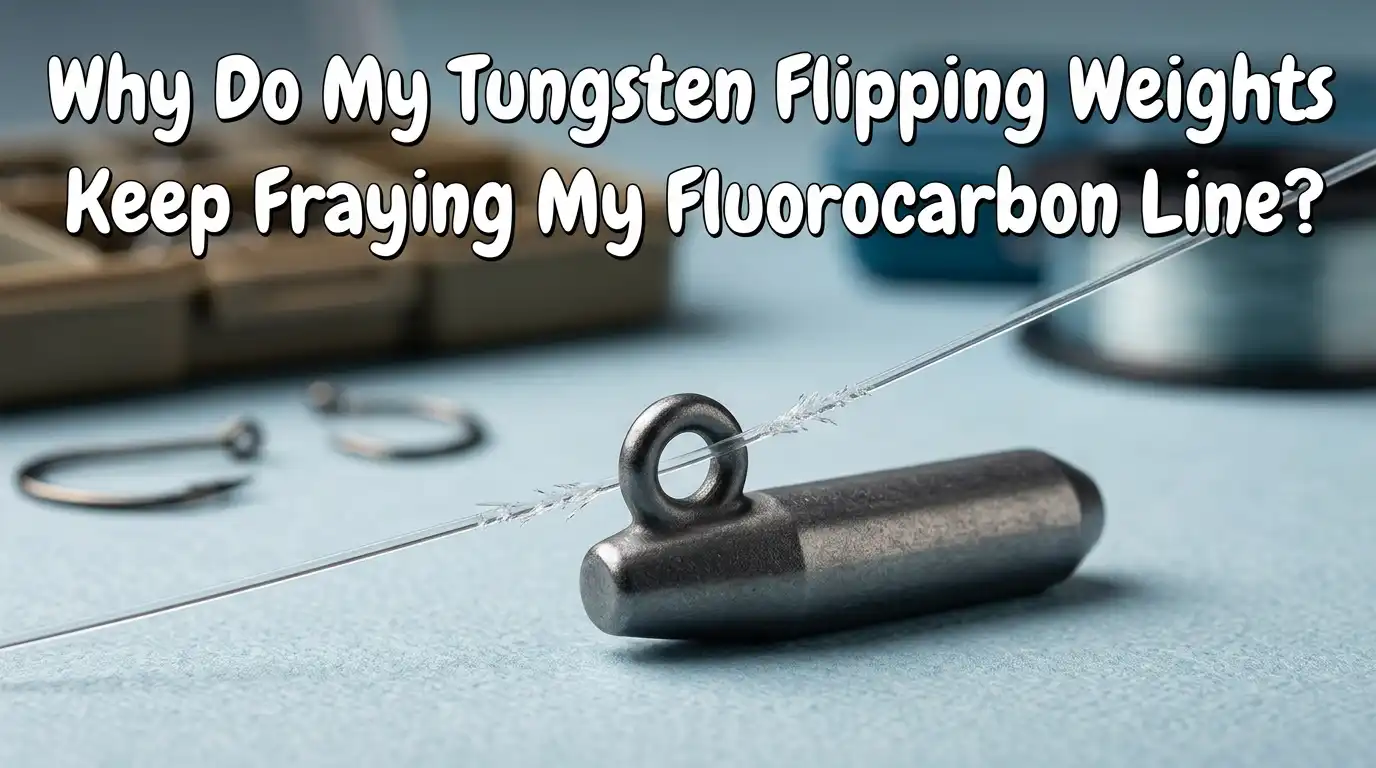
The line keeps fraying right above the weight. You set the hook on a giant and the line snaps. You reel in and notice fuzzy, white, damaged fluorocarbon. Sound familiar?
This guide breaks down exactly why this happens and how to stop it. You will learn the science behind the abrasion, the best protective gear, the right knots, and small habits that save your line.
In a Nutshell:
- Tungsten is harder than fluorocarbon. Tungsten sits around 9 on the Mohs hardness scale, while fluorocarbon is soft plastic. Every time the weight slides, it can shave the line.
- Cheap tungsten weights often have rough inner bores. Low quality casting leaves sharp edges and burrs inside the weight that act like tiny knives against your line.
- A bead or peg solves most cases. Adding a tungsten or brass bead, or pegging the weight in place, stops the grinding contact between the weight and your knot.
- Knot choice matters a lot. A Palomar knot with a long tag end, a snell, or a uni knot holds up better than a basic improved clinch under flipping pressure.
- Inspect your line every few flips. Heavy cover punishes line. Run your fingers up the leader after each fish or snag and retie at the first sign of fuzz.
- Premium tungsten weights with polished inserts last longer and protect your line, even though they cost more up front.
What Actually Causes the Fraying in the First Place
Tungsten is one of the hardest metals used in fishing tackle. It rates around 7.5 to 9 on the Mohs scale. Fluorocarbon line, while stiff, is still a soft plastic by comparison. When the two rub together under load, the weight wins every time.
The damage usually happens in three spots. The line above the weight gets abraded as the sinker slides. The knot gets bruised when the weight slams down onto it during a pitch. And the inner bore of the weight scrapes the line during every twitch.
Flipping makes this worse because you are constantly moving the bait through wood, vegetation, and rock. Every pitch sends the weight crashing into the knot. Over an hour of fishing, that adds up to hundreds of impacts.
Cheap Tungsten Weights Have Rough Inner Bores
Not all tungsten is created equal. Premium weights are made from 97 percent pure tungsten powder that is heated, pressed, and polished. Budget weights often use lower tungsten content mixed with nickel or other binders, and the inner bore is left rough.
When you slide your line through a low quality weight, you can sometimes feel the grit. That texture is what is sawing into your fluorocarbon. A quick test is to push a Q tip through the bore. If cotton fibers snag or pull off, the bore is too rough for fluoro.
Pros of premium tungsten: smoother bore, longer line life, more sensitivity, smaller profile per ounce.
Cons of premium tungsten: higher price per weight, easier to lose to snags because you hesitate to break off.
Spending more up front often saves money on retied rigs and lost fish.
The Magic Fix: Add a Bead Between the Weight and the Knot
This is the single most popular solution among tournament anglers. A small bead sits between the tungsten weight and your hook knot. It acts as a buffer so the weight never grinds directly on the knot.
But here is the catch. Glass and plastic beads break under tungsten pressure. The tungsten is harder than glass and will shatter or chip the bead, which then cuts the line worse than before. Use a brass bead or a tungsten bead instead. These materials match or exceed the hardness of the weight.
Pros of using a bead: cheap, easy, protects the knot, adds a clicking sound that can attract bass.
Cons of using a bead: one more piece to lose, can affect bait action slightly, glass and plastic versions make the problem worse.
Always carry a small container of brass beads in your flipping box.
Peg Your Weight to Stop the Sliding Entirely
If the weight cannot slide, it cannot saw on your line. Pegging locks the tungsten in place against the bait. There are two main ways to do this. You can use a rubber bobber stopper above the weight, or you can use a silicone peg insert pushed through the bore.
Bobber stoppers are gentle on fluorocarbon and easy to slide for adjusting depth. Silicone pegs hold tighter, which is great for punching mats but can pinch the line if forced too hard.
Pros of pegging: stops abrasion completely, keeps the bait and weight together for better hooksets, improves feel.
Cons of pegging: can damage line if you use toothpicks (avoid these), bobber stoppers can slip on hard hooksets, removing pegs takes time.
Skip the toothpick trick. Wood splinters cut fluorocarbon faster than tungsten does.
Choose the Right Knot for Heavy Cover Flipping
A weak knot is the first thing to fail under flipping pressure. The classic improved clinch is not strong enough for heavy tungsten and big fish. You need knots designed for thick fluoro and shock loads.
The Palomar knot is the go to for most flippers. It retains around 95 percent of line strength when tied correctly. The snell knot is even better with straight shank flipping hooks because the pull angle drives the hook home. The uni knot also works well and is easier to tie with cold fingers.
Pros of the Palomar: simple, strong, works with any hook.
Cons: can be tricky with very thick fluoro above 20 pound test.
Pros of the snell: unbeatable hooksetting power, very strong.
Cons: only works with straight shank hooks, slower to tie.
Always wet your knot before cinching it down to reduce friction heat.
Wet Your Line Before Tightening Every Knot
This sounds basic but it matters more than most anglers realize. Fluorocarbon is stiff and generates heat when it is cinched tight. Heat weakens the line at the very spot you are trying to make strong. Saliva or water lubricates the line and lets it slip into place without burning.
Take an extra two seconds. Put the knot in your mouth or dip it in the lake. Then pull it tight in one smooth motion. Avoid jerky tightening, which creates micro fractures.
Pros of wetting: stronger knots, fewer break offs, costs nothing.
Cons: habit takes time to build, easy to forget when rushing between flips.
Many pros also pull the tag end and main line separately before final tightening. This seats the wraps evenly and prevents the knot from gapping under load. Small habit, big payoff over a tournament day.
Inspect the Inside of Every New Weight Before Tying On
This step takes ten seconds and saves a trophy fish. When you open a new pack of tungsten weights, hold each one up to the light and look through the bore. Check for chips, cracks, sharp edges, or rough casting marks.
Run a piece of old fluorocarbon through the weight and pull it back and forth a few times. If the line comes out fuzzy or shows fresh white marks, the weight is defective. Reject it.
You can also use a small needle file or fine sandpaper rolled into a tube to smooth a rough bore. Twist it through the weight gently. This works on lower priced weights to make them safer for fluoro.
Pros of inspection: catches bad weights before they cost you a fish.
Cons: small bores can be hard to inspect, takes practice to spot defects.
Manufacturing defects from shipping bumps are more common than you would think.
Use Insert Sleeves for Extra Line Protection
Some premium tungsten weights come with built in plastic or rubber inserts in the bore. These sleeves create a smooth surface between the line and the metal. Aaron Martens famously used heat shrink tubing inside his tungsten weights for the same effect.
You can make your own. Cut a tiny piece of fluorocarbon friendly shrink tube, slide it inside the bore, and apply gentle heat. The sleeve protects the line without changing the weight’s behavior.
Pros of inserts: great line protection, lets you use cheaper weights safely, easy DIY project.
Cons: sleeves can wear out and need replacing, slight reduction in sensitivity, adds setup time.
This trick works especially well for Texas rigs and Carolina rigs where the weight slides freely. It also saves money on premium weights when you fish heavy cover daily.
Match Your Fluorocarbon Pound Test to the Cover
Light line gets cut faster than heavy line. If you are flipping into thick brush or mats with 12 pound fluoro, you are asking for trouble. Heavy cover flipping calls for 20 to 25 pound fluorocarbon at minimum.
Heavier line has a thicker diameter, which means more material to abrade before failure. It also handles tungsten contact better because the impact spreads across more surface area.
Pros of heavier fluoro: more abrasion resistance, better hooksetting power, fewer break offs.
Cons of heavier fluoro: more visible, less sensitive, harder to manage on baitcasters, more memory.
For mat punching, many anglers move up to 50 or 65 pound braid as a main line with a short fluoro leader. This combination gives you the strength of braid with the invisibility of fluoro near the bait. It is a smart compromise for clear water flipping.
Retie Often and Trim After Every Fish
Even with every precaution, fluorocarbon takes damage over time. The smart move is to retie often. After every fish, run your fingers from the weight up the line about three feet. Feel for rough spots, nicks, or fuzz.
If you feel anything, cut six to twelve inches off and retie. It is faster than losing the next bite. Tournament anglers retie every 30 minutes during heavy flipping sessions, even when nothing feels wrong.
Pros of frequent retying: prevents most break offs, keeps confidence high.
Cons of frequent retying: uses up line faster, takes time away from fishing.
Keep your nippers on a retractor clipped to your shirt. Easy access encourages the habit. A spool of fluoro is cheap. Losing the biggest bass of the year is not.
Slow Down Your Pitch to Reduce Knot Impact
Hard, fast pitches send the weight slamming into your knot with serious force. Over a day, this pounds the knot flat and weakens it. A smoother pitch with controlled fall causes far less damage.
Practice pitching with a soft entry. Feather the line with your thumb so the weight glides in instead of crashing. You will spook fewer fish and protect your knot at the same time.
Pros of a soft pitch: stealthier presentation, longer knot life, more bites in pressured water.
Cons: harder to reach distance, requires practice, less effective in wind.
This is one of those small adjustments that separates weekend anglers from tournament winners. Sensitivity to your gear extends its life and improves your results. Spend a few minutes on the lawn each week practicing soft pitches with a casting target.
Switch to a Braid Main Line with a Fluoro Leader
If fluoro keeps failing in heavy cover, consider rethinking your setup. Many flipping pros run 50 to 65 pound braid as their main line with a short fluorocarbon leader of about three to five feet. The tungsten weight slides on the leader, not the braid.
If the leader gets damaged, you only retie a short section instead of stripping yards of fluoro. Braid is also nearly immune to abrasion from tungsten because of its woven Spectra or Dyneema fibers.
Pros of braid plus leader: stronger main line, fewer break offs, cheaper retying.
Cons: more visible in clear water, requires a strong connection knot like the Alberto or FG, more knots to manage.
This setup is the standard for mat punching and pad fishing. It combines the best traits of both line types.
Frequently Asked Questions
Does pegging my tungsten weight damage fluorocarbon line?
It can if you use the wrong material. Toothpicks splinter and cut the line. Plastic pegs forced too hard pinch the line. Stick with rubber bobber stoppers or silicone inserts designed for fishing. These hold the weight without harming fluorocarbon.
How often should I retie when flipping heavy cover with tungsten?
Most tournament anglers retie every 20 to 30 minutes during active flipping. Always retie after catching a fish over three pounds, after pulling free from a snag, or anytime you feel a rough spot on the line above the weight.
Are tungsten beads better than brass beads for protecting my knot?
Both work well because both are harder than glass or plastic. Tungsten beads add more sensitivity and clicking sound. Brass beads cost less and are easier to find. Either choice is far better than glass, which shatters under tungsten pressure.
Can I sand the inside of a cheap tungsten weight to make it safer?
Yes. Use fine grit sandpaper rolled into a tube, or a small round needle file. Twist it through the bore gently for about thirty seconds. Then run a piece of old fluoro through to test. If the line comes out clean, the weight is safe to use.
Why does my line break right at the weight even when I use a bead?
Check the bead material first. If it is glass or hard plastic, replace it with brass or tungsten. Also check the weight bore for chips. Finally, make sure your knot is fully seated and wet when tightened. All three factors must be right for the system to work.
Is fluorocarbon the wrong choice for flipping heavy cover?
Not at all. Fluorocarbon offers low visibility and excellent sensitivity, which both matter in clear water flipping. The key is using 20 pound or heavier line, protecting the knot with a bead, and retying often. Many pros still prefer fluoro for these reasons.

Hi, I’m Ivy Webb, the passionate angler and creator behind BaitHookVault.com. I spend my days out on the water personally testing and reviewing a wide variety of fishing tools and gear.