How to Stop Braided Line From Slipping on a Smooth Reel Spool?
Braided line can feel amazing on the water. It casts far. It feels sharp in your hands. It gives great bite detection. But one small setup mistake can ruin all of that.
If braid slips on a smooth reel spool, the handle turns, the spool moves, and the line still slides under pressure. That means weak hooksets, poor drag control, and a lot of frustration.
The good news is simple. You do not need a new reel. In most cases, you only need the right base layer, the right knot, and better tension while spooling. This guide shows you exactly what to do, step by step, so your braid grips the spool and stays locked in place from the first cast to the next hard run.
In a Nutshell
- Braided line slips because it is smooth and thin. A polished aluminum spool gives it very little bite. If you tie braid straight to a bare spool, it can spin around the arbor instead of gripping it. That is why the base layer matters so much.
- Monofilament backing is the most reliable fix for most anglers. A short layer of mono bites the spool well and gives braid a secure base. It also saves money because you do not need to fill the whole reel with braid.
- Tape is a fast fix, but it is usually the second choice. A small piece of masking tape or water friendly tape can stop slip fast. Still, mono backing lasts longer and usually gives a more secure hold over time.
- Tension during spooling is a big deal. Loose braid causes two problems. It can slip at the arbor, and it can dig into itself later. Keep steady pressure on the line while you spool so it packs tightly and evenly.
- Do not overfill or underfill the spool. Most reels work best when line sits about one eighth inch below the spool lip. That level helps casting and line control while keeping the wraps neat and tight.
- If your reel is already slipping, you can fix it today. Strip off the braid, add mono backing or tape, respool under firm tension, and test it before fishing. A ten minute reset can save a full day on the water.
Why Braided Line Slips on a Smooth Spool
Braided line slips because its surface is slick. It does not stretch much, and it does not bite into a smooth spool the way mono often does. When you pull hard on the line, the whole braid layer can rotate around the arbor instead of staying fixed. That makes the drag feel wrong and the reel feel weak.
This problem shows up most on bare aluminum spools and reels with no grip surface at the center. A tight knot alone does not always solve it. The knot may stay tied, but the braid can still rotate around the spool under load.
That is why most real fixes focus on adding grip before the braid goes on. Once you understand that point, the rest of the solution becomes very simple and very practical.
How to Confirm Slippage Before You Respool
Before you strip all your line, make sure slip is the real problem. Tighten the drag more than usual. Hold the spool or line firmly with your hand. Then turn the handle and watch closely. If the spool stays still but the braid layer rotates around the arbor, you have spool slip.
Another sign is strange drag behavior. You pull line and it feels jerky, weak, or uneven. You may also notice that hooksets feel soft even with tight drag. On a spinning reel, the braid can look solid on top while the lower wraps move underneath. That hidden movement is the clue.
The good part is this test is quick and safe. It helps you avoid guessing. If slip is not the issue, you can look at the drag washers or spool setup next. If slip is the issue, you already know the fix starts at the arbor.
Clean and Inspect the Spool First
A dirty spool can make the problem worse. Old line dust, salt, oil, and grime reduce friction even more. Before you add backing or tape, wipe the spool clean with a dry cloth. If it has buildup, use a lightly damp cloth and let it dry fully before spooling line.
Look closely at the arbor too. Some spools have ports, holes, or a rubber grip section. Some are fully smooth. If your spool already has a rubber grip band, you may not need mono or tape, though a test is still smart. If the spool is fully polished and smooth, you should plan for a grip layer.
Pros: A clean spool helps tape stick better and helps backing sit tight.
Cons: Cleaning alone will not stop braid slip on a smooth spool.
This step is simple, but it matters. A secure line job starts with a clean base, not with hope.
Use Monofilament Backing for the Most Secure Grip
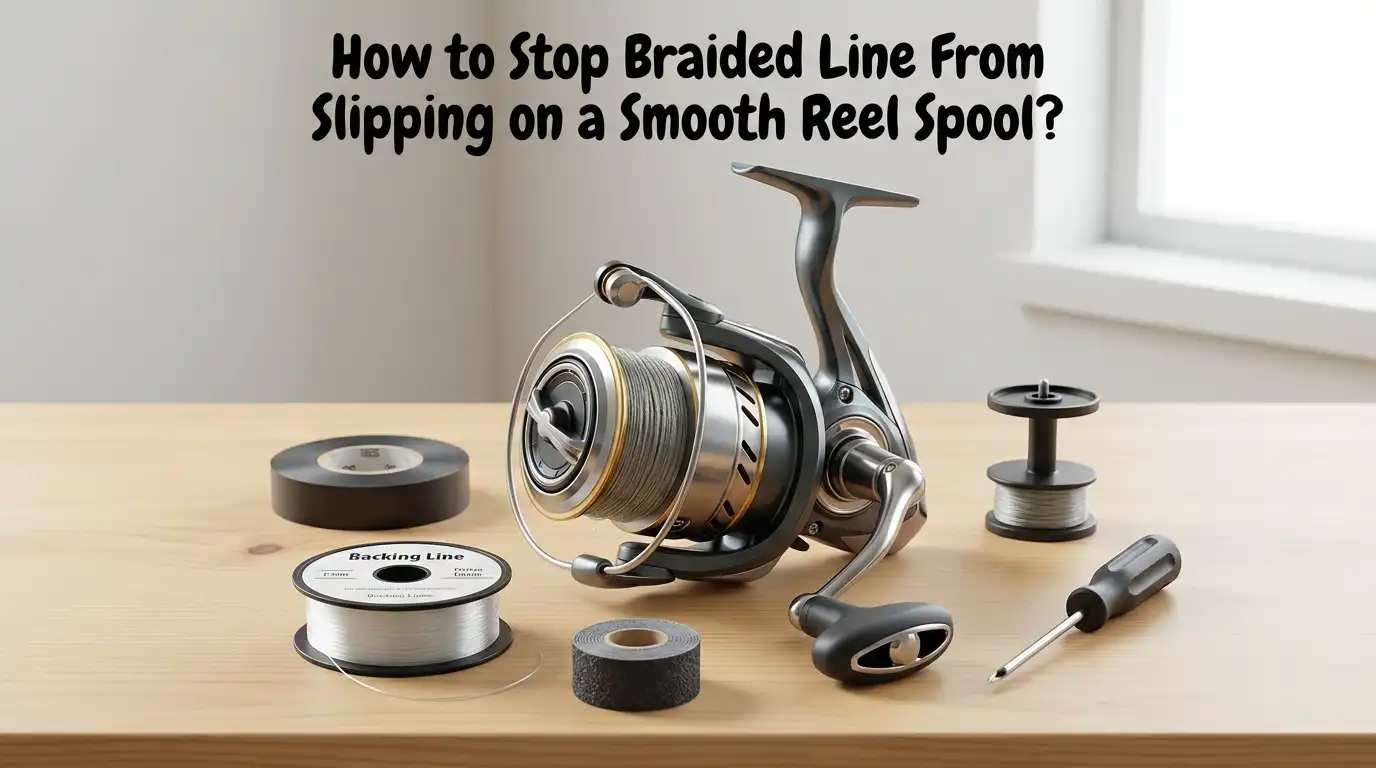
For most anglers, mono backing is the best answer. Monofilament grips the spool better than braid, and the braid grips the mono well once you join them. This gives you a stable base that does not spin under pressure. It also saves braid, which matters on larger reels.
A short layer is often enough. On many spinning reels, a modest amount of mono creates the grip you need. On larger spools, anglers often use more mono so they only need enough braid for real fishing distance. That keeps the setup secure and cost friendly.
Pros: Strong grip, long lasting fix, lower braid cost, easy to respool later.
Cons: Requires one extra knot and a little more setup time.
If you want the safest method for a smooth spool, start with mono. It is simple, proven, and hard to beat for daily use.
Use Tape When You Need a Fast Fix
Tape works because it adds texture to a smooth arbor. A small wrap gives the braid something to bite into. This method is fast and useful if you want a quick repair at home or at the dock. Many anglers use masking tape or water friendly tape for this reason.
Keep it simple. Use a small piece or one to two neat wraps. Do not build a thick lump in the center of the spool. Too much tape can create an uneven base and poor line lay. After the tape goes on, spool the braid under firm tension so it digs in and locks down.
Pros: Fast, cheap, easy, great for quick resets.
Cons: Can shift over time, can get messy, less secure than mono on some setups.
Tape is a solid backup plan. Still, if you want the method with the best long term grip, mono usually wins.
Use a Braid Ready Spool the Right Way
Some reels come with a braid ready spool. These often have a rubber insert or a grip surface built into the arbor. That feature helps stop slip without extra backing. Even so, do not assume it solves every problem. If braid goes on loose, it can still move or dig into itself later.
Read the spool markings and inspect the arbor before you start. If the reel has a true grip band, you can often tie braid straight on and spool it tight. If it only has a label or a shallow texture, test it before fishing hard. A braid ready claim is helpful, but it is not magic.
Pros: Clean setup, fewer materials, less line to manage.
Cons: Not every reel grips equally well, and loose spooling can still cause trouble.
When in doubt, do a quick slip test. A quick test is better than a lost fish.
Tie the Right Knot at the Arbor and at the Join
Your knot choice matters, but it does not work alone. At the arbor, many anglers use an arbor knot for mono backing. That gives the mono a neat start on the spool. Then they connect mono to braid with a double uni, Alberto, or Albright style knot. The key is a compact join that passes tension well.
If you are using tape and braid only, make sure the first wraps go on very tight. The knot should sit flat and stay centered. On the lure end, braid often does best with a knot that holds slick line well, such as a Palomar for terminal tackle. A strong system is better than one strong knot.
Pros: Better security, smoother line lay, fewer failures under load.
Cons: Bad knots create bumps, weak joins, and wasted line.
Take a few extra minutes here. Good knots protect every cast that follows.
Apply Firm Tension While You Spool
Many slip problems begin during the spooling process, not during the fight. If braid goes on loose, the wraps do not pack down. That makes it easier for the line to rotate at the arbor or cut into the lower layers later. Firm tension helps the line bite and settle correctly from the start.
You can hold the line with a cloth, glove, or your fingers with care. Keep pressure steady and consistent as you turn the handle. Let the line pack in tightly and evenly across the spool face. On spinning reels, watch the direction of the supply spool too so twist stays low.
Pros: Better grip, better line lay, fewer wind knots, less dig in.
Cons: Too much pressure can heat your fingers or make setup awkward without a cloth.
Tight line on the way in gives you better control on the way out. This step is one of the biggest difference makers.
Fill the Spool to the Correct Level
Even a secure line job can cast badly if the spool is filled wrong. Too little line cuts casting distance. Too much line causes loops, loose coils, and line control issues. Most setups work best when the line stops about one eighth inch below the spool lip.
That small gap matters. It helps the line peel off cleanly without spilling over the edge. It also keeps the wraps packed in a stable shape. On many spinning reels, this sweet spot improves casting and lowers trouble at the same time. If you use mono backing, plan the backing amount so the final braid fill lands at that level.
Pros: Longer casts, better control, cleaner line flow.
Cons: Needs a little planning, and mistakes mean you may have to respool.
The right fill level finishes the job. A great base still needs a proper top off.
Fix a Reel That Is Already Slipping
If your reel is slipping right now, do not fish through it. Strip the braid off until you reach the arbor. Then decide on your fix. If you want the most secure result, add mono backing first. If you need the fastest repair, add a neat layer of tape. After that, reconnect the braid and spool it back under firm pressure.
If the old braid is still in good shape, you can reuse it. Just keep it clean and avoid kinks while you remove it. Pack it back on tightly and stop at the right fill level. Then test the reel again before you go fishing.
Pros: Saves the braid, fixes the root issue, restores drag control.
Cons: Takes a little time, and sloppy respooling can repeat the same problem.
This is a repair you can do in one sitting. Most slipping reels do not need parts. They need a better base.
Avoid Common Mistakes That Cause Slip Again
A few small mistakes bring the problem back fast. The first is tying braid straight to a fully smooth spool and hoping the knot will hold everything. The second is using too little tension while spooling. The third is adding too much tape, which creates a soft lump instead of a flat grip surface.
Another common mistake is ignoring line twist or loose coils during the first trip. Fresh braid often settles after some use, but obvious loops should not be ignored. Fix them early before they turn into deeper trouble. Also, do not assume a tight drag proves the line job is sound. A slipping braid layer can hide under tension until the moment you need it most.
Good setup is simple, but it rewards care. A few smart habits prevent repeat problems and save time later.
Best Method for Spinning Reels and Baitcasters
On spinning reels, mono backing is often the best all around choice. It grips well, keeps cost down, and helps you hit the right fill level without using too much braid. A common approach is to add enough mono to build the base, then top it with the amount of braid you actually need for fishing.
On baitcasters, both mono backing and a small piece of tape can work well. Baitcasters often pack line under higher pressure, so the setup can hold very well if you start correctly. Still, smooth spools can slip here too, so do not skip the base layer. The reel style changes the setup details, but the goal stays the same.
Best all around choice: mono backing.
Best quick fix: tape.
Best practice: test the spool after spooling, before the trip.
FAQs
Can I tie braid straight to a smooth spool?
You can, but it often slips under pressure. A smooth spool gives braid very little bite. Mono backing or a small tape layer is much safer.
Is tape enough to stop braid from slipping?
Yes, tape can work well as a quick fix. Still, mono backing is usually the stronger long term option for a daily fishing setup.
How much mono backing do I need?
You only need enough to create grip and help fill the spool correctly. On some smaller spinning reels, a short section works fine. On larger reels, anglers often use more mono to save braid.
Why does my braid still feel loose after I fixed the spool?
The line may have been packed on with too little tension. Strip it back and respool it tightly. Also check that the spool is not overfilled.
What is the single best fix for most anglers?
Mono backing plus firm spooling tension is the most dependable fix for most spinning reels and baitcasters.

Hi, I’m Ivy Webb, the passionate angler and creator behind BaitHookVault.com. I spend my days out on the water personally testing and reviewing a wide variety of fishing tools and gear.