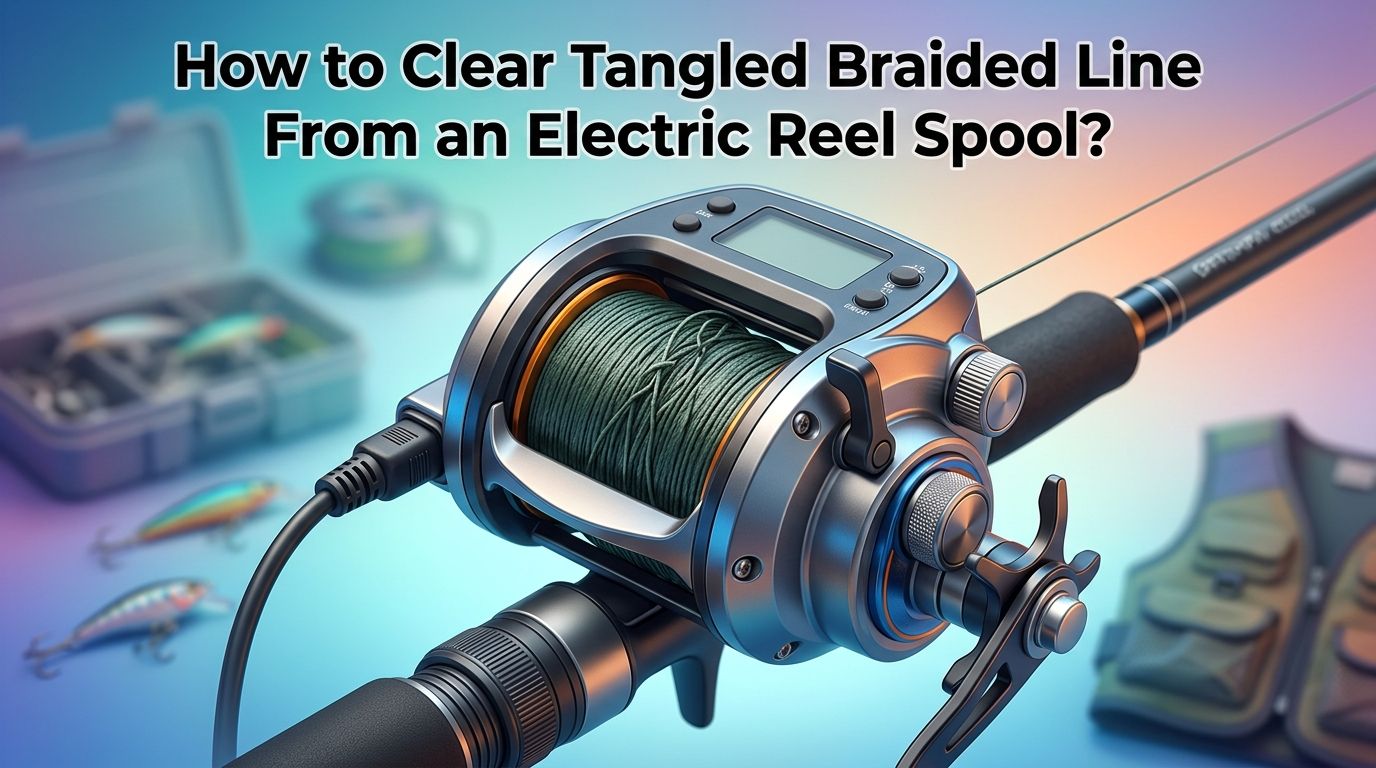
How to Clear Tangled Braided Line From an Electric Reel Spool?
You just hooked into a solid fish, and your electric reel jams. You look down and see a mess of braided line bunched up, looped over itself, and buried deep into the spool. Sound familiar?
Tangled braided line on an electric reel is one of the most frustrating problems any angler can face. Braided line is thin, slippery, and lacks the stretch of monofilament.
These properties make it excellent for sensitivity and strength, but they also make it prone to tangles, wind knots, and dig ins on electric reels.
In a Nutshell
- Tangled braided line on electric reels usually starts with loose wraps on the spool. When braid is not loaded under proper tension, it digs into lower layers during a hard fight or a snag. This creates knots and loops that jam the reel. Always spool braid with firm, consistent pressure of at least 2 to 4 pounds to avoid this issue from the start.
- You can clear most tangles without cutting all the line. Use a combination of patience, a thin pick tool, and careful hand pulling to work out loops and knots. Only cut the damaged section if the braid is frayed or kinked beyond repair. Saving usable line reduces waste and cost.
- Soaking the spool in warm water loosens tight tangles. Warm water softens the braid fibers slightly and relaxes tension in buried loops. This makes it much easier to pull knots free without damaging the line or the reel.
- Prevent future tangles by closing the bail manually, applying drag when spooling, and keeping proper line level on the spool. Overfilling the spool is a common mistake that leads to loose coils flying off during a cast or retrieve. Leave about 1/8 inch of space below the spool lip.
- Wind knots and backlashes on electric reels are often caused by line coming off faster than the lure or weight is pulling it. Adjusting your brake settings, using the correct line weight for your reel, and avoiding casting directly into strong wind will reduce these events significantly.
- Regular line maintenance extends the life of your braid and prevents repeat tangles. Strip your line off the reel every few trips, check for abrasion, and respool with proper tension. This simple habit keeps your electric reel performing at its best.
How to Identify the Type of Tangle on Your Spool
Before you start pulling and cutting, take a moment to look at the tangle. Not all tangles are the same, and the fix depends on the type. A wind knot is a loose overhand knot that forms in the line above the spool. It usually sits near the top layer and is easy to spot.
A dig in is different. This happens when a loop of braid gets pulled under the tightly wound layers on the spool. Dig ins are harder to fix because the line is buried and locked in place by surrounding wraps.
A backlash occurs when the spool spins faster than line is leaving the reel. This creates a bird’s nest of tangled loops on the spool surface. Identifying which type of tangle you have saves time because each one requires a slightly different approach.
How to Remove a Wind Knot From Braided Line
Wind knots are the most common tangle on electric reels. They look like small overhand knots sitting in your line, usually near the top few layers of the spool. To fix a wind knot, stop reeling immediately when you feel resistance or see a loop forming.
Pull line off the spool by hand until you can see the knot clearly. Use a thin pick, a needle, or even a toothpick to loosen the knot. Braided line is very thin, so a fine tool works better than your fingers. Gently push the pick into the center of the knot and wiggle it open.
Pros of this method: Quick, does not require cutting line, and works on the water. Cons: Can be difficult with very thin braid like 10 or 15 pound test. If the knot is tight, you may need to cut just that small section and retie.
How to Fix a Dig In on Your Electric Reel Spool
Dig ins are the most frustrating type of tangle. They happen when a loop of braid slides under the wound line on the spool. The surrounding wraps then lock it in place during the next retrieve or fight. You will notice a dig in when your line suddenly stops coming off the reel or feels stuck.
To fix it, open the reel’s side plate or access the spool directly. Pull line off the spool by hand, layer by layer, until you reach the buried loop. Do not yank hard because this can tighten the dig in further. Once you find the loop, use a thin blade or pick to lift it free.
After removing the loop, you need to respool the line under firm tension. Pinch the braid with a damp cloth as you reel it back on. This ensures tight, even wraps that prevent the problem from returning.
Pros: Fixes the root cause and lets you keep most of your line. Cons: Takes time and may require removing the spool from the reel.
How to Use Warm Water to Loosen Stubborn Tangles
Sometimes braided line tangles are so tight that your fingers and tools alone cannot free them. This is where warm water becomes your best friend. Fill a bowl or bucket with warm tap water. Do not use boiling water because extreme heat can damage some braided line coatings.
Remove the spool from your electric reel if possible. Submerge the tangled section in the warm water for two to three minutes. The heat relaxes the braid fibers and loosens the tension holding the tangle together. After soaking, try working the knot or dig in free with your pick tool.
Pros: Very effective for tight tangles, does not damage the line, and requires no special equipment. Cons: Not practical on a boat unless you have access to warm water. Cold salt water will not give the same results.
How to Safely Cut and Remove Damaged Braided Line
In some cases, the tangle is too severe to save. The braid may be frayed, kinked, or weakened at the tangle point. Fishing with damaged braid is risky because it can snap under load. If the tangle is beyond repair, cutting is the right choice.
Use sharp braided line scissors or a razor blade. Regular scissors often struggle with braid because of its tough fibers. Cut only the damaged section, not the entire spool. Pull out the bad portion and check the remaining line for abrasion or weakness.
Tie the two good ends together with a strong joining knot like the FG knot or double uni knot. These knots are slim enough to pass through your rod guides smoothly. Test the knot with a firm pull before you resume fishing.
Pros: Removes the weak spot and restores full strength. Cons: Shortens your total line length and adds a knot that could catch on guides.
How to Respool Braided Line With Proper Tension
Respooling is critical after clearing a tangle. If you put the line back on loosely, you are setting yourself up for the same problem again. Proper tension is the single most important factor in preventing braided line tangles on electric reels.
Tighten your reel’s drag to a firm setting. Have a helper hold the line spool with a pencil through the center, or use a line spooler tool. As you reel the braid onto the spool, pinch it with a damp cloth or towel. This creates friction and ensures each wrap sits tight against the previous one.
Aim for 2 to 4 pounds of tension while spooling. Every 20 to 30 yards, stop and check that the line is laying flat and even across the spool. Uneven stacking leads to loose spots that can tangle later.
How to Prevent Wind Knots on Your Electric Reel
Prevention is always better than a fix. Wind knots happen when line leaves the spool faster than the weight or lure is pulling it. This creates slack that forms loops, and those loops tighten into knots during the next retrieve.
Close the bail by hand after every cast. Letting the bail snap closed by turning the handle creates a small loop of slack. That slack is often enough to start a wind knot. Also, do not overcast. Feather the line with your finger as the lure or weight flies out to control the speed.
Avoid casting into strong headwinds with light lures. The wind pushes the line back and creates slack. If you must cast into wind, use a heavier weight and make a lower, more controlled cast. Proper line fill level also matters. Leave about 1/8 inch below the spool lip. Overfilled spools throw off coils of loose line that tangle instantly.
How to Choose the Right Braided Line Weight for Your Electric Reel
Using the wrong line weight causes tangles more often than most anglers realize. Very thin braid on a large spool is a recipe for dig ins. The thin line cuts into itself under pressure and buries into lower layers. Conversely, braid that is too heavy for your reel reduces capacity and casting distance.
Match your braided line weight to the reel manufacturer’s recommendations. Most electric reels list a range of suitable line weights in the manual or on the reel body. For deep drop fishing, 50 to 80 pound braid is common. For lighter applications, 30 to 50 pound braid works well.
If you prefer thinner braid for sensitivity, add a monofilament backing layer first. This gives the braid a grippy base to hold onto and prevents it from slipping and digging in under load.
How to Maintain Your Electric Reel to Reduce Line Tangles
A well maintained electric reel is far less likely to produce tangles. Dirty or corroded line guides create friction that causes uneven line lay. Salt buildup on the spool can rough up the surface and catch braid fibers, creating loops.
Rinse your electric reel with fresh water after every saltwater trip. Pay special attention to the spool, level wind mechanism, and line roller. Dry the reel with a soft cloth and apply a light reel oil to moving parts.
Check the level wind for smooth, consistent travel. If it stutters or sticks, the line will bunch up on one side of the spool. This creates an uneven surface that promotes tangles. A quick service of the level wind mechanism once or twice a season keeps everything running smoothly.
How to Strip and Inspect Braided Line for Hidden Damage
Braided line does not show wear as obviously as monofilament. It does not curl or develop visible memory. But it still degrades over time, especially in the first 20 to 30 yards closest to your terminal tackle. Abrasion from rocks, structure, and fish teeth weakens the fibers gradually.
Every few trips, strip the first 50 yards of braid off your reel and run it between your fingers. Feel for rough spots, flat sections, or areas where the braid feels thinner. These are signs of wear. Cut off any damaged section.
You can also reverse your line by stripping it all off and respooling it in the opposite direction. This puts the fresh, unused braid at the working end and extends the total life of your spool. This is a cost effective trick that experienced deep drop anglers use regularly.
How to Store Your Electric Reel to Prevent Line Issues
Storage matters more than most anglers think. Braided line can develop problems while your reel sits in a garage, tackle box, or rod locker for weeks between trips. UV exposure weakens braid over time, reducing its strength and making it more prone to fraying and tangling.
Store your electric reel in a cool, dark place with a reel cover or inside a padded case. Loosen the drag before storage to relieve tension on the line and internal components. If the reel will sit for more than a month, consider backing off the drag completely.
Avoid storing rods and reels in direct sunlight or hot vehicles. Heat and UV light degrade braid coatings and can cause the line to become stiff and brittle. A few minutes of proper storage habits will save you from tangles on your next trip.
How to Handle a Tangle While You Are on the Water
You are offshore, the fish are biting, and your electric reel jams with a tangle. Panic is tempting, but staying calm and working through the problem step by step will get you back in the action faster.
First, stop the reel motor immediately. Continuing to reel with a tangle will make it worse. Open the drag or free spool to release tension. Identify the type of tangle by looking at the spool carefully.
If it is a wind knot near the surface, use your pick tool or a hook point to open it. If it is a dig in, you may need to pull line off by hand until you reach the buried loop. Work slowly and steadily. If you cannot fix it within a few minutes, cut the damaged section and retie. Keep a small tool kit with scissors, a pick, and spare leader material in your tackle bag for exactly these situations.
How often should I respool braided line on an electric reel?
Most anglers should respool their braided line once or twice per year with regular use. If you fish frequently in harsh conditions like rocky bottom or around sharp structure, check and replace the working end of your braid every few months. Braided line lasts longer than monofilament, but it still wears out and loses strength over time.
Can I use monofilament backing under braid to prevent tangles?
Yes, monofilament backing is highly recommended under braided line on electric reels. A base layer of monofilament gives the braid something to grip. Without it, braid can spin freely on the smooth spool surface, causing the entire line to slip and dig in under heavy loads. Use enough mono to fill about one third of the spool before adding braid on top.
Why does my braided line keep digging into the spool?
The most common cause is insufficient tension during spooling. When braid is loaded loosely, a hard hookset or a big fish pulling drag causes the line to cut down into the softer layers below. Always spool braid under firm, steady tension. Using too thin a line for your reel size also increases dig in risk. Match your line weight to your reel’s specifications.
What tools do I need to fix a tangled electric reel?
You need sharp braided line scissors, a fine pick or needle tool, and a damp cloth for applying tension while respooling. A small flashlight helps you see tangles clearly in low light conditions. Some anglers also keep a lighter handy to carefully seal knot ends after cutting and retying. These items fit easily in a small pouch in your tackle bag.
Is it better to cut the tangle out or try to untangle it?
It depends on the severity. Small wind knots and surface tangles are usually worth untangling because you save line and avoid adding knots. Deep dig ins or bird’s nests with frayed or kinked line should be cut out. Fishing with weakened braid risks losing fish and tackle. If you spend more than five minutes on a tangle without progress, cutting the damaged section is usually the smarter choice.

Hi, I’m Ivy Webb, the passionate angler and creator behind BaitHookVault.com. I spend my days out on the water personally testing and reviewing a wide variety of fishing tools and gear.