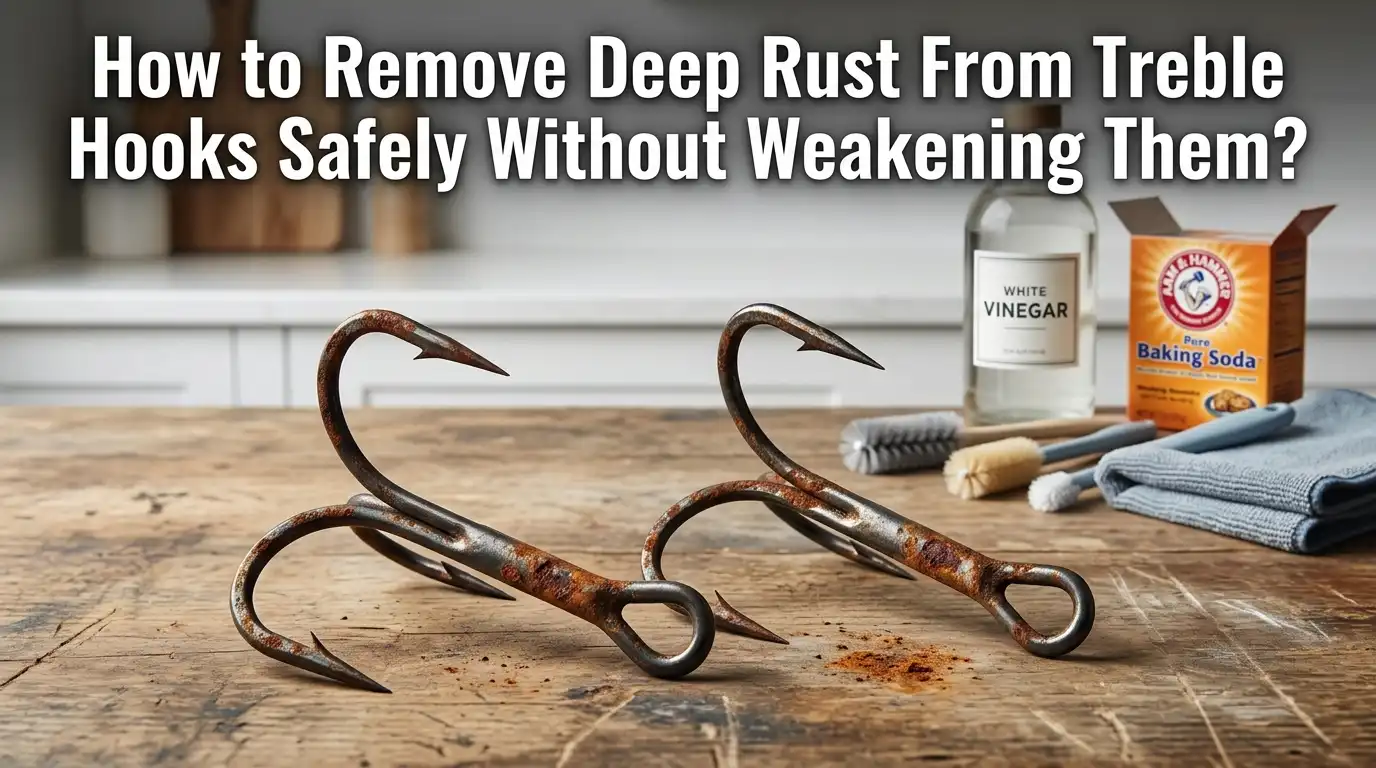
How to Remove Deep Rust From Treble Hooks Safely Without Weakening Them?
Rust on your favorite treble hooks feels like a small disaster. You open your tackle box, and those once shiny points look orange, pitted, and tired.
Throwing them away seems wasteful, but using them as is can cost you a fish or even break mid fight. The good news is that you can rescue most rusted treble hooks at home with simple tools.
The trick lies in choosing a method that lifts the rust without eating into the steel underneath. This guide walks you through every safe option, from gentle soaks to mechanical scrubbing, so your hooks stay strong and sharp.
In a Nutshell
- White vinegar is your best friend for moderate rust. A soak of 12 to 24 hours removes most rust without seriously thinning the metal, but never leave hooks in acid longer than needed.
- Always neutralize acid with baking soda water after any vinegar, lemon, or citric acid soak. Skipping this step lets acid keep working and weakens the hook over time.
- Mechanical methods like brass brushes, fine steel wool, or a copper penny edge work best for light surface rust. They are the safest option because they remove rust without chemical risk.
- Deep pitting cannot be reversed. If the hook shaft looks thin, the point crumbles, or the bend feels brittle, retire that hook because it can fail on a strong fish.
- Dry, oil, and store correctly after cleaning. A light coat of reel oil or corrosion inhibitor and a desiccant pack in your tackle box keep rust from coming back fast.
- Sharpen and stress test every restored hook before you tie it on. A quick bend test and a fingernail sharpness check confirm the hook is still trustworthy.
Why Rust Forms on Treble Hooks So Quickly
Treble hooks rust fast because of three things working together. They are made from high carbon steel, which holds a sharp point but reacts with moisture quickly.
They get wet during every cast, dunk, and fish landing. And they often sit packed tightly with other damp gear inside a closed tackle tray.
Saltwater speeds things up dramatically because salt ions act like a catalyst for oxidation. Even freshwater hooks can rust in days if stored wet. The protective coating on most hooks, whether bronze, nickel, or tin, eventually wears off from fish teeth, lure rattles, or sharpening.
Once that coating is gone, bare steel meets oxygen and water, and rust spreads. Understanding this helps you fight rust at its source instead of just treating the symptoms.
Knowing When a Rusty Hook Is Worth Saving
Not every rusty hook deserves a rescue mission. Before you spend time cleaning, look closely at the hook under good light.
Light surface rust that looks like an orange film is almost always removable, and the hook stays strong. Medium rust with rough texture but no visible pitting is usually fixable too.
Deep rust shows different signs. Look for pitting, which appears as tiny craters in the steel. Check the points and barbs carefully because these thin spots fail first.
Flaking metal, a brittle feel when you flex the hook gently, or a bent shank that does not spring back all mean the hook has lost structural strength. If two of three prongs on a treble look pitted, recycling that hook is safer than fishing with it. Saving a quarter is not worth losing a trophy fish.
Gathering the Right Tools Before You Start
Working smart starts with the right supplies on your workbench. You do not need expensive gear, just basic items most homes already have.
Gather white vinegar, baking soda, a soft bristle toothbrush, a brass wire brush, fine grade steel wool, paper towels, and a small glass or plastic container.
Add a pair of needle nose pliers for handling hooks safely. Wear cheap nitrile gloves because acid soaks can irritate skin. Grab eye protection too, since flicking a rusty hook can sting. A small magnet helps gather loose hooks.
A hook sharpener or fine diamond file finishes the job by restoring the points. Set up near a sink with good lighting. Place a towel down so hooks do not roll off. Preparation prevents mistakes that damage hooks or hurt fingers during cleaning.
Method 1: The Classic White Vinegar Soak
White vinegar is the go to method for most anglers because it works gently and costs almost nothing. The acetic acid in vinegar dissolves iron oxide without aggressively attacking the underlying steel.
Pour enough white vinegar into a glass jar to fully cover your hooks. Drop the hooks in and let them soak for 12 to 24 hours depending on rust depth.
After soaking, scrub gently with a toothbrush. Then rinse in a baking soda water bath, mixing one tablespoon of baking soda per cup of warm water. This neutralizes leftover acid that could continue weakening the metal. Pat dry immediately with paper towels.
Pros: Cheap, safe, gentle on steel, easy to find. Cons: Slow compared to stronger acids, can dull bronze coatings, requires neutralizing afterward, and longer than 24 hours risks pitting healthy steel.
Method 2: Baking Soda Paste for Light to Medium Rust
Baking soda works as a mild abrasive rather than a chemical rust remover. It is perfect when you want zero risk of acid damage. Mix baking soda with just enough water to form a thick paste, like toothpaste consistency. Coat each rusty hook generously and let it sit for 30 to 60 minutes.
Then take your toothbrush or a soft cloth and scrub each prong in small circles. The fine grit lifts oxidation without scratching deep into the steel. Rinse with clean water and dry completely. For stubborn spots, repeat once or twice.
Pros: No acid risk at all, food safe ingredients, will not affect hook temper, kind to bronze finishes. Cons: Works mainly on surface rust, struggles with deep pitting, requires more scrubbing effort, and may not fully restore badly oxidized hooks. This method shines for regular maintenance between trips.
Method 3: Lemon Juice and Salt for Natural Rust Removal
Lemon juice contains citric acid, a slightly milder but still effective rust eater. Adding salt creates a gentle abrasive action that helps lift oxidation. Squeeze fresh lemon juice into a small bowl and sprinkle in a tablespoon of table salt. Stir until partly dissolved.
Submerge your treble hooks in the mixture for two to four hours. You will see the rust start to loosen. Use a toothbrush to scrub the points and bends. Neutralize with baking soda water afterward, just like with vinegar.
Pros: All natural, smells better than vinegar, gentle on metal, kitchen ingredients only. Cons: More expensive than vinegar if you buy lemons just for this, salt residue must be rinsed thoroughly, works slower on deep rust, and citric acid can still attack steel if left too long. Never exceed six hours in this solution because the salt accelerates corrosion past that point.
Method 4: Mechanical Removal With Brass Brush and Steel Wool
When you want zero chemicals involved, mechanical removal is the safest path. A brass wire brush is softer than steel, so it removes rust without gouging the hook. Hold the hook firmly with pliers and brush along the shaft in one direction. Work slowly so you do not snap a thin point.
Fine grade 0000 steel wool polishes the metal back to a clean finish. For tight spots between the three prongs of a treble, fold the steel wool into a point. The edge of a copper penny works surprisingly well as a scraper for small areas.
Pros: No acid exposure, no waiting, full control over pressure, preserves hook temper completely. *Cons: Takes more time per hook, hard to reach barbs and inside curves, can leave fine scratches that invite future rust, and physical scrubbing tires your hands during big batches.
Method 5: Citric Acid Powder for Stubborn Deep Rust
Citric acid powder, sold in baking or canning sections, is more concentrated than lemon juice. It tackles deeper rust faster than vinegar. Mix three tablespoons of citric acid powder into two cups of warm water and stir until dissolved. Drop in your hooks.
Check progress every 30 minutes. Most hooks finish in one to three hours, far faster than vinegar. Once the orange color is gone, rinse in plain water, then in baking soda water. Dry immediately with a paper towel and apply light oil.
Pros: Faster than vinegar, food safe powder, stronger on deep rust, less smell. Cons: Stronger acid means more risk of hydrogen embrittlement if left soaking too long, costs more than vinegar, requires careful timing, and overexposure can pit healthy steel. Never leave hooks in citric acid overnight because extended exposure to stronger acids weakens high carbon steel significantly.
Method 6: Electrolysis for Serious Rust on Bigger Hooks
Electrolysis sounds technical but works beautifully on heavily rusted hooks. You need a small DC power source like an old phone charger, a piece of sacrificial steel like a rebar scrap, washing soda, and water. Mix one tablespoon of washing soda per gallon of water in a plastic container.
Clip the positive lead to the sacrificial steel and the negative lead to your hooks. Submerge both without touching each other. Run the current for 30 to 60 minutes. Rust transfers from your hook to the sacrificial piece.
Pros: Removes rust without removing any healthy metal, preserves original hook profile, almost no chance of weakening steel, great for valuable or vintage hooks. Cons: Setup takes time, requires electrical know how, produces hydrogen gas so ventilation is essential, and overkill for small jobs. Best reserved for batches of larger treble hooks.
Drying, Oiling, and Sharpening After Rust Removal
The job is not done when the rust comes off. Wet hooks rust again within hours, so drying matters as much as cleaning. Pat each hook with a paper towel, then place them on a dry cloth in a sunny spot or near a fan. Let them air dry for at least 30 minutes.
Apply a thin coat of light oil. Reel oil, mineral oil, or a corrosion inhibitor spray all work well. Avoid heavy greases that attract dirt. Wipe off excess so the hook does not feel slippery in your fingers.
Finally, sharpen each point with a fine diamond file or a dedicated hook sharpener. Test sharpness by dragging the point lightly across your fingernail. It should catch and bite, not slide. A restored hook needs a fresh point because the original coating is gone.
Testing Restored Hooks Before You Use Them
A cleaned hook looks great but might still be weak inside. Run a quick stress test before tying it to your line. Hold the hook eye with pliers and the bend with another pair. Apply gentle outward pressure, simulating a hookset. A healthy hook flexes slightly and springs back. A weakened hook bends easily or stays bent.
Check each of the three prongs separately because rust often attacks unevenly. Look at the points under a magnifier for hairline cracks or thinning. Run the prong along your thumbnail. A clean catch means a sharp, solid point.
If any prong feels questionable, retire that treble. Replacing a single hook costs less than losing a fish of a lifetime. Anglers who pressure test rebuilt hooks rarely lose fish to gear failure, even on big trophies.
Preventing Rust From Returning in the First Place
Prevention beats restoration every time. Always dry your lures and hooks before closing your tackle box at the end of a trip. Open your trays at home and let everything air out for a day. Moisture trapped inside a sealed box rusts hooks within a week, especially after saltwater use.
Drop a few silica gel desiccant packs into each tray. Save the packs that come with shoes, electronics, or vitamins. Some anglers tuck a piece of chalk or a few uncooked rice grains in each compartment to absorb humidity.
For saltwater gear, rinse with fresh water first. A light spray of corrosion inhibitor on lure hooks before storage adds another layer of protection. Store tackle boxes indoors with stable temperature, not in a hot garage or damp basement where condensation forms.
When to Replace a Treble Hook Instead of Restoring It
Some hooks are simply done. Knowing when to let go saves time and protects you on the water. Replace any hook with deep pits visible to the naked eye because pits weaken the cross section permanently. Discard hooks where the point has broken off or the barb is missing.
If the metal flexes too easily and stays bent, the steel has lost temper from corrosion or over soaking in acid. A grayish black color instead of bright silver after cleaning often signals deeper damage. Hooks on cherished lures can be swapped out by opening the split ring with pliers and installing fresh ones of the same size and weight.
Buying replacement trebles costs little. Losing a five pound bass or a saltwater inshore species because a hook snapped costs far more in disappointment. Trust your gut. If a hook feels off, replace it.
Frequently Asked Questions
How long should I soak treble hooks in vinegar to remove deep rust?
For deep rust, soak for 12 to 24 hours in plain white vinegar. Check progress at the halfway mark. Never leave hooks in acid longer than 24 hours because extended exposure can weaken the steel and create pitting on healthy metal. Always finish with a baking soda water rinse to stop the acid action.
Does vinegar weaken fishing hooks over time?
Short soaks of less than a day do not noticeably weaken quality hooks. Long soaks of 48 hours or more can cause hydrogen embrittlement in high carbon steel, making hooks brittle and prone to snapping. Following the time limits and neutralizing with baking soda after every soak keeps your hooks strong.
Can I use Coca Cola to remove rust from hooks?
Yes, cola contains phosphoric acid that dissolves light rust. Soak hooks for six to twelve hours, then scrub with a toothbrush. It works similarly to vinegar but leaves a sticky residue, so rinse thoroughly. Cola is handy in a pinch but not as efficient as dedicated rust removers for deep rust.
Should I sharpen treble hooks after removing rust?
Absolutely. Rust removal strips the original factory coating and may dull the points slightly. Use a fine diamond file or a dedicated hook sharpener to restore each of the three prongs. Test sharpness on your thumbnail before fishing. A sharp hook hooks fish, while a dull restored hook just looks pretty.
How do I store treble hooks to stop rust forever?
Dry hooks completely before storage. Add silica gel desiccant packs to each tackle tray. Store boxes indoors with stable temperature and humidity. Apply a light coat of corrosion inhibitor on saltwater hooks. Open your trays after every trip to let trapped moisture escape, especially during humid summer months.
Is electrolysis safe for small treble hooks?
Yes, electrolysis is one of the safest methods for fragile or valuable hooks because it does not remove any healthy steel. The process needs basic electrical setup and good ventilation since hydrogen gas forms during the reaction. It works best for batches of bigger trebles rather than tiny panfish hooks.
Can I reuse a hook that had deep pitting after cleaning?
Generally no. Deep pits permanently reduce hook strength because the steel cross section is thinner at those points. Even if the hook looks clean and sharp, pits can fail under load when a strong fish pulls. Replace pitted hooks with fresh ones of the same size to keep your lures fishing safely.

Hi, I’m Ivy Webb, the passionate angler and creator behind BaitHookVault.com. I spend my days out on the water personally testing and reviewing a wide variety of fishing tools and gear.