Why Is My Monofilament Line So Coiled And Stiff?
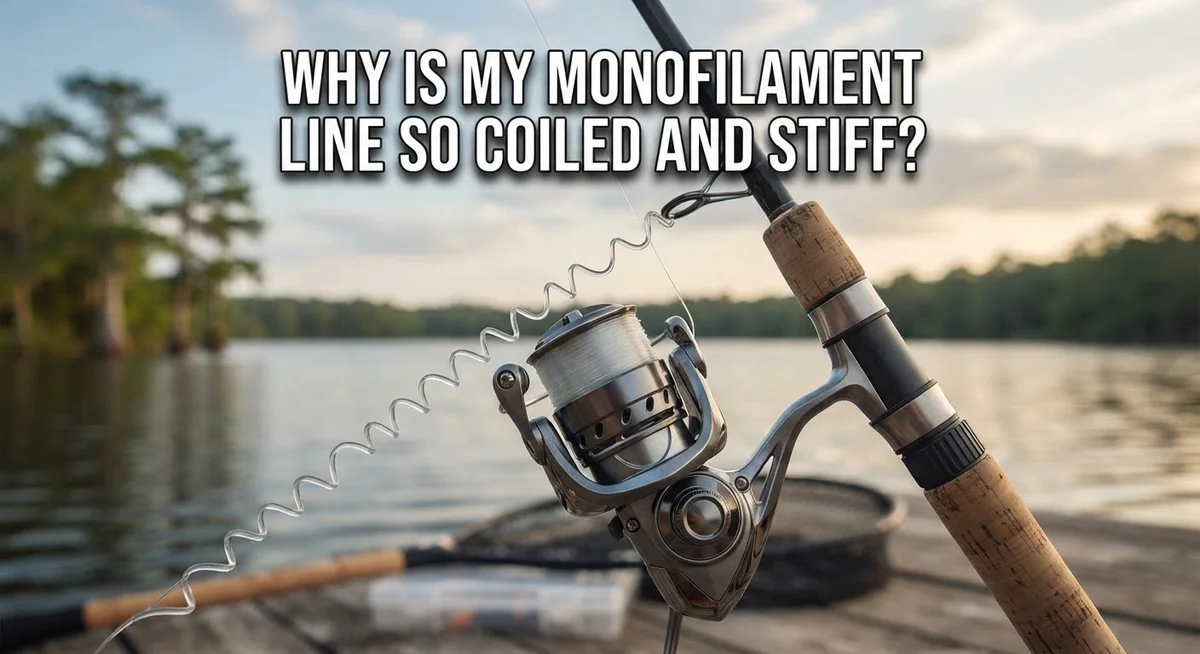
Have you ever opened your tackle box and found your monofilament line curled up like a spring? You are not alone.
This is one of the most common problems anglers face. It can turn a fun day of fishing into a frustrating one.
Coiled and stiff line does not just look bad. It affects how your bait moves in the water. It causes annoying tangles. It even reduces how far and accurate your casts can be.
In a Nutshell
- Line memory is normal. Your mono simply holds the shape of its spool. This is not a defect. It is just how monofilament behaves.
- Storage matters. Small spools create tighter coils. Large arbor spools help your line stay straighter and more relaxed.
- Stretching helps a lot. Tie your line to something sturdy and pull gently. This simple step removes coils before you cast.
- Cold weather makes it worse. Low temperatures stiffen mono even more. Warm your line slightly before fishing in cold conditions.
- Guides and twist play a role. Stuck line guides or twisted line from your reel can cause extra coiling. Check your gear often.
- Diameter affects performance. Thinner line coils less than thick line. Choosing the right diameter keeps your line smoother overall.
What Causes Monofilament Line to Coil and Stiffen
Monofilament line coils and stiffens for a few clear reasons. The main culprit is line memory. Your mono absorbs the shape of the spool it sits on for weeks or months. Once you unspool it, the line wants to return to that coiled form.
Temperature plays a big role too. Cold water and cold air make mono stiffer and more prone to coiling. Heat actually helps relax the line, which is why stretching works so well.
Your reel and line guides also matter more than you might think. If your guides do not rotate freely, they create friction and twist. This twist travels down your line and causes coiling. Check that all guides spin without resistance before you fish.
The thickness of your line affects coiling too. Thicker monofilament holds coils more stubbornly than thin line. A large diameter line remembers its spool shape longer and resists straightening.
Your casting technique and lure choice add to the problem. Every cast and lure rotation can introduce twist into your line. This twist accumulates and causes visible coils over time.
Storage method matters as well. Small spools create tight, aggressive coils. Large arbor spools store line in gentler curves that relax faster.
Finally, oversized butt sections (the thick part of tapered line) trap coils no matter what you do. These sections resist straightening because of their stiffness and diameter.
Understanding these causes helps you prevent problems before they start. Line memory is normal and expected. Most coiling issues are fixable with simple stretching and proper storage. Severe cases may require replacing the line entirely.
Understanding Line Memory and How It Forms
Monofilament line develops coils and stiffness because of a property called line memory. Your mono absorbs the shape of whatever spool it winds around. When you store line on a small or tight spool, the fibers lock into that curved form. Once you remove the line, it tries to return to that coiled shape.
This happens at the molecular level. Monofilament is a plastic polymer. Heat and pressure during manufacturing and storage cause the material to set into specific shapes. The line literally remembers this form and resists change.
Temperature makes memory worse. Cold weather stiffens monofilament even more. If you fish in winter or store your tackle in an unheated garage, expect extra coiling and rigidity. Warm conditions help relax the fibers slightly, but the memory remains.
Your reel contributes too. If your line guides do not spin freely, friction creates twist as you cast and retrieve. This twist compounds coiling problems. A stuck guide forces line to wrap unevenly, making coils tighter and more stubborn.
The diameter of your line matters as well. Thicker line holds coils more aggressively than thin line. A heavy butt section on tapered line traps coils regardless of how much you stretch it. The thicker material simply has more memory.
Casting technique and lure weight add extra twist. Heavy lures and repeated casting motions introduce spiral tension into your line. This tension works against the line and creates additional stiffness.
Understanding these causes helps you take action. Line memory is normal and expected. It does not mean your line is ruined. Most coiling and stiffness can be reduced or eliminated with proper storage, maintenance, and stretching before you fish.
How Storage Spool Size Affects Coiling
Spool size directly controls how tightly your monofilament coils. Small spools force your line into tight, compact circles. When you unspool that line, it remembers every curve and wants to spring back into coils.
Large arbor spools spread your line across a wider surface. This creates gentler curves that your mono remembers less intensely. The line stores with looser, more forgiving bends. When you cast, it unwinds much more smoothly without fighting back.
The diameter of your spool matters just as much as its width. A spool that is too narrow concentrates all your line into a tight bundle. Each layer presses down on the layers below, creating permanent crimps. A wider spool distributes the pressure evenly across the entire line length.
Think of it this way: wrapping line around a pencil creates tight coils. Wrapping the same line around a baseball creates gentle waves. Your line behaves the same way.
When you store mono on small spools for weeks or months, the memory sets in deeper. The longer it sits in that coiled position, the harder it becomes to straighten. This is why storage spool choice matters more than most anglers realize.
Professional anglers often transfer their line to larger spools before storing it for the season. This simple step reduces coiling by up to 50 percent. You do not need expensive equipment. Any large, smooth spool works fine.
If you currently use small spools, switching to larger ones will show results immediately. Your line will cast better, tangle less, and feel much more manageable in your hands. This single change prevents most coiling problems before they start.
The Role of Temperature and Line Diameter
Temperature and line diameter work together to control how much your monofilament coils and stiffens. Understanding this relationship helps you manage your line better.
Cold temperatures make coiling worse. When monofilament gets cold, the plastic becomes more rigid and holds its spool shape even tighter. If you fish in winter or store line in an unheated garage, expect extra stiffness. Warm temperatures help the line relax, which is why anglers often soak their line in warm water before fishing.
The diameter of your line plays a huge role too. Thinner monofilament resists coiling better than thick line. A 4 pound test line will have fewer coils than 20 pound test stored on the same spool. Thicker line has more surface area and develops stronger memory faster. This is one reason why many anglers choose lighter diameter line when possible.
Here’s the practical part: combine these factors wisely. If you fish in cold climates, use thinner line to reduce coiling problems. If you prefer thicker line for strength, expect more coiling and plan accordingly.
Stretch your line before casting, especially in cold weather. This simple step helps release the coils that formed during storage. Just tie your line to something stationary and pull gently for several seconds.
Line diameter also affects how well your line casts. Thinner line flows through guides more smoothly and carries casting loops better. Thicker line may collapse sooner because it holds coils regardless of stretching. If coiling frustrates you constantly, switching to a lighter diameter might solve the problem completely.
Step-by-Step: How to Stretch and Straighten Coiled Line
Straightening coiled monofilament takes just a few minutes and works best when done before you fish.
Start by tying one end of your line to a stationary object. A fence post, tree, or boat cleat works well. Make sure the knot is secure so the line won’t slip during stretching.
Walk backward slowly while holding the line in your hand. Keep steady tension as you move away from the anchor point. This stretches the monofilament and helps release the coils that formed on the spool. Walk about 20 to 30 feet if you have the space.
Once you’ve stretched the line, hold it taut for a few seconds. Then walk back toward the anchor point while maintaining light pressure. This second pass helps set the line straighter.
For stubborn coils, repeat the process two or three times. Each pass removes more memory from the line. You’ll notice the coils becoming less pronounced with every stretch.
Hot water helps too. Fill a bucket with warm (not boiling) water and soak your line for five to ten minutes while it’s still on the reel. The warmth softens the monofilament slightly and makes stretching more effective. After soaking, stretch the line using the same method described above.
Let your line rest for a few hours after stretching. Monofilament needs time to settle into its new shape. Avoid casting immediately after stretching, as the line still holds some memory.
Store your straightened line on a larger spool between fishing trips. This prevents new coils from forming and keeps your line ready for the next outing.
Maintaining Line Guides and Reels to Prevent Twist
Your line guides and reel directly control whether twist builds up in your monofilament. When guides stick or don’t spin freely, they trap the line and create permanent coils.
Check each guide on your rod by running your fingernail across it. You should feel smooth contact with no rough spots or burrs. A stuck guide stops the line from rotating naturally as it leaves the spool. This trapped rotation transfers into your monofilament as twist, which then shows up as coiling when you cast.
Clean your guides regularly with a soft cloth and warm water. Debris like sand, salt, or dried algae builds up inside guides and causes friction. Wipe from the guide closest to the reel toward the tip. Pay extra attention to the first guide, which handles the most line pressure.
Your reel’s bail also matters. If the bail doesn’t open and close smoothly, it creates drag on the line. This drag forces twist into your mono. Spin the bail by hand. It should move freely without sticking or making grinding sounds.
Check your reel’s drag system too. A drag that’s too tight causes the line to twist as it pulls against resistance. Set your drag so line pulls out with steady pressure but doesn’t slip suddenly.
Replace any guide that has visible damage like cracks or sharp edges. Even tiny imperfections catch your line and create friction points. A damaged guide ruins your casting distance and introduces twist faster than anything else.
These maintenance steps take fifteen minutes but prevent hours of frustration on the water. Clean guides and smooth reels keep your line straight and your casts accurate.
Common Mistakes That Make Coiling Worse
Your monofilament coils and stiffens because of mistakes you’re making right now. Understanding these errors helps you fix the problem before it ruins your fishing day.
Using oversized butt sections is the biggest culprit. A thick butt section holds coils regardless of how much you stretch your line. The plastic memory stays locked in place. Even after stretching, the coils return within minutes. Switch to a thinner butt section that matches your rod’s requirements.
Storing on small spools creates permanent damage to your line. Small spools force the monofilament into tight spirals. Every time you cast, your line remembers that shape. The coils become harder to remove with each fishing trip. Larger spools distribute the line more evenly and reduce memory formation.
Ignoring line twist from your reel makes coiling exponentially worse. When your reel’s line roller doesn’t spin freely, twist builds up with every cast. This twist combines with spool memory to create stubborn coils. Check that your bail rotates smoothly without resistance.
Operator error during casting introduces unwanted twist into your line. Improper casting technique or using lures that spin too much adds twist. This twist interacts with existing coils to make your line even stiffer.
Neglecting regular maintenance allows small problems to become big ones. Dirty guides and stuck components force your line to twist as it moves through them. The added twist worsens coiling dramatically.
These mistakes compound each other. Fix one mistake and you’ll see immediate improvement. Address all of them and your monofilament will cast smoothly and perform reliably on every outing.
Troubleshooting Persistent Stiffness and Sagging
Monofilament line develops persistent stiffness and sagging because of how it responds to storage and use. The line retains the shape of its spool, which creates coils that don’t disappear on their own. This memory effect gets worse over time, especially when you store line on small spools or in cold conditions.
Stiffness happens when your line sits coiled for extended periods. The plastic material hardens into that shape and resists straightening. Sagging occurs when the coils finally relax but the line doesn’t return to its original state. You’ll notice loops forming during casting and tangles developing more frequently.
Temperature plays a significant role in how stiff your line becomes. Cold weather makes monofilament even more rigid and difficult to work with. Warm environments help the material stay more flexible, though this doesn’t solve the underlying memory problem.
One key factor many anglers overlook involves your reel setup. If your line guides don’t rotate freely or if your reel’s drag system is too tight, you’re adding extra twist into the line. This twist combines with the existing coils and makes stiffness much worse. Check that all guides spin smoothly and your drag releases line without resistance.
The thickness of your line matters too. Thicker monofilament holds coils more stubbornly than thinner line. If you’re using an oversized butt section, expect persistent stiffness regardless of how much you stretch it. The heavier material simply won’t cooperate the way thinner sections do.
Replace severely damaged line rather than spending hours trying to fix it. If coils remain after multiple stretching attempts, your line has likely suffered permanent damage and won’t perform reliably on the water.
Final Thoughts
Coiled and stiff monofilament is a normal part of fishing. Your line remembers the shape of its spool. This memory causes most of the problems you see on the water.
The good news is simple. You can fix this issue with a few easy steps. Stretching your line and storing it properly makes a real difference.
Small changes create big results. Use a large arbor spool when you store your line. Check your guides often. Keep your reel’s drag system in good shape.
Cold weather makes coiling worse. Try to store your line somewhere warm between trips. This simple step protects your line from extra stiffness.
Line diameter matters more than most anglers think. Thinner line coils less than thick line. Pick the right diameter for your fishing style to avoid extra hassle.
Thicker butt sections hold their coiled shape no matter what you do. Stretching helps some lines but not these. Sometimes replacing the line is your best option.
Watch for warning signs. If your line feels too stiff or keeps sagging after you try to fix it, this may mean it’s time for a fresh spool. Old, damaged line hurts your casting and your catch rate.
Remember that a little care goes a long way. Rotate your storage spools. Inspect your guides. Stretch your line before big trips.
Fishing should feel fun, not frustrating. When your line behaves the way it should, your casts fly further and your lures move naturally.
Take these steps seriously and your monofilament will serve you well. Good habits prevent most coiling problems before they start. Your next fishing trip will feel smoother and more enjoyable.
Frequently Asked Questions
Why does my monofilament line coil right out of the box?
Monofilament has “memory.” This means it remembers the shape of the spool it was wound on. When you remove the line from storage, it tries to return to that coiled shape. This is completely normal and happens to every angler.
The coiling gets worse if you store your line on small spools. Large spools create gentler curves. Cold temperatures also make the problem worse because the line becomes less flexible.
Can I fix coiled line, or do I need to replace it?
You can fix most coiling problems with stretching. Tie one end of your line to a stationary object like a fence post or tree. Pull the other end firmly and hold the tension for several seconds. Repeat this a few times before you fish.
This stretching helps the line relax and lose its memory. If your line is severely kinked or damaged, replacement is your best option. Trying to fish with heavily coiled line wastes your time and ruins your experience.
Does line diameter affect how much it coils?
Yes, it does. Thinner monofilament coils less than thick line. However, thicker butt sections hold their coiled shape no matter what you do. If you use a very thick leader section, expect some stiffness to remain.
Choose a line diameter that matches your rod and target fish. Lighter line means fewer coiling headaches during storage and use.
What role does my reel play in line stiffness?
Your reel can actually make coiling worse. If your line guides don’t rotate freely, they create extra twist in your line. Check that all guides spin smoothly before each fishing trip.
Stuck guides force your line to wrap around itself. This introduces permanent twist that stretching alone cannot fix. Clean and maintain your guides regularly.

Hi, I’m Ivy Webb, the passionate angler and creator behind BaitHookVault.com. I spend my days out on the water personally testing and reviewing a wide variety of fishing tools and gear.