Beaver Dam Original Tip Up Review 2026: Still Worth It?
Ice fishing gear changes fast. Plastic bases get cheaper. Electronics get smarter. Yet one wooden stick keeps showing up on frozen lakes across Wisconsin, Minnesota, and Michigan every single winter.
The Beaver Dam Original Tip Up debuted more than 50 years ago, and anglers still buy it at four times the price of a budget model. That fact deserves an honest look.
This review covers what the Beaver Dam does right, what it does poorly, and whether the price tag makes sense for you in 2026.
In A Nutshell:
- The spool is the main selling point. Beaver Dam uses an underwater spool with Smooth Spool Technology and freezeproof grease. The spool turns with almost no resistance, which means pike and walleye feel nothing when they run with your bait.
- Build quality is genuinely old school. Every unit is made by hand in the USA on a finished pine board with a seamless steel tube. Many owners report units lasting 20 years or more with zero repairs.
- The price hurts. Expect roughly $40 to $65 depending on the model and retailer. A functional HT or Frabill unit costs $15 to $25, and plenty of forum veterans call the Beaver Dam overpriced for what it does.
- It does not cover your hole. The rail design spans the hole but leaves it open. In brutal cold your hole will skim over, and you will chip ice before every flag.
- Line is not included. You buy the tip up, then you buy the Dacron line separately. Budget another $10 to $12 per unit.
- Best fit: anglers chasing pike and lake trout who value feel, longevity, and tradition over convenience features.
What Is The Beaver Dam Original Tip Up?

Last update on 2026-10-22 / Affiliate links / Images from Amazon Product Advertising API
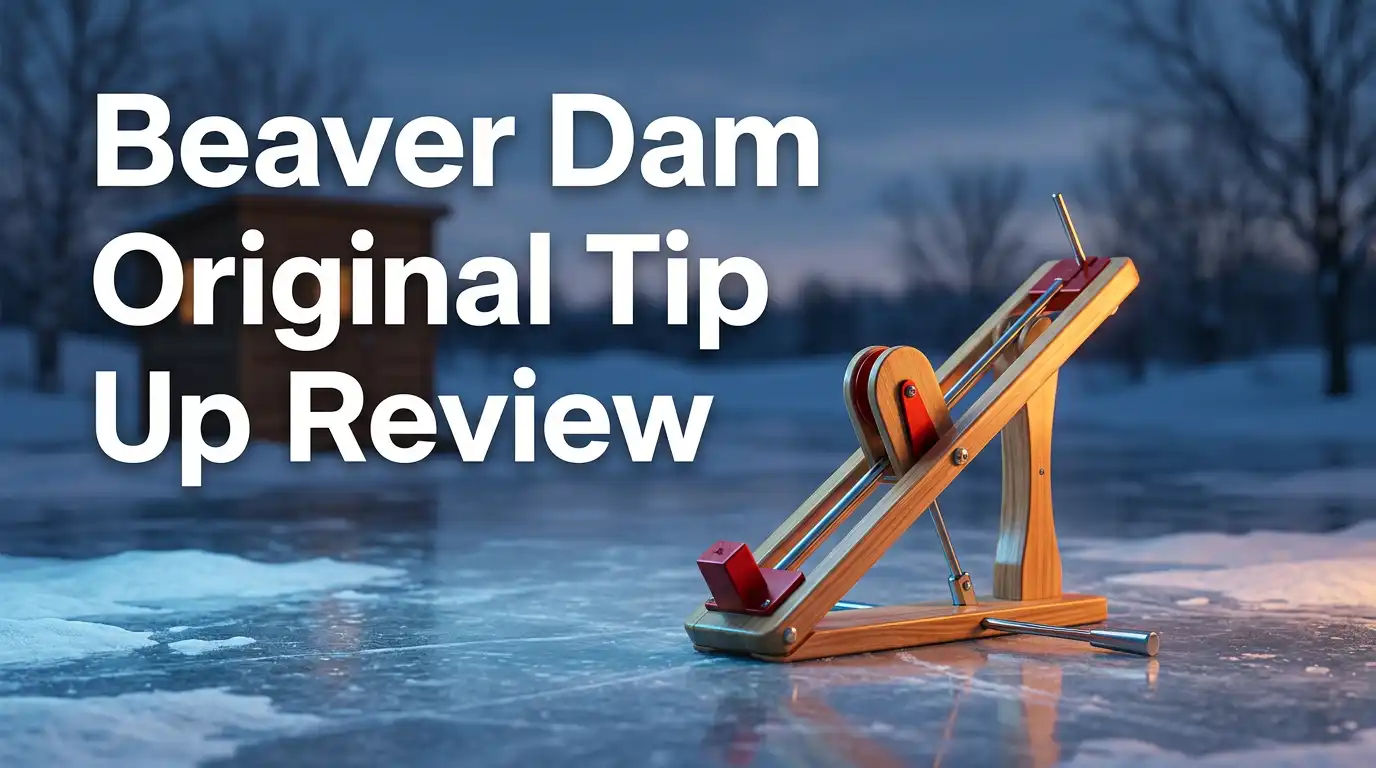
The Beaver Dam Original is a rail style tip up. A long wooden board lays across your ice hole. A steel tube drops through the center.
At the bottom of that tube sits the spool, fully submerged in water below the ice line. Water does not freeze below the ice surface, so the spool keeps spinning no matter how cold the air gets.
A trip shaft runs up through the tube and holds a spring steel flag. When a fish takes your bait, the spool rotates, the shaft releases, and the flag snaps upright. Simple mechanics. No batteries. No electronics.
The company started in Beaver Dam, Wisconsin, and the design has barely changed. That consistency is the whole point. Anglers who learned on these units in the 1980s buy the exact same product today.
Unboxing And First Impressions
The box is plain cardboard with the Beaver Dam logo. No plastic clamshell. No glossy insert. You pull out one tip up wrapped in thin paper, and that is it.
The first thing I noticed was weight. The pine board feels dense and solid in your hand. The clear finish is smooth with visible wood grain, and mine had one small knot near the end. It looks like a tool, not a toy. The steel tube is seamless and already packed with grease.
Then came the disappointment. No line. No hooks. No leader. No instructions beyond a small tag. I expected at least a starter spool at this price. You will need to buy Dacron tip up line before your first trip, so plan ahead and do not order this the night before opening weekend.
Build Quality And Materials
The construction is honest and basic. You get a pine base with a clear protective finish, a steel tube, a brass bushing, a metal spool, and a spring steel flag wire. There are no plastic gears and no tiny clips waiting to snap in the cold.
I like that every part is serviceable. If your flag wire bends, you straighten it. If grease thins out after several seasons, you repack the tube. Nothing is sealed shut or glued.
Wood does require care, though. Leave a wet Beaver Dam in a bucket all season and the finish will dull. Mine developed small water marks along the base after one winter. A quick wipe down after each trip solves this. Owners who dry their units properly report decades of service, which matches what I saw in long term reviews.
Top 3 Alternative For Beaver Dam Original Tip Up

Last update on 2026-10-22 / Affiliate links / Images from Amazon Product Advertising API
Frabill Pro Thermal Tip Up

Last update on 2026-10-22 / Affiliate links / Images from Amazon Product Advertising API
HT Enterprises Polar Therm Tip Up

Last update on 2026-10-22 / Affiliate links / Images from Amazon Product Advertising API
Celsius Up Tip Integrated Hole Cover Tip Up
Spool Performance In Cold Weather
This is where the Beaver Dam earns its reputation. The spool sits underwater, so freeze up is nearly impossible. I fished in temperatures near zero degrees Fahrenheit and the spool still turned freely with a light finger push.
Resistance is remarkably low. I tested by pulling line slowly with a scale. The Beaver Dam required noticeably less force to start turning than my older plastic rail unit. That difference matters with pike, because a fish that feels drag often drops the bait before you reach the hole.
Reeling in is also easy. There is no crank handle. You place a finger on the spool and spin it, or you hand line and let the spool rewind. Some anglers hate the lack of a handle. I found it faster once I built the habit, especially with gloves on.
Flag Sensitivity And Trip Settings
The flag is simple spring steel with a bright cloth triangle at 17 and a half inches tall. That height helps on crowded lakes where you watch six units at once.
Sensitivity adjusts by how deeply you seat the trip shaft against the spool notch. A shallow setting trips on the lightest pickup. A deeper setting holds through wind and small panfish nibbles.
Here is the honest drawback. Unlike the Frabill Arctic Fire, the Beaver Dam has no labeled dual trip settings. You learn the sweet spot by trial and error, and that takes a few outings. Beginners will get false flags in gusty conditions until they figure it out. Once dialed in, false trips became rare for me, but the learning curve is real.
Setup Time On The Ice
Setup is fast. Drill the hole, clear slush, lay the board across, drop the tube, set your depth, bait, and set the flag. I average under two minutes per unit after some practice.
The 23 inch base is a real advantage. It spans wide or chewed out holes that would swallow a small round tip up. I fished one hole that had been reamed twice, and the Beaver Dam still sat flat and stable.
Wind stability is also strong because the long board resists tipping. I never had one blow over on bare ice.
Teardown is where the rail style loses points. You pull the whole assembly out wet, and water drips everywhere. Round thermal units seal up cleaner. Carry a towel or a dedicated bag.
Pros And Cons Of The Beaver Dam Original
Pros
- Smoothest spool in its class. Fish run without feeling resistance, which increases hookup rates on light biting pike and walleye.
- Underwater spool never freezes. Freezeproof grease and submerged placement keep it turning in extreme cold without batteries or chemicals.
- Built by hand in the USA. Quality control shows in the finish, the bushing fit, and the overall feel.
- Exceptional lifespan. Multiple owners report 20 plus years of use with no part replacement.
- Wide 23 inch base. It bridges large, sloppy, or refrozen holes with no wobble.
- Easy field service. Grease, flag wire, and spool are all accessible without tools.
Cons
- Expensive. At $40 to $65 per unit, outfitting a six tip up spread costs serious money.
- No hole cover. Your hole freezes over in deep cold, so you chip ice on every flag.
- Line sold separately. Add $10 to $12 per unit before you can fish.
- Wet and bulky teardown. The assembly drips, and the long board does not nest neatly in a bucket.
- No labeled trip settings. Sensitivity tuning relies on feel rather than marked positions.
- Wood needs drying. Neglect leads to finish damage over several seasons.
Who Should Buy The Beaver Dam Original
This tip up fits a specific angler. If you chase northern pike, lake trout, or big walleye and you believe spool feel changes your catch rate, the Beaver Dam delivers.
It also suits anglers who buy once and keep forever. Spending $50 on a unit that lasts 25 years costs $2 per season. That math works.
Finally, it fits people who enjoy the tradition. Wooden tip ups look right on the ice. Many owners pass them down to kids and grandkids.
Skip it if you fish only two or three times a year. Skip it if you fish very cold water without a shelter. Skip it if you need to fill a tip up spread on a tight budget. A $20 Frabill catches fish too.
Beaver Dam Versus Frabill Pro Thermal
These two take opposite approaches. The Frabill Pro Thermal uses a round plastic base with roughly one inch of foam insulation covering a 10 inch hole. That cover slows refreezing and blocks light, which some anglers believe reduces spooking in shallow water.
The Beaver Dam leaves the hole open and bets everything on spool smoothness.
Frabill wins on convenience. It sits in a five gallon bucket, it keeps your hole workable, and it costs far less.
Beaver Dam wins on feel and durability. Forum veterans consistently say the Beaver Dam spins easier, and the wooden build outlasts plastic.
My take: run Frabills in extreme cold, run Beaver Dams when you want maximum sensitivity on finicky fish.
Beaver Dam Versus HT Polar Therm
HT Enterprises builds the budget benchmark. The Polar Therm covers your hole, includes a 200 foot spool, and some models add a built in tackle box. Price typically lands under half the Beaver Dam.
Long time anglers on ice fishing forums argue openly about this matchup. One common comment calls Beaver Dam units obscenely overpriced and not close to as smooth as a good old HT. Other anglers insist the opposite after decades of side by side use.
My honest read is that HT offers better value and Beaver Dam offers better feel. The HT plastic components do fail more often in my experience, especially flag clips in deep cold. Decide based on whether you repair gear or replace it.
Maintenance Tips For Long Life
Care is simple but not optional. Dry the wooden base after every trip. I lean mine against a basement wall overnight rather than stacking them wet in a bucket.
Repack the steel tube with freezeproof grease once per season. Thin grease is the number one cause of sluggish spools, and it takes five minutes to fix.
Check the flag wire for bends after transport. Straighten gently by hand.
Spool fresh Dacron line every two or three seasons. Old line holds memory and tangles.
Store units flat or hanging, never under heavy gear. A cracked base ends the unit, and that is the only failure I consider serious. Treat the wood well and this tip up genuinely outlives most of your other tackle.
Final Verdict: Is It Worth The Money?
The Beaver Dam Original Tip Up remains an excellent product with real flaws. The spool performance is the best I have used. The build quality justifies the handmade claim. The lifespan is outstanding.
But you pay a premium for tradition as much as performance. The open hole design is a genuine weakness in brutal cold, and the missing line at this price feels stingy.
My recommendation: buy two or three Beaver Dams for your prime spots, and fill the rest of your spread with thermal units. That combination gives you sensitivity where it counts and convenience everywhere else.
If you only buy one tip up this winter and you fish pike seriously, this one still earns the shelf space.
Frequently Asked Questions
Does the Beaver Dam Original come with line?
No. The unit ships bare, so you need to buy Dacron tip up line separately. Most anglers spool 50 to 100 feet of 30 pound Dacron, which costs around $10 per unit.
How much line does the spool hold?
The spool holds roughly 150 feet of standard tip up line. That capacity covers almost every freshwater situation, including deep lake trout water.
Will the spool freeze in extreme cold?
The spool sits below the ice in liquid water, so it does not freeze. Your hole surface will skim over, though, because this model does not cover the hole.
Is the Beaver Dam legal in every state?
Rules vary by state and by species. Check your local regulations for tip up limits, flag marking requirements, and line restrictions before you fish.
How long does a Beaver Dam tip up last?
With basic drying and annual greasing, 20 years is common. Many owners report units from the 1990s still working normally today.
Can beginners use this tip up?
Yes, but expect a short learning curve on trip sensitivity. Practice setting the flag at home before your first trip on the ice.

Hi, I’m Ivy Webb, the passionate angler and creator behind BaitHookVault.com. I spend my days out on the water personally testing and reviewing a wide variety of fishing tools and gear.