Why Is My Fly Line Memory Coiling and How to Stretch It Straight?
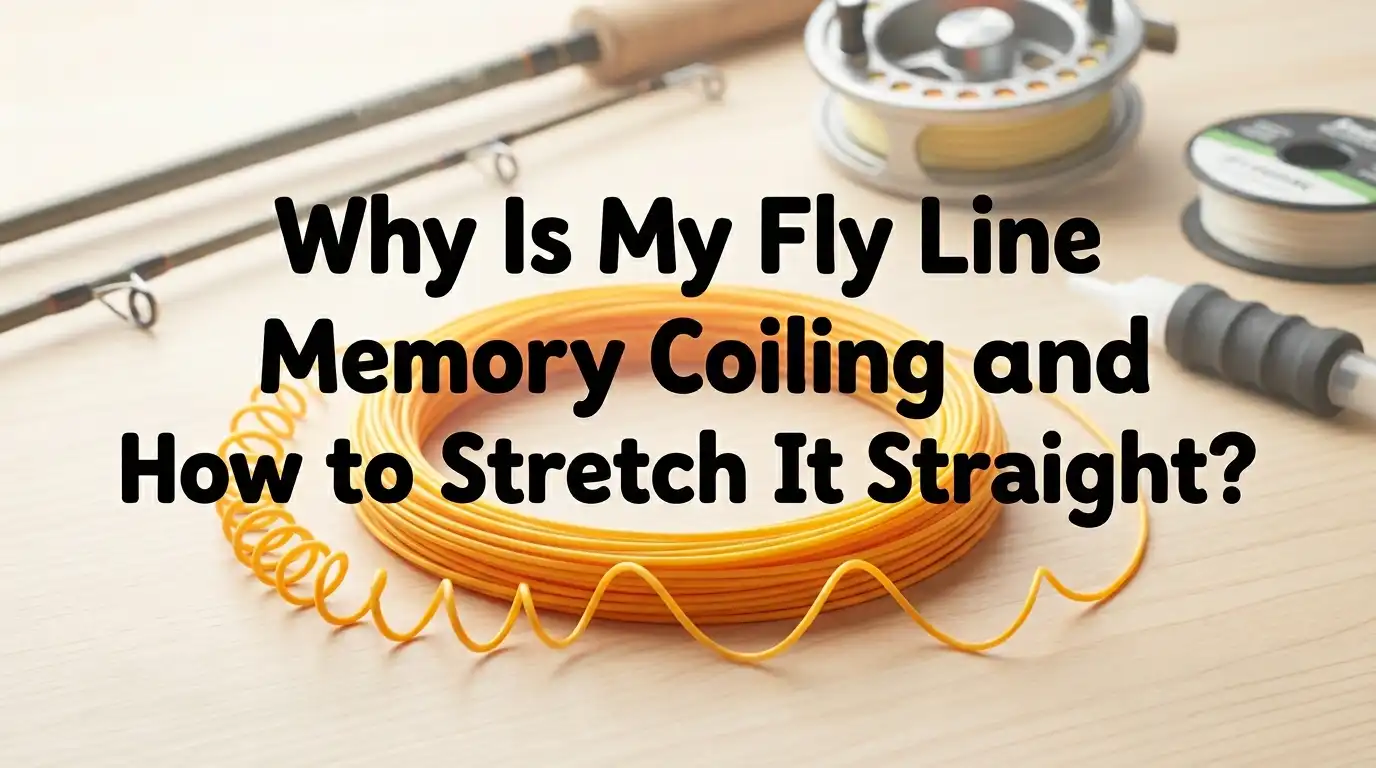
Have you ever pulled fly line off your reel only to watch it spring into tight loops like a slinky on the water? That frustrating spiral pattern is called fly line memory, and it ruins casts, tangles leaders, and spooks fish.
The good news is that line memory is a fixable problem. You do not need fancy gear or a new line to solve it. You just need a few simple techniques, a bit of patience, and the right habits before you hit the water.
This guide breaks down the exact reasons your fly line coils, the science behind the problem, and the proven methods to stretch it straight.
In a Nutshell:
- Stretch your line by hand before every fishing trip. Pull two to three foot sections firmly between your hands, working down the entire head of the line. This is the single most effective fix for line memory.
- Cold lines coil more. If you fish in temperatures below 60°F, expect more memory and stretch the line longer. Tropical lines used in cold water will coil very badly.
- Small arbor reels create tighter coils. A large arbor reel reduces memory because the line wraps around a wider circle. Switching reels can make a real difference.
- Clean your line regularly. Dirt, sunscreen, and bug spray break down the coating and worsen memory. A quick wash with mild soap and water restores flexibility.
- Store your line loose, not tight. If you store rods for the off season, peel the line off the reel and loop it into wide coils, or back the drag off completely.
- Sun and warmth are your friends. A few minutes of sunlight or a soak in warm water softens the coating and helps memory release faster.
What Fly Line Memory Actually Is
Fly line memory is the tendency of your line to hold the shape of the reel spool. When line sits wrapped around a small spool for hours or weeks, the plastic coating remembers that curved shape. When you pull it off, it springs back into tight loops instead of laying flat.
Think of it like a garden hose left coiled all winter. When you stretch it out in spring, it still wants to curl. Fly line behaves the same way because it is built around a flexible core wrapped in a PVC or polyurethane coating. That coating is the part that holds the curve.
Memory is not a defect. Every fly line has some memory. The amount depends on the line material, the temperature, the reel size, and how long the line has been spooled.
Why Cold Weather Makes Coiling Worse
Temperature plays a huge role in how much your line coils. Cold makes the plastic coating stiff, which locks in the spool shape. Warm conditions soften the coating and let it relax into a straight position naturally.
If you fish in early spring or late fall, you will notice memory more than in summer. Tropical fly lines are the worst offenders in cold water because they are built with stiffer coatings made for hot weather. Using a tropical line below 70°F is a recipe for stubborn coils.
Pros of fishing cold water lines in cool weather: they stay supple, cast smoothly, and shed memory quickly. Cons: they get sticky and limp in tropical heat, so you cannot use one line everywhere. Match your line to your climate and the memory problem shrinks before it starts.
How Reel Size Affects Line Memory
The size of your reel spool directly controls how tight your line coils. A small arbor reel has a narrow center, which forces the line into tight circles. A large arbor reel has a wider center, so the line wraps in bigger, gentler loops.
Big loops mean less memory. The coating bends less sharply, so it does not remember the shape as strongly. This is why most modern fly reels use large arbor designs.
Pros of large arbor reels: less memory, faster line retrieval, and better drag performance. Cons: they cost more and are slightly heavier than small arbor models. Pros of small arbor reels: they are lightweight, classic looking, and cheaper.
Cons: they create more memory, especially with thick lines like floating weight forward tapers. If memory is your main complaint, upgrading to a midarbor or large arbor reel solves a lot of the problem permanently.
Sign Your Line Has Too Much Memory
You can spot a memory problem within seconds of stripping line off your reel. The line will fall to the ground in tight rings instead of laying flat. When you cast, the loops travel through the guides in jerky bumps instead of a smooth flow.
Other signs include poor distance casting, leader tangles at the rod tip, and the line piling up at your feet instead of shooting through the rod. You may also see the line skating across the water surface in waves rather than landing softly.
If your indicator dives unexpectedly because the coils are pulling it under, that is another sign. Memory creates drag on the water, which kills strike detection. Once you know what to look for, you will spot the problem on your first cast every time.
Step by Step: Hand Stretching Your Fly Line
Hand stretching is the fastest and most reliable fix. Here is the exact process used by guides and pro casters every morning before fishing.
First, pull all the line you plan to fish off the reel, usually 30 to 50 feet. Lay it on grass, sand, or a clean deck. Avoid sharp gravel or hot pavement that can damage the coating.
Next, grab the line about two feet apart with both hands. Pull firmly and steadily for about five to ten seconds. Do not yank. A smooth, slow pull works better than a hard tug. Release slowly, then move down two feet and repeat. Work your way through the entire length of line you pulled off.
This takes about two to three minutes total. Pros: it works every time, costs nothing, and needs no tools. Cons: it takes a few minutes and you have to redo it after long breaks.
The Tree or Post Method
If you fish alone and want a hands free option, the tree method works great. Find a smooth tree, fence post, or boat cleat. Wrap the end of your fly line around it once, leaving the leader off to the side.
Walk backward with the rod until the entire fly line is between you and the post. Clamp your hand on the reel so the line cannot pay out, then pull back smoothly with steady pressure for about thirty seconds. Release slowly.
You will feel the line stretch and hear a slight creak as the coating relaxes. Pros: it stretches the entire line at once, saves time, and gets even tension throughout. Cons: you need a smooth anchor point with no rough edges, and pulling too hard can stress your tippet or backing knot. Always check the line for nicks afterward.
The Warm Water Soak Trick
For lines with deep, stubborn memory after winter storage, a warm water soak works wonders. Fill a sink or bucket with warm, not hot, water and add a drop of mild dish soap. Coil the line loosely into the water and let it sit for about ten minutes.
The warmth softens the coating and the soap cleans off built up grime. After soaking, pull the line through a soft cloth to remove dirt, then hand stretch it as described earlier. The combination of warmth, cleaning, and stretching resets the line almost like new.
Pros: it cleans and de memorizes the line at the same time, and it works on the worst cases. Cons: you cannot do it streamside, and hot water above 100°F can damage the coating. Stick to lukewarm water and your line will thank you.
Cleaning Your Line to Reduce Memory
A dirty line holds memory worse than a clean one. Sunscreen, fish slime, algae, and bug spray all cling to the coating and stiffen it. Cleaning is part of memory prevention, not just a cosmetic chore.
Pull the line off the reel and wipe it with a soft cloth dampened in warm soapy water. Run the line through your fingers as you pull. Avoid harsh chemicals like alcohol, gasoline, or solvents because they strip the coating and shorten line life.
After cleaning, dry the line and apply a fly line dressing if your manufacturer recommends one. Many modern lines have slick coatings built in and need no dressing.
Pros of regular cleaning: less memory, longer line life, smoother casting, and better floating. Cons: it takes ten minutes after every few trips, and over cleaning can wear the coating thin. Once a month during heavy use is plenty.
How to Store Fly Line to Prevent Memory
Storage habits make or break your line. If you store rods rigged with line tightly spooled for months, you will fight memory every time you fish. A few small habit changes prevent the problem entirely.
For short term storage between trips, just back off the reel drag completely. This lets the line relax slightly. For long term storage during the off season, the best method is to peel the line off the reel and wind it loosely into wide loops, about 12 inches across. Store these loops in a paper bag or pillowcase in a cool, dark place.
Pros of off reel storage: zero memory at the start of the next season. Cons: you have to respool the line, which takes a few minutes. Pros of on reel storage: quick and easy. Cons: memory builds over months, and you will need to stretch heavily before the first trip.
Casting Techniques That Reduce Coiling
Believe it or not, the way you cast can either build or fight memory. Repeatedly casting off the same shoulder twists tiny rotations into the line. Over weeks, these twists turn into permanent coils.
To fight this, switch hands occasionally or roll cast every so often to release built up twist. Some anglers strip out their full line and let it trail behind them in a moving boat or current for a minute. The flowing water naturally untwists the line.
If you fish stillwater and notice your line spinning as you strip it in, that is twist accumulating. Detach the fly, hold the rod tip up, and let the line hang freely.
Gravity will spin out the twist over a few minutes. Pros: it costs nothing and prevents future problems. Cons: it takes awareness and a small habit change. Once you build the habit, your line stays straighter for years.
When to Replace Your Fly Line
Sometimes memory is permanent because the line has reached the end of its life. Fly lines last roughly 200 to 300 days of fishing with good care, or two to four seasons for most anglers. After that, the coating cracks, gets sticky, or refuses to lay flat no matter what you do.
Signs of a worn out line include visible cracks, a chalky surface, sinking sections that should float, and memory that returns within minutes of stretching. If you see these, no amount of soaking or stretching will save it.
Pros of replacing: instant casting improvement and no more daily memory battles. Cons: new lines cost real money, and you must spool them on properly to avoid twist. When you do buy new line, load it onto your reel under light tension with the package laying flat, not spinning, to prevent twist from day one.
Frequently Asked Questions
How long does it take to stretch fly line memory out?
Hand stretching takes two to three minutes for an average head length. The post method takes about thirty seconds. For deep memory after winter, a warm soak plus stretching takes about fifteen minutes total.
Can I damage my fly line by stretching it too hard?
Yes, but it is hard to do with hand pressure alone. The danger comes from yanking sharply or stretching against a sharp object. Use smooth, steady pulls and you will not hurt the line.
Will fly line memory go away on its own in warm weather?
Partly. Warm air softens the coating and reduces mild memory naturally. However, deep memory from long storage will not fully release without active stretching.
Why does my new fly line still have memory?
Brand new lines come tightly wound on small factory spools. Even premium lines need a stretch before the first cast. This is normal and not a defect.
Does fly line memory affect distance casting?
Absolutely. Coiled line creates friction in the rod guides and bunches up in the air. Straight line shoots smoothly and adds five to fifteen feet to most casts.
Can I use a hair dryer to remove fly line memory?
You can, but be careful. Use low heat and keep the dryer at least 12 inches from the line. High heat damages the coating permanently. Warm water is safer and works just as well.

Hi, I’m Ivy Webb, the passionate angler and creator behind BaitHookVault.com. I spend my days out on the water personally testing and reviewing a wide variety of fishing tools and gear.