Why Does My Reel Anti Reverse Keeps Failing in Cold Weather?
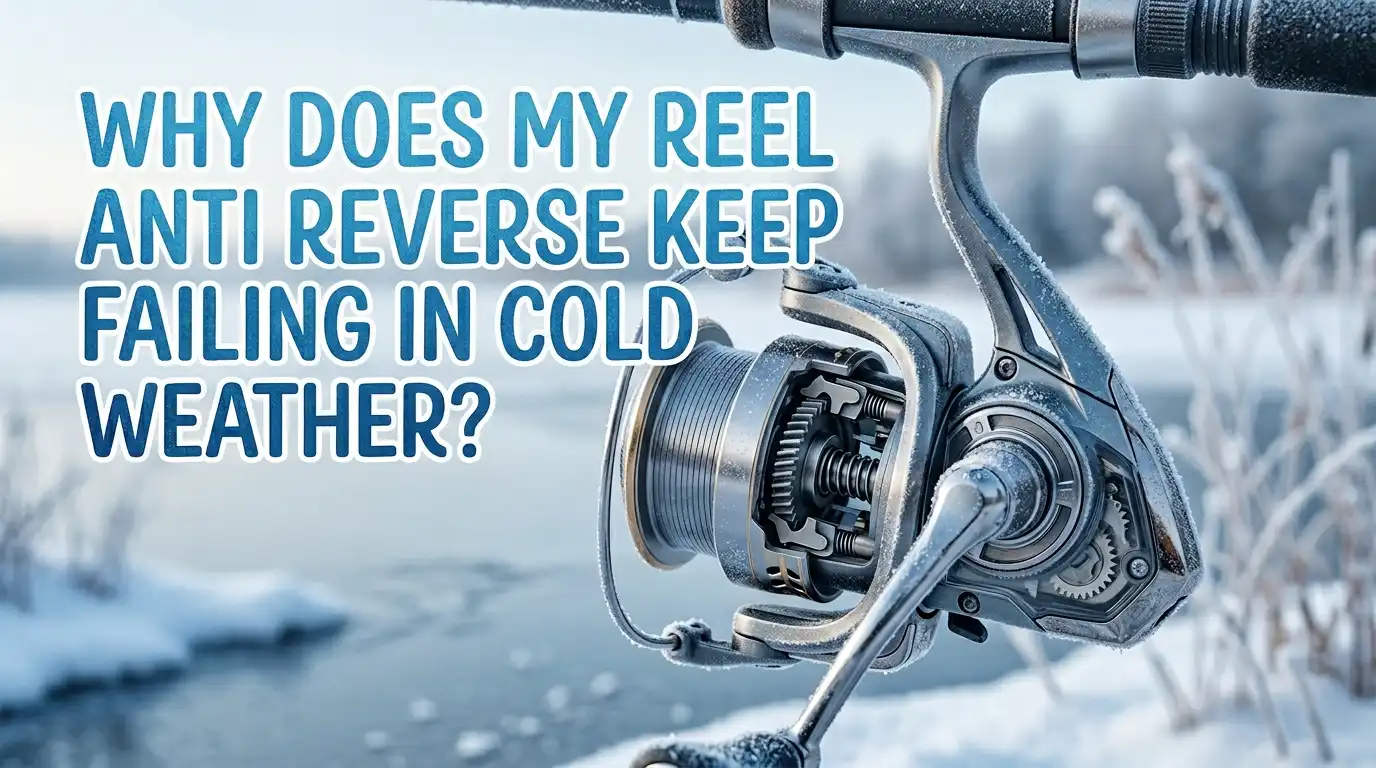
You just set the hook on a solid fish in freezing weather, and your reel handle spins backward. The line goes slack. The fish is gone. Your anti reverse failed at the worst possible moment, and you have no idea why.
This is one of the most frustrating problems cold weather anglers face. Your reel works perfectly at home. It works fine on mild days.
But the second temperatures drop below freezing, the anti reverse starts slipping. The handle kicks back on hooksets. You lose confidence in your gear, and you lose fish.
In a Nutshell
- Thick grease is the number one cause of anti reverse failure in freezing temperatures. Factory lubricants stiffen in cold weather and prevent the roller clutch bearing from engaging properly. Switching to a lightweight oil solves this issue for most anglers.
- The roller clutch bearing (also called the one way bearing) is the heart of your anti reverse system. Small rollers must slide freely along tapered ramps to lock the handle in one direction. Cold, thick lubricant stops this movement and causes the bearing to slip.
- Cleaning the anti reverse bearing with a solvent and re lubricating with a thin, cold rated oil is the most effective fix. Many anglers report complete success after removing old grease and applying a light reel oil that stays fluid at low temperatures.
- Metal contraction in extreme cold can also play a role, especially in reels with mechanical pawl systems. Parts shrink slightly and may not engage fully, allowing the handle to spin backward on a hard hookset.
- Prevention is easier than repair. Preparing your reels before winter with the right lubricant and a quick bearing service will save you from lost fish and broken trust in your equipment. A 15 minute cleaning session can protect your reel all season.
- Not all reels handle cold equally. Some brands and models are known for cold weather anti reverse issues. Choosing reels with proven cold weather performance or upgrading your bearing can make a big difference.
How the Anti Reverse System Works Inside Your Reel
The anti reverse is the mechanism that stops your reel handle from spinning backward. Most modern reels use a roller clutch bearing (also called a one way bearing) to achieve this. This bearing sits on the main shaft or crankshaft of your reel.
Inside the bearing, small steel rollers sit in a cage between an inner shaft and an outer race. The outer race has tapered ramps. When the handle turns forward, the rollers slide to the wide part of the ramp and spin freely. When the handle tries to turn backward, the rollers wedge into the narrow part and lock the shaft in place.
The system depends on the rollers moving freely and quickly. Any resistance to that movement can cause a failure. Springs inside the cage push the rollers into the engaged position by default. This means the reel should always resist backward rotation unless something prevents those rollers from sliding into their locked position.
Older reels use a mechanical pawl system instead. A small metal tab drops into gear teeth to stop reverse rotation. Both systems are vulnerable to cold weather, but the roller clutch is far more common today.
Why Cold Temperatures Cause Anti Reverse Failure
Cold weather creates a specific chain of events inside your reel. The most important factor is lubricant viscosity. Grease and heavy oils thicken dramatically as temperatures drop. At 15 to 25 degrees Fahrenheit, standard reel grease can turn nearly solid.
When thick lubricant surrounds the rollers in your anti reverse bearing, they cannot slide quickly enough to engage. The handle tries to turn backward during a hookset, and the rollers are stuck in the grease. By the time they move, the handle has already spun back and you have lost tension on the fish.
Metal contraction is a secondary factor. Steel, brass, and aluminum all shrink slightly in extreme cold. This can change the clearances between parts just enough to affect bearing engagement. The effect is small, but it adds to the problem created by thick lubricant.
Moisture is also a concern. Condensation can form inside the reel body during temperature swings. If that moisture freezes around the bearing, it physically locks the rollers in place or prevents them from engaging correctly.
The Role of Factory Grease in Cold Weather Failures
Most reels ship from the factory with a general purpose grease applied to their internal parts. This grease works well at room temperature and in moderate conditions. It is not designed for freezing weather.
Factory grease is often applied generously, including around the anti reverse bearing. This is a problem because anti reverse bearings should never have heavy grease on them.
They need to be dry or have only a very light coating of thin oil. Heavy grease slows the roller movement and causes the exact failure you experience in the cold.
Many anglers report that brand new reels fail in cold weather because of excessive factory lubrication. One angler described sending reels to a professional for cleaning, only to have the tech apply oil to the anti reverse bearing. The reels worked fine indoors but failed immediately in freezing temperatures on the water.
The fix starts with removing that factory grease from the anti reverse bearing entirely.
Step by Step: Cleaning Your Anti Reverse Bearing
Cleaning the bearing is the single most effective fix for cold weather anti reverse failure. Here is how to do it safely.
Step 1: Remove the reel’s side plate or body cover to access the anti reverse bearing. Consult your reel’s schematic if you are unsure where it sits. On spinning reels, it is usually beneath the rotor. On baitcasters, it is near the handle side plate.
Step 2: Carefully remove the bearing. Note its orientation. The rollers are loosely held in the cage and can fall out easily. Work over a clean towel to catch any tiny parts.
Step 3: Soak the bearing in a cleaning solvent. Isopropyl alcohol, carburetor cleaner, or acetone all work. Gently rotate the bearing back and forth in the solvent to flush out old grease and debris.
Step 4: Dry the bearing completely with a lint free cloth or compressed air at low pressure. Do not blow the rollers out of their cage.
Step 5: Apply one or two drops of a lightweight reel oil. Do not use grease. Rotate the bearing to distribute the oil evenly.
Step 6: Reinstall the bearing in the correct orientation and reassemble your reel.
Pros: This method solves the problem for the majority of anglers. It costs almost nothing and takes about 15 minutes.
Cons: You risk losing tiny rollers if you are not careful. Some reels require special tools to access the bearing.
Choosing the Right Lubricant for Cold Weather Fishing
Lubricant choice is critical for cold weather reel performance. The wrong product will recreate the exact problem you just fixed. The right one will keep your anti reverse working reliably in sub freezing conditions.
Lightweight reel oil is the best choice for anti reverse bearings in cold weather. Look for oils that remain fluid at low temperatures. Some manufacturers offer cold rated formulas that stay thin down to minus 40 or minus 50 degrees Fahrenheit.
Avoid standard reel grease on the anti reverse bearing entirely. Grease belongs on gear teeth and friction points, not on the roller clutch. Even thin greases can cause problems in extreme cold.
Synthetic oils generally perform better in cold than petroleum based oils. Their molecular structure resists thickening at low temperatures. A single drop is usually enough for the entire bearing.
Pros of lightweight synthetic oil: Stays fluid in extreme cold, does not attract as much dirt, allows fast roller engagement.
Cons of lightweight synthetic oil: Needs more frequent reapplication than grease, can migrate away from the bearing over time, requires annual maintenance.
How Metal Contraction Affects the Anti Reverse
Temperature changes cause all metals to expand and contract. This effect is small, but it matters inside precision mechanical devices like fishing reels. At sub freezing temperatures, the steel rollers, shaft, and outer race all shrink slightly.
This contraction can create tiny gaps between the rollers and the ramp surfaces. Those gaps may prevent the rollers from wedging tightly enough to stop backward rotation. The result is a soft or delayed engagement of the anti reverse during hooksets.
Reels with mechanical pawl systems are also affected. The pawl may not drop fully into the gear teeth if the parts have contracted. This creates a partial engagement that can slip under load.
There is no way to prevent metal contraction. However, proper lubrication reduces the impact because a thin oil allows the rollers to respond quickly even with slightly changed clearances.
Why Moisture and Ice Buildup Cause Problems
Fishing in freezing temperatures means dealing with moisture in many forms. Water can enter your reel body through the line roller, bail arm, or handle shaft. Splash, spray, and even condensation from your hands all introduce moisture.
When that moisture reaches the anti reverse bearing and freezes, it creates a physical barrier. Ice crystals can lock rollers in place or coat the ramp surfaces. This prevents proper engagement and causes the handle to spin backward.
Temperature swings make this worse. If you store a cold reel in a warm truck cab, condensation forms inside the reel body. Take it back outside, and that condensation freezes on critical parts.
To prevent ice buildup: Keep your reel at a consistent temperature during fishing trips. Avoid bringing cold reels into warm spaces and then back outside. Wipe down your reel frequently to remove surface moisture. A light coating of reel oil on exposed metal parts helps repel water.
Spinning Reels vs Baitcasters: Which Fails More in Cold
Both reel types can fail in cold weather, but spinning reels tend to have more anti reverse issues in freezing conditions. The design of spinning reels places the roller clutch bearing in a position that is more exposed to moisture and temperature changes.
Spinning reels also rely entirely on the one way bearing for anti reverse in most modern models. Baitcasters often have additional mechanical backup systems like pawls or worm gear engagement that provide a secondary layer of protection.
Baitcasters are not immune, though. Many anglers report handle kickback on baitcasters in temperatures below 25 degrees Fahrenheit. The root cause is the same: thick lubricant on the anti reverse components.
Pros of baitcasters in cold weather: Often have backup anti reverse systems, bearing is more protected from moisture.
Cons of baitcasters in cold weather: More complex to disassemble, some models require professional service to access the anti reverse bearing.
Pros of spinning reels in cold weather: Easier to access and clean the bearing, simpler internal design.
Cons of spinning reels in cold weather: More prone to anti reverse slip, bearing is more exposed to the elements.
Pre Season Winter Reel Maintenance Routine
A simple maintenance routine before winter can prevent anti reverse failure all season. This process takes about 20 to 30 minutes per reel and requires basic tools and supplies.
Start by removing the spool and wiping down the spool shaft with a clean cloth. Apply a few drops of cold rated reel oil to the shaft. Next, remove the side plate or rotor to access the anti reverse bearing.
Clean the bearing thoroughly using the steps described earlier in this post. Remove all old grease and replace it with a single drop of lightweight synthetic oil.
Inspect the gears and apply a thin layer of cold rated grease to the gear teeth only. Remove any excess. Heavy grease buildup on gears can migrate to the anti reverse bearing over time.
Check all screws and tighten any that feel loose. Cold weather cycling can loosen fasteners. Some anglers apply a small amount of threadlocker to gear screws for added security.
Finally, put the reel in your freezer for a few hours and test it. Turn the handle and try to spin it backward. If the anti reverse engages solidly, your reel is ready for winter.
Quick Field Fixes When Your Anti Reverse Fails on the Water
Sometimes your anti reverse fails while you are on the water with no tools available. Here are quick fixes that can get you through the rest of your trip.
Warm the reel with your hands. Cup the reel body and breathe warm air onto it. This can temporarily thin the lubricant enough to restore anti reverse function. It is not a permanent fix, but it works in a pinch.
Switch the anti reverse toggle. If your reel has an anti reverse switch, flip it off and back on several times. This can re engage the pawl or shift the bearing enough to restore function.
Reel steadily and avoid sudden movements. Quick, sharp hooksets create the most load on the anti reverse. A smooth, sweeping hookset puts less sudden force on the bearing and reduces the chance of slipping.
Keep a backup reel ready. If cold weather fishing is a regular part of your season, having a second reel that has been properly prepped for cold is the smartest safety net.
Pros of field fixes: They cost nothing and require no tools.
Cons of field fixes: They are temporary and unreliable. The problem will return as the reel cools again.
When to Replace the Anti Reverse Bearing Entirely
Sometimes cleaning and re lubricating the bearing is not enough. If the rollers are worn, the ramp surfaces are damaged, or corrosion has pitted the metal, the bearing needs replacement.
Signs that your bearing is beyond cleaning include persistent slipping even in warm weather, visible rust or pitting on the rollers, and a gritty feeling when you rotate the bearing by hand. Missing rollers also require full replacement since the bearing will not function with even one roller gone.
Replacement bearings are available for most popular reel models. You can find the correct part number in your reel’s schematic or parts list. Installation requires careful attention to orientation. The bearing must face the correct direction, or the anti reverse will engage in the wrong rotational direction.
Pros of bearing replacement: Completely restores anti reverse function, new bearings are inexpensive.
Cons of bearing replacement: Requires finding the correct part, some reels need special tools or a press for bearing removal and installation.
Reel Storage Tips to Prevent Cold Weather Damage
How you store your reels between trips matters just as much as how you maintain them. Poor storage habits create the conditions that cause anti reverse failure in cold weather.
Store reels in a dry, temperature stable location. Avoid leaving them in your vehicle, garage, or shed where temperatures swing wildly between day and night. These swings cause condensation inside the reel body.
Loosen the drag before storing your reels for any length of time. A tightened drag compresses the washers and can trap moisture. Loosening it allows air circulation and prevents moisture related corrosion on internal parts.
Wipe your reels dry after every trip. Pay special attention to the area around the line roller, bail arm, and handle knob. These are entry points for water. A light spray of corrosion inhibitor on metal surfaces provides extra protection.
Store reels upright in a padded reel bag or case. This prevents lubricant from migrating to areas where it does not belong, like the anti reverse bearing.
Common Mistakes That Make Cold Weather Anti Reverse Worse
Several well meaning habits actually make cold weather anti reverse problems worse. Knowing what to avoid is just as important as knowing what to do.
Using WD 40 as a lubricant is a common mistake. WD 40 is a solvent and water displacer, not a lubricant. It strips existing lubrication and leaves a residue that attracts dirt. Use it for cleaning if needed, but always follow up with a proper reel oil.
Over lubricating the anti reverse bearing is another frequent error. More is not better with roller clutch bearings. A single drop of light oil is enough. Excess lubricant slows the rollers and recreates the original problem.
Ignoring annual maintenance lets old grease harden and debris accumulate inside the bearing. Even if you do not fish in cold weather often, yearly bearing service keeps your anti reverse reliable.
Storing reels in extreme cold without proper preparation invites moisture buildup and lubricant failure. Always prep your reels before the cold season begins.
FAQs
Why does my reel handle spin backward only in cold weather?
Cold temperatures thicken the lubricant around your anti reverse bearing. The small rollers inside the bearing cannot slide fast enough to engage and lock the handle. This causes backward spin during hooksets. The problem disappears in warm weather because the lubricant thins out and allows normal roller movement. Cleaning the bearing and using a cold rated lightweight oil fixes this issue.
Can I use WD 40 to fix my anti reverse in the field?
WD 40 can work as a temporary emergency fix because it acts as a solvent and breaks down thick grease. However, it is not a true lubricant and will strip protective oils from your bearing. If you use it in the field, make sure you clean and properly lubricate the bearing with reel oil as soon as you get home. Relying on WD 40 long term will cause more problems.
How often should I clean my anti reverse bearing for winter fishing?
Clean and re lubricate your anti reverse bearing at least once before each cold weather season. If you fish frequently in freezing temperatures, check the bearing every few weeks. Lightweight oils can migrate or wear off faster than grease, so more frequent maintenance is necessary during heavy winter use.
Should I use grease or oil on my anti reverse bearing?
Use oil only. Anti reverse roller clutch bearings require free roller movement to function. Grease is too thick and slows the rollers, especially in cold weather. Apply one or two drops of lightweight synthetic reel oil. Save grease for gear teeth and other friction surfaces inside your reel.
Will upgrading my reel fix cold weather anti reverse problems?
A higher quality reel may perform better in cold weather, but no reel is immune to lubricant related anti reverse failure. Even premium reels ship with factory grease that can cause problems in freezing conditions. The best approach is to properly service any reel you plan to use in winter, regardless of its price or brand.
Is it safe to put my reel in the freezer to test the anti reverse?
Yes. Many anglers and reel technicians use the freezer test to check cold weather performance. Place your reel in the freezer for two to three hours. Remove it and immediately test the anti reverse by trying to turn the handle backward. If it slips, you know the bearing needs cleaning and re lubrication before your next cold weather trip.

Hi, I’m Ivy Webb, the passionate angler and creator behind BaitHookVault.com. I spend my days out on the water personally testing and reviewing a wide variety of fishing tools and gear.