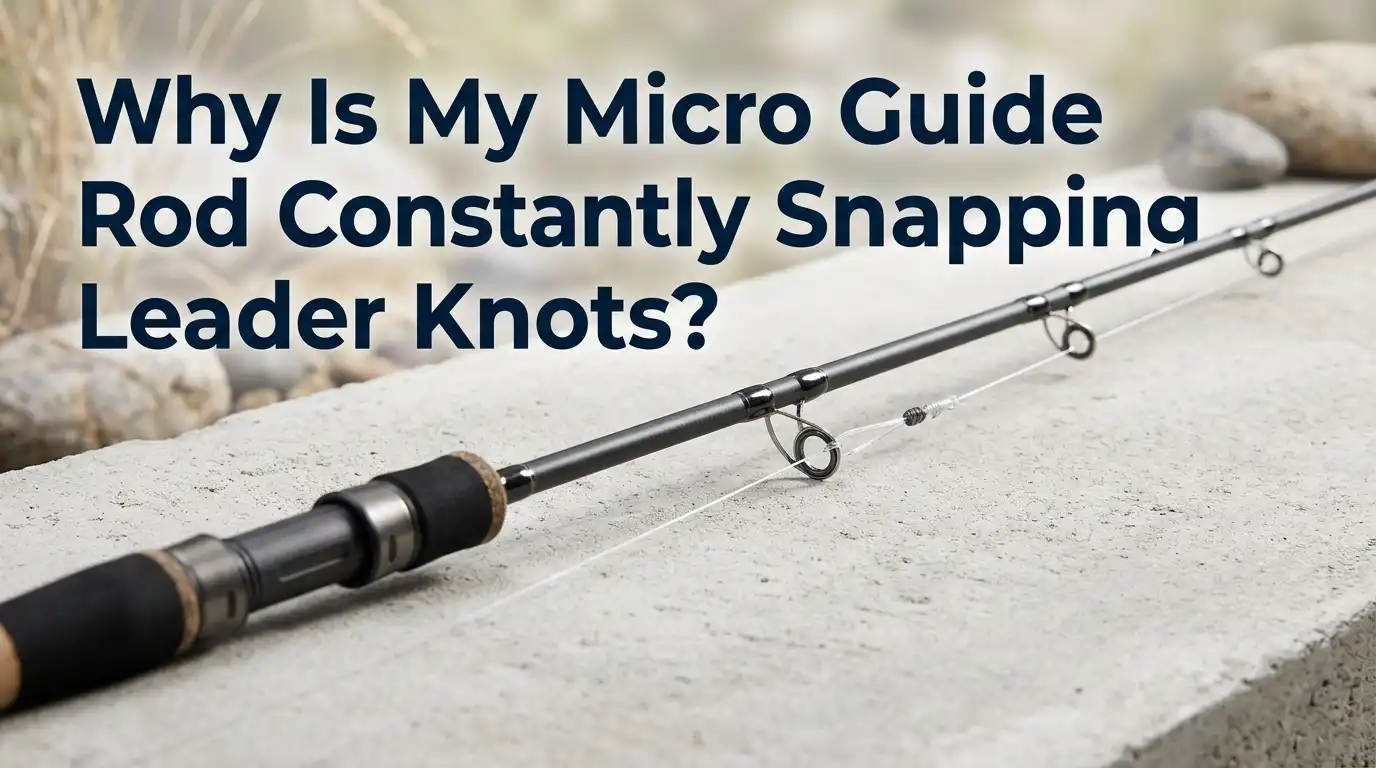
Why Is My Micro Guide Rod Constantly Snapping Leader Knots?
You set up your favorite micro guide rod, tied a fresh leader, and rigged up your best lure. Then on the second cast, snap. Your knot blew apart and your lure flew into the lake. Sound familiar?
Micro guides give you sensitivity and lighter rod tips. But they also punish bad knots, bulky connections, and small mistakes most anglers never notice. The good news is that this problem has clear causes and simple fixes.
This post breaks down every reason your leader knot keeps snapping. You will learn what to change, which knots to tie, and how to set up your rig so your line stops failing on the cast.
Key Takeaways:
- Knot bulk is the main villain. Most leader knot failures on micro guide rods happen because the knot body is too thick. A thick knot slams into the guide ring on the cast and snaps under shock load.
- The FG knot is the gold standard for micro guides because it sits flush against the braid. The Alberto knot and slim beauty knot also work well when tied correctly.
- Leader length matters more than you think. Your knot should sit on the reel spool before each cast, not on the rod blank. A leader that is too long forces the knot through every guide.
- Line balance is critical. Your braid diameter and leader diameter must match closely. A 30 pound leader tied to 10 pound braid creates a step that catches guides.
- Tag ends and trimming matter. A poorly trimmed tag end can flare out and grab the guide insert. Use a lighter or nail polish to seal the tag for extra security.
- Rod loading and casting style also play a role. A jerky cast snaps weak knots even if the rest of your setup looks perfect.
Understanding What Micro Guides Actually Do
Micro guides are small line guides found on modern bass rods and finesse rods. They are smaller than standard guides, sometimes half the size. Rod builders use them to reduce weight and improve sensitivity.
But here is the catch. Small guides have small openings. A bulky knot that flies through a normal guide ring will slam into a micro guide like a brick wall. That sudden stop creates massive force on your knot.
Your line is moving at high speed during a cast. When the knot hits the guide, the energy has to go somewhere. Usually, it goes into the weakest link of your knot. That is why your leader keeps snapping right at the connection.
The Real Reason Your Knot Keeps Snapping
Most anglers blame their knot tying. But the knot itself is often fine. The problem is the interaction between your knot and your guides.
When you cast, your line peels off the spool fast. Your knot races up the blank toward the rod tip. If the knot is even slightly too big, it bangs against each guide on the way out. Every impact weakens the connection.
After a few casts, your knot looks fine but is already damaged inside. Then one cast snaps it clean. The fix is not always to tie a better knot. Sometimes you just need a thinner knot or a shorter leader. I will cover both.
Why the FG Knot Rules Micro Guide Rods
The FG knot is a friction knot. It wraps your braid tightly around the leader using small loops. The result is a knot that is almost flush with the leader line. There is no big bulky knot body to catch on guides.
The FG knot also keeps its strength even when wet or loaded. Many tournament anglers swear by it for finesse fishing with micro guides. It works because the braid grips the leader along its length, not at a single weak point.
Pros: Slim profile, very high knot strength, slides through micro guides easily.
Cons: Takes practice to tie well, harder to tie in wind or cold, slower than other knots. Many beginners need to watch a video several times before getting it right.
The Alberto Knot as a Solid Backup
Not everyone wants to learn the FG knot. The Alberto knot is a great middle ground. It is easier to tie than the FG but slimmer than a double uni. Many bass anglers use the Alberto for everyday braid to fluorocarbon connections.
To tie it, fold your leader, pass the braid through the loop, wrap it seven times up and seven times back, then pull it tight. The knot body lies straight along the leader, which helps it slide through guides.
Pros: Quick to tie, learns fast, slim enough for most micro guides, holds well with fluorocarbon.
Cons: Slightly bulkier than the FG, can slip if not pulled tight properly, less consistent with heavy leaders above 30 pound test. Always wet it before cinching to prevent burn damage.
The Double Uni Knot and Why It Fails on Micro Guides
The double uni is the most popular leader knot in fishing. It is fast and strong. But it is also one of the bulkiest knots you can tie, with two knot bodies sitting side by side.
On a standard rod with bigger guides, the double uni works fine. On a micro guide rod, it becomes a problem. The double bump catches on the line guide insert and creates that loud pop you hear before your lure disappears.
Pros: Easy to learn, works with any line type, strong when tied well.
Cons: Too thick for most micro guides, creates wind knots more often, hangs up on the cast. If you love the double uni, switch to micro guides only if you commit to a slimmer knot.
Leader Length: The Mistake Almost Everyone Makes
This single fix solves the problem for many anglers. Your leader should be short enough that the knot sits on your reel spool when you are ready to cast. Not on the rod blank.
If your knot is sitting between guides when you go to cast, it has to travel through every single guide on the way out. Each guide is one more chance for the knot to catch and snap.
For a 7 foot casting rod, try a leader around 18 to 24 inches long. For a spinning rod, you can go a little longer because the line peels off the spool differently. The goal is the same. Keep the knot on the spool before the cast starts.
Matching Your Braid and Leader Diameter
A 10 pound braid with a 25 pound fluorocarbon leader creates a step. The braid is thin and the leader is thick. Your knot has to bridge that gap, and the resulting connection is always bulky.
Try to match your braid and leader diameters more closely. For example, 15 pound braid with 12 to 15 pound fluorocarbon works much better than 10 pound braid with 20 pound fluorocarbon. Closer diameters mean slimmer knots and fewer guide hangups.
Pros of matching diameters: Smaller knots, smoother casts, fewer wind knots, better lure presentation.
Cons: You may need to upgrade your braid strength, which can cost more. You also lose some shock absorption when the leader is closer in weight to the braid.
Checking Your Guides for Damage
Sometimes the problem is not your knot at all. A chipped or cracked guide insert will cut your line on every cast. Micro guides are especially prone to damage because they are small and easy to bang against hard surfaces.
Run a cotton swab around the inside of each guide. If the cotton snags or pulls fibers, you have a damaged insert. Even a tiny crack acts like a razor blade on your line.
Replace any damaged guides before you fish again. A rod repair shop can swap a single guide cheaply. You can also do it yourself with a guide repair kit, some thread, and rod finish epoxy. Do not ignore this step. A bad guide will destroy any knot you tie.
How Your Casting Style Affects Knot Failure
Hard casters break more leader knots. A jerky, snap heavy cast creates a shock load that hits the weakest point in your setup. With micro guides, that point is usually the knot.
Smooth your cast out. Load the rod gradually and let the rod tip do the work. A long, sweeping cast puts less force on the knot than a quick wrist snap.
Also check your release timing. If you release too early or too late on a baitcaster, your lure jerks the line hard. Spinning anglers should make sure the line is properly seated on the bail roller. Small casting flaws cost you fish, even with a perfect knot.
Tag End Trimming and Sealing
A long, stiff tag end on your knot acts like a tiny hook. It catches on every guide insert and creates drag. Trim your tag ends very close to the knot body, but leave just enough so the knot does not slip.
For braid tags, melt the end gently with a lighter. Hold the flame an inch away and pull it across the tag for a half second. This creates a small ball that will not unravel.
For fluorocarbon tags, you can use a drop of clear nail polish or UV resin. This locks the tag down and helps it slide through guides without grabbing. It also extends the life of your knot.
Line Care and How Old Line Snaps Easier
Old braid loses strength. Old fluorocarbon gets brittle. Both problems show up first at your leader knot, where stress is highest.
Check your line for fuzz, discoloration, or stiffness. If your braid feels rough between your fingers, it is past its prime. Cut off the first 20 feet and retie your leader, or just respool with fresh line.
Sunlight, heat, and saltwater all damage line faster than most anglers realize. Store your reels in a cool, dark place between trips. Rinse your gear with fresh water after every saltwater outing. Healthy line tied with a slim knot rarely snaps on a cast.
When to Skip the Leader Entirely
Sometimes the smartest fix is to ditch the leader. If you fish heavy cover with braid, you may not need a leader at all. Direct tie your lure to the braid and skip the leader knot problem completely.
This works well for frogs, flipping jigs, and topwater baits. You lose some stealth, but you gain casting distance and zero knot failures.
Pros: No more snapping knots, more casting distance, simpler rigging, faster setup.
Cons: Less stealth for clear water, no shock absorption, braid is visible to fish in some conditions. Use this approach when fish are aggressive or water is stained. For finesse fishing in clear water, a leader is still the better choice.
Practice Tying Your Knot at Home
The best knot is the one you can tie well. Spend 30 minutes at home tying your chosen knot with old line. Tie it ten times in a row until it feels easy.
Pull on each knot until it breaks. Watch where it fails. If it breaks at the knot, your technique needs work. If it breaks above or below, your knot is solid.
This practice pays off on the water. A confident angler ties faster, tighter, and cleaner knots. You will spend less time retying and more time fishing. Plus, you will trust your setup when a big fish bites.
Frequently Asked Questions
Is the FG knot really worth learning for micro guides?
Yes. The FG knot is the slimmest braid to leader knot you can tie. It glides through micro guides with almost no resistance. Once you learn it, your knot failures will drop dramatically.
Can I use a swivel instead of a leader knot?
You can, but a swivel is bulky and will not pass through micro guides at all. Swivels work better on rods with standard guides. For micro guide rods, stick with a slim knot like the FG or Alberto.
How short should my leader be on a baitcaster with micro guides?
Aim for 18 to 24 inches. The goal is to have the knot sit on the reel spool before you cast. That way, the knot never travels through the guides during the cast itself.
Why does my knot snap only on long casts?
Long casts create more line speed and more force at the knot. A small flaw that survives a short cast will break on a long one. Tie a slimmer knot and check your tag ends.
Should I use mono or fluorocarbon as a leader?
Both work. Fluorocarbon is harder to see underwater and sinks faster. Mono floats and has more stretch. Choose based on your lure and the fish you target. The knot rules stay the same either way.
Can old braid cause leader knots to snap?
Absolutely. Old, worn braid loses strength right where it grips the leader. If your braid feels fuzzy or stiff, replace it. Fresh line and a slim knot solve most snapping problems for good.

Hi, I’m Ivy Webb, the passionate angler and creator behind BaitHookVault.com. I spend my days out on the water personally testing and reviewing a wide variety of fishing tools and gear.