How To Clean Fish Slime And Dirt Off An EVA Foam Grip?
Fish slime and grime build up fast on your EVA foam grip. After a long day on the water, your rod handle can look and feel messy.
Blood, sunscreen, sweat, and dirt all stick to the foam surface. This buildup makes your grip feel gross and slippery.
The good news? EVA foam is tough. It handles scrubbing without falling apart.
You do not need fancy tools to get your grip clean again. A few simple steps will do the trick.
This guide walks you through the best cleaning methods that actually work. You will learn how to spray, scrub, and rinse your grip properly.
In a Nutshell
- Spray your cleaner onto the grip and let it sit for 20 to 30 seconds. This wait time helps break down slime and dirt before you scrub.
- Scrub with a nylon brush or a scrub brush. EVA foam can handle firm pressure, so do not hold back.
- Wipe or rinse the grip with a cloth or water. This step removes loosened grime and cleaner residue.
- Repeat the process if slime or dirt still remains. Some grips need a second round for a full clean.
- Avoid harsh chemicals that can damage the foam over time. Gentle yet effective cleaners work best.
- Do not skip the dwell time. Scrubbing too soon means the cleaner has not had a chance to work.
Why EVA Foam Grips Attract Slime and Grime
EVA foam grips attract slime and grime because of how the material works. The foam has a porous, textured surface that traps moisture and organic matter. Fish slime sticks to this texture like glue.
When you handle a wet fish, slime transfers directly to your grip. Blood from the catch also binds to the foam easily. Sweat from your hands mixes with the slime and creates a sticky layer. Sunscreen and insect repellent add to this buildup over time.
Salt water makes the problem worse. The salt crystals embed into the foam’s pores. Dirt particles settle into these same tiny spaces. Once trapped, the grime hardens and becomes stubborn to remove.
The good news is that EVA foam’s porous nature also makes it easy to clean. The same texture that traps grime also allows cleaning solutions to penetrate deeply. You can scrub aggressively without damaging the material.
Heat and sun exposure speed up grime buildup. When your grip sits in the sun, the foam dries out slightly. This creates more surface cracks where slime can hide. Humidity also plays a role. Damp conditions allow bacteria and algae to grow on the grip.
Your grip accumulates layers of buildup quickly because you use it constantly while fishing. Every cast, every fish, and every wipe on your pants adds more material to the surface. This is why regular cleaning matters.
The porous structure of EVA foam is actually an advantage for cleaning. It means you do not need expensive or specialized products. Simple solutions work well because they can reach deep into the material. Understanding why the grime sticks helps you choose the right cleaning method.
What You’ll Need Before You Start Cleaning
Before you start cleaning your EVA foam grip, gather the right supplies. Having everything ready saves time and prevents you from stopping mid clean.
You will need a cleaning solution. Common options include diluted all purpose cleaner, dish soap mixed with water, or disinfecting wipes. Mix your cleaner in a spray bottle if using liquid. The spray bottle lets you apply cleaner evenly across the grip surface.
Next, get a scrubbing tool. A nylon brush works best for EVA foam. You can also use a soft scrub brush or an old toothbrush. The brush bristles lift slime and dirt from the porous foam without damaging it. Avoid wire brushes or steel wool, as these can scratch the material.
Bring a cloth or towel for wiping. Microfiber cloths work great because they absorb moisture quickly. An old t shirt or cotton rag also does the job well. You will use this to wipe away loosened grime and dry the grip after cleaning.
Water access is helpful. A hose, sink, or bucket of water lets you rinse the grip thoroughly. Rinsing removes soap residue and final bits of slime. If you are on a boat, saltwater works, but freshwater is better when available.
Consider keeping cleaning supplies in your tackle box or boat. Store your brush and cloth in a small bag. Keep your cleaner in a sealed spray bottle. This way, you can clean your grip immediately after fishing while slime is still wet and easier to remove.
Optional but useful items include paper towels for quick wipes and a small container for mixing cleaner if you prefer making your own solution. Having these supplies ready means you can clean your grip in seconds rather than hunting for tools later.
Step-By-Step: The Spray-and-Scrub Method
Start with a clean spray bottle filled with your chosen cleaner diluted to the right strength. A 10 to 1 water to cleaner ratio works well for most solutions. Fill the bottle halfway with water, then add your cleaner concentrate. Shake it gently to mix the solution evenly.
Hold the grip firmly in one hand and spray the entire surface with your diluted cleaner. Make sure you cover all areas where slime and dirt have built up. Pay special attention to the ridges and textured sections where grime hides.
Let the cleaner sit for 20 to 30 seconds. This dwell time is crucial. The solution needs time to break down the slime and loosen the dirt particles. Many anglers skip this step and wonder why scrubbing feels harder than it should be.
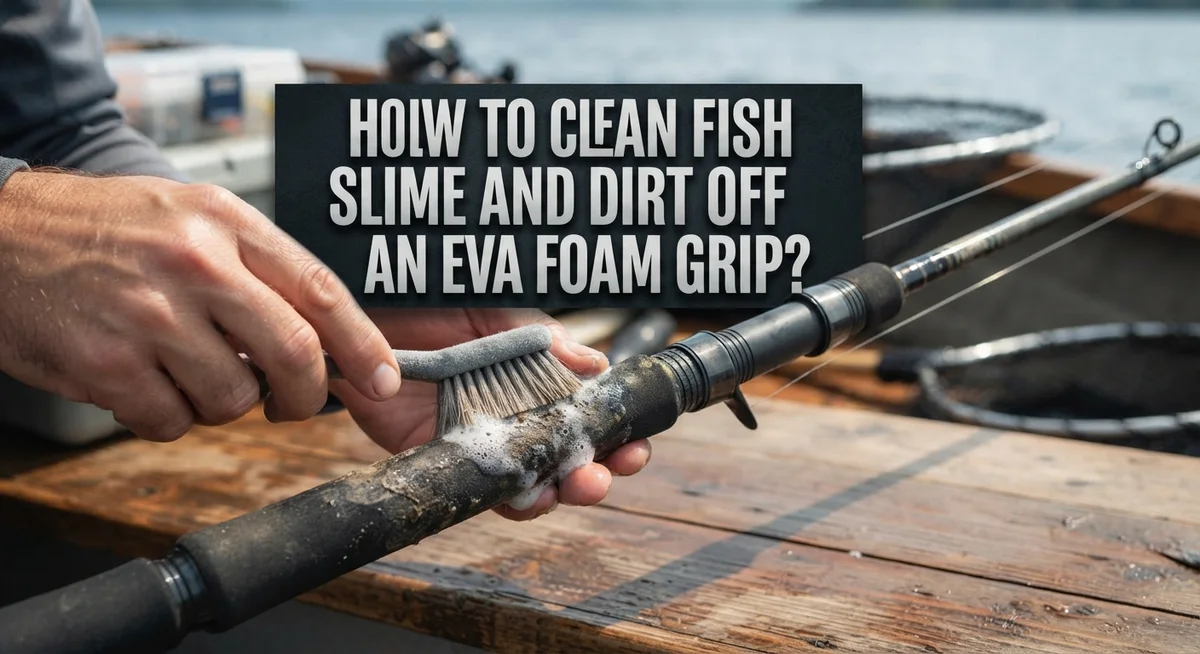
Grab your nylon brush or scrub brush and start scrubbing in circular motions. Apply moderate pressure. EVA foam is tough and can handle vigorous scrubbing without damage. Work the brush across the entire grip surface, paying extra attention to seams and grooves.
Wipe the grip clean using a damp cloth or rinse it under running water. You can use a hose if you are at the dock or a spray bottle filled with plain water. Remove all cleaner residue and loosened grime.
Check your work. If slime or dirt remains, repeat the spray, wait, and scrub steps. Most grips need only one cycle, but heavily soiled grips may need two passes.
Dry the grip with a clean cloth or let it air dry. This prevents water spots and keeps the grip ready for your next fishing trip. The entire process takes about 20 seconds of active work. You now have a clean, fresh grip that feels comfortable and looks like new again.
Alternative Cleaning Techniques for Different Situations
When fish slime builds up heavily or you face stubborn dirt, you need alternative methods beyond the basic spray and scrub approach. These techniques work well for different situations you’ll encounter on the water.
The Magic Eraser method offers a gentle alternative that works surprisingly well. Dampen the eraser slightly and rub it across the grip in circular motions. The eraser lifts slime without aggressive scrubbing. This approach takes a bit longer but causes minimal wear on the foam. Many anglers prefer this for regular maintenance between deeper cleans.
Disinfecting wipes provide quick cleaning when you’re actively fishing. Pull out a wipe and rub it over the grip. Let it sit for five to ten minutes if possible. The moisture and cleaning agents break down buildup. This method works best for light to moderate slime. Keep a small pack in your tackle box for convenient access.
Dawn soap mixed with water creates an effective homemade solution. Mix a few drops with water in a spray bottle. Spray the grip and let it sit briefly. Scrub with a nylon brush, then rinse thoroughly with fresh water. This approach costs very little and uses supplies you likely have at home.
The damp brush method works when you have water access but no spray bottle. Wet your nylon brush and add a tiny amount of soap if available. Scrub the grip directly with the damp brush. Wipe away moisture with a cloth. This technique requires minimal supplies and works during boat trips or shore fishing.
Vinegar solutions cut through stubborn salt and mineral deposits. Mix equal parts vinegar and water in a spray bottle. Spray and let sit for thirty seconds. Scrub with your brush and rinse well. The vinegar smell dissipates quickly as the grip dries.
Choose your method based on what’s available and how dirty your grip has become. Each approach handles different levels of buildup effectively.
Tips for Faster and More Effective Cleaning
Speed matters when you’re cleaning fish slime off your grip. The spray and wait technique saves you time because the cleaner does half the work for you. Simply spray your solution, let it sit for 20 to 30 seconds, then scrub. This waiting period breaks down the slime so your brush doesn’t have to work as hard.
Use a nylon brush with firm pressure instead of gentle scrubbing. EVA foam can handle aggressive scrubbing without damage. Press down hard and use circular motions to lift stubborn debris quickly.
Apply more cleaner if the first pass doesn’t work completely. Don’t assume one spray is enough for heavy buildup. A second application takes only seconds but delivers much better results on grimy grips.
Temperature matters more than you think. Warm water or a slightly warm cleaning solution works faster than cold water. The heat helps break down fish oils and sunscreen residue stuck to the foam.
Work in sections rather than trying to clean the entire grip at once. Focus on one area, scrub thoroughly, then move to the next section. This approach prevents you from missing dirty spots and keeps your effort organized.
Rinse immediately after scrubbing instead of letting the cleaner dry on the grip. Dried cleaner residue requires extra scrubbing to remove completely. A quick rinse takes five seconds and saves you time overall.
Keep your brush clean between uses. A dirty brush spreads old grime around instead of removing new slime. Rinse your brush frequently while cleaning to maintain its scrubbing power.
Stock your boat with cleaning supplies so you can clean grips while fishing. Quick cleanings throughout the day prevent heavy buildup that requires aggressive scrubbing later. Regular maintenance takes far less effort than deep cleaning a neglected grip.
Common Mistakes That Damage Grips or Waste Time
People make several mistakes when cleaning EVA foam grips that either damage the material or waste precious time. Understanding what to avoid saves you effort and keeps your grips in great condition.
Using overly harsh chemicals ranks as the top error. While EVA foam is durable, some people use industrial strength solvents or bleach solutions that degrade the material over time. The foam becomes brittle and loses its cushioning properties. Stick to mild cleaners diluted properly. Your grip doesn’t need aggressive chemicals to get clean.
Skipping the dwell time is another common waste of effort. Some people spray cleaner and immediately scrub without letting it sit. This means you’re working much harder for the same result. The 20 to 30 seconds of waiting time lets the cleaner break down slime and dirt naturally. Your brush does less work, and you finish faster.
Using dirty brushes repeatedly spreads old grime instead of removing new slime. A grimy brush just moves debris around your grip surface. Rinse your brush between uses or switch to a clean one halfway through cleaning.
Letting cleaner dry on the grip wastes time because dried residue requires extra scrubbing to remove. Rinse immediately after scrubbing while the cleaner is still wet and active.
Scrubbing the entire grip at once without a system causes you to miss spots or repeat areas. Work in sections from top to bottom. This organized approach prevents confusion and saves time.
Using cold water slows down the cleaning process. Warm water breaks down fish slime faster than cold water. If you’re cleaning at your vehicle, use warm water from your cooler or tap.
Avoiding these mistakes means cleaner grips in less time and material that lasts longer. Focus on the right technique rather than brute force or harsh products.
Maintaining Your EVA Foam Grip Between Deep Cleans
Between deep cleaning sessions, your EVA foam grip needs quick maintenance to prevent buildup. Daily or weekly touch ups keep slime and dirt from becoming stubborn problems that require heavy scrubbing later.
The fastest approach uses a lightly dampened cloth and a few quick wipes. After fishing, rinse your grip with fresh water to remove loose salt and fish debris. This simple step stops minerals from bonding to the foam surface.
For grips that feel slightly sticky or smell off, use a damp nylon brush with gentle circular motions. Work in small sections across the grip. Wipe away loosened grime with a clean cloth. This takes under two minutes and prevents slime from hardening.
Keep a small spray bottle of diluted cleaner in your tackle bag. A quick 20 second spray followed by a brush pass removes most daily buildup. You don’t need aggressive scrubbing for light cleaning between trips.
Disinfecting wipes work well for quick maintenance while you’re actively fishing. A single wipe removes surface slime and blood without needing water access. Store them in a waterproof container for easy grab and go access.
Check your grip every few days for color changes or sticky spots. These signs mean bacteria or mineral deposits are starting to accumulate. Addressing them immediately prevents deep cleaning emergencies later.
Store your grip in a dry location between fishing trips. Moisture trapped in the foam encourages bacterial growth and makes slime stick harder. Ensure your grip air dries completely before storing your rod.
Regular maintenance saves you time during deep cleaning sessions. A grip that receives weekly touch ups cleans in minutes. A neglected grip covered in hardened slime and salt requires 15 to 20 minutes of vigorous scrubbing. Small efforts between trips deliver major time savings when serious cleaning becomes necessary.
Final Thoughts
Cleaning fish slime and dirt off your EVA foam grip does not need to be complicated. A spray cleaner, a nylon brush, and 20 to 30 seconds of patience handle most jobs.
The material itself makes this easy. EVA foam tolerates vigorous scrubbing without breaking down or losing its shape.
You do not need special training or expensive tools. Basic household items and a bit of consistency keep your grip looking fresh trip after trip.
Remember the core process each time you clean. Spray, wait, scrub, rinse. This simple pattern removes almost any mess your grip picks up.
Avoid the common mistakes that waste your time. Harsh chemicals and skipped dwell time cause more problems than they solve.
Regular maintenance also matters as much as deep cleaning. A quick wipe after each trip prevents slime and dirt from building up into stubborn stains.
Your grip works hard every time you fish. It deserves a few minutes of care after each use.
Think of cleaning as part of your routine, not an extra chore. Fishermen who clean grips regularly spend less time scrubbing later.
Consistency beats intensity when it comes to grip care. Five quick cleanings each week work better than one long scrubbing session each month.
Keep your cleaning supplies close by. A brush and spray bottle in your tackle bag mean you can clean grips right after you catch fish.
This habit protects your investment and keeps your gear pleasant to hold. Nobody enjoys grabbing a sticky or smelly rod handle.
Clean grips also last longer. Dirt and grime break down foam over time, so regular care extends the life of your gear.
Follow these steps, stay consistent, and your EVA foam grip will stay clean, fresh, and ready for your next fishing adventure.
Frequently Asked Questions
How long does it take to clean an EVA foam grip?
Most grips clean in about 20 seconds with the right method. Spray your cleaner on the grip, wait 20 to 30 seconds, then scrub with a nylon brush. A quick wipe or rinse finishes the job. If your grip has heavy buildup, you might need an extra 10 to 15 seconds for a second pass.
Can I use any brush to scrub my EVA foam grip?
A nylon brush works best for EVA foam. Avoid wire brushes or stiff bristles that can damage the material. A soft to medium nylon brush cleans effectively without harming the foam. Old toothbrushes also work well for smaller areas or tight spots.
What should I do if the cleaner dries on my grip?
Dried cleaner residue requires extra scrubbing to remove. This wastes your time and effort. Always wipe or rinse your grip right after scrubbing. If residue does dry, spray the area again and let it sit for 30 seconds before wiping clean.
Is EVA foam tough enough for aggressive scrubbing?
Yes, EVA foam is durable and handles vigorous scrubbing without damage. You do not need to be gentle with your brush strokes. The material resists wear from normal cleaning methods. Focus on removing all the slime and dirt rather than worrying about harming the grip.
Can disinfecting wipes clean my grip?
Disinfecting wipes work well for quick cleaning. Let the grip soak for 5 to 10 minutes with the wipe draped over the slimed area. The longer contact time helps break down fish slime. Wipes are convenient for maintenance cleaning between deep cleaning sessions.

Hi, I’m Ivy Webb, the passionate angler and creator behind BaitHookVault.com. I spend my days out on the water personally testing and reviewing a wide variety of fishing tools and gear.