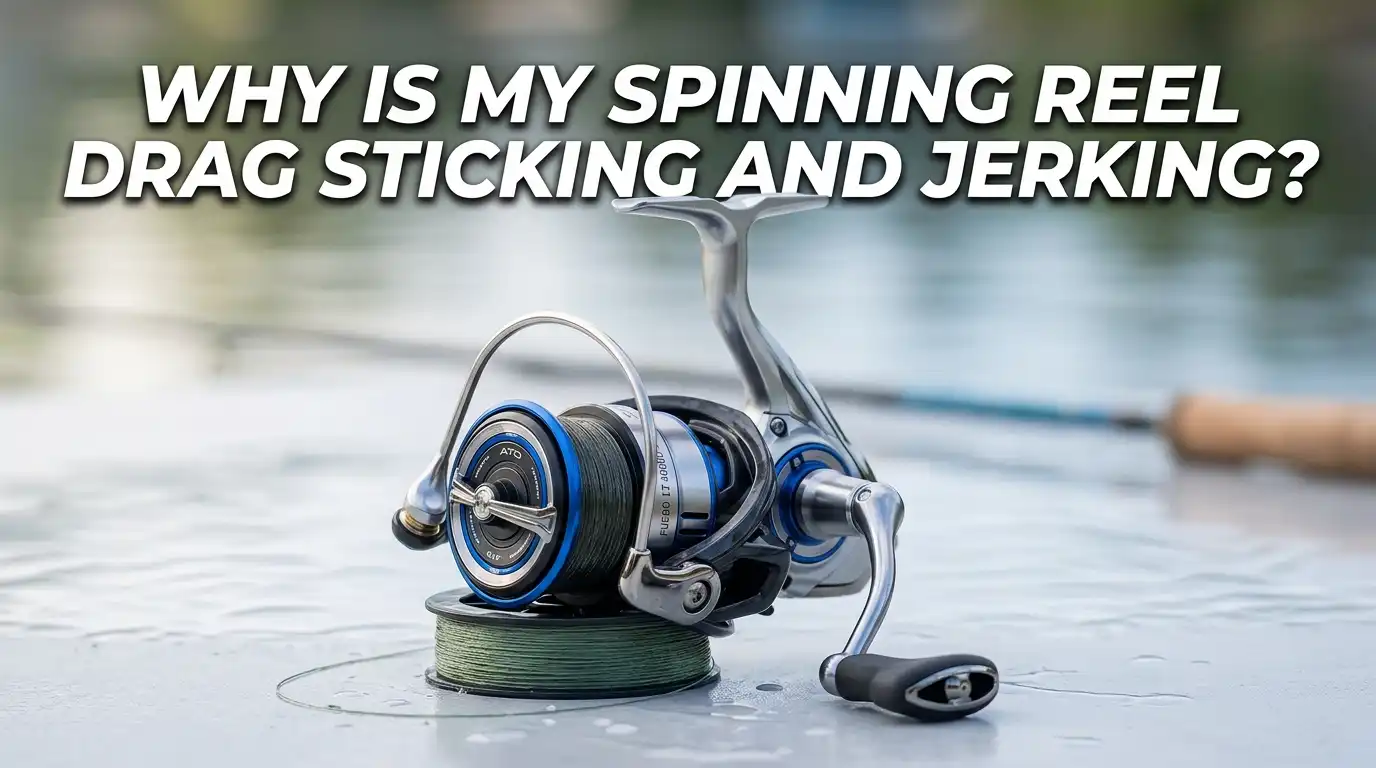
Why Is My Spinning Reel Drag Sticking And Jerking?
Your rod tip bounces. The line jerks out in sudden bursts instead of flowing smoothly. You feel that ugly grab and release every time a fish pulls.
A sticking, jerky drag is one of the most frustrating problems an angler faces, and it breaks line, loses fish, and ruins good days on the water.
The good news is simple. Most drag problems are not a broken reel. They come from dirt, salt, old grease, compressed washers, or the wrong lube. You can fix nearly all of them at home with a few cheap tools and 15 minutes of work.
In A Nutshell:
- Dirty drag washers cause most problems. Salt, sand, and old grease build up between the washers and make the drag grab instead of slide. A simple cleaning fixes the majority of jerky drags.
- Felt and carbon washers need different lubes. Felt washers should only be oiled. Carbon fiber washers should be lightly greased. Using the wrong one creates sticking and ruins smooth release.
- Storing the reel with a tight drag flattens the washers. Always back the drag off after fishing so the washers stay springy and even.
- A worn or compressed washer needs replacement. When cleaning does not help, swapping in fresh carbon washers restores smooth, strong drag pressure.
- Set your drag by pulling line past the rod tip, never straight off the spool. This gives you the true working pressure and shows real stickiness.
- Rinse saltwater reels after every trip. Most sudden drag failures trace back to salt and grime that was never washed out.
What A Sticking And Jerking Drag Actually Means
A healthy drag releases line in one smooth, steady flow. A sticky drag holds the line too long, then lets go in a sudden jerk. This stop and start motion is called stick slip. You feel it as a bouncing rod tip and uneven line release when a fish runs.
The drag works by stacking washers inside the spool. Metal washers press against friction washers, and that friction controls how hard the line pulls out. When the friction surface is clean and even, line slides smoothly. When it is dirty, dry, or damaged, the surfaces grab and slip in jerks.
Understanding this helps you fix it. The problem almost always lives in those washers. Once you know that, the repair becomes simple and logical.
Dirty Drag Washers: The Number One Cause
This is the most common reason your drag sticks and jerks. Over time, salt, sand, dust, and water work their way into the drag stack. They mix with the grease and form a gritty paste. That paste makes the washers grab unevenly, which creates the jerking feeling.
Saltwater reels suffer the most because salt crystals are abrasive and they hold moisture. Even freshwater reels collect dust and old lube that hardens. You may not see the dirt from outside, but inside the spool it builds up fast.
The fix is to open the drag and clean every washer. A clean drag stack is a smooth drag stack. Most anglers are shocked at how much grime they find inside a reel that looked fine on the surface.
Pros of cleaning the washers: It is free, fast, and solves most jerky drags. Cons: You must take the spool apart carefully, and you risk losing the small clip if you rush.
Step By Step: How To Clean Your Drag Washers
Lay a towel over your workspace first, since this gets a little greasy. Unscrew the front drag knob and lift the spool off the reel. If your line is staying on, tape it down so it does not unravel into a mess.
Inside the spool you will see a small clip holding a metal washer. Remove it carefully with needle nose pliers or a pick. Do not lose this clip. Cover the spool with the towel while you pop it free so it cannot fly away.
Flip the spool over and tap out the washers. Keep them in the exact order you removed them, because some have tabs that only fit one way. Wipe each washer clean with a cloth and a little solvent on the cloth, never sprayed straight onto the washer.
Pros: Deep cleaning restores smooth drag almost every time. Cons: It takes patience, and reassembling in the wrong order can keep the problem alive.
Felt Washers Versus Carbon Washers: Know The Difference
This step trips up many anglers, so read it twice. Felt and carbon fiber washers do not get the same treatment. Using the wrong lube is a direct cause of a sticky drag.
Felt washers should only be oiled. Put one drop of synthetic oil on your finger and rub it gently into the surface. Never grease felt, because grease soaks in and makes the felt grab and stick.
Carbon fiber washers should be lightly greased. Use a tiny dab of drag grease and rub it into the fabric with your fingertip. A thin coat is all you need. Too much grease attracts dirt and slows the drag down.
Pros of matching lube to material: Smooth, consistent release and longer washer life. Cons: You must first identify your washer type, which means checking the reel manual or looking closely at the material.
Old Or Wrong Grease Gumming Up The Drag
Grease that has gone old turns thick and sticky. It dries into a gummy layer that makes washers grab in jerks. This is especially common in reels that sit unused for a season or two.
The wrong grease causes the same trouble. Heavy automotive or general purpose grease is too thick for a drag system. It creates drag that hesitates, then releases in a sudden lurch. Only use grease made for fishing reel drags on carbon washers.
To fix this, wipe the old grease off completely with a solvent on a cloth. Then apply only a thin film of proper drag grease. Remember the golden rule of grease: a barely visible layer does the work, and thick globs only collect dirt.
Pros: Fresh, correct grease gives instant smoothness. Cons: Buying a dedicated drag grease costs a little money, though one tube lasts years.
Compressed Washers From Storing The Drag Too Tight
Here is a habit that quietly destroys drags. Storing your reel with the drag cranked down compresses the washers. They lose their springiness and stay flattened, which makes the drag grab unevenly.
Felt washers are the worst hit by this. When squeezed for weeks or months, they pack down and stop releasing smoothly. The drag then feels sticky right from your first cast.
The fix is a simple habit change. Back the drag knob off a couple of turns after every trip. This takes the pressure off the washers and lets them keep their shape. Just remember to reset your drag before the next fish.
Pros of backing off the drag: It costs nothing and prevents future stickiness. Cons: You must remember to retighten before fishing, or you will lose your first hookset to a slipping drag.
When To Replace Your Drag Washers
Sometimes cleaning and lubing is not enough. Worn washers are glazed, cracked, flattened, or grooved. Once the friction surface is damaged, no amount of lube brings back smooth drag.
Carbon fiber replacement washers are a popular upgrade. They handle heat better, last longer, and resist sticking compared to old felt washers. Many anglers swap felt for carbon and never look back. Replacement kits are sold for most common reel sizes and series.
To replace them, follow the same disassembly steps, then drop the new washers in the same order. Match the thickness and size of the originals so the drag stack still seats correctly under the clip.
Pros: Fresh carbon washers give stronger, smoother, more reliable drag. Cons: You need the correct size for your reel, and a wrong fit can throw off your drag range.
Salt And Water Intrusion In Saltwater Reels
Saltwater is the silent killer of smooth drags. Salt crystals are abrasive and they trap moisture inside the reel. Even a sealed reel can let small amounts of salty water reach the drag stack over time.
Braided line makes this worse because it squeezes saltwater down onto the spool and around the drag area. The salt then dries and grinds the washers each time line pulls out. This is why saltwater drags fail faster than freshwater ones.
Prevention beats repair here. Rinse the reel gently with fresh water after every saltwater trip. Hold it horizontal, tighten the drag during the rinse so water cannot get in, then shake it dry and let it air out.
Pros of regular rinsing: It stops most salt related drag failures before they start. Cons: It adds a few minutes after each trip, and you must avoid blasting water in, which forces salt deeper.
Mechanical Causes Beyond The Drag Washers
Not every jerky feeling comes from the washers. Sometimes the problem hides elsewhere in the reel. A rough or seized line roller can make line stutter as it comes off the bail, which feels like a sticky drag.
A worn or dry main shaft can also bind the spool slightly and cause uneven release. So can a bent spool, a damaged bail spring, or grit in the spool support area. These issues mimic drag stickiness but live outside the drag stack.
To check, remove the spool and turn the line roller with your finger. It should spin freely with no grinding. Wipe and oil the shaft, and inspect the spool for damage. If the drag is clean but still jerky, look at these moving parts next.
Pros of checking the mechanics: You catch problems a drag cleaning would miss. Cons: Some parts need deeper disassembly, which is harder for beginners.
How To Set Your Drag The Right Way
A wrongly set drag can feel sticky even when the reel is healthy. Set your drag too tight and the line grabs hard before it slips. That hard grab feels exactly like a jerky drag.
The correct way is to pull line off past the rod tip, not straight off the spool. Thread the line through the guides, then pull. This shows the true working drag with the rod loaded, which is how it behaves during a fight.
A common starting point is to set the drag to about a quarter of your line breaking strength. Adjust from there based on the fish you target. Always test by pulling slowly and feeling for smooth, steady release.
Pros of proper setting: You avoid false stickiness and protect your line from breaking. Cons: It takes a moment of testing before each trip, which busy anglers often skip.
Front Drag Versus Rear Drag: Which Sticks More
Reel design affects how often you fight drag problems. Front drag reels use larger washers stacked in the spool. Bigger washers spread the load and give smoother, stronger drag that resists sticking under heavy pressure.
Rear drag reels place the system in the back of the body for easy access. They feel comfortable to adjust mid fight, but the washers are usually smaller. Smaller washers heat up and stick more easily when a big fish runs hard.
So if your rear drag reel keeps sticking, the design plays a part. The fixes are the same, but you may need to service it more often. Many serious anglers prefer front drag for big fish because it stays smoother.
Pros of front drag: Smoother, stronger, less prone to sticking. Cons: It is harder to adjust while fighting a fish, and changing spools takes more effort than a rear drag.
A Simple Maintenance Routine To Prevent Future Sticking
Prevention is far easier than repair. Build three habits into your fishing routine and your drag will stay smooth for years. These steps take only minutes but save you from lost fish.
First, rinse and dry the reel after every saltwater trip, and back the drag off before storage. Second, every six to eight fishing days, oil the line roller, bail joints, and main shaft with light reel oil. Never use WD40 as a lube, since it is a solvent and washes lubrication away.
Third, once a year, open the drag stack, clean the washers, and re lube them correctly. Felt gets oil, carbon gets a thin grease. This yearly service keeps the friction surfaces fresh and prevents the gummy buildup that causes jerking.
Pros of a routine: Smooth drag, longer reel life, fewer lost fish. Cons: It requires discipline, but the payoff on the water is huge.
Frequently Asked Questions
Why does my drag stick only when I tighten it down hard?
This usually means your washers are compressed or contaminated. Under high pressure, dirty or flattened washers grab instead of slipping. Clean the drag stack and replace worn washers. Also avoid storing the reel with the drag cranked tight, since that flattens the washers over time.
Can I use WD40 to fix a sticky drag?
No. WD40 is a solvent, not a lubricant. It can clean parts, but it strips away the oil and grease your drag needs and can soak into felt washers and ruin them. Use proper reel oil for felt washers and drag grease for carbon washers instead.
How often should I clean my spinning reel drag?
A full drag service once a year suits most anglers. Heavy saltwater users or charter anglers may need it two or three times a year. Reels fished only a few times a season can go longer. Rinse after each saltwater trip to stretch the time between deep cleanings.
Should I grease or oil my drag washers?
It depends on the material. Grease carbon fiber washers with a thin layer of drag grease. Oil felt washers with a single drop of synthetic oil. Never grease felt, because it soaks in and causes sticking. Check your reel manual if you are unsure which type you have.
Is a jerky drag ruining my line?
Yes, it can. A sticky drag creates sudden pressure spikes that shock and weaken your line. These spikes break line during a fish run, especially on light tackle. Fixing the drag protects your line and helps you land more fish. Smooth, steady drag is gentler on every knot and connection.
My drag is clean but still jerks. What now?
Look beyond the washers. Check the line roller, main shaft, and spool for grit, wear, or damage. A rough line roller often mimics a sticky drag. Oil the moving parts and inspect for bent or worn components. If problems remain, a worn washer set or internal issue may need replacement or a service center.

Hi, I’m Ivy Webb, the passionate angler and creator behind BaitHookVault.com. I spend my days out on the water personally testing and reviewing a wide variety of fishing tools and gear.