How To Tie A Palomar Knot That Does Not Burn The Line?
The Palomar knot is a favorite among anglers. It is strong. It is simple. But many people burn their line while tying it.
Line burn happens when friction heats up the line. This weakens your knot. It can cause your line to snap at the worst moment.
The good news? You can prevent this easily. A few small changes make a big difference.
This guide will show you exactly how to tie a Palomar knot the right way. You will learn each step in simple detail.
In a Nutshell
- Double your line first. Pass the loop through the hook eye before you start tying anything else.
- Tie a loose overhand knot. Use the doubled line to form a bight. Do not pull it tight yet.
- Loop the bight over the hook. Slide it down so it sits near the eye. Keep the lines flat and even.
- Wet the knot before pulling tight. This one step stops most friction. It is the real secret to a burn free knot.
- Pull both ends smoothly. Tighten the standing line and tag end together. Avoid sudden jerks or twists.
- Check for overlaps. Make sure the line lies flat with no crossing sections. Overlaps create weak spots that snap under pressure.
What Causes Line Burn When Tying Knots
Line burn occurs because friction generates heat when you tighten a knot too quickly. The doubled line slides against itself, creating resistance that weakens and damages the material.
Friction is the main culprit. When you cinch the knot without moisture, the line rubs together at high speed. This rubbing action heats up the fibers and can actually melt or fray them. Monofilament lines suffer this problem most often because they have low melting points.
Line overlap creates another major issue. If the doubled line crosses over itself during tying, those contact points become stress zones. When you pull tight, the knot tightens unevenly and friction concentrates at the overlapped areas. This causes visible nicks and weak spots in your line.
Jerky, sudden movements make things worse. When you yank the line tight instead of pulling smoothly, the friction spikes dramatically. The line doesn’t have time to distribute the tension evenly. This rapid tightening generates intense heat in a short time.
Twisting the doubled line while tying also increases friction. If you rotate or spiral the bight as you work, you create extra contact points between the line strands. Each twist adds more surface area rubbing together.
Dry conditions accelerate line burn. Without any moisture, the line has nothing to reduce friction. The fibers grip each other tightly, making heat buildup inevitable.
Understanding these causes helps you prevent them. You now know why moisture matters, why smooth pulling works better than jerking, and why keeping your line flat and untwisted saves you from damage. These simple awareness points form the foundation of burn free knot tying.
Materials and Setup Before You Begin
Before you start tying a Palomar knot, gather what you need. Having everything ready prevents mistakes and keeps your line safe from burn damage.
First, prepare your fishing line. Check that it has no frays, kinks, or weak spots. Run your fingers along the section where you plan to tie. If you feel any rough areas, trim them off with clean scissors. A smooth line prevents friction problems during tightening.
Next, have water or saliva nearby. This is your most important tool for preventing line burn. Keep a small cup of water at your tying station, or simply use your mouth. You will apply moisture right before cinching the knot tight. This step reduces friction dramatically and protects your line from heat damage.
Gather your hook or lure. Make sure the eye is clean and has no burrs. Run your finger inside the eye gently. Any sharp edges can catch and fray your line. A smooth eye lets the doubled line pass through without resistance.
Set up good lighting. Even though the Palomar knot works in low light, you still need to see clearly during setup. Poor lighting causes you to twist the doubled line accidentally or create overlaps. Position yourself near a window or use a headlamp.
Clear your work surface. Remove anything that could snag your line or distract you. A clean, flat workspace helps you keep the doubled line straight and prevents unwanted twists.
Take your time. Rush leads to jerky movements and premature tightening. Slow, deliberate actions keep friction minimal and your knot strong.
Step-by-Step: Tying A Burn-Free Palomar Knot
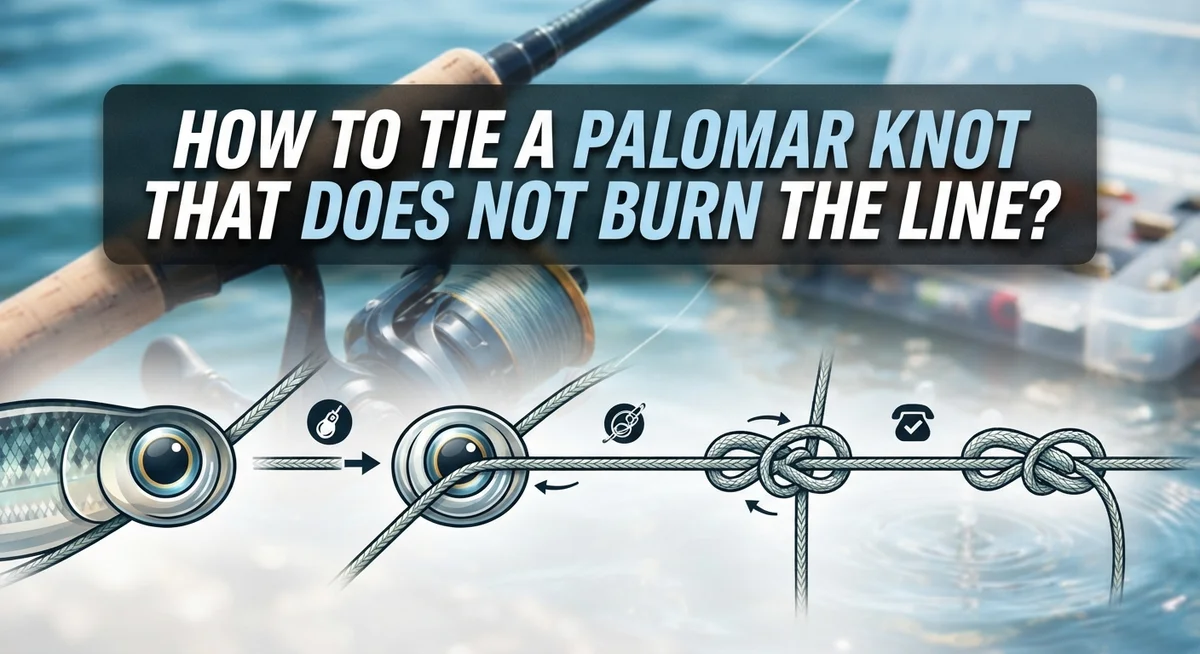
Start by doubling your line and passing it through the hook eye. This creates a loop, or bight, that you’ll use for the entire knot.
Form a loose overhand knot using the doubled line. Keep it very loose at this stage. You’re not ready to tighten yet. The knot should sit naturally without any tension pulling it closed.
Now slide the bight over the hook. Loop it around so the doubled line wraps completely around the hook shank. The bight should pass over the hook eye and come back through. This step locks the hook in place within your knot structure.
Before you pull anything tight, wet the knot completely. Use water, saliva, or a damp cloth to coat the line where it will cinch. This moisture reduces friction and prevents the line from heating up and burning. Don’t skip this step.
Pull both the standing line and tag end smoothly and evenly. Avoid jerky movements or sudden yanks. Steady pressure works best. Watch the knot as it tightens to make sure the line stays flat and doesn’t overlap itself.
Tighten until the knot sits snug against the hook eye. The doubled line should form clean, parallel sections with no twists or spirals. If you see crossing sections or overlaps, loosen it and start again.
Test the knot by pulling hard on the standing line. A properly tied Palomar knot holds extremely well. The line should not slip or slide. Your knot is complete when it’s tight, smooth, and shows no signs of burn marks or discoloration on the line itself.
The Role of Lubrication in Preventing Friction Damage
Lubrication is your best defense against line burn when tying a Palomar knot. Moisture reduces friction dramatically by creating a thin layer between line fibers. This layer lets the knot tighten smoothly without heat buildup.
Saliva works perfectly for this job. Your mouth is always available, and saliva contains natural lubricants that protect fishing line. Simply wet your finger and apply it to the knot before pulling tight. This simple step cuts friction by a huge amount.
Water is equally effective. Keep a small bottle or cup nearby during your tying session. A quick dip of your finger or a light spray on the knot delivers the same protection as saliva. Either option costs nothing and takes seconds.
Apply lubrication at the right moment. Wet the knot after you form the overhand knot but before you cinch it down. This timing matters because you want moisture present when friction peaks. Waiting until after tightening is too late.
The amount of moisture matters too. You need enough to coat the line without soaking it completely. A light, even coating works best. Too much water can make the line slippery and harder to control.
Lubrication also helps the knot settle evenly. When the line glides smoothly, each fiber sits properly without kinks or overlaps. This creates a stronger, cleaner knot that resists breaking.
Don’t skip this step thinking it wastes time. Applying lubrication takes five seconds and prevents line damage that could ruin your catch. Make it part of your routine. Wet, tie, pull smooth, and tighten. This sequence keeps your Palomar knot burn free every single time.
Common Mistakes That Lead to Line Burn
Line burn happens when friction damages your fishing line during knot tightening. Understanding what causes this problem helps you avoid it completely.
Premature tightening is the biggest culprit. Many anglers pull the knot tight before the doubled line fully settles into position. This creates excessive friction at pressure points. The line heats up and weakens. Your knot fails when you need it most.
Line overlap creates another major issue. When the doubled line crosses itself during tying, it forms weak points. These overlaps concentrate pressure in small areas. The line burns through at these spots. Always keep your doubled line parallel and separate.
Skipping the lubrication step guarantees problems. Dry line generates tremendous heat during cinching. Even a few seconds of friction can damage the fibers. Your line becomes brittle and snaps under load.
Twisting the doubled line while tying increases friction significantly. When you rotate or spiral the bight, the fibers rub against each other. This creates heat before you even tighten the knot. Keep your doubled line straight and untwisted throughout the entire process.
Jerky or uneven pulling also causes line burn. Sudden yanks create friction spikes. Smooth, steady pressure distributes the load evenly. Pull both the standing line and tag end at the same speed.
Dry conditions accelerate all these problems. Low humidity reduces the line’s natural flexibility. Cold temperatures make line stiffer and more prone to burning. These environmental factors make lubrication even more critical.
The solution is simple. Slow down your tying process. Wet your knot before cinching. Pull smoothly and evenly. Keep your doubled line parallel. These habits eliminate line burn completely and create stronger knots.
Troubleshooting a Weak or Damaged Knot
A weak or damaged Palomar knot fails because friction burns the line during tightening. You can fix this by understanding what went wrong and adjusting your technique.
Inspect the knot first. Look for dark spots, fraying, or areas where the line feels rough. These signs show heat damage occurred. The doubled line may have twisted during tying, creating extra friction. The knot might have tightened unevenly, putting stress on one side only.
Check your lubrication method. If you skipped wetting the knot, that’s your main problem. Even light moisture reduces friction by 80 percent. Your next attempt must include this step. Apply water or saliva right after forming the overhand knot but before pulling tight.
Examine your pulling technique. Did you jerk the line or pull too fast? Smooth, even pressure prevents damage. Pull the standing line and tag end at the same speed. Avoid sudden movements that create heat spikes.
Test the doubled line itself. Sometimes the line twisted during setup, creating weak spots. Unwind the doubled section completely. Start fresh with straight line. Twisting causes the fibers to rub against each other, burning from the inside out.
Adjust your cinching speed. Count to three as you tighten. This slow pace lets the knot settle properly. Fast tightening generates heat before the line can settle into position.
Practice on scrap line first. Tie several practice knots on old line. This builds muscle memory for smooth, controlled movements. You’ll feel the difference between jerky and smooth tightening.
The key is combining moisture, smooth pulling, and patience. These three elements eliminate line burn completely.
Tips for Tying in Low-Light or Difficult Conditions
Low-light conditions present unique challenges when tying a Palomar knot. Your hands struggle to see the doubled line clearly. Your fingers may slip or misposition the knot accidentally. The good news is that the Palomar knot remains one of the easiest knots to tie even in darkness.
Start by using your sense of touch rather than sight. Feel the doubled line pass through the hook eye. Your fingertips can guide the bight into position without seeing it perfectly. This tactile approach prevents the twisting and overlapping that cause line burn.
When tying in difficult conditions, slow your movements significantly. Rush creates mistakes. Mistakes create friction. Friction burns your line. Take your time with each step. Feel the overhand knot form before you cinch it down.
Lubrication becomes even more critical in low-light situations. You cannot see if the knot is dry or properly moistened. Apply saliva or water generously to the knot area. This step takes seconds but prevents damage you cannot see until it’s too late.
Use a headlamp or small light source if available. Position it to illuminate your hands and the knot area. This simple tool makes a huge difference without requiring any special equipment.
Practice tying on scrap line before heading out. Muscle memory helps you tie correctly even when visibility drops. Your hands will know where to position each loop and bight.
Count to three as you tighten the knot. This rhythm prevents jerky pulling that generates excessive heat. Smooth, steady pressure keeps friction minimal and protects your line from burn damage.
Testing Knot Strength Before Casting
Testing your Palomar knot strength before casting tells you whether line burn occurred during tying. This simple check saves you from losing fish or breaking your line mid cast.
Start by holding the finished knot up to light. Look closely at the doubled line section near the hook eye. You want to see clean, smooth line with no dark spots or discoloration. Dark marks mean friction burned the line during tightening. Fraying or rough texture also signals damage.
Run your fingers along the knot slowly. A healthy knot feels smooth throughout. If you feel rough patches or bumps, friction damaged the line fibers. These weak spots will fail under pressure.
Pull the tag end gently. It should slip out smoothly without resistance. If the tag end catches or feels gritty, line burn created friction points inside the knot. This means your next cast could snap unexpectedly.
Test the knot’s actual strength using steady, even pressure. Hold the standing line in one hand. Gently pull the hook downward with your other hand. A properly tied Palomar knot resists significant force. If it slips or loosens easily, line burn weakened the connection.
Listen for sounds as you test. A creaking noise means friction and heat damage. Silence indicates a clean, strong knot.
If your test reveals problems, retie the knot on fresh line. Remember to wet the knot with saliva or water before tightening. Pull smoothly without jerking. Count to three as you cinch it down.
Testing takes thirty seconds. It prevents frustration and lost fish. Make this quick check part of your regular tying routine before every fishing trip.
Final Thoughts
Tying a strong Palomar knot comes down to a few simple habits. Moisten the line before you cinch it. Pull slowly and evenly. Keep the doubled line flat, without twists or overlaps.
These small steps make a huge difference. They protect your line from unnecessary friction. This means your knot holds strong when a fish strikes.
Many anglers rush this knot because it looks so simple. But rushing is exactly what causes line burn. Patience is the real secret here, not speed.
Think of every knot as practice for the next one. Each time you tie it, your hands learn the right pressure. Your fingers start to sense when lubrication is enough.
Over time, this knot becomes second nature. You will tie it faster without sacrificing quality. That balance of speed and care is what separates a strong knot from a failed one.
Remember that even small mistakes can weaken your line. A slight twist or a dry knot might seem harmless. But under pressure, these tiny flaws often turn into big problems.
So always check your work before you cast. A quick glance and a gentle tug can save your whole line. This habit takes seconds but prevents hours of frustration later.
The Palomar knot rewards careful hands. It is not about brute strength. It is about smooth motion and proper moisture.
Master these basics, and you will rarely deal with line burn again. Your knots will feel cleaner, tighter, and more reliable.
In the end, good technique beats good luck every time. Keep practicing, stay patient, and your Palomar knot will never let you down.
Frequently Asked Questions
Why does my Palomar knot burn the line?
Line burn happens when friction builds up during tightening. The most common cause is skipping the lubrication step. Dry line creates heat as it cinches. Another culprit is twisting the doubled line before you tie it. Twisted sections create weak spots that heat up faster.
Jerky pulling motions also cause burns. Your hands should apply smooth, steady pressure instead.
Should I wet the knot before or after tying?
Wet it before you cinch the knot tight. Apply saliva or water to the doubled line and the overhand knot itself. This reduces friction instantly.
Don’t wait until after tightening. By then, heat has already damaged the fibers. A quick dab of moisture takes one second and prevents most line burn problems.
Can I use oil or other lubricants instead of water?
Water and saliva work best for this knot. They reduce friction without affecting line strength. Oil can leave residue that weakens your line over time.
Stick with simple, natural moisture. Your mouth provides the easiest option when you’re on the water.
What pulling speed prevents line burn?
Count to three as you tighten. This pace gives you smooth, controlled tension. Fast jerking motions trap heat in the fibers.
Imagine you’re tightening a jar lid slowly and carefully. That’s the speed you want. Patience beats speed every single time with the Palomar knot.
How do I know if line burn already happened?
Run your fingers along the finished knot under light. Look for fuzzy spots, discoloration, or rough patches. Pull the tag end gently. A weak spot will feel mushy or break easily.
If you spot damage, retie the knot on fresh line. Testing takes thirty seconds and saves your cast.

Hi, I’m Ivy Webb, the passionate angler and creator behind BaitHookVault.com. I spend my days out on the water personally testing and reviewing a wide variety of fishing tools and gear.