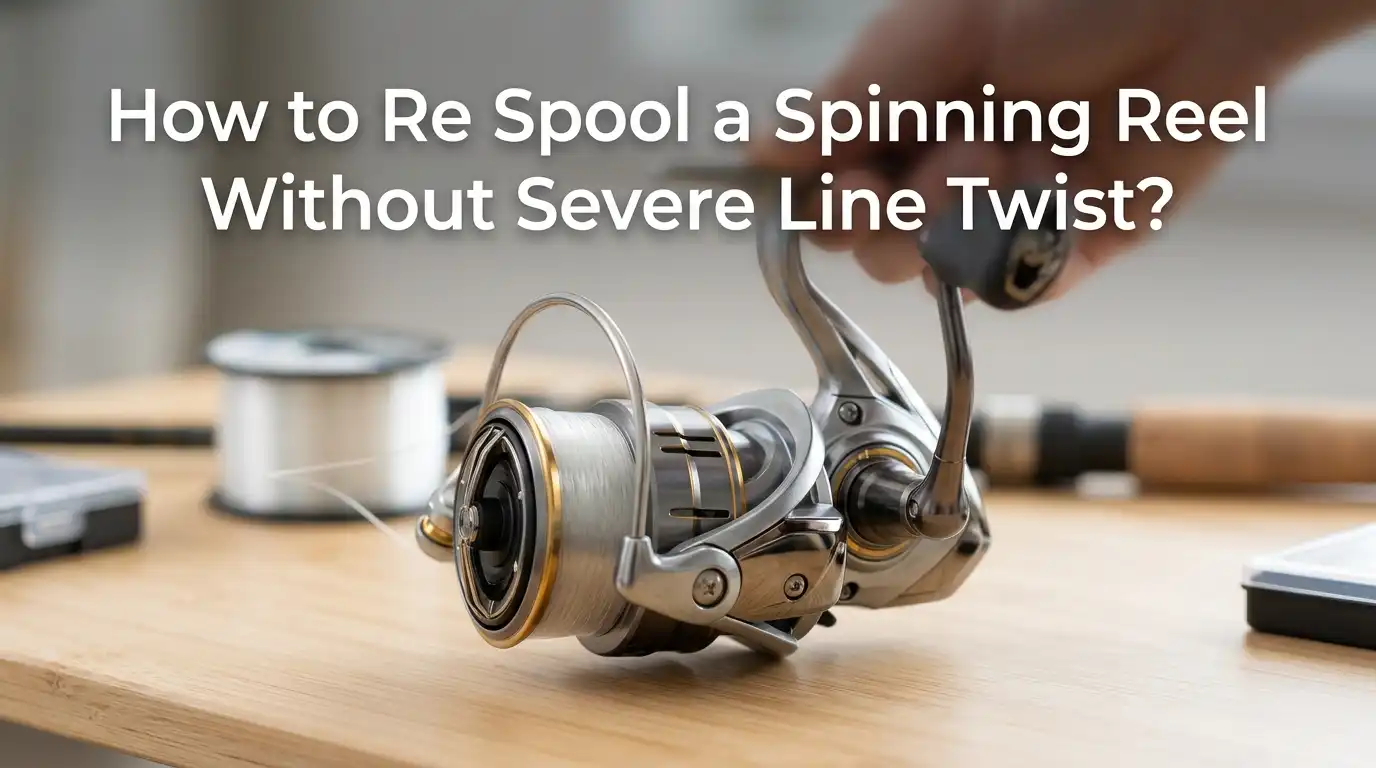
How to Re Spool a Spinning Reel Without Severe Line Twist?
A spinning reel should make fishing easier. Yet one bad re spool can turn a smooth cast into loops, knots, and lost time. If your line jumps off the spool, twists near the rod tip, or forms loose coils after a few casts, the problem often starts long before you hook a fish.
The good news is that severe line twist is usually preventable. You do not need special gear or a fancy setup. You need the right line direction, steady tension, the right fill level, and a few smart habits on the water.
This guide shows you exactly how to re spool a spinning reel the right way. You will learn what causes twist, how to stop it during spooling, and how to fix it if your line is already in bad shape.
In a Nutshell
- Start with the line facing the right direction. This is the biggest fix for most anglers. A spinning reel wraps line in loops, so the filler spool must feed line in the same natural direction. If the line starts forming coils after a few handle turns, stop and flip the filler spool over. That one move can prevent a full day of frustration.
- Keep steady tension from the first wrap to the last wrap. Loose line goes on the reel in soft layers. Those layers dig in, jump out, and twist fast. Use your fingers, a soft cloth, or a simple tension setup to keep the line firm. Tight and even line lays better and casts better.
- Do not overfill the reel. Many line problems look like twist, but the real cause is an overfilled spool. Leave about one eighth inch of space below the spool lip. That small gap helps the line leave the reel in clean loops instead of exploding off the edge.
- Match the line type to the reel and technique. Mono and fluorocarbon have more memory. Braid has less memory and behaves better on spinning gear, but it still needs proper backing or a secure base. The wrong line size or a stiff line on a small reel will fight you on every cast.
- Use better habits after the re spool. Close the bail by hand. Pull the line snug before the first turn of the handle. Do not reel while the drag slips. Use a swivel when a lure spins. These small habits matter because twist builds little by little, then shows up all at once.
- Fix bad twist early. If your line already looks curly, do not keep fishing and hope it improves. Remove the lure, let the line trail behind a moving boat, or stretch it on land and reel it back under pressure. Mild twist can be fixed. Severe twist often means it is time for fresh line.
What Causes Severe Line Twist on a Spinning Reel
A spinning reel does not wind line the same way a baitcaster does. The spool stays still while the bail wraps line around it. That design is useful, but it also means twist can build up fast if anything is off. The most common cause is wrong spool direction during the re spool.
Other causes show up after the line is already on the reel. Reeling while the drag slips adds twist fast. Letting the reel close the bail by turning the handle can add slack and small twists. Lures that spin, like spoons or in line spinners, can also turn the line over and over.
Line memory adds another layer to the problem. Mono and fluorocarbon want to keep the shape of the spool they came from. If that curl fights the reel, the line springs into coils. Severe twist is usually not one mistake. It is several small mistakes stacking together.
What to Prepare Before You Start Re Spooling
You only need a few things to do this well. Get your reel, rod, fresh line, scissors, and a soft cloth. A pencil through the filler spool can help if another person is assisting. If you are alone, you can still do a clean job with hand tension and a careful pace. Simple works if your setup stays controlled.
Check the reel size and the line rating printed on the spool. That rating gives you a safe range for line size. If you load a small spinning reel with thick, stiff line, you increase memory and coils right away. Try to stay close to the reel’s intended line range.
You can also choose between a hand method and a spooler. Pros of the hand method: cheap, easy, and good for one reel. Cons: tension can vary. Pros of a spooler: more even pressure and less wobble. Cons: extra cost and setup time.
Remove the Old Line and Inspect the Reel First
Before you add new line, take off the old line and look at the reel. This step saves you from blaming the new line for an old problem. Check the spool lip, the bail wire, and the line roller. If the roller feels sticky or does not spin freely, your reel can twist line no matter how carefully you spool it. A smooth line roller matters more than many anglers think.
Look for nicks on the spool lip or rough spots near the bail arm. Those spots can grab line and cause poor lay on the spool. Wipe away dirt, salt, and dried grime. A clean reel gives the line a smoother path from spool to guide.
This is also a good time to decide if backing is needed. Braid can slip on a bare spool. Mono or fluorocarbon usually grips better. Fixing the reel before the re spool is easier than fixing twist later.
Tie the Line to the Spool the Right Way
Run the line through the first guide closest to the reel. Open the bail before tying anything. Then wrap the line around the reel spool and tie a simple arbor style connection or another secure spool knot. Pull it snug and trim the tag end short. If you forget to open the bail first, you will only do it once.
For mono and fluorocarbon, a simple spool knot usually works fine because the line grips the spool as it tightens. For braid, the line can slip on the spool under load. That is why many anglers use mono backing first or secure braid with a small strip of tape on the bare spool.
Pros of mono backing for braid: better grip and lower cost. Cons: adds one more knot. Pros of tying braid straight with tape: fast and clean. Cons: less forgiving if the wrap slips. Keep it simple, but make it secure.
Set the Filler Spool in the Correct Direction
This is the step that prevents most severe twist. Place the filler spool flat so the line comes off in a natural loop. Start reeling slowly and watch the line near the first guide. After about ten turns, stop and give the line some slack. If you see tight coils or little loops, flip the filler spool over and test again. Let the line tell you which side is right.
On most spinning reels, anglers want the filler spool to feed line in a counter clockwise direction. Still, the quick test matters more than guessing. Different line spools and reel setups can behave a little differently.
Pros of the flat spool test: easy, accurate, and free. Cons: takes patience. Pros of guessing and winding fast: none. Cons: you may ruin the whole re spool. A ten second check here can save hours on the water.
Keep Steady Tension While You Wind the Line
Once the direction is right, keep the tension steady from start to finish. Hold the line lightly with a soft cloth or your fingers in front of the reel. The goal is firm pressure, not crushing pressure. The line should lay flat and tight, not soft and spongy.
If the first layers go on loose, the problem stays buried inside the spool. Later, casts and hook sets pull that loose line out in bunches. That can look like line twist, but it often starts as poor line lay. Reel at a slow, even speed and stop if the filler spool starts wobbling or jumping.
Pros of firm hand tension: more control and better line lay. Cons: your fingers can get warm on long fills. Pros of very high tension: the line packs tight. Cons: too much pressure can stress the line. Aim for steady and moderate pressure the whole time.
Stop at the Right Fill Level
A spinning reel casts best when it is full, but not too full. Leave about one eighth inch of space below the spool lip. Some anglers stop a little below that, but the key is to avoid filling right to the edge. An overfilled spool is one of the fastest ways to create loops and messy casts.
Too little line hurts casting distance. Too much line makes the spool dump extra coils on the cast. That creates loose loops, wind knots, and line piles near the tip. Many anglers think they need more line for distance, but an overfilled spool usually does the opposite.
Pros of a full but safe spool: better casting and smoother line flow. Cons: you need to watch the fill carefully. Pros of underfilling: fewer blow ups. Cons: shorter casts and weaker spool shape. Fill it enough for performance, but keep that clean gap below the lip.
Pick the Best Line for Your Reel and Fishing Style
The line itself can make re spooling easy or hard. Mono is easy to use and budget friendly, but it has more memory. Fluorocarbon is sensitive and sinks well, yet it can be stiff on smaller spinning reels. Braid is thin and limp, so it usually behaves best on spinning gear, though it still needs proper spooling. There is no perfect line for every angler.
Mono pros: simple, forgiving, and easy to manage. Mono cons: more coils and memory. Fluorocarbon pros: good sensitivity and low stretch. Fluorocarbon cons: can coil badly if it is too heavy or too stiff. Braid pros: low memory, long casting, and strong for its size. Braid cons: can slip on the spool and show wind knots if line lay is poor.**
For many anglers, braid with a leader gives the easiest line control on a spinning reel. If you prefer straight mono or fluorocarbon, stay light enough for your reel size and re spool more often.
Use Better Habits After Every Cast
A perfect re spool can still go bad if your habits add twist during fishing. The best habit is to close the bail by hand after every cast. Then pull the line snug before you start reeling. This helps the line settle on the spool under control instead of starting with slack.
Another big rule is simple. Do not reel while the drag is slipping. If the fish is taking line, let it take line. Reeling against the drag twists the line fast. Also watch spinning lures and soft plastics. If a lure spins on the retrieve or a plastic sits crooked, it can twist the line with every turn.
Pros of manual bail closing: less slack and less twist. Cons: it takes a little practice. Pros of using a small swivel with spinning lures: major twist reduction. Cons: extra hardware may affect some finesse presentations. Good habits keep new line fresh much longer.
Fix Twist That Is Already in the Line
If your line is already twisted, act early. Mild twist can often be removed. First, cut off the lure and any terminal tackle. Then let a long section of bare line trail behind a slowly moving boat for a few minutes. The water resistance helps the line unwind. Reel it back in under tension. This is one of the simplest and most effective fixes on the water.
If you are on land, tie the line to a fixed point, walk out a long cast, and apply light tension with the rod. Then reel back slowly while keeping steady pressure. This helps reduce memory and light twist.
Pros of the water drag method: fast, easy, and very effective. Cons: you need open water and boat movement. Pros of the land stretch method: useful from shore and easy to control. Cons: it helps mild twist more than severe twist. If the line stays kinky, replace it.
Check the Line Roller, Bail, and Drag Settings
Sometimes the line is not the main problem. The reel is. A dirty or frozen line roller adds twist every time you retrieve. Spin the roller with your finger. If it feels rough, sticky, or slow, clean it and service it. A smooth roller lets the line pass without grabbing and turning.
The bail also matters. If it snaps shut harshly or does not guide line cleanly to the roller, line lay can suffer. Check that the bail wire is straight and the roller groove is clean. Then look at your drag. If the drag is too tight, you may start cranking while line slips out under pressure.
Pros of basic reel maintenance: smoother retrieves and less hidden twist. Cons: it takes a few minutes. Pros of ignoring small reel issues: none. Cons: repeated twist, weak line, and poor casting. Good spooling works best on a reel that is clean and functioning well.
Common Mistakes That Create Twist Fast
A few mistakes show up again and again. The first is winding line on too fast without checking the filler spool direction. The second is overfilling the reel. The third is using line that is too heavy or too stiff for the spool size. These three mistakes alone cause many severe twist problems.
Other errors happen during fishing. Reeling slack line after a cast, reeling while the drag slips, and using spinning lures without a swivel all add up. Even a badly rigged soft plastic can spin and twist the line during the retrieve. Small errors repeat with every cast, and then the line suddenly looks ruined.
The fix is simple. Slow down. Check direction after a few turns. Keep pressure on the line. Fill to the right level. Close the bail by hand. Good re spooling is less about tricks and more about clean basics done in the right order.
FAQs
Why does my spinning reel line twist even after a fresh re spool?
The most likely causes are wrong filler spool direction, loose tension during spooling, or bad habits after the cast. A sticky line roller can also keep adding twist. Fresh line helps, but fresh line alone does not solve a setup problem.
Is braid better than mono for reducing line twist?
Braid usually behaves better on spinning reels because it has less memory. It comes off the spool with fewer coils. Still, poor spooling and bad retrieve habits can twist braid too. Braid reduces some problems, but it does not erase mistakes.
Should I use a swivel on a spinning reel?
Use a swivel when your lure spins or when your rig tends to turn on the fall. It can help a lot with spoons, in line spinners, and some finesse rigs. For very light or subtle setups, test whether the extra hardware affects the action.
When should I replace the line instead of trying to fix it?
Replace it when the line stays curly after untwisting, shows kinks, feels rough, or keeps springing off the spool. Mono and fluorocarbon can weaken after severe twist. If the line looks tired and acts tired, fresh line is the smarter fix.

Hi, I’m Ivy Webb, the passionate angler and creator behind BaitHookVault.com. I spend my days out on the water personally testing and reviewing a wide variety of fishing tools and gear.