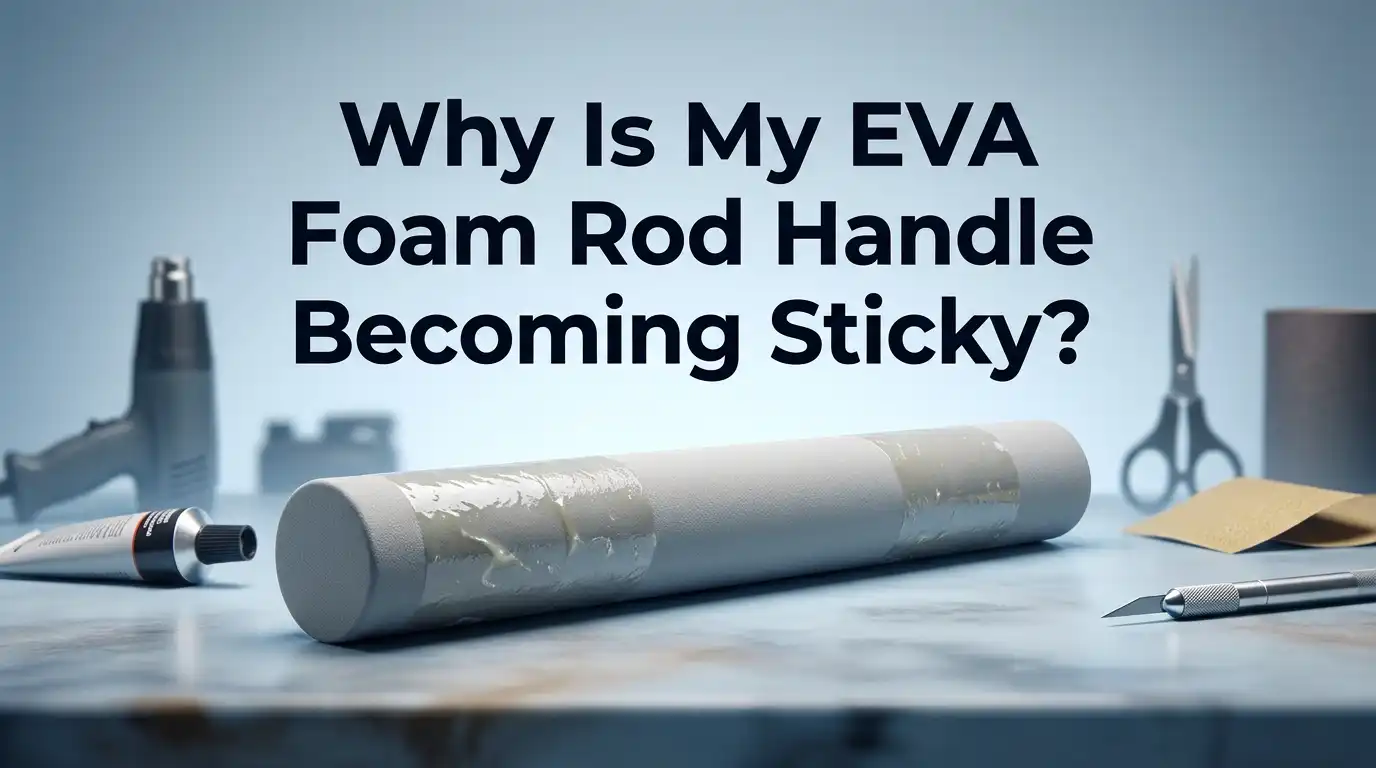
Why Is My EVA Foam Rod Handle Becoming Sticky?
You grab your favorite fishing rod, and something feels off. The handle sticks to your palm. It grabs your skin instead of sliding smoothly.
That once soft and clean EVA foam grip now feels tacky, gummy, and unpleasant. If this sounds familiar, you are not alone. Thousands of anglers face this exact problem every season, and most have no idea why it happens.
The good news is simple. A sticky EVA foam handle is fixable. You do not need to throw your rod away. You do not need to buy a new one either.
Key Takeaways
- Sticky EVA foam is usually caused by breakdown of the material surface, often triggered by sun exposure, heat, sweat, sunscreen, bug spray, and old age. The tacky feeling comes from degraded foam and trapped grime.
- Dish soap and warm water solve most cases. A gentle scrub with mild soap removes oils, sweat, and dirt that make the surface feel gummy. This is the safest first step to try.
- Isopropyl alcohol works well for stubborn stickiness. It strips away the degraded top layer and dissolves oily residue. Use it with care and test a small spot first.
- Light sanding restores badly damaged grips. When cleaning fails, fine grit sandpaper removes the ruined surface and reveals fresh foam underneath. This method is powerful but permanent.
- Prevention beats repair every time. Store rods away from direct sun, rinse after saltwater trips, and keep sunscreen and oils off the handle. Simple habits keep your grip clean for years.
- Avoid oil based products and harsh solvents. These can speed up the breakdown of EVA foam and make the problem far worse over time.
What EVA Foam Actually Is
EVA foam stands for ethylene vinyl acetate. It is a soft, lightweight material used on many rod handles today. Manufacturers love it because it feels warm in the hand, resists water, and costs less than cork. Anglers love it because it grips well even when wet.
The foam has a closed cell structure. This means tiny sealed pockets of air sit inside the material. That design makes it comfortable and buoyant. But it also means the surface can react to certain chemicals and conditions over time.
EVA foam is durable, but it is not indestructible. Sun, heat, sweat, and oils slowly wear at the outer layer. When that layer breaks down, the smooth surface turns tacky. Knowing what the material is helps you understand why it fails and how to fix it properly.
Why Your EVA Foam Rod Handle Turns Sticky
The sticky feeling comes from surface breakdown mixed with trapped grime. Over months and years, the top layer of the foam starts to degrade. The molecules weaken, and the once dry surface becomes soft and gummy to the touch.
Several things speed up this process. Ultraviolet rays from the sun attack the foam and break its chemical bonds. Heat inside a hot car or garage makes it worse. Sweat, skin oils, sunscreen, and bug spray soak into the surface and leave a sticky film.
The stickiness is often a combination of two problems at once. First, the foam itself is aging and degrading. Second, layers of oil and dirt have built up on top. This is why cleaning alone sometimes works, and why deeper repair is needed in other cases.
The Role of Sun and Heat Damage
Sunlight is one of the biggest enemies of EVA foam. The ultraviolet rays slowly break the bonds that hold the foam together. Over time, this makes the surface brittle at first and then soft and sticky as it degrades further.
Heat adds fuel to the fire. Leaving a rod in a hot car, a sealed garage, or direct summer sun raises the temperature of the foam. EVA can warp or soften when it gets too hot, and this weakens the outer layer even faster.
Dark colored foam handles resist sun damage better than light ones. Still, no grip is fully safe from long term exposure. The key lesson here is clear. Store your rods in cool, shaded places. This one habit alone can add years of clean life to your handle.
How Sweat, Sunscreen, and Oils Cause Stickiness
Your hands do more damage than you think. Every time you fish, your palms leave behind sweat and natural skin oils. These soak into the porous surface of the foam. Over many trips, the buildup turns into a sticky, grimy film.
Sunscreen and bug spray make things worse. Both contain oils and chemicals that EVA foam does not handle well. When these products transfer from your hands to the grip, they break down the surface and leave a tacky residue behind.
Petroleum based products are especially harmful. EVA can degrade when it meets oils and certain solvents. That is why a handle used near lotions, greasy snacks, or oily tackle often feels stickier. Keeping these substances away from your grip is one of the easiest ways to protect it.
Method 1: Cleaning With Dish Soap and Warm Water
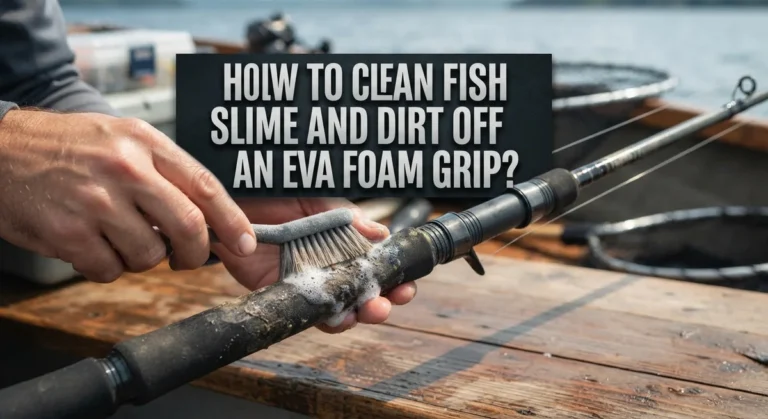
Start with the gentlest method first. Dish soap and warm water remove most sweat, oil, and dirt that cause stickiness. This approach is safe, cheap, and effective for mild to moderate cases.
Here is how to do it. Mix a few drops of mild dish soap into a bowl of warm water. Dip a soft cloth or soft bristle brush into the mix. Scrub the handle in small circles with light pressure. Work up a gentle foam. Then rinse the grip with clean water and let it air dry fully.
Pros: This method is safe for the foam, uses items you already own, and rarely causes damage. It works well for regular upkeep.
Cons: It may not remove deep stickiness or a badly degraded surface. Heavy buildup often needs a stronger method after this first attempt.
Method 2: Using Isopropyl Alcohol for Stubborn Stickiness
When soap and water fall short, isopropyl alcohol steps in. This is a common and trusted fix among anglers. Alcohol dissolves oily residue and strips away the thin degraded layer that makes the foam feel tacky.
Use a 70 to 90 percent isopropyl alcohol solution. Pour a small amount onto a clean cloth. Wipe the handle firmly but not aggressively. You may see grime and dark residue transfer onto the cloth. Keep wiping with fresh sections until the surface feels dry and clean again.
Pros: Alcohol cuts through oils fast and removes stubborn stickiness that soap cannot. It dries quickly and leaves no residue.
Cons: Too much scrubbing can dry out the foam. Always test a small hidden spot first. Overuse over time may wear the surface, so save this method for tougher jobs rather than weekly cleaning.
Method 3: Light Sanding to Restore the Surface
Sometimes the foam is too far gone for cleaning alone. When the surface stays sticky no matter what you try, sanding is the answer. This method removes the ruined top layer and reveals fresh, clean foam underneath.
Use fine grit sandpaper. Start with around 240 grit to take off the damaged layer. Then move to 600 grit, and finish with 1000 grit for a smooth feel. Sand with light, even strokes along the length of the handle. Wipe away dust with a dry cloth as you go.
Pros: Sanding brings even badly aged grips back to life. It removes stickiness at the source rather than just cleaning the top.
Cons: This method is permanent and removes material. Sand too hard and you can gouge the foam or change its shape. Go slow and check your progress often.
Method 4: The Magic Eraser Approach
A melamine sponge, often called a magic eraser, offers a middle ground between cleaning and sanding. It works by gently abrading the surface. Many anglers use it to lift stickiness and grime from rod grips.
To use it, wet the sponge with plain water and squeeze out the excess. Rub the handle in gentle strokes. The fine foam of the sponge wears away the sticky top layer and pulls off trapped dirt. Wipe the grip clean and let it dry.
Pros: A magic eraser is cheap, easy to find, and needs no chemicals. It handles moderate stickiness well and gives quick results.
Cons: The sponge is more abrasive than it looks. It slowly wears away the surface, so heavy use can thin the foam. Use light pressure and treat it like a mild sanding tool rather than a soft sponge.
What Products to Avoid on EVA Foam
Some products do more harm than good. Knowing what to skip protects your handle from faster damage. The wrong cleaner can turn a small sticky patch into a fully ruined grip.
Stay away from oil based cleaners and conditioners. EVA foam breaks down when it meets oils and petroleum products. Skip WD-40, furniture polish, and any spray that leaves a slick coating. These may feel smooth at first but degrade the foam over time.
Harsh solvents like acetone and paint thinner are also risky. They attack the foam too aggressively and can melt or dissolve the surface. Bleach and strong acids fall in the same danger zone. Stick with mild soap, isopropyl alcohol in moderation, and gentle abrasion. These proven methods clean well without wrecking your grip.
Step by Step Full Restoration Routine
Here is a complete plan that combines the best methods in order. Follow these steps from gentlest to strongest, and stop as soon as the stickiness is gone.
First, wash the handle with mild dish soap and warm water. Scrub gently, rinse, and dry. Second, if it still feels tacky, wipe it down with isopropyl alcohol on a clean cloth. Test a small area first to be safe.
Third, if stickiness remains, use a damp magic eraser with light strokes. Fourth, for the worst cases, sand with 240, then 600, then 1000 grit paper. Finish by wiping off all dust and letting the grip air dry completely. Working in this order means you use the least harsh method that gets the job done, which protects your foam for the long run.
How to Prevent Your Handle From Getting Sticky Again
Prevention is far easier than repair. A few simple habits keep your grip clean and dry for many seasons. Building these into your routine saves you time and effort later.
Store your rods in a cool, shaded place. Keep them out of direct sun and hot cars. Rinse the handle with fresh water after every trip, especially after saltwater or a sweaty day. Wipe it dry before you put it away.
Keep sunscreen, bug spray, and oily hands off the grip when you can. Wash your hands before handling the rod if you have lotion on them. A quick wipe down with a damp cloth after each outing removes sweat and grime before it builds up. These small steps stop stickiness before it ever starts.
When to Replace the Handle Instead of Fixing It
Sometimes repair is not worth the effort. If the foam is crumbling, cracked deep, or falling apart in chunks, cleaning and sanding will not save it. At that point, replacement is the smarter choice.
Look for warning signs. Deep gouges, missing pieces, and foam that stays soft and mushy even after cleaning all point to full breakdown. If sanding removes so much material that the handle loses its shape, the grip has reached the end of its life.
Replacing an EVA grip is a doable project for many anglers, though it takes tools, patience, and some skill. If you are not comfortable doing it yourself, a rod builder or tackle shop can handle the job. Weigh the cost of a new grip against the value of the rod before you decide.
Frequently Asked Questions
Why does my EVA foam handle feel sticky even after cleaning?
Cleaning removes oil and dirt, but it cannot fix a degraded surface. If the foam itself has broken down from sun and age, the top layer stays tacky. In that case, light sanding or a magic eraser removes the damaged layer and solves the problem.
Can I use isopropyl alcohol on EVA foam safely?
Yes, in moderation. Isopropyl alcohol cleans oily residue and stubborn stickiness well. Always test a hidden spot first and avoid heavy repeated use. Too much scrubbing over time can dry out and wear the foam surface.
Does sunscreen really damage rod handles?
Yes. Sunscreen contains oils and chemicals that EVA foam does not resist well. When it transfers from your hands to the grip, it soaks in and breaks down the surface. This leaves a sticky film that builds up over time.
How do I stop my handle from getting sticky in the first place?
Store rods in cool, shaded places away from heat and sun. Rinse the handle after each trip and wipe it dry. Keep sunscreen, bug spray, and oily hands off the grip. These simple habits prevent most stickiness.
Is a sticky EVA foam handle a sign the rod is ruined?
Not usually. Most sticky handles are fixable with cleaning or sanding. The rod blank and other parts stay fine. Only replace the grip if the foam is crumbling, cracked deep, or falling apart in pieces.
Can I use a magic eraser on my rod grip?
Yes, but use it gently. A magic eraser is a mild abrasive, not a soft sponge. Wet it, wring it out, and rub with light pressure. It lifts stickiness and grime well, but heavy use will slowly thin the foam.
What should I never use to clean my EVA foam handle?
Avoid oil based cleaners, WD-40, furniture polish, and harsh solvents like acetone or paint thinner. These break down or melt the foam and make stickiness worse. Bleach and strong acids also cause damage. Stick to mild soap and moderate alcohol use.

Hi, I’m Ivy Webb, the passionate angler and creator behind BaitHookVault.com. I spend my days out on the water personally testing and reviewing a wide variety of fishing tools and gear.