Why Is My Fishing Reel Anti-Reverse Failing When I Hook A Fish?
You set the hook. You feel the weight. Then your handle spins backward and your heart sinks. The fish is gone, and your reel just betrayed you. A failing anti-reverse is one of the most frustrating problems an angler can face. It always seems to happen at the worst moment, right when a fish bites.
The good news is simple. This problem is fixable. In most cases you do not even need a new reel. You just need to understand the small part that locks your handle in place. Once you know how it works, you can spot the cause fast.
This guide breaks down every reason your anti-reverse fails under load. You will learn how to test it, clean it, and repair it step by step. Let us get your reel locking solid again.
Key Takeaways
- The anti-reverse bearing is the usual culprit. A tiny one way roller clutch bearing inside your reel locks the handle so it cannot spin backward. When it fails, your handle gives way under the pull of a fish.
- Too much grease is the number one cause of failure. The roller clutch needs to grip a metal sleeve to work. Heavy grease makes the rollers slip instead of lock, especially in cold weather.
- Cold and wet conditions make slipping worse. Old, thick, or wrong lubricant stiffens when temperatures drop, so many reels fail to lock during winter or rainy trips.
- Most fixes cost you almost nothing. Cleaning the bearing with degreaser solves the problem for many reels. A simple wipe and a light oil drop often brings the lock right back.
- A worn dog or pawl affects older reels. Reels with a ratchet style anti-reverse can fail when the metal latch wears down or the spring slips loose.
- Check your anti-reverse switch first. Sometimes the lever is simply flipped off, or it is bent. This free, instant fix saves many anglers from a full teardown.
What The Anti-Reverse Does On Your Reel
The anti-reverse is the part that stops your handle from spinning backward. When it works, you turn the handle forward to bring in line. You cannot turn it the other way. This lock lets you set the hook with full force.
Think of it like a ratchet on a wrench. It moves freely one way and locks the other way. This one way action is the whole point. It transfers your hookset power straight to the fish instead of letting line slip out.
When you hook a fish, the fish pulls hard. That pull tries to spin your handle backward. A healthy anti-reverse holds firm and the fish stays connected. A failing one lets the handle slip, and you lose tension and often the fish.
How The Anti-Reverse Mechanism Actually Works
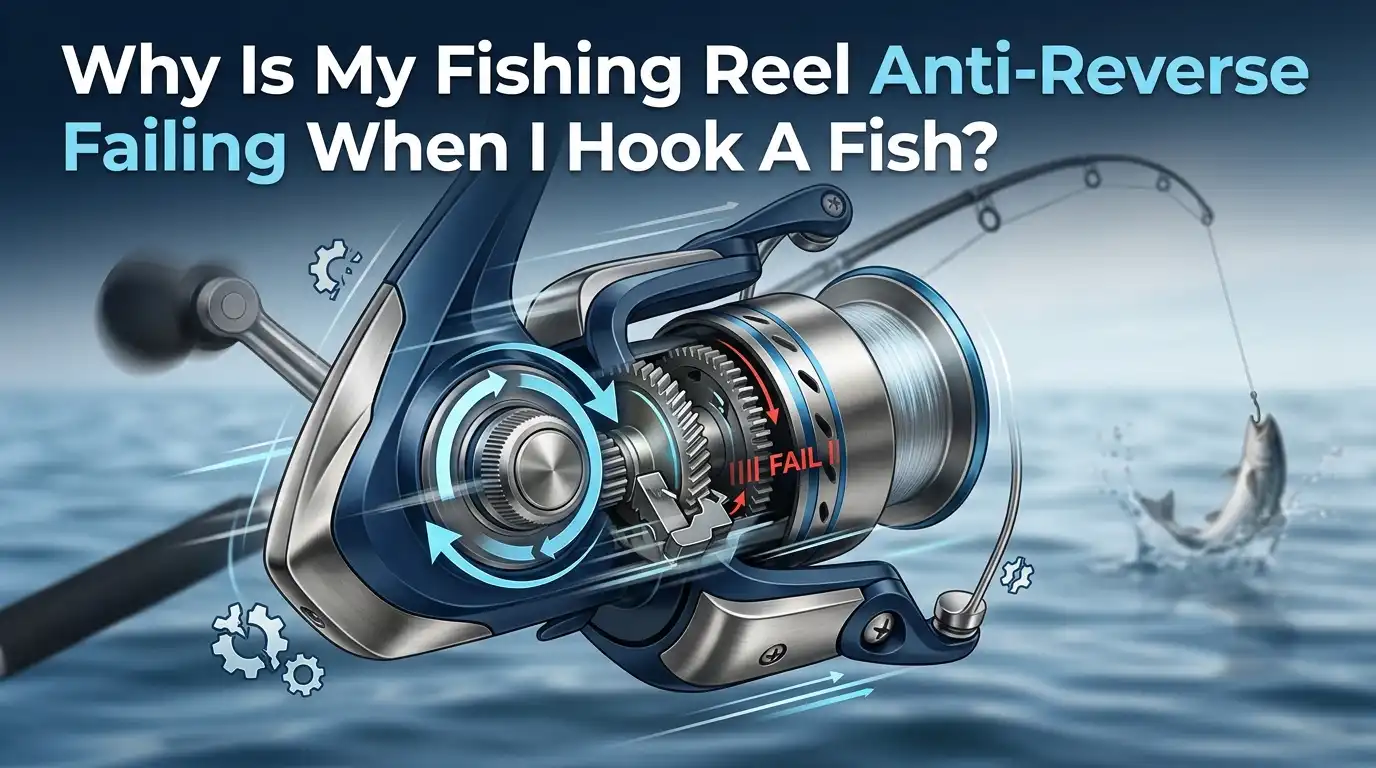
Most modern reels use a one way roller clutch bearing. This is a small metal ring packed with tiny rollers. The rollers sit on tiny ramps inside the bearing. When the shaft turns one way, the rollers roll free.
When the shaft tries to turn the other way, the rollers wedge against the ramps and lock. This wedging action is instant and tight when the bearing is clean. That is why people call it instant anti-reverse. There is zero backplay.
Older reels use a different system called a dog and ratchet. A metal latch, called the dog or pawl, drops into the teeth of a gear. When the handle tries to reverse, the dog catches a tooth and stops it. Both systems do the same job in different ways.
Why It Fails Right When You Hook A Fish
The failure shows up under load for a clear reason. When you reel normally, there is no backward force. The mechanism never has to grip hard. Everything feels fine, and you think your reel is healthy.
Then a fish hits and applies real pressure. Now the bearing or dog must hold the full pull of the fight. A weak or dirty mechanism cannot grip under that stress. It slips, and the handle spins back.
This is why bench testing can fool you. You spin the handle, it locks, and you assume all is well. But a light test does not match the load of a strong fish. The hookset is the true test, and that is when hidden problems appear.
Cause 1: Too Much Grease In The Bearing
This is the most common reason by far. The roller clutch needs friction to grip the inner sleeve. Grease is sticky and thick, so it fills the tiny gaps the rollers need. The rollers float instead of wedging tight.
Many people grease this bearing thinking more lube means better performance. With this one part, the opposite is true. The roller clutch should run dry or with only a trace of light oil. Heavy grease almost always causes slipping.
The fix is to clean the grease out completely. Use a degreaser or reel cleaner, flush the bearing, and let it dry. Add one tiny drop of light oil at most. After this simple cleanout, most reels lock solid again.
Pros: cleaning costs almost nothing and solves most cases. Cons: you must open the reel, and reassembly takes care and patience.
Cause 2: Cold And Wet Weather Slipping
Many anglers notice the anti-reverse fails only in winter or rain. The reel works fine at home but slips on the water. Temperature is the hidden factor here. Cold makes oil and grease thicker and stiffer.
When the lubricant stiffens, the rollers cannot move fast enough to lock. The bearing reacts too slowly, so the handle slips before it grips. Below fifty degrees, this problem gets much worse, and rain makes it worse still.
The fix is the same cleaning step plus a switch to lighter oil. Use a thin, low temperature reel oil instead of grease. A clean, dry, or lightly oiled bearing handles cold far better. This stops most weather related slipping for good.
Pros: a quick oil change fixes seasonal failure. Cons: you may need to reclean before each cold season for best results.
Cause 3: A Worn Or Damaged Roller Clutch
Sometimes the bearing is simply worn out. The rollers, springs, or ramps inside wear down over years of use. Saltwater corrosion speeds this up a lot. When the parts wear, the bearing cannot grip no matter how clean it is.
You can spot this when cleaning does not fix the slipping. If you flush the bearing, oil it lightly, and it still fails, the part is likely dead. A worn clutch often feels gritty or rough when you spin it by hand.
The fix is to replace the bearing. These parts are cheap and sold by part number for most reel models. You press the old one out and the new one in. Some baitcasters need a small press tool, but spinning reels are often easier.
Pros: a new bearing restores like new performance. Cons: you must match the exact part, and pressing it in takes some skill.
Cause 4: A Worn Dog Or Pawl In Older Reels
Older and some saltwater reels use the dog and ratchet system. Over time the metal dog wears down. The ears or tips that catch the gear teeth get rounded. A rounded dog slides off the teeth instead of catching them.
The spring that holds the dog can also slip loose or break. When this happens, the dog never drops into place. The handle then spins backward freely under load. This is a common failure on classic reels with heavy use.
The fix is to inspect the dog and spring closely. You can lightly scuff the ratchet teeth to add grip. Compressing the dog ears slightly can restore the catch. If the dog is badly worn, replace it with a new part.
Pros: cheap parts and a simple repair on most old reels. Cons: parts can be hard to find for very old or rare models.
Cause 5: The Anti-Reverse Switch Is Off Or Broken
Before you open anything, check the switch. Many reels have a small lever, often on the bottom of the reel foot. This lever turns the anti-reverse on and off. Sometimes the lever simply got bumped into the off position.
When the switch is off, the handle spins both ways on purpose. This is a feature for anglers who like to back reel. If you forgot the switch, your reel is not broken at all. Flip it back on and the lock returns.
If the switch is on but the reel still slips, the lever may be bent or worn. The fix here is to inspect and straighten or replace the lever. This is always the first thing to check because it is free and instant.
Pros: the easiest possible fix, often takes one second. Cons: a bent internal lever may still need a teardown to repair.
How To Test Your Anti-Reverse Properly
A weak bench test fools many anglers. To test right, you must mimic the load of a fish. Tie your line to something solid, like a fence post or a heavy object. Then put a real bend in your rod.
Pull hard while watching the handle. A healthy reel keeps the handle locked tight with no backward movement. If the handle creeps or jumps backward, your anti-reverse is failing under load.
You can also feel for backplay. Grab the handle and gently rock it back and forth. A tiny bit of play is normal on some reels. A loose, sloppy wiggle points to a worn or dirty bearing. This test takes one minute and tells you the truth.
Step By Step Guide To Cleaning The Bearing
Here is the core fix that solves most problems. First, gather a screwdriver set, degreaser, cotton swabs, and light reel oil. Work over a clean towel so you do not lose small parts. Take photos as you go so reassembly is easy.
Open the side plate or body of the reel to reach the anti-reverse bearing. It is usually a small metal ring around the main shaft. Remove it carefully and note which way it faces. Direction matters because the bearing only locks one way.
Soak and flush the bearing in degreaser until all grease is gone. Spin it to feel free rolling one way and locking the other. Let it dry fully, then add only one small drop of light oil. Reassemble, and your lock should be back.
When To Replace The Bearing Instead Of Cleaning
Cleaning fixes most reels, but not all. You should replace the bearing when cleaning fails to restore the lock. If you flush it, dry it, oil it lightly, and it still slips, the part is worn out. A worn clutch will never grip again.
Watch for these signs. The bearing feels gritty, rough, or notchy when you spin it. You see rust or corrosion on the rollers. The bearing locks one moment and slips the next with no pattern. These all point to internal wear.
Order the bearing by your reel model and part number. Match the size and direction exactly or it will not work. Many spinning reels let you swap it by hand. Some baitcasters need a small socket or press to seat the new part.
Instant Anti-Reverse Versus Backplay Designs
Reels come in two styles, and the difference matters at hookset. Instant anti-reverse uses the roller clutch and has zero backward play. The moment you stop, the handle is locked. This gives you the firmest hookset possible.
Older or simpler reels have some backplay. The handle moves back a small amount before the dog catches. This tiny slip can cost you power on a fast hookset. Some anglers feel this loses fish, while others say the difference is small.
If your reel has backplay by design, it may not be broken at all. It is doing what it was built to do. Knowing your reel type helps you set the right expectation. If you want zero slip, choose a reel with true instant anti-reverse.
Pros of instant anti-reverse: rock solid hooksets and direct power. Cons: the roller clutch is more sensitive to grease and cold.
How To Prevent Anti-Reverse Failure In The Future
Prevention is easier than repair. Clean your reels after every saltwater trip. Rinse with fresh water and dry them well. Salt is the biggest enemy of the roller clutch. A quick rinse stops most corrosion before it starts.
Never pack the anti-reverse bearing with grease. Remember the rule for this one part. It runs dry or with a trace of light oil only. Tell anyone who services your reel about this rule too, since many over grease it by habit.
Service the bearing once or twice a year if you fish often. A yearly cleanout keeps the lock crisp and reliable. Store your reels in a dry place, not a damp garage. These small habits keep your anti-reverse working when the big fish bites.
Frequently Asked Questions
Why does my anti-reverse work on the bench but fail on a fish?
A light bench spin does not match the pull of a real fish. The mechanism only grips under heavy load. A dirty or worn bearing locks fine with no pressure but slips when a fish strains it. Test with a bent rod and hard pull instead.
Should I put grease on my anti-reverse bearing?
No. The roller clutch bearing needs friction to grip and lock. Grease is too thick and makes the rollers slip. Use only a tiny drop of light oil, or run it clean and dry. This is the opposite of how you treat most reel parts.
Can cold weather cause my anti-reverse to fail?
Yes. Cold thickens oil and grease inside the bearing. The rollers then move too slowly to lock in time. Many anglers see slipping only in winter or rain. Cleaning the bearing and using thin, low temperature oil fixes most cold weather failure.
How much does it cost to fix a failing anti-reverse?
Often nothing but a little time. Cleaning the bearing with degreaser solves most cases for free. If the bearing is worn out, a new one is usually cheap when bought by part number. A full teardown by a shop costs more but is rarely needed.
Is some backward play in my handle normal?
It depends on your reel. Instant anti-reverse reels have zero play. Older dog and ratchet reels have a small amount by design. A tiny, consistent wiggle is normal on those. A loose, sloppy, growing wiggle is not and points to wear or grease.
How often should I service my anti-reverse?
Service it once or twice a year if you fish a lot. Saltwater anglers should rinse after every trip and clean the bearing more often. A yearly cleanout keeps the lock crisp. Regular care prevents the slip that costs you fish at the worst moment.

Hi, I’m Ivy Webb, the passionate angler and creator behind BaitHookVault.com. I spend my days out on the water personally testing and reviewing a wide variety of fishing tools and gear.