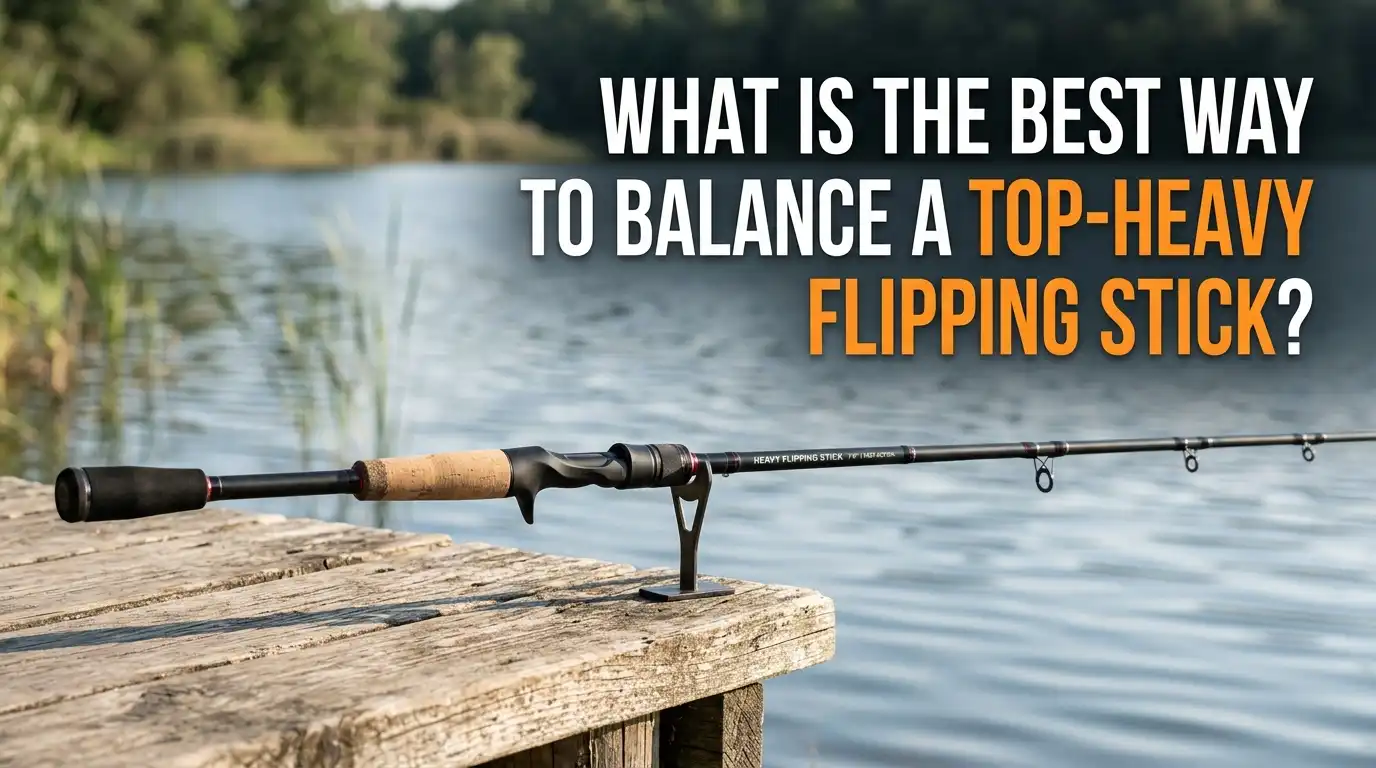
What Is the Best Way to Balance a Top Heavy Flipping Stick?
A top heavy flipping stick can drain your energy and ruin your accuracy on the water. If you have spent a long day flipping and pitching with a rod that constantly pulls the tip down, you know the struggle. Your wrist aches. Your casts lose precision. You miss bites because fatigue has taken over.
The good news is that you can fix this problem. Balancing a flipping stick is a practical skill that every bass angler and custom rod builder should understand.
The process involves shifting the center of gravity so the rod feels lighter in the tip and more natural in your hand. Whether you add counterweight to the butt, adjust your handle length, reposition your reel seat, or choose lighter components, several proven methods exist.
In a Nutshell
- Balance is about weight distribution, not total weight. A flipping stick can weigh more overall and still feel lighter if the weight sits in the right place. The goal is to move the center of gravity closer to the reel seat so the rod feels neutral in your hand during actual fishing.
- Adding counterweight to the butt end is the most common fix. Materials like tungsten cylinders, lead tape, or steel bolts placed inside the butt section of the rod blank can offset a heavy tip. Tungsten is preferred because it packs more weight into a smaller space.
- Longer rear grips solve balance problems without adding dead weight. Extending your rear handle shifts the fulcrum point and gives you more leverage. Many pro anglers prefer a 10 inch or longer rear grip on flipping sticks for this reason.
- Lighter guides and components on the tip section reduce the problem at its source. Choosing ultra thin ring guides or fewer guides overall means less weight pulling the tip down, which reduces or eliminates the need for counterweight.
- Balance your rod with the reel mounted and line through the guides. Experienced builders recommend balancing the rod in its actual fishing configuration, with a full spool of line and line run through all guides. This gives you the most accurate result.
- The ideal balance point depends on your fishing style. Flipping, pitching, and punching each put different demands on the rod. A rod used for tip up presentations benefits most from a tip light feel, while a rod used for cranking may actually perform better with extra tip weight.
Why Does a Flipping Stick Become Top Heavy
A flipping stick becomes top heavy because of how its components are distributed along the blank. The guides, tip top, and the thinner blank walls near the tip section all contribute weight forward of your hand. Heavy duty guides designed for braided line and thick cover add extra grams to the front half of the rod.
The blank itself plays a role. Flipping rods are typically 7 to 7 feet 6 inches long with heavy or extra heavy power ratings.
That length combined with a stiff, thick walled blank creates a significant amount of mass ahead of the reel seat. The reel and handle assembly sit behind your grip hand, but they often lack enough mass to offset the tip section.
Factory rods rarely address this issue because manufacturers focus on overall weight as a marketing number. A lighter total weight looks good on paper but can actually make the rod feel worse if most of that weight sits near the tip. Custom rod builders solve this by thinking about balance from the start.
Understanding Center of Gravity and Balance Point
The center of gravity of your rod is the exact point where the rod would sit level on your finger without tipping to either side. For a flipping stick, you want this balance point to fall at or very near the reel seat. This makes the rod feel weightless in your hand.
Most factory flipping rods have a balance point several inches forward of the reel seat. This forward balance point creates a constant downward pull on the tip that your wrist must fight against. Over a full day of flipping, this small force adds up to serious fatigue.
To find your current balance point, mount your reel with a full spool of line, run the line through all guides, and rest the rod on your extended index finger. Slide it until it sits level. Mark that spot.
The distance between that mark and the center of your reel seat tells you how far off balance your rod is. Every inch forward of the reel seat means more strain on your wrist and forearm.
Adding Counterweight to the Butt Section
The most popular method for balancing a top heavy flipping stick is adding weight to the butt end of the rod. This shifts the center of gravity back toward the reel seat. You have several material choices, and each has strengths and weaknesses.
Tungsten weights offer the best weight to size ratio. Small tungsten cylinders or pinewood derby style tungsten weights fit inside the butt of the blank and add significant mass in a tiny space. Pro: Maximum weight in minimum space. Con: Higher cost compared to other materials.
Lead tape wraps around the inside or outside of the butt section. You can add it gradually until you reach your desired balance. Pro: Easy to adjust and reposition. Con: Lead is toxic and requires careful handling.
Steel bolts or threaded rod inserted into a tee nut mounted in the butt end provide adjustable weight. Pro: Simple and inexpensive. Con: Can rattle if not secured properly.
Place all counterweight as close to the extreme butt end as possible. Weight placed at the farthest point from the tip requires less total mass to achieve balance. This keeps your overall rod weight lower.
Extending the Rear Handle Length
A longer rear grip is one of the cleanest solutions for a top heavy flipping stick. It works by moving your back hand farther from the balance point, which gives you more leverage against the tip weight. This method adds no dead weight to the rod.
Many professional bass anglers prefer rear grips of 10 inches or longer on their flipping rods. Hall of fame angler Denny Brauer, who popularized the flipping technique in the 1980s, specifically designed his rods with longer handles. The extra length allows the butt to rest against your forearm. This transfers the load from your wrist to your elbow and shoulder.
Pro: No added weight. Better leverage. More comfortable for long sessions. Resting the butt on your forearm reduces wrist fatigue dramatically.
Con: A longer handle can interfere with bulky clothing or rain gear. It may feel awkward in tight spaces on boats with high gunwales. Some anglers find it changes their casting mechanics.
The key is to match the handle length to your physical size. Shorter anglers may find that a 10 inch rear grip is plenty, while taller anglers can go longer.
Repositioning the Reel Seat
Moving the reel seat closer to the tip is another way to improve balance without adding counterweight. This shifts the heaviest single component on the rod, the reel, closer to the center of the rod’s mass.
Some custom builders move the reel seat forward by one to three inches compared to a standard position. This small change can make a noticeable difference in how the rod feels. The reel becomes the new fulcrum point and helps counteract the tip weight more effectively.
Pro: No added weight. Clean solution that works with existing components. Can improve the overall feel of the rod.
Con: Changes the grip position and feel. Some anglers find the altered hand position uncomfortable. It may affect your casting stroke, especially if you have years of muscle memory with a standard reel seat placement.
This method works best during a new build. Repositioning a reel seat on an existing rod requires removing and reinstalling components, which is labor intensive and risks damaging the blank.
Choosing Lighter Guides and Components
Reducing weight at the source is the smartest approach to solving a top heavy rod. Lighter guides on the tip section mean less weight pulling the rod forward. Modern guide technology offers ultra thin ring guides that weigh a fraction of traditional guides.
Titanium frame guides with thin silicon carbide or aluminum oxide rings represent the lightest options available. These guides reduce overall tip weight while maintaining line protection and casting performance. Some builders also reduce the total number of guides, though this requires careful planning to maintain proper line flow and blank loading.
Pro: Solves the root cause of the problem. Reduces overall rod weight. Improves rod sensitivity because less guide mass dampens vibrations.
Con: High quality lightweight guides cost more. Fewer guides can create stress points on the blank. Not all guide styles work with all line types.
The tip top is another spot where you can save weight. A lighter tip top may only save a gram or two, but at the farthest point from the handle, even small savings make a measurable difference in balance and feel.
Matching the Right Reel to Your Rod
Your reel is the heaviest single item on the setup, and its weight plays a huge role in balance. A heavier reel naturally counterbalances a heavy tip. Some builders intentionally pair a heavier reel with a tip heavy rod to fix the balance without modifying the rod at all.
A baitcasting reel that weighs 7 to 8 ounces will offset more tip weight than one that weighs 5 to 6 ounces. The difference of one or two ounces in reel weight can move the balance point back by several inches.
Pro: No modification to the rod required. Easy to swap reels until you find the right match. A heavier reel with a larger spool can also hold more line.
Con: The overall setup weighs more. Some anglers prefer ultralight reels for comfort and do not want to sacrifice that. A heavier reel may feel clunky for finesse presentations.
Palm style reel grips work especially well here because your hand sits directly over the reel, making the added reel weight feel natural and centered.
Balancing for Your Specific Fishing Technique
Different flipping and pitching styles demand different balance profiles. A rod used for tip up presentations like flipping jigs into brush benefits most from a tip light feel. Your rod tip stays above your head for hours, and gravity constantly pulls against you.
For punching through heavy mats with weights of one ounce or more, balance becomes more complicated. Some builders argue that you should balance the rod with the lure weight included. Others say you should balance without the lure because the bait spends most of its time on the bottom with slack line.
The best approach depends on how you fish. If you flip and immediately retrieve, the lure hangs off your rod tip for most of the day. Balancing with the lure weight makes sense. If you let your bait sit on the bottom and wait for bites, balance without the lure because the bait weight is no longer on your rod.
Pro anglers like Matt Stefan prioritize a tip light feel on flipping sticks even if it means adding weight to the butt. Stefan has noted that he wants his extra heavy flipping stick to feel like a drop shot rod in the tip.
Step by Step Process to Balance Your Flipping Stick
Start by gathering your rod, reel, line, and chosen counterweight material. Mount the reel with a full spool of line and thread the line through all guides. Let about 10 feet of line hang past the tip.
Step one: Find your current balance point by resting the rod on your index finger. Note where it sits level. Step two: Decide where you want the balance point. Most builders aim for the center of the reel seat or the front edge of the foregrip.
Step three: Add small amounts of weight to the butt end. Start with a quarter ounce and recheck the balance. Step four: Continue adding weight in small increments until the balance point reaches your target. Step five: Secure the weight permanently. Use epoxy or hot glue to lock tungsten cylinders in place. Wrap lead tape tightly and seal it.
Check the balance again after securing the weight. The adhesive adds a small amount of mass that can shift things slightly. Make final adjustments before closing up the butt cap.
Common Mistakes to Avoid When Balancing
The biggest mistake is adding too much weight. An overly butt heavy rod feels sluggish and unresponsive. You want neutral balance, not a rod that drops backward out of your hand. Add weight gradually and check often.
Another common error is placing weight too far up inside the blank instead of at the extreme butt. Weight placed two or three inches inside the blank requires more total mass to achieve the same balance shift. Keep all counterweight in the last half inch of the butt section for maximum effect.
Ignoring how the rod will actually be used is a critical mistake. Building a balanced rod that sits perfectly on your finger but feels wrong during a casting stroke defeats the purpose. Always test the rod through full flipping and pitching motions after balancing. Pick it up, swing it, and mimic your fishing movements.
Some builders also forget to account for the weight of the line running through the guides. A full spool of braided line adds weight to the tip section, so always balance with line installed.
Pros and Cons of a Perfectly Balanced Flipping Stick
A well balanced flipping stick delivers real performance benefits on the water. Reduced fatigue means you can fish longer and stay sharper throughout the day. Improved accuracy comes from easier tip control. Better bite detection results from a tip light rod that transmits vibrations more freely. Faster rod tip speed lets you keep baits low to the water and slip them under overhanging cover.
The downsides are worth considering too. Added counterweight increases overall rod weight, even if the rod feels lighter in hand. The time and cost of balancing, especially with tungsten, can be significant. A balanced rod built for one reel may not balance properly with a different reel, which limits your flexibility. Some anglers also find that a perfectly balanced rod feels unfamiliar at first if they have spent years fishing tip heavy setups.
The trade off is almost always worth it. Most anglers who try a balanced flipping stick never go back to an unbalanced one.
When to Accept a Slightly Tip Heavy Rod
Not every rod needs perfect balance. For short fishing sessions of an hour or two, the fatigue reduction from balancing may not matter much. Some anglers actually prefer a slight forward bias because it helps them feel the rod loading during the pitch.
Cranking rods and other tip down retrieve rods benefit from extra tip weight. Gravity pulls the rod into the retrieve position naturally, reducing the energy needed to keep the tip pointed at the water. In these cases, a tip heavy rod is a feature, not a flaw.
If you fish multiple techniques with one rod, perfect balance for flipping may make the rod feel wrong for other applications. A slight tip heavy bias is a reasonable compromise for a versatile rod.
The bottom line is this: balance matters most for tip up, repetitive techniques like flipping, pitching, and jigging where you hold the rod for hours. For other styles, a little tip weight can actually help.
Final Thoughts on Getting the Best Balance
Balancing a top heavy flipping stick is part science and part personal preference. The physics are clear. Moving weight to the butt end shifts the center of gravity back toward your hand. But the degree of balance that feels right varies from angler to angler.
Start with the simplest solutions first. Try a heavier reel or a longer rear grip before adding counterweight. If those changes are not enough, tungsten weights in the butt section will get you the rest of the way. Always balance with your actual fishing setup mounted and line through the guides.
The best flipping stick is one that disappears in your hand. You should feel the bait, not the rod. With proper balance, your wrist stays fresh, your accuracy stays sharp, and you catch more fish. Take the time to get it right and your next day on the water will prove the difference.
Frequently Asked Questions
What is the ideal balance point for a flipping stick?
The ideal balance point for a flipping stick falls at or near the center of the reel seat. This position makes the rod feel neutral in your hand with the reel mounted. Some anglers prefer the balance point slightly forward of the reel seat, at the front edge of the foregrip. The exact spot depends on your hand size, grip style, and personal comfort. Test it by holding the rod naturally and checking whether the tip drops or stays level.
Does adding weight to the butt make the rod feel heavier overall?
Adding counterweight does increase the total weight of the rod. However, a balanced rod almost always feels lighter in hand than an unbalanced one, even if it weighs more on a scale. The reason is that your wrist no longer fights against the forward pull of the tip. Your muscles work less, so the rod feels effortless. Most builders add between half an ounce and one and a half ounces of counterweight, which is barely noticeable in the hand.
Should I balance my flipping stick with or without the lure attached?
This depends on your fishing style. If you fish presentations where the bait hangs off the rod tip for most of the time, balance with the lure. If you flip into cover and let the bait sit on the bottom while you wait for bites, balance without the lure. Most experienced builders balance with the reel, line, and no lure because the bait spends the majority of fishing time on the bottom with slack line.
Can I balance a factory rod or only a custom build?
You can balance a factory rod. The easiest method is inserting tungsten weights or a steel bolt into the butt section under the butt cap. Many butt caps can be removed, modified, and reattached. You can also wrap lead tape around the butt section under a shrink tube cover. Adding a heavier reel or swapping to a longer rear grip are non permanent options that work well on factory rods.
What is the best material for counterweighting a flipping stick?
Tungsten is the preferred material because it offers the highest density in the smallest volume. A small tungsten cylinder weighs the same as a much larger piece of lead or steel. This means you can add enough counterweight without bulking up the butt section. Lead tape is a budget friendly alternative that allows fine tuning. Steel bolts work in a pinch but take up more space inside the blank.
How do I know if my rod is too butt heavy after adding weight?
Pick up the rod and go through your normal flipping motions. If the rod feels sluggish or slow to respond at the tip, you have added too much weight. A butt heavy rod will also feel like it wants to rotate backward in your hand. The goal is a neutral feel where neither end dominates. Remove small amounts of weight until the rod responds quickly to your movements while still feeling balanced at rest.

Hi, I’m Ivy Webb, the passionate angler and creator behind BaitHookVault.com. I spend my days out on the water personally testing and reviewing a wide variety of fishing tools and gear.