Daiwa BG Spinning Reel Review 2026: Still Worth It?
The Daiwa BG has quietly become the reel that other budget saltwater reels get compared against. It landed in 2016 with an aluminum body, oversized gears, and a price tag that made anglers suspicious.
Ten years later, it is still on tackle shop pegboards, still catching stripers, snook, and tuna, and still costing far less than reels that feel this solid. But 2026 brings new competition, including Daiwa’s own refreshed BG SW and BG LT models.
So the real question is simple. Does the classic BG still deserve your money this year, or has it finally been passed by? I fished mine hard, weighed the flaws honestly, and put the answer below.
In a Nutshell:
- The Daiwa BG is a metal reel at a plastic reel price. You get a machined aluminum body, an aluminum side cover, and a screw in handle for around $110 to $160 depending on size. Very few competitors match that construction under $200.
- Digigear is the star feature. Daiwa builds the drive gear 20 to 40 percent larger than rival reels in the same size class. Anglers report reels staying smooth after five seasons of heavy saltwater use, which is not normal at this price.
- The ATD drag is smooth from the first run. Low startup inertia means the spool gives line without that sudden jerk that snaps light leaders. Max drag ranges from about 13.2 pounds on the 2500 up to 33 pounds on the largest sizes.
- It is water resistant, not waterproof. The drag is sealed, the rest of the reel is not. Surf anglers who dunk gear should step up to a sealed reel instead.
- The stock handle knob is too small. Most owners swap it for an aftermarket power knob, which adds $30 or more to the total cost.
- 2026 changes the picture. The new BG SW and BG LT bring sealed frames and lighter bodies, so the classic BG is now the value pick rather than the newest pick.
Daiwa BG Saltwater Spinning Reel
No products found.
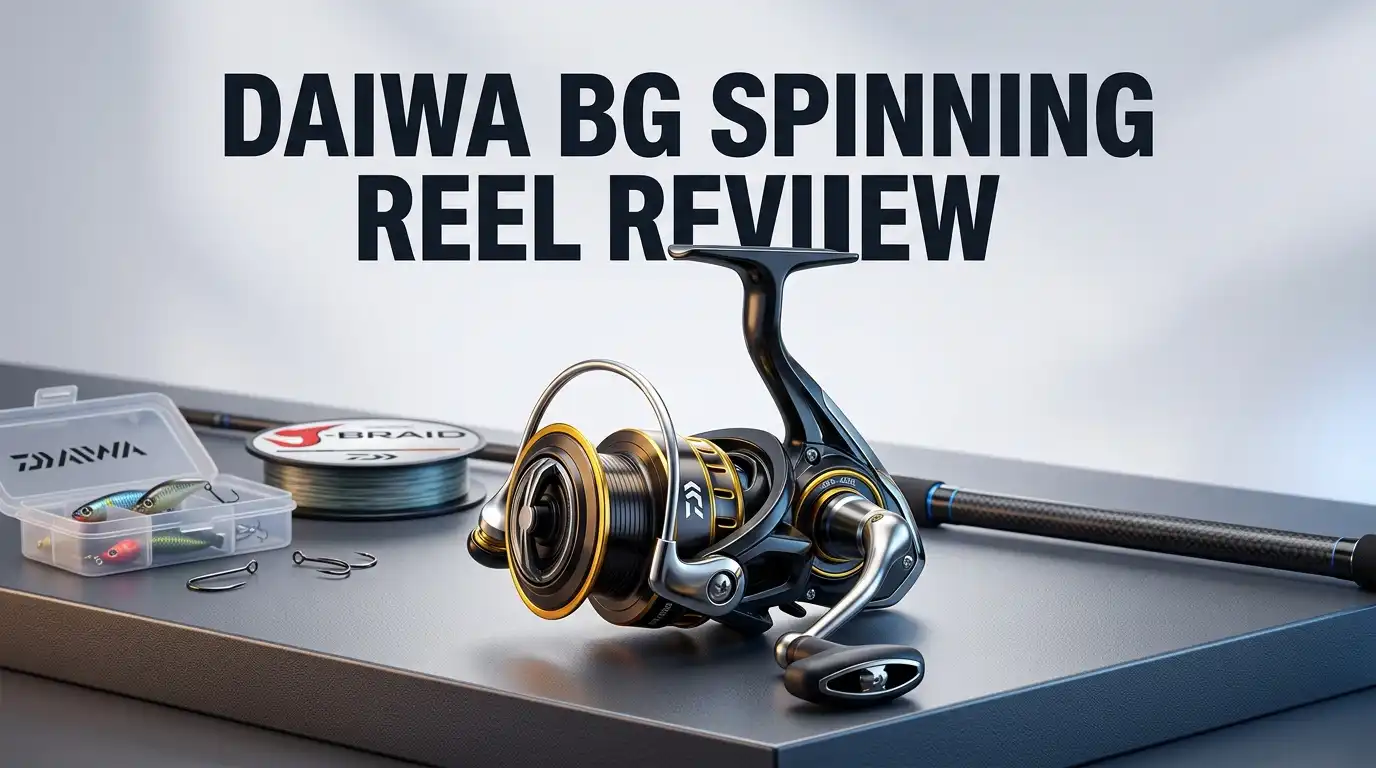
The Daiwa BG is a front drag saltwater spinning reel built around a black anodized machined aluminum housing that Daiwa calls Hard Bodyz. The line runs from the tiny BG1500 up to the heavy BG8000.
Most anglers land on the 2500, 3000, or 4000 size. The 2500 weighs 9.3 ounces, turns at a 5.6:1 gear ratio, and pulls 33.2 inches of line per crank with 13.2 pounds of max drag. The 4000 moves up to 5.7:1, 39.9 inches per crank, and 17.6 pounds of drag.
Inside you get six ball bearings plus a roller bearing, an Air Rotor, and the oversized Digigear drive gear. The handle screws directly into the drive shaft rather than folding, which kills the wobble that cheap reels develop. Daiwa aimed this reel at anglers who wanted metal construction without paying $250 for it. That goal has not changed in 2026.
Unboxing Experience and First Impressions
The BG ships in a plain cardboard box with a foam insert, a schematic sheet, and a small tube of grease on some sizes. There is no reel bag, no fancy printing, and no plastic display stand. Daiwa clearly spent the budget on the reel instead of the packaging, and honestly that feels right.
Pull it out and the weight surprises you first. It feels dense in the hand, not heavy, just solid. The black and gold finish looks sharper in person than in product photos. The gold anodized spool and rotor accents give it a look that punches above the price.
Spin the handle and you notice two things. The retrieve is smooth with a faint mechanical hum, not silky like a $400 reel but clean and tight. The bail snaps closed with a firm click. The screw in handle threads in with zero slop. First impression after two minutes of handling: this does not feel like an entry level reel.
Build Quality and Body Design
The aluminum body is the reason this reel earned its reputation. Frame flex is what kills cheap spinning reels under load. Graphite bodies twist when a fish pulls hard, the gears fall out of alignment, and the reel grinds itself apart over a season. The BG barely flexes at all.
Both the body and the side cover are machined aluminum, which is unusual below $200. Many rivals use a graphite side plate to save weight and cost. Daiwa went with metal on both sides. The tradeoff is weight. A BG3000 sits heavier than a comparable graphite framed reel, and you feel that after a long day of casting lures.
The rotor is a composite Air Rotor design that balances well and keeps vibration low. The bail wire is thick. The line roller is oversized and spins freely, which cuts line twist with braid. Nothing here feels like a corner was cut to hit a price point.
Top 3 Alternative for Daiwa BG Spinning Reel

Last update on 2026-09-26 / Affiliate links / Images from Amazon Product Advertising API
PENN Battle III Spinning Reel

Last update on 2026-09-26 / Affiliate links / Images from Amazon Product Advertising API
PENN Spinfisher VII Spinning Reel

Last update on 2026-09-26 / Affiliate links / Images from Amazon Product Advertising API
Shimano Spheros SW A Saltwater Spinning Reel
Digigear System and Cranking Power
Digigear is Daiwa’s digitally machined gear design. The claim is a perfect mesh between the drive gear and the pinion gear. The practical result is cranking power that does not fade. Daiwa builds these gears 20 to 40 percent larger than competitors in the same size class, with a wider tooth pattern that spreads load across more contact area.
This matters most when a fish digs. Winching a blackfish out of rock or pulling a grouper off structure loads a spinning reel in a way that casting never does. Small gears deform under that pressure. Large gears do not.
Long term reports back this up. Charter captains who jig tautog daily report BG reels staying smooth after several seasons. My own 3000 has been through four seasons of inshore work and still cranks cleanly. Gear durability is the single strongest argument for buying this reel. It is also the hardest feature to fake in a spec sheet.
ATD Drag Performance on Real Fish
ATD stands for Automatic Tournament Drag. The name is marketing fluff. The engineering is not. Daiwa uses a grease that stays thin at rest and thickens the moment the spool starts turning. That reduces startup inertia, which is the extra pressure needed to break the drag loose on the first run.
Why care? If your drag is set at 10 pounds but startup inertia is 25 percent, the fish actually pulls 12.5 pounds before line moves. That gap is where light leaders break. The BG keeps that gap small, so you can set drag closer to your true line rating.
In use the drag gives line in a steady hiss rather than a stutter. Max drag runs from 13.2 pounds on the 2500 up to 33 pounds on the 8000. The drag washers are sealed against water, though the rest of the reel is not. For a reel at this price the drag quality is genuinely surprising.
Casting Distance and Line Management
The BG uses an ABS spool with a slightly tapered lip. Line peels off in smaller coils, which cuts friction on the guides and adds distance. With 15 pound braid on a 3000, casting a half ounce jig feels effortless, and wind knots stay rare as long as you keep tension when reeling slack.
The spool is deep, so light braid needs mono backing on the classic BG models. This annoys some anglers, and Daiwa fixed it on the 2026 models with a braid ready gasket. On the older BG you either add backing or accept a partly filled spool.
Line lay is even across the spool with a gentle forward taper. I have not seen the loose loops near the lip that plague some budget reels. The oversized line roller keeps twist under control when you retrieve against a fish. Casting performance is good, not class leading. A Shimano spool still throws slightly farther.
Which Daiwa BG Size Should You Buy
Size choice trips up more buyers than anything else. The BG runs from 1500 to 8000, and the numbers do not translate perfectly across brands.
The BG1500 and BG2000 suit trout, panfish, and light freshwater work with 6 to 10 pound braid. The BG2500 is the inshore sweet spot for redfish, speckled trout, school stripers, and flats work with 10 to 15 pound braid. The BG3000 adds line capacity for bigger snook, slot stripers, and light surf.
The BG4000 and BG4500 handle surf casting, jetty fishing, and light offshore jigging with 20 to 30 pound braid. The BG5000 through BG8000 move into tuna, big sharks, and heavy bottom work.
One warning. The classic BG runs large for its number. A BG5000 is noticeably bigger and heavier than a BG MQ 5000. Handle the reel in person if you can, or size down one step from what you think you need.
Saltwater Durability and Maintenance
The BG survives saltwater well but it is not sealed. The drag stack has a waterproof seal. The body joints, bail arm, and handle do not. Spray and splash are fine. Submersion is not.
Rinse the reel with a light freshwater spray after every saltwater trip. Never blast it with a hose nozzle, since pressure drives salt past the seals instead of washing it away. Back the drag off before rinsing, then set it again once the reel dries.
Every twenty trips or so, wipe the line roller and add a drop of reel oil. Once a year, open the side plate and check the drive gear grease. The screws are standard and the schematic in the box is clear enough to follow.
Owners who skip rinsing report bail spring corrosion within two seasons. Owners who rinse report reels running fine after five. The reel rewards basic care and punishes neglect faster than a fully sealed model would.
What the Daiwa BG Does Not Do Well
Honest reviews list the flaws, so here they are. The handle knob is too small. It is a narrow round knob that digs into your palm during a long fight. Most owners buy an aftermarket power knob, which adds real cost to a budget reel.
The reel is heavy. A BG4000 feels noticeably weightier than a graphite framed rival. All day casting for inshore fish gets tiring.
It is not waterproof. Surf anglers who take waves, kayak anglers, and boat anglers who dunk reels should spend more on a sealed model.
The reverse switch is a weak point. Older spinning reels failed at this mechanism more than anywhere else, and most modern reels dropped it entirely. The BG keeps it, and it serves almost no purpose.
Smoothness is good, not premium. Compared to a Shimano Stradic you feel more texture in the retrieve. That texture never goes away, though, which is arguably the better trade.
Pros and Cons of the Daiwa BG
Pros
- Machined aluminum body and side cover deliver frame rigidity that graphite reels cannot match under load.
- Oversized Digigear drive gear stays smooth for years, with real world reports of five seasons without service.
- ATD drag has low startup inertia, so light leaders survive the first run of a hot fish.
- Screw in handle removes the wobble and play common in folding handle designs.
- Sizes run from 1500 to 8000, so one family covers trout ponds through offshore jigging.
- Price sits well below reels of similar build quality, often $100 to $160.
- Parts and schematics are easy to find, and the reel is simple to service at home.
Cons
- Stock handle knob is small and uncomfortable during extended fights with big fish.
- Heavier than graphite framed competitors in every size.
- Body is water resistant only, so submersion and heavy surf spray cause problems.
- The reverse switch adds a failure point with almost no practical benefit.
- Deep spool needs mono backing when you use light braid.
- Retrieve feel is slightly rougher than premium Japanese reels in the $250 range.
Daiwa BG vs BG MQ vs the 2026 BG SW and BG LT
Daiwa now sells several BG variants and the naming confuses buyers. The classic BG is the original aluminum workhorse at the lowest price. The BG MQ uses Monocoque body construction, which fits a larger gear inside a smaller, lighter, better sealed housing. It costs roughly double and weighs less in every size.
For 2026 Daiwa refreshed both ends of the line. The BG SW won an ICAST Best of Show award for saltwater reels. It adds a gasket sealed waterproof frame, Powerdrive Digigear, a reinforced Powerdrive Rotor, ATD Tough carbon drags, a braid ready spool, and a soft touch egg shape power knob. That knob upgrade directly fixes the biggest complaint about the old BG.
The BG LT targets inshore anglers with Airdrive Design, a lighter body, 6.2:1 gearing, and up to 26.4 pounds of drag at 9.9 ounces. If your budget stretches, the 2026 models are better reels. If it does not, the classic BG still works.
Daiwa BG vs Penn Battle III and Shimano Spheros
The PENN Battle III is the closest rival on price. It brings a full metal body, HT100 carbon drag washers, and PENN’s service network. The Battle III feels slightly rougher out of the box than the BG and its drag lacks the low startup feel of ATD. Battle owners love the toughness, though, and PENN parts are everywhere.
The PENN Spinfisher VII costs more and adds IPX5 sealing across the body and drag. If you fish the surf or take water over the rail, the Spinfisher is the smarter buy. It is heavier and less refined, but it shrugs off conditions that hurt a BG.
The Shimano Spheros SW A sits higher again, with X Ship gearing, cold forged aluminum gears, and up to 33 pounds of drag. It casts farther and runs smoother than either budget reel. For pure value per dollar the BG still wins. For pure performance it does not.
Price and Value in 2026
Street pricing on the classic BG now runs roughly $110 for the smaller sizes and up to $200 for the largest models, with the popular 2500 through 4000 sitting near $120 to $160. That is higher than the 2016 launch price, but so is everything else in tackle.
Value is about what else that money buys. At $130 you can get a graphite bodied reel with more bearings and a smoother out of box feel. It will not last as long. You can also get a sealed reel for $220 that survives worse conditions. It costs 70 percent more.
The BG occupies the gap where metal construction meets an affordable price. That gap is narrower in 2026 than it was five years ago, mainly because Daiwa’s own BG SW and BG LT now compete for the same buyer. Watch for price drops on the classic BG as retailers clear stock for the new models.
Who Should Buy the Daiwa BG
No products found.
Buy the Daiwa BG if you fish inshore salt, bays, jetties, piers, or big freshwater and you want a reel that survives years of use without a premium price. It suits anglers who fight fish near structure and need gears that do not strip under pressure.
Skip it if you fish the surf and regularly dunk your gear. A sealed Spinfisher VII serves you better. Skip it if all day casting comfort matters most, since lighter reels exist at the same price.
Kayak anglers should think carefully. The reel handles spray fine but a swamped BG needs a full teardown afterward.
Budget anglers building a first serious saltwater setup should put the BG at the top of the list. Add $30 for an aftermarket power knob and you have a reel that will outlast the rod you pair it with. That combination is hard to beat in 2026.
Frequently Asked Questions
Is the Daiwa BG waterproof?
No. The drag stack is sealed against water, but the body, bail arm, and handle are not. Splash and spray cause no problems. Submerging the reel or taking repeated waves will drive salt inside. Rinse with a light freshwater spray after every salt trip and the reel holds up for years.
How long does a Daiwa BG last?
With basic rinsing and an annual grease check, five to eight seasons of regular use is realistic. Daiwa claims Digigear lasts one to three times longer than competing gears, and long term owner reports support that. Neglected reels corrode at the bail spring and line roller within two seasons.
What size Daiwa BG is best for inshore fishing?
The BG2500 and BG3000 cover most inshore work. Pick the 2500 with 10 to 15 pound braid for trout, redfish, and school stripers. Pick the 3000 for bigger snook, slot stripers, and light surf where extra line capacity helps.
Can I use the Daiwa BG in freshwater?
Yes. The smaller sizes work well for bass, walleye, pike, and carp. The 2500 and 3000 pair nicely with medium and medium heavy spinning rods. The reel is heavier than dedicated freshwater models, so weigh that against the durability you gain.
Is the Daiwa BG MQ worth the extra money?
It depends on your fishing. The MQ is lighter, better sealed, and fits a larger gear in a smaller body. For offshore jigging and long days of casting, the upgrade pays off. For casual inshore use a few times a month, the classic BG delivers most of the performance for half the price.
Does the Daiwa BG need mono backing with braid?
On the classic BG, yes. The spool runs deep and lacks a braid gripping gasket, so braid tied directly can slip on the arbor. Add mono backing or a few wraps of electrical tape. The 2026 BG SW and BG LT include braid ready spools that remove this step.

Hi, I’m Ivy Webb, the passionate angler and creator behind BaitHookVault.com. I spend my days out on the water personally testing and reviewing a wide variety of fishing tools and gear.