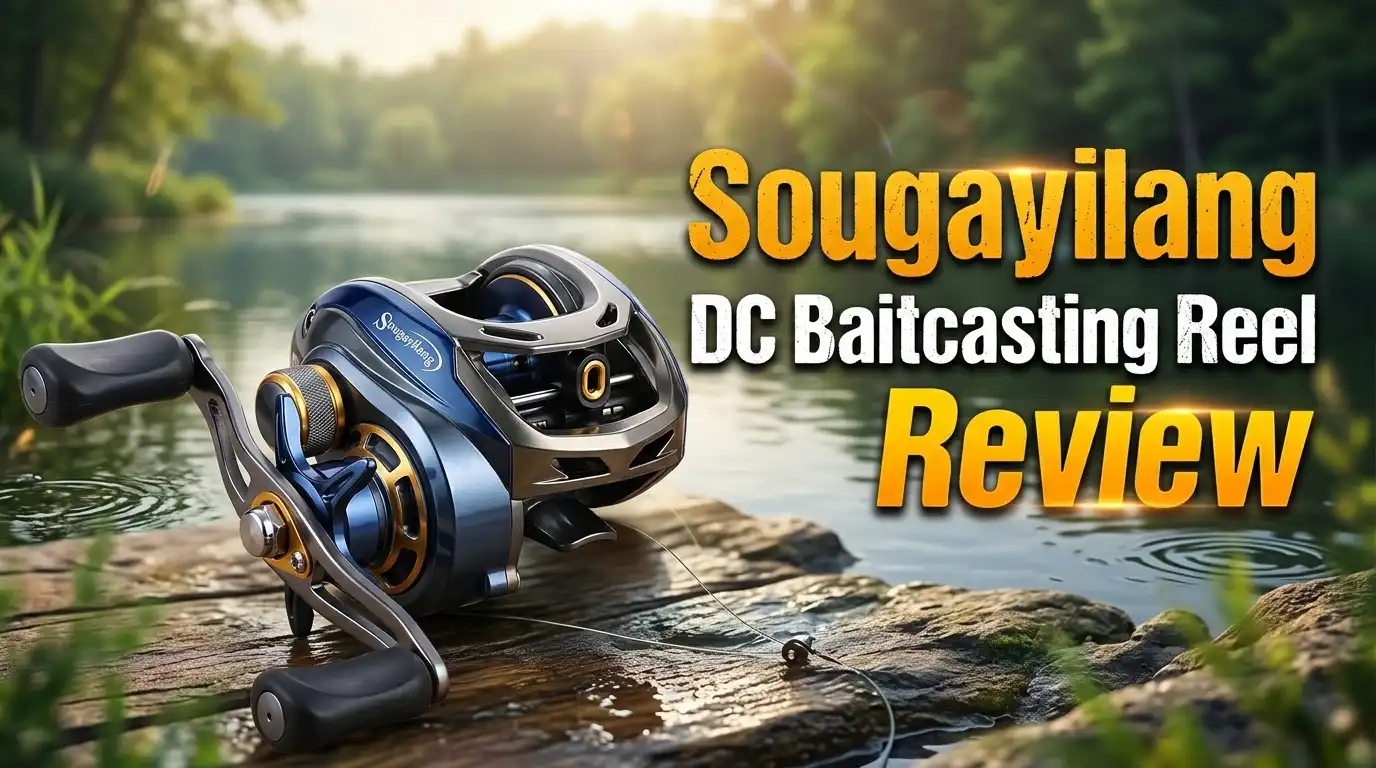
Sougayilang DC Baitcasting Reel Review 2026: Worth Buying?
Digital control baitcasters used to cost a small fortune. For years, only Shimano sold them, and the entry price scared off most weekend anglers. Then budget brands started copying the idea.
The Sougayilang DC baitcasting reel sits right in the middle of that shift. It promises a tiny computer inside the side plate, three braking modes, and a price tag that looks like a typo.
So does the magic actually work? I spooled one up, threw it at bass, and pushed it harder than a thirty dollar reel deserves. This review covers the good, the bad, and the parts Sougayilang does not advertise. No hype. Just what happened on the water.
In a Nutshell:
- The digital brake genuinely works. The internal chip reads spool speed about 1,000 times per second and feathers the brake for you. Beginners will backlash far less than they would with a plain magnetic reel.
- Specs punch above the price. You get a 7.2:1 gear ratio, 18.5 pounds of cross carbon drag, 4+1 shielded bearings, a reinforced nylon body, and roughly 8 ounces of total weight.
- Casting distance is average, not amazing. The DC system trades a little distance for safety. Lures under a quarter ounce still struggle.
- Build quality is the weak spot. The nylon frame flexes under heavy load, and some owners report the DC unit failing within weeks.
- It is a learning reel, not a lifetime reel. Treat it as a cheap entry into digital braking, not a replacement for a premium baitcaster.
- Value rating: strong for beginners, weak for serious tournament use. Buy it to learn. Upgrade later.
Sougayilang DC Baitcasting Reel: Full Overview

Last update on 2026-10-28 / Affiliate links / Images from Amazon Product Advertising API
The Sougayilang DC baitcaster is a low profile casting reel built around an electronic braking chip. Sougayilang is a Chinese tackle brand that sells almost entirely through online marketplaces. The company has built its name on aggressive pricing rather than heritage.
This model, sometimes labeled the SSX DC, uses a reinforced nylon frame with aluminum side plates. The spool is machined aluminum with drilled ports to cut weight. A brass main gear sits on dual bearings inside.
The headline feature is the microcomputer brake. A dial on the palming side offers settings from MIN through MAX, plus three preset casting modes. The reel decides how much brake you need mid flight. You just throw and hold your thumb ready.
Unboxing Experience and First Impressions
The reel arrives in a slim cardboard box with foam padding and a thin cloth bag. There is no hard case, no spare parts kit, and no reel oil. You get the reel, a folded paper manual, and a small Allen wrench on some batches.
First thing I noticed was the weight. At 8 ounces it feels light in the palm, though not feather light like premium carbon reels. The paint finish is glossy black with silver accents. It looks more expensive than it is.
Spinning the handle out of the box felt smooth but slightly dry. The handle knobs are soft rubber and grip well with wet hands. The side plate pops open with a satisfying click, revealing the DC dial and the spool tension knob.
Key Specifications at a Glance
Here is what Sougayilang lists for this model, confirmed against the printed manual.
The gear ratio is 7.2:1, which pulls roughly 30 inches of line per crank. Max drag is rated at 18.5 pounds using a cross carbon washer stack. Bearing count is 4+1 shielded stainless steel, which is modest but honest for the price.
Line capacity sits near 150 meters of 0.20mm mono, 120 meters of 0.25mm, or 100 meters of 0.30mm. Body material is reinforced nylon with stainless steel internals and an aluminum handle arm. Weight is 8 ounces, or about 227 grams.
The reel ships in both left and right hand retrieve. Sougayilang includes a one year warranty on manufacturing defects. Normal wear is excluded.
How the Digital Control Braking System Works
Traditional baitcasters use magnets or centrifugal weights. Both apply a fixed amount of brake no matter what the spool is doing. The DC system is different. A tiny chip powered by the spinning spool itself monitors rotation speed and applies electromagnetic resistance only when the spool outruns the lure.
That is the moment backlash happens. The chip catches it before your thumb can.
In practice you hear a soft hum during the cast. That hum is the brake working. It sounds strange the first few casts and then becomes oddly reassuring. The dial lets you pick the aggressiveness. Setting 1 brakes hard for beginners and windy days. Setting 3 brakes lightly for experienced casters chasing distance.
No batteries are needed. The spool generates its own power.
Top 3 Alternative for Sougayilang DC Baitcasting Reel
No products found.
Piscifun Torrent II Baitcasting Reel

Last update on 2026-10-28 / Affiliate links / Images from Amazon Product Advertising API
KastKing Zephyr Bait Finesse Baitcasting Reel

Last update on 2026-10-28 / Affiliate links / Images from Amazon Product Advertising API
Sougayilang DC Baitcasting Reel 6+1BB 7.1:1
Casting Performance on the Water
This is where the reel earns or loses your money. On setting 1 with a half ounce spinnerbait, I threw forty casts before I got a single fluff. That is excellent for a beginner tool. The brake clamps down hard and keeps the spool honest.
Distance on setting 1 is modest. You give up maybe fifteen percent compared to a tuned magnetic reel. Move to setting 3 and distance improves noticeably, but the safety net thins out.
Lure weight matters a lot. Anything from three eighths to one ounce casts beautifully. Below a quarter ounce the spool struggles to start and the brake overcorrects. Light finesse lures are not this reel’s friend.
Wind handling impressed me. Casting into a headwind on setting 1 stayed controlled.
Drag Power and Fighting Fish
Sougayilang claims 18.5 pounds of max drag. I measured closer to 14 pounds with a scale before the washers started slipping unevenly. That is still plenty for bass, walleye, pike, and most inshore work.
The cross carbon stack feels smooth at low and medium settings. Under three to six pounds of pressure it gives line in a steady hiss with no stutter. Push past ten pounds and you feel a slight grabby quality on the startup.
Heat is the enemy here. Long runs from a strong fish warm the washers and the pressure drifts. For bass in open water that never mattered. For hard pulling catfish or saltwater species, I would set the drag lower and fight with the rod.
An audible clicker alarm signals a strike.
Build Quality and Materials
Here is where the price shows. The frame is reinforced nylon, not aluminum. Sougayilang markets it as lightweight and corrosion resistant, and both claims are true. But nylon flexes.
Put heavy pressure on the handle while cranking a deep diving crankbait and you can feel the frame twist slightly. The gears stay engaged, but the flex tells you where the limits are.
The brass main gear is a genuine positive. Brass wears smoothly and resists chipping better than cheap zinc alloys. The spool is CNC machined aluminum and runs true with no wobble.
Screws are the weak link. Several owners report the side plate screws loosening after a few trips. Check them before every outing and add a drop of thread locker.
Comfort, Weight and Ergonomics
Palming this reel is comfortable. The side plate curves into the hand and the 8 ounce weight balances fine on a medium heavy rod around seven feet long. All day casting did not tire my wrist.
The handle arm measures around 95mm, which is a little short for cranking big baits. Swapping to a longer aftermarket handle improves leverage, and the standard 8mm shaft fits most cheap upgrade handles.
Rubber knobs grip well when wet. They are soft, which is pleasant, but soft rubber also tears easily if you drop the reel on gravel.
Thumb bar action is light and positive. The star drag clicks cleanly so you can count adjustments without looking. Small detail, big convenience when a fish is running.
What This Reel Does Not Do Well
Honest reviews need honest flaws. Here they are.
Reliability is inconsistent. Multiple owners report the DC unit going silent and dead within days or weeks. When the chip fails, you are left with a reel that has almost no braking at all, which means constant backlash. Quality control varies batch to batch.
Light lure casting is poor. Anything under a quarter ounce fights the system.
The reel is freshwater focused. Saltwater exposure corrodes the screws and bearings fast, even with rinsing.
Parts availability is basically nonexistent. No schematics, no spare spools, no replacement DC modules. When it breaks, you replace the whole reel.
Customer service runs through marketplace messaging only, and response times can stretch for days.
Pros and Cons
Pros
- Real digital braking at a budget price. Nothing else near this cost offers an electronic brake that actually functions.
- Smooth 7.2:1 retrieve with a brass main gear that holds up to regular use.
- Lightweight 8 ounce body that palms comfortably for long sessions.
- Three braking modes plus MIN and MAX give genuine tuning range.
- Strong backlash prevention for beginners learning the thumb technique.
- Audible drag clicker and a clean, well finished exterior.
Cons
- DC unit failure is a documented risk. Some units die within weeks with no repair path.
- Nylon frame flexes under heavy load and limits big fish performance.
- Real drag measures lower than the advertised 18.5 pounds.
- Poor with lures under a quarter ounce.
- No spare parts, no schematics, and slow support.
- Freshwater only in practical terms despite corrosion resistant marketing.
Who Should Buy This Reel
This reel fits a specific angler. If you have never thrown a baitcaster and the fear of backlash has kept you on spinning gear, this is a cheap and effective way in. The brake covers your mistakes while you build thumb control.
It also suits anglers who want a backup reel for the boat or a loaner for friends and kids. Losing it over the side would sting for an afternoon, not a month.
Skip it if you fish tournaments, chase heavy saltwater species, or need gear that performs identically on trip one hundred as it did on trip one. Serious anglers should save for a Shimano SLX DC instead.
Casual bass and pike anglers will get real enjoyment here.
Line Choice and Setup Tips
Line choice changes how this reel behaves. Monofilament in 12 to 15 pound test is the most forgiving starting point. Mono has memory and friction, which helps the brake do its job.
Braid in 30 to 40 pound test casts farther but punishes mistakes. A braid backlash on this reel is miserable to pick out. Add a mono backing layer first so the braid does not slip on the spool.
Fill the spool to about one eighth inch below the rim. Overfilling causes line to jump off in loops.
Set the spool tension knob so your lure falls slowly and stops without the spool overrunning. Start on DC setting 1 or MAX for your first hour. Step down only after twenty clean casts.
Maintenance and Long Term Care
Budget reels live or die on maintenance. Rinse the reel with fresh water after every trip, but never submerge it. Water inside the side plate will kill the DC chip.
Wipe the exterior with a soft cloth and clean the line guide with a cotton swab. Grit in the level wind grinds the worm gear down fast.
Apply a drop of light reel oil to the handle knobs, spool shaft, and bearings every ten trips. Use reel grease sparingly on the main gear. Too much grease slows the spool and reduces casting distance.
Check and tighten all external screws before each outing. Store the reel dry with the drag backed off so the carbon washers do not compress and flatten.
Price and Value in 2026
The Sougayilang DC typically sells between thirty and fifty dollars depending on sales and color. The nearest brand name digital reel, the Shimano SLX DC, costs around 180 dollars. That gap is the entire argument for this reel.
You are buying roughly seventy percent of the DC experience for twenty five percent of the price. That math works if your expectations stay realistic.
Compare it instead to magnetic brake budget reels like the Piscifun Torrent II at a similar price. Those reels are tougher and more reliable but demand more thumb skill.
Value verdict: excellent as a learning tool, average as a fishing tool. Buy it knowing it may not last three seasons.
Final Verdict
The Sougayilang DC baitcasting reel does something genuinely useful. It puts digital braking in the hands of anglers who could never justify a premium DC reel. For a beginner, that single feature shortens the learning curve dramatically.
The tradeoffs are real. Build quality is average, the drag underdelivers, and the chip itself can fail without warning. You are rolling dice on quality control.
My rating is 3.5 out of 5. It earns strong marks for innovation and price, and loses points for durability and support.
Buy it if you want a low risk entry into baitcasting. Pass on it if you need gear you can trust completely. For forty dollars, it is a fair gamble.
Frequently Asked Questions
Does the Sougayilang DC reel need batteries?
No. The spinning spool generates the power that runs the braking chip. There is nothing to charge and nothing to replace. The system activates the moment the spool starts turning during a cast and shuts off when the spool stops.
Is this reel good for saltwater fishing?
Not really. Sougayilang markets corrosion resistance, but the screws, bearings, and level wind components show rust quickly after saltwater exposure. Light inshore use with thorough freshwater rinsing afterward may work for a season. Dedicated saltwater reels use sealed bearings and anodized aluminum frames instead.
What is the best DC setting for beginners?
Start on setting 1 or MAX, which applies the heaviest braking. Pair it with 12 to 15 pound monofilament and a half ounce lure. Make twenty controlled casts before lowering the setting. Most beginners stay on setting 1 or 2 for their first several trips.
Can it handle big fish like catfish or pike?
It handles pike and medium catfish adequately. The real drag measures near 14 pounds, which stops most freshwater fish. The nylon frame flexes under sustained heavy pressure, so fight large fish with the rod rather than cranking hard against the drag.
How long does the Sougayilang DC reel last?
Experiences vary widely. Many owners report two or three seasons of regular use with no problems. Others report the DC unit failing within weeks. Regular cleaning, careful screw checks, and keeping water out of the side plate improve your odds significantly.
Is it better than a Shimano SLX DC?
No. The Shimano SLX DC offers a stronger aluminum frame, a more refined braking algorithm, better casting distance, full parts support, and far higher reliability. It also costs roughly four times more. The Sougayilang makes sense only as a budget introduction to digital braking.

Hi, I’m Ivy Webb, the passionate angler and creator behind BaitHookVault.com. I spend my days out on the water personally testing and reviewing a wide variety of fishing tools and gear.