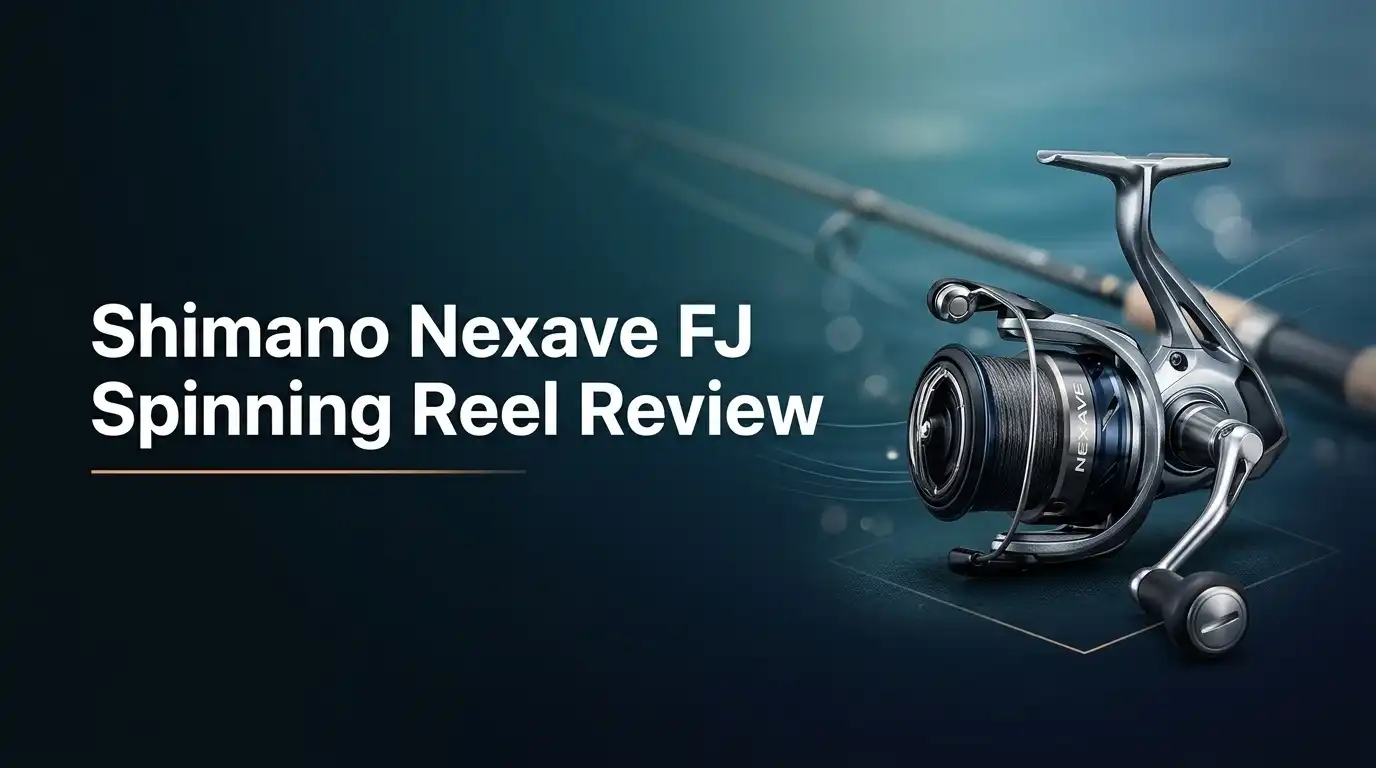
Shimano Nexave FJ Spinning Reel Review 2026: Worth Buying?
The Shimano Nexave FJ arrived in 2026 with a fresh body, a lower price than most anglers expected, and technology borrowed from reels that cost twice as much. It sits at $62.99 for the smaller sizes and $69.99 for the two largest models.
That puts it in a crowded price bracket where KastKing, Pflueger, and Shimano’s own Sedona all fight for your money. So does the Nexave FJ actually earn a spot on your rod, or is it a pretty face with a short lifespan?
I spent weeks casting, cranking, and deliberately abusing this reel to find out. This review covers the good, the frustrating, and the problems you will not read on the packaging.
In a Nutshell:
- The price is the headline. You get SilentDrive, the Anti Twist Fin, a G Free Body, and the Propulsion Line Management System for around $63. Shimano normally reserves SilentDrive for pricier reels, so seeing it here is genuinely surprising.
- Smoothness is excellent out of the box. The retrieve feels quiet and refined for this class. Spin the handle and you will struggle to hear the gears working.
- Weight is the weak spot. The 2500HG and C3000HG both weigh 8.8 ounces. Competing reels in this bracket often come in lighter, and you will notice it after a long day of casting.
- Durability reports are mixed. Several owners report binding after rain exposure or a few weeks of heavy use. This is not a sealed reel, and it does not pretend to be.
- Only 3 ball bearings plus 1 roller bearing. The smoothness comes from tight manufacturing tolerances, not from a stacked bearing count.
- Best for casual and beginner anglers. If you fish every weekend in rough saltwater conditions, spend more. If you fish a few times a month in freshwater, this reel makes sense.
What Is the Shimano Nexave FJ?

Last update on 2026-11-20 / Affiliate links / Images from Amazon Product Advertising API
The Nexave FJ is Shimano’s entry level front drag spinning reel for 2026. It replaces the older Nexave FI and brings a complete redesign rather than a cosmetic refresh.
Shimano built it for new anglers, backup rod duty, and budget conscious fishermen who still want the brand name on the side plate. The lineup covers five sizes, from a tiny 1000 model for panfish up to a C5000HG for larger inshore work.
Shimano also sells clam pack versions of most sizes for retail shelves. The marketing pitch is simple: premium technology, entry level price. The body uses graphite rather than metal, which keeps the cost down and the corrosion risk low.
The Unboxing Experience
My C3000HG arrived in a slim cardboard box with a cutaway window. Nothing fancy, and nothing wasteful. Inside you get the reel, a spare handle screw cap, a basic parts diagram, and the warranty card.
No spare spool, no reel bag, no protective neoprene cover. At this price that is expected, though a cheap cloth bag would have been a nice touch. The first thing I noticed was the finish. The black and gunmetal paint looks far more expensive than $63.
The second thing I noticed was the weight in my palm. It feels dense rather than cheap and hollow. I mounted it, gave the handle a spin, and smiled. The rotation is impressively quiet right from the start.
Full Specifications Breakdown
Shimano offers five sizes with real differences between them. The NEX1000FJ runs a 5.0:1 gear ratio, weighs 7.9 ounces, retrieves 26 inches per crank, and carries a 7 pound rated drag.
The NEX2500HGFJ and NEXC3000HGFJ both use a 6.2:1 ratio, weigh 8.8 ounces, and pull 36 inches per turn. The two big models, NEX4000HGFJ and NEXC5000HGFJ, drop to 5.8:1, weigh 10.8 ounces, and retrieve 37 and 39 inches per crank.
Every single size uses the same 3 ball bearings plus 1 roller bearing setup. Rated max drag climbs sharply in the larger sizes, reaching 24 pounds on the 4000 and C5000. Mono capacity on the C3000HG is 10 pound test at 140 yards.
Top 3 Alternatives for Shimano Nexave FJ

Last update on 2026-11-20 / Affiliate links / Images from Amazon Product Advertising API
Shimano Sahara FJ Spinning Reel

Last update on 2026-11-20 / Affiliate links / Images from Amazon Product Advertising API
Shimano Sedona FJ Spinning Reel

Last update on 2026-11-20 / Affiliate links / Images from Amazon Product Advertising API
Pflueger President Spinning Reel
Build Quality and Materials
The Nexave FJ uses a graphite body and a graphite rotor. There is no metal frame here, and Shimano never claimed otherwise. The spool is cold forged aluminum, which is the right choice because it holds line shape under pressure.
The handle folds and uses a screw in design rather than a cheap push button. The bail wire feels thinner than I would like, and I would not want to drop this reel on concrete. Side to side flex exists if you squeeze the body hard, though normal fishing pressure does not reveal it.
Build quality matches the price, not the brand reputation. Shimano cut material cost in sensible places and spent the savings on gear machining instead.
SilentDrive and Real World Smoothness
SilentDrive is the star feature and the reason this reel punches above its price. Shimano redesigned the drive gear, the worm shaft, and the surrounding parts to tighten tolerances to a micron level.
The result is a retrieve with almost no vibration and very little noise. You can crank this reel next to your ear and barely hear it. Compared to the old Nexave FI, the difference is immediately obvious. The improvement holds up under load too, at least during early use.
Reeling a crankbait or a swimbait feels controlled rather than gritty. The smoothness is the single best thing about this reel. Whether it stays that way long term is a separate question I address below.
Anti Twist Fin and Line Management
The Anti Twist Fin is a small flexible polymer tab mounted near the line roller. It keeps tension on the line as it comes onto the spool. The job is to stop slack loops from forming, prevent line falling off the spool lip, and reduce uneven winding.
In practice it works, and it works noticeably well with braid. I fished 15 pound braid on the C3000HG and had zero wind knots across several sessions. Light mono also laid down evenly.
This is the feature beginners will appreciate most because loose line is the number one frustration for new spinning reel users. It does not eliminate line twist from lures that spin, so you still need a quality swivel for inline spinners.
Casting Distance and the Propulsion Spool
The Propulsion Line Management System uses a specially angled upper spool lip. The shape straightens line flow as it leaves the spool and cuts friction during the cast. Shimano has used variations of this design for years, and it performs here.
My distance with a half ounce jig improved slightly over a comparable budget reel. Accuracy is where I noticed the bigger gain. Line peels off cleanly, so short pitches land where you aim instead of fluttering.
Light lures under a quarter ounce still cast better on the 1000 size than on the C3000HG, which is normal physics rather than a flaw. Casting performance is a legitimate strength of the Nexave FJ. The spool lip design earns its keep every single cast.
Drag System Performance
Shimano rates the C3000HG at 20 pounds of max drag and the 4000HG at 24 pounds. Treat those numbers as a ceiling rather than a working target. Real world usable drag sits far lower, and I ran mine around 4 to 6 pounds for bass and inshore species.
At those settings the drag starts up smoothly without the jerky hesitation cheap reels often show. Sustained pressure is a different story. During a long fight the washers heat up and the pressure becomes less consistent.
The drag knob itself turns with firm clicks, which makes mid fight adjustment easy. This drag handles freshwater species and small inshore fish comfortably. Asking it to stop a big redfish on a long run is pushing past its design limits.
Which Size Should You Choose

Last update on 2026-11-20 / Affiliate links / Images from Amazon Product Advertising API
Size choice matters more than most buyers realize. The 1000 size suits ultralight rods, trout, panfish, and 4 pound mono. It is the lightest at 7.9 ounces and the most pleasant to fish all day. The 2500HG is the classic bass and walleye size with a fast 6.2:1 ratio.
The C3000HG is my pick for most anglers because it shares the 2500 body with a deeper spool, giving you 140 yards of 10 pound mono.
Step up to the 4000HG for pike, catfish, and light inshore work. The C5000HG handles surf duty and bigger baits. Avoid buying larger than you need, because the big models jump to 10.8 ounces.
Saltwater Use and Corrosion Resistance
Shimano does not market the Nexave FJ as a sealed saltwater reel, and that distinction matters. The graphite body resists corrosion naturally, which helps. The internals are another story.
This reel has no water resistant seals protecting the gear box or the drag stack. Several owners report the reel binding up after getting caught in rain, which points directly at water intrusion. Salt spray will cause problems faster than freshwater will.
If you fish the surf or a boat deck, rinse this reel with fresh water after every single trip and let it dry fully. Treat light inshore use as the absolute maximum, and accept that saltwater will shorten its working life.
What the Nexave FJ Does Not Do Well
Honest reviews cover failures, so here they are. Weight is the first problem. At 8.8 ounces the mid sizes feel heavy on modern lightweight rods, and 10.8 ounces on the 4000 is a lot for the class. Longevity is the second and bigger concern.
Owner reports describe reels that turned stiff after roughly two weeks of normal use, with the handle becoming hard to crank once line and a lure were attached. Others describe binding every time the reel got rained on.
Water intrusion appears to be the common thread. The bearing count of 3 plus 1 is also low, so there is little margin once one bearing degrades. Finally, there is no spare spool and no bag included.
Pros and Cons
Pros
- SilentDrive delivers genuinely quiet and smooth rotation at an entry level price
- The Anti Twist Fin greatly reduces wind knots and loose line, especially with braid
- The Propulsion spool lip improves both casting distance and accuracy
- G Free Body shifts weight closer to the rod and reduces wrist fatigue
- Cold forged aluminum spool holds up better than cheap stamped alternatives
- Five sizes cover panfish through light inshore fishing
- Excellent finish quality that looks far more expensive than $62.99
Cons
- Heavy for the class at 8.8 ounces in the mid sizes and 10.8 ounces in the large ones
- Only 3 ball bearings plus 1 roller bearing across the entire lineup
- No water resistant sealing, and multiple reports of binding after rain exposure
- Durability complaints after short periods of regular use
- Graphite body flexes under hard hand pressure
- Rated drag figures are far higher than usable real world drag
- No spare spool, bag, or extras in the box
Nexave FJ Compared to Sienna, Sedona, and Sahara
Shimano stacks four budget spinning reels, and the differences are real. The Sienna sits below the Nexave at roughly $30 and uses simpler internals with no SilentDrive.
The Nexave FJ is a clear upgrade over the Sienna for about double the money. The Sedona FJ costs a little more and adds a stronger gear and better internal durability, which matters for frequent anglers.
The Sahara FJ sits above both, bringing HAGANE gearing, better sealing, and a far longer service life for roughly $110. The Nexave is the best looking value on paper, but the Sahara is the better long term purchase if you fish often. Buy based on how many trips you take per year.
Who Should Buy the Shimano Nexave FJ
This reel fits a specific angler very well. Beginners benefit most because the line management features forgive the mistakes new spinning reel users make.
Casual anglers who fish a handful of times each season will likely never reach the durability wall that heavy users hit. It also works nicely as a backup reel kept in the truck or on a loaner rod for friends and kids.
Parents buying a first real reel for a teenager will find this an easy recommendation. Tournament anglers, guides, and anyone fishing weekly should skip it and save for the Sahara FJ. Saltwater regulars should also look elsewhere unless they commit to rinsing after every trip.
Final Verdict
The Shimano Nexave FJ is a genuinely good reel for the first season and a question mark after that. Shimano packed real technology into a $62.99 package, and the smoothness, casting, and line control all deliver.
The finish quality alone makes it feel like a steal on the shelf. The concerns are serious though, and the reports of binding after rain and stiffening after a few weeks cannot be ignored.
I rate it 3.5 out of 5. Buy it if you fish occasionally in freshwater and want Shimano quality without the price. Skip it if you fish hard, fish salt, or need a reel that survives five seasons of abuse without complaint.
Frequently Asked Questions
Is the Shimano Nexave FJ good for saltwater fishing?
It handles light inshore use but has no sealing. Rinse it with fresh water after every saltwater trip. For regular saltwater fishing, the Sahara FJ or a sealed reel is a safer choice.
How many bearings does the Nexave FJ have?
Every size uses 3 ball bearings plus 1 roller bearing. The smooth feel comes from SilentDrive manufacturing tolerances rather than a high bearing count.
What is the best Nexave FJ size for bass fishing?
The 2500HG and C3000HG both work well. The C3000HG offers a deeper spool with the same 8.8 ounce weight, making it the more versatile pick.
How much does the Shimano Nexave FJ cost?
Sizes 1000 through C3000HG list at $62.99. The 4000HG and C5000HG list at $69.99.
Is the Nexave FJ better than the Shimano Sienna?
Yes. The Nexave FJ adds SilentDrive, the Anti Twist Fin, and the G Free Body. It costs roughly double, and the upgrade in feel is immediately noticeable.
Can you service the Nexave FJ yourself?
Basic cleaning and oiling are possible with simple tools. Full gear box disassembly is tricky on graphite bodied reels, so a Shimano service center is the safer route.

Hi, I’m Ivy Webb, the passionate angler and creator behind BaitHookVault.com. I spend my days out on the water personally testing and reviewing a wide variety of fishing tools and gear.