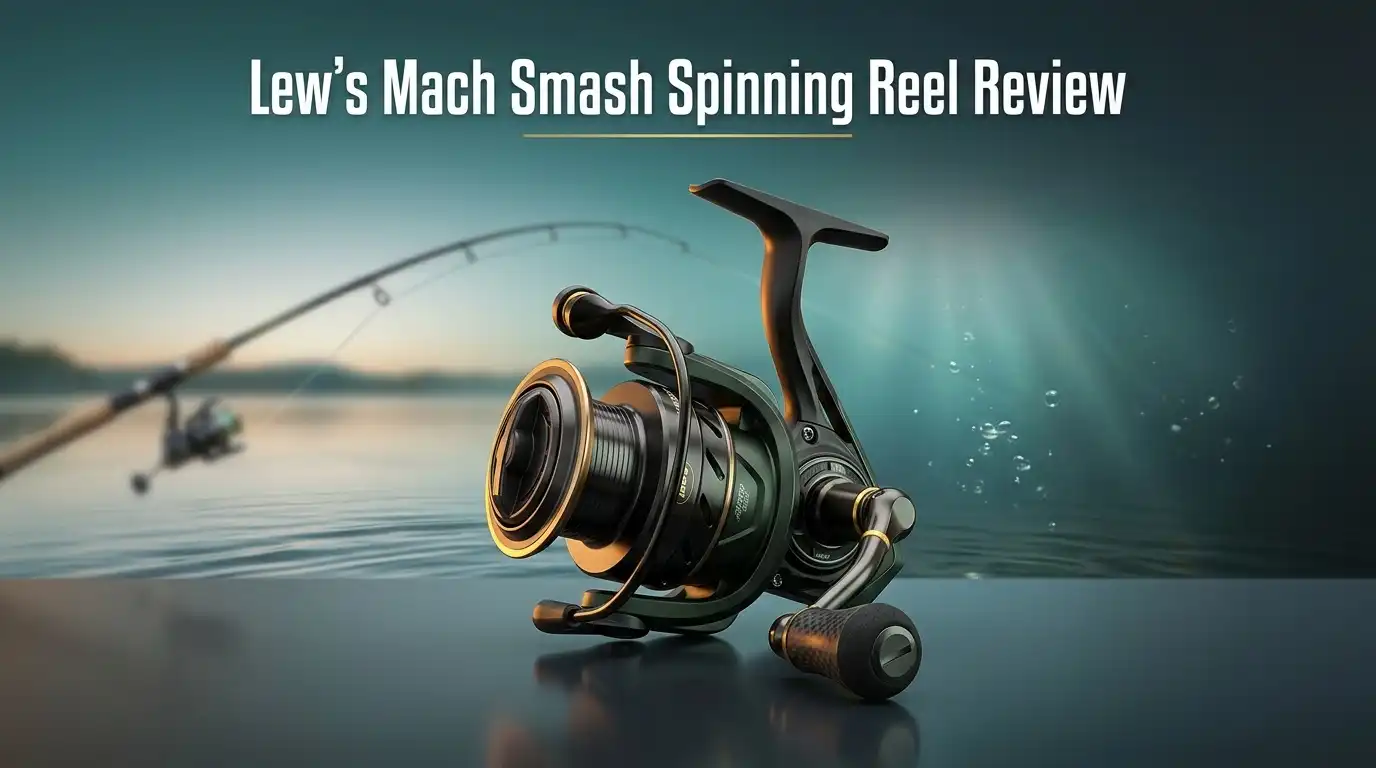
Lew’s Mach Smash Spinning Reel Review 2026: Worth Buying?
You want a spinning reel that feels smooth, looks sharp, and doesn’t cost a fortune. The Lew’s Mach Smash promises all three.
It has bold Mach styling, eight bearings, and a drag that goes up to 17 pounds. On paper, that’s a lot of reel for under $80.
Does it hold up on the water, though? This review covers how the reel feels, how it casts, and how it fights fish. It also covers the problems, because every reel has a few. By the end, you’ll know if the Mach Smash belongs on your rod.
In a Nutshell
- Great value for the price. The Mach Smash usually sells for well under $80. You get eight bearings, brass gears, and an aluminum spool, which is more than most reels at this price offer.
- Smooth retrieve, at least at first. Lew’s packs the gears in Speed Lube, so the reel feels silky right out of the box. Some owners say the gears feel a little rougher after a heavy season.
- Strong drag for its size. The 200 size has 13 pounds of max drag and the 300 size has 17 pounds. That’s plenty for bass, walleye, and big catfish in open water.
- Light graphite body. The 200 weighs about 8.4 ounces and the 300 weighs about 9.1 ounces. Your wrist stays fresh through a long day of finesse fishing.
- Braid works, but mono is quieter. The ported aluminum spool holds braid well. A few anglers say braid sounds noisy through cheaper guides and prefer mono or fluorocarbon.
- Not a saltwater workhorse. The graphite frame flexes under heavy loads, and the reel has no real sealing. Keep it in fresh water for the best results.
Lew’s Mach Smash Spinning Reel

Last update on 2026-11-20 / Affiliate links / Images from Amazon Product Advertising API
The Lew’s Mach Smash sits in the middle of the Mach family. It sits above the entry level Mach 1 and below the aluminum Mach 2. Lew’s built it for anglers who want good performance without paying premium prices.
The reel uses a graphite frame and graphite sideplates. Inside, solid brass Speed Gears drive the rotor. A skeletal rotor cuts weight and keeps the reel balanced. Lew’s also adds a Zero Reverse one way clutch, so you get instant hook sets with no back play.
You can buy it alone or as part of the popular Mach Smash combo. The combo pairs the reel with an IM6 graphite rod and usually sells for around $100. Many anglers buy the combo first, then grab a second reel later.
The style is part of the appeal. The red, black, and gray color scheme looks great on any rod.
Unboxing Experience
The Mach Smash comes in a clean, bright box with bold Mach graphics. Inside, the reel sits snugly in a molded tray. Nothing rattles or slides around during shipping.
The handle comes folded down next to the body. You screw it into either side, so left and right handed anglers both get a good fit. The threads feel tight and solid. You also get a basic manual with drag and maintenance tips.
My first impression was simple: this reel looks more expensive than it is. The anodized spool shines nicely. The ports in the spool give it a racing look. The Combat Grip knob feels firm and slightly textured.
I turned the handle a few times right away. The retrieve felt smooth with zero wobble. The bail snapped closed with a crisp click. It’s a good first impression for a reel at this price.
Key Specifications at a Glance
You should know the numbers before you buy. The Mach Smash comes in a few sizes, but the 200 and 300 sizes are the most popular.
The MHS200 has a 6.2:1 gear ratio and picks up 31 inches of line per turn. It holds 140 yards of 6 pound mono or 100 yards of 10 pound mono. Max drag hits 13 pounds. It weighs about 8.4 ounces.
The MHS300 also uses a 6.2:1 gear ratio. It pulls in 32 inches per turn. It holds 145 yards of 10 pound mono and offers 17 pounds of max drag. It weighs about 9.1 ounces.
Both sizes use seven stainless steel double shielded ball bearings plus one Zero Reverse clutch bearing. Both come with a one year limited warranty. That 6.2:1 ratio is fast enough for most bass techniques.
Top 3 Alternative for Lew’s Mach Smash Spinning Reel
Lew’s Mach 2 Spinning Reel

Last update on 2026-11-20 / Affiliate links / Images from Amazon Product Advertising API
Shimano Sedona FJ Spinning Reel

Last update on 2026-11-20 / Affiliate links / Images from Amazon Product Advertising API
Daiwa BG MQ Spinning Reel

Last update on 2026-11-21 / Affiliate links / Images from Amazon Product Advertising API
Build Quality and Design
The Mach Smash uses a graphite body. Graphite keeps the weight down and resists corrosion better than cheap metal. It’s a smart choice for a budget reel.
Graphite has a downside, though. It flexes more than aluminum under heavy pressure. When you horse a big fish out of thick cover, you may feel a little give in the body. Most bass anglers will never notice it. Heavy cover anglers might.
The skeletal rotor looks great and keeps the reel balanced. The brass gears are a real plus. Brass lasts much longer than the zinc gears you find in many cheaper reels.
Fit and finish look clean overall. The paint holds up well with normal care. Some owners report small chips around the rotor after a season of rough use. Treat it gently and it will look good for a long time.
Bearings and Smoothness
Eight bearings sounds impressive for a reel under $80. In practice, the retrieve feels smooth and quiet right out of the box. Lew’s Speed Lube helps a lot here.
The Zero Reverse clutch works well. When you set the hook, the handle locks instantly. You get no back play, which means you don’t miss bites.
There’s one honest catch. Bearing count doesn’t equal bearing quality. After heavy use, some anglers say the Mach Smash feels a bit gritty. That usually points to the lube breaking down, not a broken part.
A quick clean and fresh grease often fixes it. If you fish three or four days a week, plan to service the reel once or twice a year. If you fish on weekends, it should stay smooth for a long time.
Drag Performance
The drag is one of the best features of the Mach Smash. Lew’s uses an oversized multi disc drag system. It feels smooth, and it starts without a sudden jerk.
The 200 size gives you 13 pounds of max drag. The 300 size gives you 17 pounds. That’s more than enough for largemouth, smallmouth, walleye, and channel catfish. You will rarely need anywhere near full drag.
I liked how easy the drag knob is to adjust. The clicks feel clear, so you can fine tune the tension during a fight. The drag stayed consistent during long runs.
Here’s the weak spot. At very high settings, the drag can feel a little sticky. It doesn’t always pay out line as smoothly as a premium Shimano or Daiwa. For most freshwater fishing, it still works great.
Spool and Line Handling
The anodized aluminum spool is ported and knurled. Ports cut weight. The knurled surface helps braid grip the spool, so you can tie braid on without a mono backer in most cases.
Line lay looks even on both mono and fluorocarbon. Wind knots show up rarely if you close the bail by hand. That habit helps with any spinning reel.
Braid is a mixed story. The spool handles braid fine. Some combo owners say braid sounds loud and scratchy through the rod guides, though. One angler switched to 8 pound mono and said the reel handled much better.
My advice: use 8 to 10 pound fluorocarbon or mono on the 200 size. On the 300 size, try 15 pound braid with a fluoro leader. Test it yourself and see what sounds and feels best to you.
Casting Performance
The Mach Smash casts well for its price. The spool lip is smooth, and line comes off cleanly. Light lures fly farther than you might expect.
I tested it with drop shots, wacky rigs, and small swimbaits. The reel handled each one without trouble. Ned rigs and shaky heads also cast nicely on the 200 size with light line.
The 300 size shines with heavier baits. Texas rigs, small jigs, and spinnerbaits all cast easily. The larger spool diameter adds extra distance.
Casting accuracy depends on your rod as much as the reel. On a quality medium power rod, the Mach Smash feels balanced and precise. On a cheap, heavy rod, it can feel slightly tip heavy. Pair it with a light graphite rod for the best results.
Handle and Comfort
The fold down handle uses Lew’s Combat Grip knob. It’s a firm, textured knob that stays grippy even when your hands get wet. That helps a lot on rainy days.
The handle swaps from right to left in seconds. The threads feel secure, and the handle doesn’t wobble during a retrieve. That’s not always true on budget reels.
Weight stays low on both sizes. At 8.4 ounces, the 200 size feels light on any finesse rod. You can fish it all day without wrist fatigue.
Some anglers prefer a power knob or a round T shaped knob. The Combat Grip is a bit narrow for big hands. If you have large hands, you might want an aftermarket knob. For most people, the stock knob feels comfortable.
Who Should Buy the Mach Smash
The Mach Smash fits a few types of anglers very well.
Beginners will love it. It’s smooth, easy to use, and doesn’t cost much. You get real performance without spending $150 or more.
Weekend bass anglers get a great finesse reel. It handles drop shots, wacky rigs, and Ned rigs with ease. It also makes a solid backup reel for tournament anglers on a budget.
Multi species anglers can use it for walleye, crappie, trout, and catfish. The 300 size holds enough line for bigger fish.
The Mach Smash is not the best fit for saltwater anglers. It’s also not ideal for anglers who fish heavy cover every day. Those anglers need a full metal body and better sealing. A Penn or a Daiwa BG MQ makes more sense there.
Pros and Cons
Every reel has strengths and weaknesses. Here’s a clear breakdown for the Mach Smash.
Pros
- Smooth retrieve right out of the box thanks to Speed Lube and eight bearings.
- Strong drag with up to 13 or 17 pounds of max pressure, depending on size.
- Lightweight graphite body that reduces wrist fatigue on long days.
- Brass gears that outlast the zinc gears in many budget reels.
- Ported aluminum spool that handles braid without a backer.
- Instant hook sets from the Zero Reverse clutch.
- Stylish Mach design that looks more expensive than it is.
Cons
- Graphite frame flexes a bit under heavy loads.
- Retrieve can feel gritty after heavy use until you service it.
- Drag can feel slightly sticky at very high settings.
- No real water sealing, so saltwater use is risky.
- Combat Grip knob feels small for large hands.
- One year warranty is short compared with some competitors.
What the Mach Smash Does Not Do Well
An honest review should cover the weak points clearly. Here’s where the Mach Smash falls short.
It does not handle saltwater well. The reel has no sealed drag or body. Salt and sand can get inside fast. Even with careful rinsing, corrosion can build up over time.
It is not made for heavy cover power fishing. When you drag big bass out of thick weeds, the graphite body flexes. A metal body reel feels much stiffer in those spots.
It does not stay perfectly smooth forever. Long term smoothness depends on maintenance. Skip cleaning and the gears will start to feel rough.
Finally, it doesn’t match premium reels in refinement. Next to a Shimano Stradic, it feels less precise. That’s fair, since the Stradic costs about three times as much. Just set your expectations to match the price.
Final Verdict
So, is the Lew’s Mach Smash worth buying in 2026? For most freshwater anglers, yes, it is.
You get a smooth retrieve, a strong drag, brass gears, and a light body for well under $80. Few reels at this price offer that combination. The Mach styling is a nice bonus.
It’s not perfect, though. The graphite frame flexes under heavy loads. The reel needs regular cleaning to stay smooth. It does not belong in saltwater. Keep those limits in mind and you’ll be happy.
Buy the 200 size for finesse bass fishing and light line. Choose the 300 size for heavier baits, braid, and bigger fish. If you want more durability, step up to the Mach 2 or the Shimano Sedona FJ. For pure value, the Mach Smash is very hard to beat.
FAQs
Is the Lew’s Mach Smash good for beginners?
Yes. It’s smooth, light, and easy to use. The price is friendly, and the reel handles many techniques. Beginners can learn finesse fishing without spending much money.
Can I use the Mach Smash in saltwater?
You can, but it’s not a good idea. The reel lacks proper sealing. If you do use it in salt, rinse it with fresh water after every trip and service it often.
What size Mach Smash should I buy for bass?
The 200 size works great for finesse bass fishing with 6 to 10 pound line. The 300 size suits heavier lures, braid, and bigger fish.
How many bearings does the Mach Smash have?
It has seven stainless steel double shielded ball bearings plus one Zero Reverse one way clutch bearing, for eight in total.
What is the max drag on the Mach Smash?
The 200 size offers 13 pounds of max drag. The 300 size offers 17 pounds.
Is the Mach Smash braid ready?
Yes. The knurled aluminum spool grips braid without a mono backer. Some anglers still prefer mono or fluorocarbon because braid can sound noisy through cheaper guides.
How does the Mach Smash compare to the Mach 2?
The Mach 2 has an aluminum body and more bearings. It feels stiffer and more refined. The Mach Smash costs less and weighs less, but its graphite body flexes more under pressure.
How often should I clean the Mach Smash?
Light anglers can service it once a year. If you fish often, clean and grease it twice a year. That keeps the retrieve smooth and stops grittiness.

Hi, I’m Ivy Webb, the passionate angler and creator behind BaitHookVault.com. I spend my days out on the water personally testing and reviewing a wide variety of fishing tools and gear.