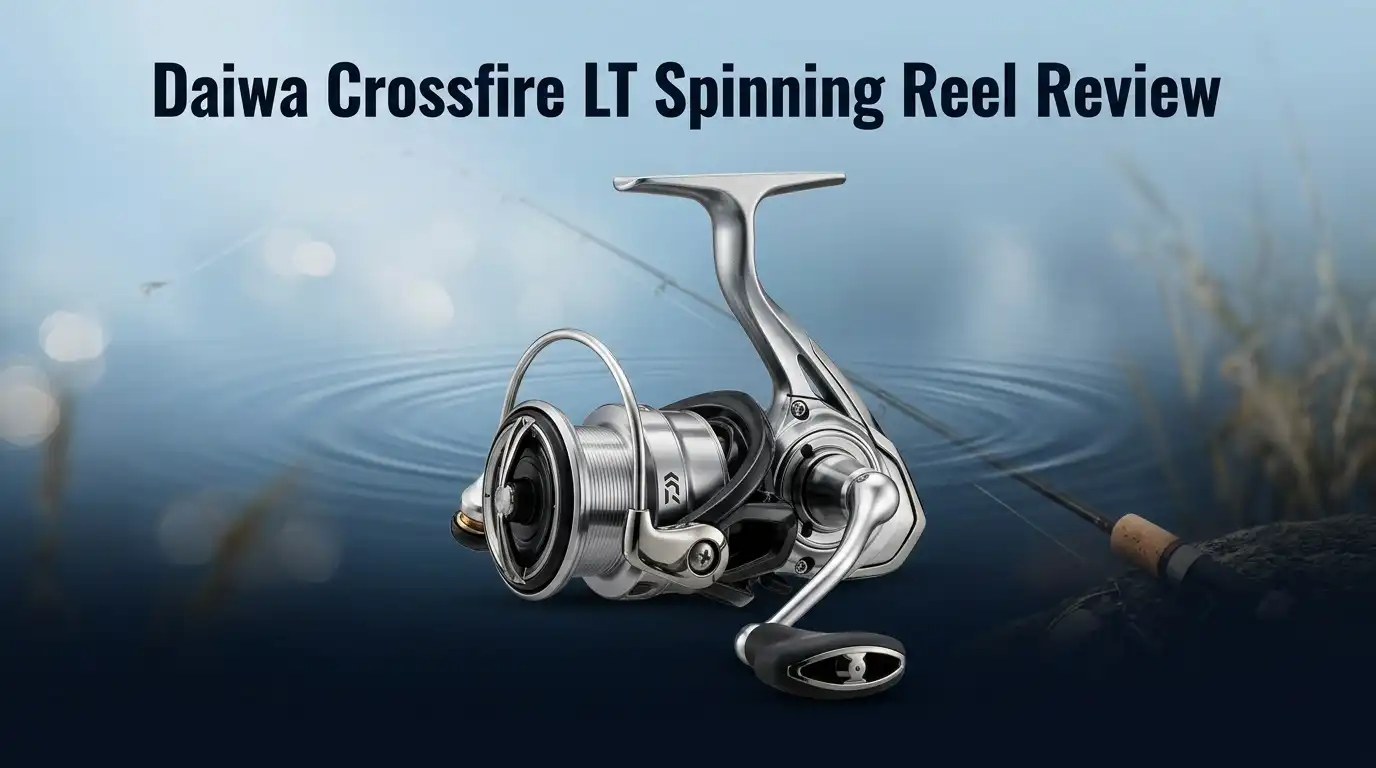
Daiwa Crossfire LT Spinning Reel Review 2026: Worth Buying?
Budget reels have a bad name for a reason. Most of them feel gritty after one season, and the drag jerks when a decent fish runs.
The Daiwa Crossfire LT keeps showing up in the conversation anyway, and the 2026 version raises the stakes with technology borrowed from reels costing three times more. I spooled one up, fished it hard in creeks and along the surf, and took notes on everything that impressed me and everything that annoyed me.
This review covers the real performance, the weak spots Daiwa does not advertise, and whether this reel deserves a spot on your rod in 2026.
Key Takeaways
- Price sits near $31 to $35 on Amazon, which places the Crossfire LT firmly in beginner territory while delivering features from Daiwa’s mid range lineup. The value ratio here is the single strongest argument for this reel.
- The 2026 redesign is a real overhaul, not a sticker change. Daiwa added AIRDRIVE Design, a DS4 body and rotor, Tough Digigear zinc gearing, an LC ABS spool, and the ATD Type L drag. The old Crossfire shared almost none of this.
- Casting distance is the standout feature. The shallow tapered spool throws light lures further than most reels at this price, and it lays line neatly enough to reduce wind knots on braid.
- The drag start up is smooth and forgiving, which protects light line during hard runs. Max drag runs from 11 pounds on the small sizes up to 26 pounds on the 4000 and 5000 models.
- The weak points are real and worth knowing. The handle knob feels cheap, the reel is not sealed against water, the bail spring is a known failure part, and small sizes weigh more than modern ultralight competitors.
- Best fit: freshwater panfish, trout, bass, light inshore work, backup reels, and kids’ first setups. Poor fit: heavy saltwater abuse, tournament level finesse, or anyone chasing the lightest possible combo.
What Is the Daiwa Crossfire LT Spinning Reel?

Last update on 2026-09-26 / Affiliate links / Images from Amazon Product Advertising API
The Daiwa Crossfire LT is the entry point of Daiwa’s spinning reel family. It sits below the Revros LT, Regal LT, and Fuego LT in the lineup, and it carries the lowest price tag Daiwa offers on a modern LT platform.
LT stands for Light and Tough. Daiwa built this concept around four goals: lighter weight, stronger gearing, more drag pressure, and better bearings. The Crossfire LT applies that thinking to a reel that costs less than a decent spool of braid and a pack of jigheads.
The 2026 model, sold in some markets as the 26 Crossfire LT, is a full redesign. Daiwa dropped in the AIRDRIVE Design package, switched the body and rotor to DS4 composite, and upgraded the drag to ATD Type L. The spool now uses the LC ABS profile aimed at longer casts.
Six sizes cover almost every situation: 1000, 2000, 2500, 3000 C, 4000 C, and 5000 C. Weights run from roughly 7.8 ounces to 10.2 ounces. Gear ratios sit at 5.2:1 or 5.3:1 depending on size, with faster XH versions offered in some regions.
Unboxing Experience and First Impressions
The Crossfire LT arrives in a simple cardboard box with a clear window. There is no fancy foam insert, no reel bag, and no cardboard cradle. You get the reel, a short manual, a parts diagram, and a small bag of spool spacer washers. That is it.
Pull the reel out and the first thing you notice is the finish. The 2026 body wears a dark charcoal shell with red accents, and it looks far more expensive than the price suggests. Nothing about the exterior screams cheap.
Then you turn the handle, and that is where the reel wins people over. The retrieve feels light and quiet, with none of the plastic grinding that haunts other reels under $40. The AIRDRIVE rotor spins with very little inertia, so the handle keeps moving after you stop cranking.
The handle screws in from the opposite side and threads in cleanly. The bail snaps over with a firm click, not a mushy flop.
One disappointment shows up immediately: the handle knob. It is hollow plastic, it rattles slightly, and it feels like the one part Daiwa cut corners on.
Build Quality and Materials Explained
Daiwa builds the 2026 Crossfire LT body and rotor from DS4, a glass reinforced composite. DS4 is not carbon, and it is not aluminum. It is a middle ground material that keeps weight down while resisting flex better than plain plastic.
The main gear is zinc die cast Tough Digigear. Zinc is softer than brass, so it will wear faster under heavy load, but Daiwa machines the teeth precisely, and the mesh feels tight out of the box. For light and medium duty fishing, zinc gearing lasts years.
The spool is aluminum die cast, which matters more than people realize. Plastic spools on cheap reels warp under braid pressure. This one does not.
Daiwa lists three bearings on the 2026 spec sheet for most sizes, and the AIRDRIVE shaft rides on a non contact design supported by dual bearings. Some retail listings quote higher bearing counts, so check the packaging for your exact model.
Honest take: this is composite construction, not metal. Crank down hard on a snagged lure and you will feel the body flex a little. That flex is normal at this price, but it tells you where the ceiling sits.
Drag System Performance in Real Fishing
The ATD Type L drag is the technical upgrade that matters most on the 2026 model. Daiwa tuned this system specifically for light lines and light lures.
Start up inertia is the number that separates good drag from bad drag. A cheap drag sticks for a fraction of a second when a fish surges, then releases suddenly. That spike is what snaps 4 pound test. The ATD Type L begins giving line almost immediately, with a soft, even pull.
In practice, this feels like the fish is on a rubber band instead of a chain. I fished 6 pound fluorocarbon on the 2500 and never lost a fish to a drag spike.
Maximum drag pressure varies by size. The 1000 through 2500 models produce roughly 11 pounds. The 3000 C jumps to about 22 pounds, and the 4000 C and 5000 C reach around 26 pounds.
Here is the caveat. Those maximum numbers are lab figures. Running any composite bodied reel near full drag puts serious strain on the frame. Fish these at half of max and the reel stays happy.
Top 3 Alternative for Daiwa Crossfire LT Spinning Reel

Last update on 2026-09-26 / Affiliate links / Images from Amazon Product Advertising API
Shimano Sienna FG Spinning Reel

Last update on 2026-09-26 / Affiliate links / Images from Amazon Product Advertising API
Daiwa Revros LT Spinning Reel

Last update on 2026-09-26 / Affiliate links / Images from Amazon Product Advertising API
KastKing Centron Spinning Reel
Casting Distance and the LC ABS Spool
Casting is where the Crossfire LT genuinely beats reels above its price class. The LC ABS spool uses a wide, shallow profile with a tapered front lip.
That taper does two jobs. It reduces the angle the line has to bend as it leaves the spool, and it cuts friction against the lip. Less friction equals more distance.
I threw a 1/16 ounce jig on the 1000 size with 6 pound braid and consistently reached water I could not touch with an older reel using the same rod. The difference was noticeable, not marginal.
The wide spool also improves line lay. Coils stack evenly across the spool face instead of bunching at the top or bottom, which means fewer wind knots on braid.
Daiwa includes spool spacer washers in the box for a reason. If your line piles toward the front lip, add a washer. If it piles toward the back, remove one. Two minutes of tuning fixes almost every line lay complaint people post online.
Retrieve Feel and the AIRDRIVE Rotor
The AIRDRIVE rotor is the piece that makes a $33 reel feel expensive. Daiwa redesigned the rotor for a perfectly round structure and cut weight by roughly 16 percent compared to the previous generation.
Lower rotor mass means lower rotational inertia. In plain terms, the handle starts turning with less effort and stops when you stop. You feel the lure better because less of the reel’s own momentum masks what the bait is doing.
Slow rolling a swimbait, I could feel the blade thump through the handle. That level of feedback used to require a $100 reel.
The retrieve ratio sits at 5.2:1 or 5.3:1 depending on size, pulling between 25 and 34 inches of line per crank. That is a moderate speed, well suited to jigs, crankbaits, and live bait.
What the retrieve does not deliver is buttery silence under load. Put a heavy fish on and you will hear a faint mechanical hum from the zinc gearing. It is not a defect. It is the sound of an affordable gear train working.
Choosing the Right Crossfire LT Size


Last update on 2026-09-26 / Affiliate links / Images from Amazon Product Advertising API
Size selection trips up more buyers than any other decision, so here is a plain breakdown.
The 1000 and 2000 sizes suit ultralight work. Think panfish, stocked trout, creek smallmouth, and small stream fishing with 2 to 6 pound line. Both weigh around 7.8 ounces and pair well with rods from 5 feet to 7 feet 6 inches.
The 2500 is the do everything choice. It handles largemouth bass, walleye, pickerel, and light inshore species on 8 to 12 pound line. If you only buy one, buy this one.
The 3000 C steps up the drag to roughly 22 pounds while staying compact. It fits redfish, speckled trout, catfish, and carp duty nicely.
The 4000 C and 5000 C move into surf and heavier inshore territory. Both weigh about 10.2 ounces and hold enough braid for long runs.
One note on the C designation: it means the reel uses a compact body with a larger spool, so you get bigger line capacity without carrying a bigger reel.
Saltwater Use and Corrosion Resistance
Daiwa does not market the Crossfire LT as a dedicated saltwater reel, and that distinction matters.
This reel is not sealed. There is no magnetic oil barrier, no rubber drag gasket, and no waterproof body seam. Water that gets inside will stay inside.
That said, anglers have used Crossfire reels in salt for years with good results. The simple internal layout helps. Fewer bearings means fewer parts that can rust into a seized mess.
The practical rules are straightforward. Splashes and spray are fine. Kayak fishing and surf casting are fine if you rinse afterward. Full submersion will likely end the reel.
My routine is simple. After every salt trip, I rinse the reel under a light stream of fresh water with the drag tightened down, then loosen the drag and let it dry upright.
A thin smear of reel grease under the drag knob and beneath the spool adds a real layer of protection. It muffles the drag clicker slightly, but the drag itself keeps working normally.
What the Crossfire LT Does Not Do Well
Every honest review needs this section, so here are the flaws without sugar coating.
The handle knob is the worst part of the reel. It is hollow plastic, it can feel slippery with wet hands, and it makes a hollow tapping sound during fast retrieves. Some anglers swap it for an aftermarket EVA knob.
The bail spring is a documented weak point. Owners of previous generations reported springs breaking after heavy use, which makes casting nearly impossible until replaced. Daiwa customer support has a strong record of sending free replacement springs.
The small sizes are heavy by modern standards. At 7.8 ounces, the 1000 gives up two full ounces to premium carbon bodied ultralight reels. On a long rod the balance is fine. On a short ultralight rod it feels nose heavy.
There is no anti reverse switch. Most anglers never miss it, but back reeling fans will.
Finally, the reel body flexes under extreme load. Treat it as a light to medium duty tool and it performs. Treat it as a winch and it will disappoint you.
Daiwa Crossfire LT Pros and Cons
Pros
- Outstanding casting distance thanks to the shallow LC ABS spool with a tapered lip, especially noticeable with light lures and thin braid.
- Smooth ATD Type L drag with very low start up inertia, which protects light line and keeps hooks from pulling during sudden runs.
- Excellent line lay that reduces wind knots and line twist, plus included spacer washers so you can fine tune the stack yourself.
- The AIRDRIVE rotor cuts weight and inertia, giving the retrieve a light, responsive feel that punches well above the price.
- Six sizes from 1000 to 5000 cover ultralight panfish through surf and inshore fishing under one product family.
- Aluminum spool and zinc Tough Digigear provide real durability where cheaper reels use plastic.
- Daiwa customer support supplies replacement parts quickly, often free of charge for small components.
Cons
- The plastic handle knob feels cheap, sounds hollow, and gets slippery when wet.
- No sealing anywhere on the reel, so submersion or heavy salt exposure will shorten its life considerably.
- Bail spring failures have been reported by long term users of the platform.
- Small sizes weigh more than competing ultralight reels built from carbon composites.
- No anti reverse switch for anglers who prefer back reeling.
- Body flex appears under heavy drag pressure, limiting the reel to light and medium duty use.
Crossfire LT vs Sienna FG vs Centron
The Shimano Sienna FG is the Crossfire LT’s most direct rival, sitting at almost the same price on Amazon.
Shimano’s reel wins on gear feel and reputation. The Sienna uses a Shimano gear train that many anglers find slightly smoother under load, and the reel has a long track record. It also includes Propulsion Line Management to reduce backlash on the cast.
Daiwa wins on casting distance and drag quality. The LC ABS spool simply throws further than the Sienna’s spool, and the ATD Type L starts more smoothly than the Sienna’s drag stack. The Crossfire is also lighter in matching sizes.
The KastKing Centron undercuts both on price and offers a higher bearing count with a collapsible handle. Build quality is decent, but the drag and line lay do not match either Japanese brand.
The Daiwa Revros LT is the natural upgrade path. It costs roughly twice as much, adds bearings and better internals, and suits anglers who fish several times a month.
Best Rod and Line Pairings
Matching the reel properly changes how it performs, so here is what worked for me.
For the 1000 and 2000 sizes, pair with an ultralight or light power rod between 6 feet and 7 feet 6 inches. Longer rods balance the reel better because the extra reel weight sits behind your hand.
Line choice matters more than most beginners expect. Load the small sizes with 6 to 10 pound braid and a fluorocarbon leader. The shallow spool fills perfectly with braid and does not waste 200 yards of backing.
The 2500 pairs beautifully with a medium light or medium power rod around 6 feet 10 inches to 7 feet. Run 10 to 15 pound braid for bass work, or 8 pound monofilament for live bait.
For the 3000 C and larger, use a medium heavy rod and 20 to 30 pound braid.
Always add a strip of electrical tape or a monofilament backing layer before braid. The aluminum spool is slick, and braid will spin on it without something to grip.
Maintenance Tips That Extend Reel Life
A budget reel lasts a long time if you give it ten minutes of attention now and then.
Rinse after every saltwater trip. Use low pressure fresh water, keep the drag tight during the rinse, then loosen it and dry the reel with the spool facing up.
Never spray a hose directly at the body seams or under the rotor. Pressure forces water past the gaps and into the gear housing.
Grease the drag knob threads and the underside of the spool twice a season. A light marine grade reel grease works best. Wipe away the old dirty grease before reapplying.
Check the handle screw every few trips. It backs out slowly with use.
Every six months, remove the spool and wipe the drag washer stack. Add one drop of drag grease to felt washers, and leave carbon washers dry unless the manual says otherwise.
Oil the line roller twice a season with a single drop of reel oil. A frozen line roller causes line twist, and most anglers blame the reel when the roller is the actual culprit.
Who Should Buy the Daiwa Crossfire LT
This reel fits several types of angler very well, and fits others poorly.
Buy it if you are new to spinning gear. You get real Daiwa technology, a forgiving drag, and casting performance that will not hold back your progress. Nothing about this reel will frustrate a beginner.
Buy it if you need backup reels. Keeping two or three spare setups in the truck costs very little with the Crossfire LT.
Buy it if you fish light tackle in fresh water. Panfish, trout, creek bass, and walleye all sit comfortably within this reel’s capability.
Buy it for kids. It is light enough for small hands and cheap enough that a dropped reel is not a disaster.
Skip it if you fish salt water constantly. Spend more and get a sealed reel like the Daiwa BG or Penn Battle.
Skip it if you chase the lightest possible ultralight combo, or if you regularly fight fish that test your drag past 15 pounds.
Final Verdict on the 2026 Crossfire LT
The Daiwa Crossfire LT earns its reputation. For roughly $33, you get a reel that casts further than most competitors, gives line smoothly when it counts, and feels genuinely pleasant in the hand.
The 2026 redesign closed the gap between budget and mid range further than I expected. AIRDRIVE Design, the LC ABS spool, and ATD Type L are features that lived on $100 reels a few years ago.
It is still a budget reel, and it behaves like one in specific ways. The knob is cheap, the body is not sealed, and the composite frame flexes under strain. Those compromises are exactly what keep the price low.
My honest scoring: casting distance gets a 9 out of 10, drag smoothness an 8, build quality a 7, and value a clean 10.
If you want the best performance per dollar in spinning reels right now, this is the reel to beat. Just match it to the fishing it was built for, rinse it when it gets wet, and it will serve you for years.
Frequently Asked Questions
Is the Daiwa Crossfire LT good for saltwater fishing?
It handles light saltwater use well but is not sealed. Splashes, spray, and kayak fishing are fine as long as you rinse the reel with fresh water afterward. Full submersion will likely ruin it. Adding grease under the drag knob and spool improves water resistance noticeably.
What size Crossfire LT should a beginner buy?
The 2500 size is the best all around starting point. It handles bass, walleye, trout, and light inshore species with 8 to 12 pound line. Choose the 1000 or 2000 for panfish and ultralight work, and the 3000 C or larger for bigger inshore fish.
How many bearings does the 2026 Crossfire LT have?
Daiwa’s 2026 spec sheet lists three bearings for most sizes, with the AIRDRIVE shaft riding on a non contact design. Some retail listings quote higher counts depending on region and model variant. Bearing count matters less than bearing placement and gear quality on reels in this class.
Can the Crossfire LT handle braided line?
Yes, and braid actually improves its performance. The aluminum spool holds braid without damage, and the LC ABS profile lays it neatly. Add monofilament backing or a strip of tape first so the braid does not slip on the spool surface.
What is the difference between the Crossfire LT and the Revros LT?
The Revros LT costs roughly double and adds more bearings, a stronger internal layout, and a more refined feel under load. The Crossfire LT matches it on casting distance and comes close on drag smoothness. Casual anglers rarely need the upgrade, while frequent anglers usually appreciate it.
Does the Crossfire LT come with a warranty?
Daiwa backs the reel with a limited warranty against manufacturing defects, and the company has a strong reputation for sending small replacement parts quickly. Contact Daiwa customer service directly with your model number and the part number from the included schematic diagram.

Hi, I’m Ivy Webb, the passionate angler and creator behind BaitHookVault.com. I spend my days out on the water personally testing and reviewing a wide variety of fishing tools and gear.