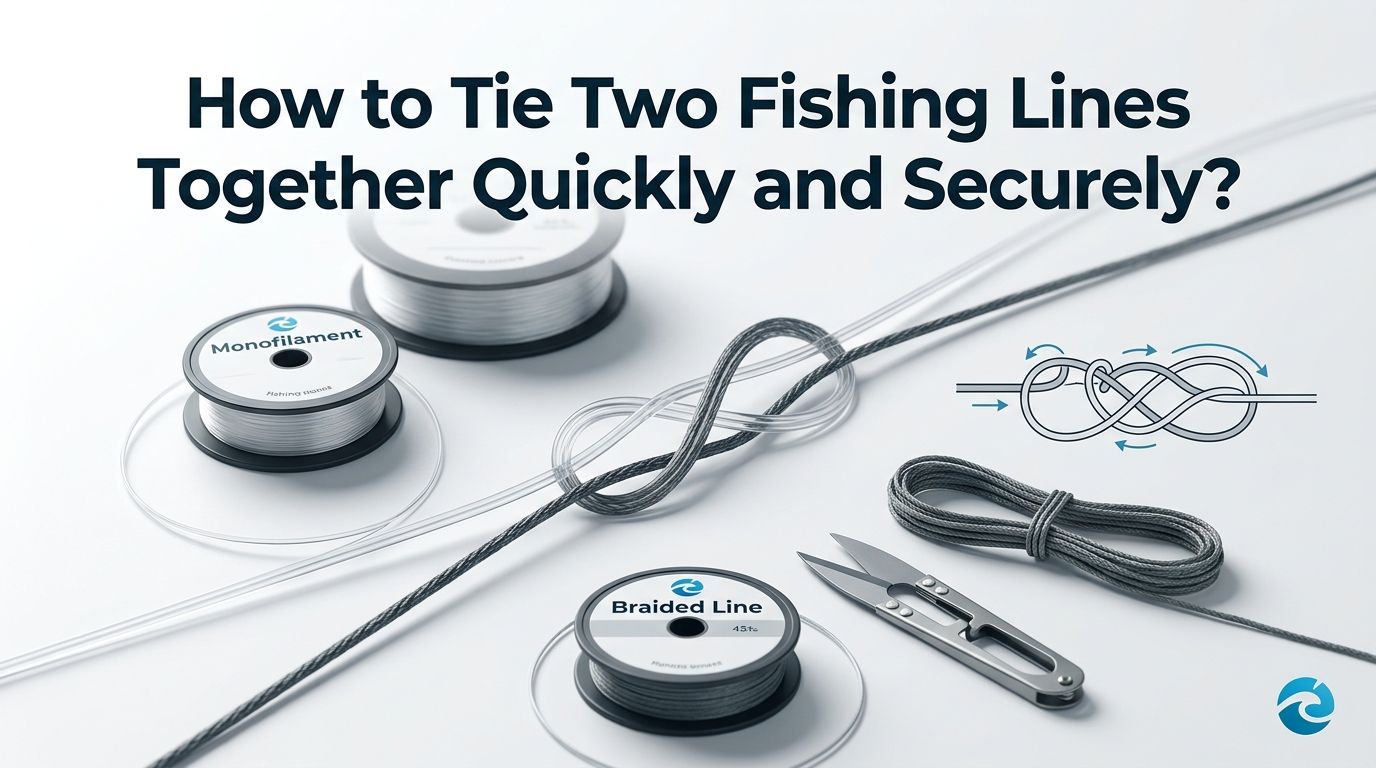
How to Tie Two Fishing Lines Together Quickly and Securely?
Have you ever been out on the water, ready to cast, only to realize your line snapped or you need to attach a leader? Knowing how to tie two fishing lines together is one of the most important skills any angler can have.
A weak connection between two lines means lost fish, lost lures, and a whole lot of frustration. Whether you fish with monofilament, fluorocarbon, or braided line, the right knot makes all the difference.
This guide walks you through the best knots, clear step by step instructions, and practical tips so you can tie strong, reliable connections every single time. Stick around, because by the end of this post, you will have the confidence to join any two fishing lines like a pro.
Key Takeaways
- The Double Uni Knot is the best all around knot for beginners and experienced anglers alike. It works with every type of fishing line and takes less than a minute to tie once you practice it a few times.
- The Blood Knot is ideal for joining two lines of similar diameter. Fly anglers use this knot more than any other for building tapered leaders. It creates a slim, symmetrical connection that passes through rod guides with ease.
- The Surgeon’s Knot is the fastest and simplest option for tying two lines together. You can tie it in seconds, even with cold or wet hands. It works well for quick leader changes on the water.
- The Alberto Knot outperforms the Albright Knot in strength tests for braid to fluorocarbon connections. If you regularly tie braided line to a heavier leader, the Alberto Knot should be your go to choice.
- The FG Knot is the strongest braid to leader knot available today. It creates the slimmest profile of any line joining knot, which allows it to slide through guides without catching. However, it takes the most practice to master.
- Always wet your knots before tightening them. Dry friction creates heat, which weakens fishing line. A little saliva or water before you cinch down a knot can increase its breaking strength by a significant margin.
How to Tie the Double Uni Knot for Any Two Fishing Lines
The Double Uni Knot is the most popular knot for joining two fishing lines. It works with monofilament, fluorocarbon, and braided line in any combination. Many anglers consider it the first knot every beginner should learn.
Step 1: Overlap the ends of both lines by about six inches. Step 2: Take the tag end of the first line and form a loop back along both lines. Step 3: Wrap the tag end through the loop and around both lines four to six times.
Step 4: Pull the tag end tight to form the first Uni Knot. Step 5: Repeat the same process with the second line going in the opposite direction. Step 6: Wet both knots and pull the standing lines to slide the two knots together.
Pros: Works with all line types, easy to learn, strong and reliable. Cons: Slightly bulkier than the Blood Knot or FG Knot, can catch on rod guides with very light line.
How to Tie the Blood Knot for Lines of Similar Diameter
The Blood Knot is a classic connection that fly anglers have trusted for decades. It works best when both lines are close in diameter, such as two pieces of monofilament or fluorocarbon. The finished knot sits symmetrically on the line and creates a very slim profile.
Step 1: Overlap the two line ends by about five to six inches. Step 2: Wrap one tag end around the other standing line five to seven times. Step 3: Tuck that tag end back between the two lines at the center where they cross.
Step 4: Wrap the other tag end around the opposite standing line the same number of times, going in the reverse direction. Step 5: Tuck that tag end through the center gap from the opposite side. Step 6: Wet the knot and slowly pull both standing lines to tighten.
Pros: Very slim profile, ideal for fly fishing leaders, high knot strength with similar diameter lines. Cons: Difficult to tie with lines of very different diameters, harder to learn than the Surgeon’s Knot.
How to Tie the Surgeon’s Knot in Under 30 Seconds
The Surgeon’s Knot (also called the Double Surgeon’s Knot) is the fastest way to join two fishing lines. You can tie it in low light, with wet hands, or while rocking on a boat. It is a simple modification of an overhand knot, and it holds up surprisingly well under pressure.
Step 1: Lay both lines side by side, overlapping about six inches. Step 2: Treat both lines as one and tie a simple overhand knot. Do not tighten it yet. Step 3: Pass the leader and tag end through the loop a second time. Step 4: Wet the knot, then pull all four line ends to tighten the knot evenly.
This knot is forgiving of sloppy technique, which makes it perfect for quick changes on the water. Some anglers add a third pass through the loop for extra security, creating a Triple Surgeon’s Knot.
Pros: Extremely fast, works with different diameter lines, very strong. Cons: Bulkier than the Blood Knot, the tag ends stick out at an angle, can collect debris in the water.
How to Tie the Alberto Knot for Braid to Fluorocarbon
The Alberto Knot is a modified version of the Albright Knot. It has proven to be stronger in multiple line strength tests. This knot is perfect for tying braided mainline to a fluorocarbon or monofilament leader.
Step 1: Fold the heavier leader line to form a loop. Step 2: Thread the braided line through the loop. Step 3: Wrap the braid around both sides of the loop seven times going up. Step 4: Wrap the braid back down seven times, creating a neat series of wraps. Step 5: Pass the braid tag end back through the loop in the same direction it entered. Step 6: Wet the knot, then slowly pull the standing lines to tighten.
The key to a strong Alberto Knot is keeping your wraps neat and tight. Messy wraps reduce the knot’s holding power and can cause it to slip under heavy loads.
Pros: Stronger than the Albright, great for braid to leader connections, compact knot profile. Cons: Takes practice to keep wraps clean, not ideal for two lines of similar diameter.
How to Tie the FG Knot for the Strongest Braid to Leader Connection
The FG Knot holds the title for the strongest braid to leader knot. Numerous tests confirm it consistently outperforms the Albright, Alberto, and Double Uni for braid to fluorocarbon connections. Its secret is that the braid weaves into the leader instead of wrapping around it, which distributes pressure across many contact points.
Step 1: Hold the braided line tight between your hands (or bite one end gently with your teeth). Step 2: Lay the leader across the braid. Step 3: Alternately wrap the leader under one side of the braid, then under the other, weaving back and forth. Repeat this 15 to 20 times. Step 4: Secure the wraps with two or three half hitch knots pulled tight. Step 5: Trim the tag ends close to the knot.
This knot creates the slimmest connection possible between two lines. It slides through rod guides with almost zero resistance.
Pros: Strongest line to leader knot, slimmest profile, passes through guides easily. Cons: The hardest knot on this list to learn, requires practice, difficult to tie in wind or poor conditions.
How to Choose the Right Knot for Your Line Type
Not every knot works well with every line type. The material and diameter of your lines should guide your knot choice. Braided line is thin and slick, so it needs more wraps to grip properly. Monofilament has more friction, so fewer wraps are needed. Fluorocarbon is stiffer than mono, which can make certain knots harder to cinch tight.
If you are joining two monofilament lines of similar size, the Blood Knot or Surgeon’s Knot will serve you well. If you are joining braid to a fluorocarbon leader, the Alberto Knot, Double Uni Knot, or FG Knot are your best options. If you need to connect two braided lines, the Double Uni Knot is the safest and most reliable choice.
Always match the knot to the situation. A slim knot matters more for casting distance. A quick knot matters more for on the water changes.
How to Avoid Common Mistakes That Weaken Fishing Knots
Even the best knot will fail if you tie it poorly. The most common mistake anglers make is forgetting to wet the knot before tightening. Dry line creates friction heat that damages the line at the knot. A quick lick of saliva or a dip in the water prevents this.
Another frequent error is pulling the knot tight too fast. A slow, steady pull lets the wraps seat properly and reduces the chance of the line crossing over itself. Rushed knots slip under pressure.
Not using enough wraps is a big problem with braided line. Braid is slippery, and a Double Uni Knot that only uses three wraps on each side will slip. Use at least five to seven wraps for braid.
Finally, always trim your tag ends close to the knot. Long tag ends catch weeds, debris, and can spook fish in clear water. Leave about an eighth of an inch and no more.
How to Test Your Knot Before You Fish
Tying a good knot is only half the job. You need to test every knot before you cast. Grab both standing lines firmly and give them a strong, steady pull. The knot should hold without slipping or deforming.
If you feel the knot slide even slightly, cut it off and tie a new one. A slipping knot will fail under the stress of a fighting fish. It is better to spend an extra 30 seconds retying than to lose a trophy catch.
For higher stakes fishing, some anglers use a small spring scale to test knot strength before heading out. This lets you pull the knot to a measured force and confirm it holds at the level you need. Testing at home with fresh line is a great way to build confidence in a new knot before you rely on it in the field.
How to Tie Two Fishing Lines Together on a Reel
Sometimes you need to join two lines directly on a reel. This happens when you want to add a braided backing under monofilament or when you are extending a spool of line that ran short. The Double Uni Knot and Surgeon’s Knot both work well for this purpose because you can tie them without removing line from the reel.
Hold the spool in one hand and work with the tag ends coming off the reel. Give yourself plenty of line to work with. At least eight to ten inches of overlap makes the tying process much easier.
After you tie and tighten the knot, spool the line under even tension. This prevents loose coils from burying the knot unevenly on the spool. An uneven spool can cause tangles and casting problems. If the knot must pass through your rod guides, choose the slimmest option like the FG Knot or Blood Knot.
How to Join Braided Line to Monofilament Line Securely
Connecting braided line to monofilament is one of the most common line joining tasks in fishing. Braid has almost zero stretch, a thin diameter, and a slick surface. Monofilament is thicker, stretchier, and has more grip. These differences mean you need a knot that accounts for both materials.
The Double Uni Knot is the easiest option. Use five to seven wraps on the braid side and three to four wraps on the monofilament side. This compensates for the slick surface of the braid.
The Alberto Knot is a stronger alternative. Its wrapping pattern locks the braid onto the monofilament loop and prevents slipping even under heavy loads. For maximum strength, the FG Knot is the clear winner, though it demands more skill.
Always test your braid to mono connection with a firm pull before fishing. Braid cuts through poorly tied knots faster than any other line type.
How to Practice Tying Fishing Knots at Home
The best time to practice knots is not on the water. Sit at your kitchen table with some scrap line and tie each knot ten times. Speed will come naturally after repetition. Focus on form first and speed second.
Use different colored lines so you can clearly see which line goes where during each step. This visual contrast helps your brain map the knot pattern faster. Paracord or thicker rope also works well for learning the motions of a new knot before switching to thin fishing line.
Set a goal of tying your chosen knot in under 60 seconds with your eyes open, and eventually with limited visibility. This simulates real conditions like early morning darkness or fishing in rain. The Double Uni and Surgeon’s Knot are realistic targets for fast tying. The FG Knot will take longer, and that is perfectly fine.
How to Decide Which Single Knot to Master First
If you only learn one line joining knot, make it the Double Uni Knot. It works for every combination of line types, it has strong and consistent breaking strength, and it is straightforward to tie. Once you can tie it with confidence, you have a knot that will serve you in 90% of fishing situations.
After the Double Uni, the Surgeon’s Knot is a smart second choice for speed. Then move on to the Alberto Knot or FG Knot if you regularly fish with braided mainline and fluorocarbon leaders. The Blood Knot is worth learning if you fly fish.
Do not try to learn five knots at once. Master one, build confidence, then add another. A single well tied knot beats five poorly tied ones every time. Your goal is a reliable connection you can tie under pressure, in the dark, and on a rocking boat. That comes from focused practice with one knot at a time.
Frequently Asked Questions
How do you tie two different types of fishing line together?
The Double Uni Knot is the best all around option for joining two different types of fishing line. It works for braid to mono, braid to fluorocarbon, and mono to fluorocarbon. Overlap the two lines, tie a Uni Knot with each line going in opposite directions, wet the knots, and pull the standing lines to slide the knots together. Use more wraps on the slicker line (braid) and fewer wraps on the thicker line (mono or fluoro).
What is the strongest knot for tying two fishing lines together?
The FG Knot is the strongest knot for tying braided line to a monofilament or fluorocarbon leader. It consistently tests at over 90% of the line’s rated breaking strength. For two monofilament lines of similar diameter, the Blood Knot provides excellent strength. The Alberto Knot is a strong choice for braid to fluoro connections with less difficulty than the FG Knot.
Can you tie braided line directly to monofilament?
Yes, you can. The Double Uni Knot, Alberto Knot, and FG Knot all create secure connections between braid and monofilament. Make sure to use enough wraps on the braid side because braid is slippery. Five to seven wraps on the braid side and three to four on the mono side give you a reliable hold. Always wet the knot and test it before fishing.
What is the easiest knot for beginners to tie two lines together?
The Surgeon’s Knot is the easiest knot for beginners. It is a modified overhand knot that takes only seconds to tie. Lay both lines together, tie an overhand knot treating both lines as one, pass the ends through the loop a second time, and pull tight. It is quick, forgiving, and strong enough for most fishing situations.
Do you need to wet fishing knots before tightening?
Yes. Wetting your knots before you cinch them tight is one of the most important steps you can take. Dry friction generates heat that weakens the line at the knot. Saliva, water, or any moisture reduces this friction and helps the wraps seat evenly. This single habit can prevent knot failures and save you from losing fish.

Hi, I’m Ivy Webb, the passionate angler and creator behind BaitHookVault.com. I spend my days out on the water personally testing and reviewing a wide variety of fishing tools and gear.