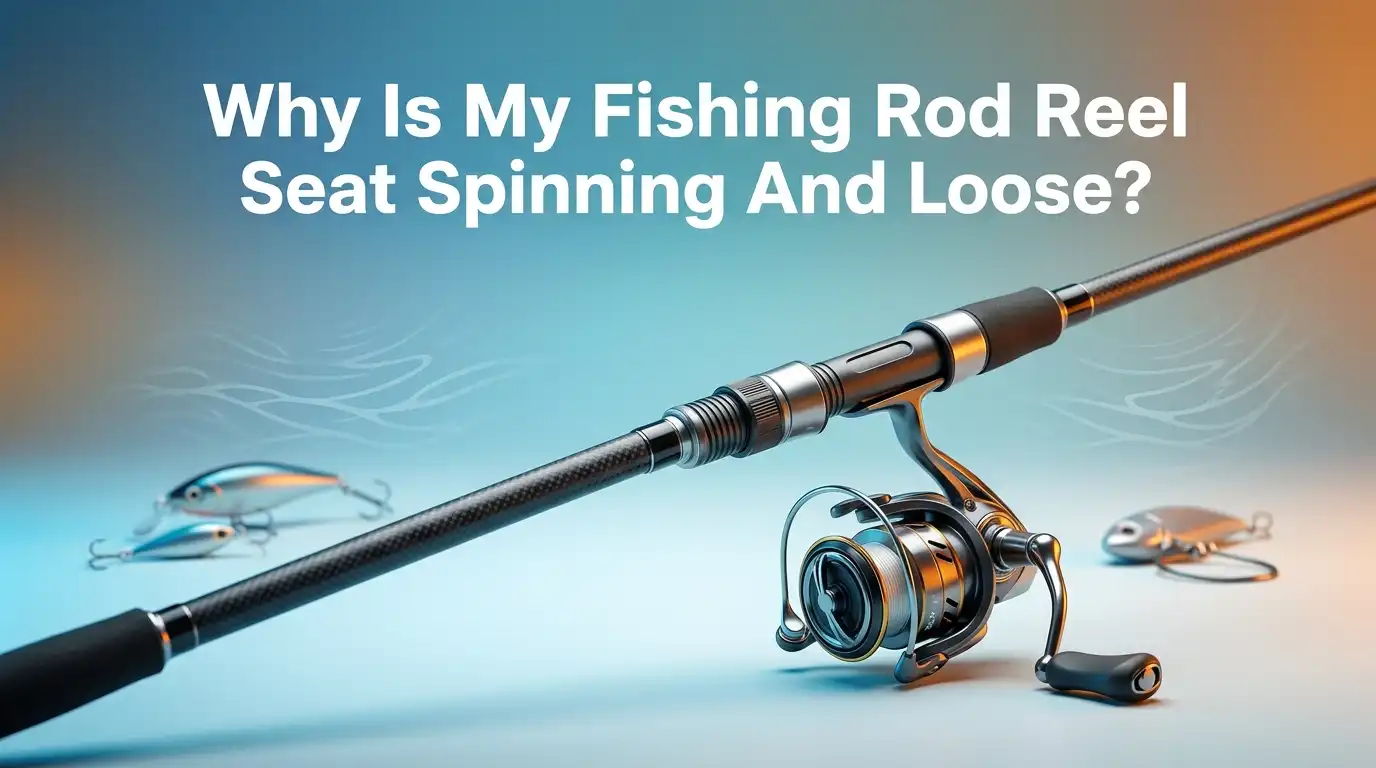
Why Is My Fishing Rod Reel Seat Spinning And Loose?
A spinning reel seat ruins a good fishing day fast. You set the hook, feel the fight, and then your reel starts to wobble or twist in your hands. The connection between your reel and rod blank just failed you.
This problem feels scary, but it is common and very fixable. Most loose reel seats come from worn glue, a small reel foot, or a nut that keeps backing off.
The good news is you can solve almost all of these issues at home with simple tools. This guide walks you through every cause and gives you clear, step by step repairs.
In a Nutshell:
- A reel seat usually spins because the epoxy bond between the seat and the rod blank has broken down. Re-gluing the seat is the most permanent fix for this issue.
- If the reel itself wobbles but the seat stays put, your reel foot is likely too small. A quick tape or heat shrink shim solves this in minutes.
- A locking nut that keeps backing off during casts is a tension problem, not a glue problem. Rubber bands, Teflon tape, or a friction washer hold it tight.
- The best long term repair uses two part epoxy injected under the seat. It costs little, dries overnight, and lasts for years.
- Temporary fixes like electrical tape and masking tape arbors work great for emergencies on the water, but they are not forever solutions.
- Always clean the surfaces with isopropyl alcohol before any glue repair. A clean bond is a strong bond.
What A Reel Seat Actually Does On Your Rod
The reel seat is the part of your rod that holds your reel in place. It sits on the rod blank, which is the long graphite or fiberglass shaft. Your reel foot slides into the seat, and a nut or hood locks it down tight.
A good reel seat keeps your reel perfectly aligned with the rod guides. This alignment matters for casting accuracy and feel. When the seat spins, your whole setup loses sensitivity and control.
The seat connects to the blank with epoxy glue and often an arbor. An arbor is a spacer that fills the gap between the thin blank and the wider seat.
Understanding these parts makes the repair much easier. Once you know what holds the seat in place, you know exactly what to fix when it fails.
The Main Reasons Your Reel Seat Spins And Feels Loose
A spinning reel seat almost always points to one of a few clear causes. Knowing the cause saves you time and money on the wrong fix.
The most common reason is failed epoxy. Over time, heat, water, and pressure break the glue bond between the seat and the blank. The seat then rotates freely on the rest of the rod.
Another cause is a reel foot that is too narrow for the seat. The seat stays glued, but the reel rocks inside it. A third cause is a lock nut that loosens during casting. Your hand brushes the nut and slowly backs it off.
Cheaper rods sometimes use weak factory glue or skip the arbor entirely. Saltwater corrosion also eats away at metal threads and bonds. Each cause has its own simple fix, which we cover below.
How To Diagnose The Exact Problem First
Before you grab any glue, you need to find out what is actually loose. A quick test takes only a minute and points you to the right repair.
First, hold the rod blank with one hand and try to twist the reel seat with the other. If the seat spins around the blank, your epoxy bond has failed. This is the most common result.
Next, lock your reel into the seat and tighten the nut fully. Then wiggle the reel. If the reel rocks but the seat itself stays still, your reel foot is too small for the seat.
Finally, make a few practice casts. If the locking nut backs off on its own, you have a tension issue. Write down which test failed. That single answer decides your whole repair plan.
Quick Temporary Fixes To Get You Through The Day
Sometimes the seat fails while you are on the water with hours of fishing left. You do not need a full repair to keep going. A few fast tricks buy you time.
For a spinning seat, wrap electrical tape tightly around the seat and onto the blank. This grips both parts and stops most of the rotation for the day.
For a wobbly reel foot, wrap the foot in tape or slide a piece of heat shrink over it. This shim fills the gap and steadies your reel instantly.
For a backing off nut, loop a few rubber bands or hair ties behind the nut. They add friction and hold the threads.
Pros: These fixes take seconds and use items you already carry. Cons: They are not permanent and will need a proper repair at home.
How To Fix A Spinning Reel Seat With Epoxy
This is the gold standard repair for a seat that spins on the blank. It is permanent and uses cheap supplies. Set aside about thirty minutes plus drying time.
Start by removing your reel. With a china marker or pencil, make four evenly spaced marks under where the reel foot sits. These marks hide the repair later.
Next, drill a small hole through the seat at each mark. Press gently and stop the moment the bit passes through the seat. Do not drill into the rod blank itself. Clean each hole with a razor blade, then wipe the seat with alcohol.
Now mix two part epoxy and draw it into a syringe. Inject epoxy into each hole until the space under the seat fills. Rotate the seat a full 360 degrees so the glue spreads everywhere. Align the seat with your guides and let it cure overnight.
Pros: This fix lasts for years and stays invisible. Cons: It needs a drill, and mistakes with the blank can ruin the rod.
How To Inject Glue Without Drilling Holes
Some anglers do not want to drill into their rod at all. The good news is you have a no drill option that still works well for a spinning seat.
If your seat has cork or an exposed blank gap at either end, you can inject glue from the open edge. Warm your two part epoxy slightly so it flows like syrup.
Use a needle or thin syringe tip to push the warm epoxy into the gap between the seat and the blank. Work it in from both ends if you can reach them.
Then rotate the seat fully to spread the glue inside. Wipe away any excess right away with alcohol, and let it cure overnight.
Pros: No drilling means no risk to the blank, and the repair stays clean. Cons: It only works when there is an open gap, and the bond may be less complete than the drilled method.
How To Fix A Reel Seat When The Reel Foot Is Too Small
Sometimes the seat is solid, but your reel still wobbles. This happens when the reel foot is narrower than the seat groove. The reel rocks side to side even with the nut tight.
The easiest fix uses tape or heat shrink tubing. Wrap electrical tape around the reel foot until it fits snugly in the seat. Build it up slowly and test the fit often.
A cleaner option is heat shrink tubing. Slide a piece over the foot and warm it until it shrinks tight. This grips the foot and removes the wobble without any mess.
For a sturdier job, cut thin foam or rubber to pad under the foot. Pros: These shims are cheap, fast, and easy to remove. Cons: Tape can slip over time, and you may need to redo it now and then.
How To Stop A Locking Nut From Backing Off
A nut that loosens during casts drives anglers crazy. Uplocking seats are the worst offenders because your hand rubs the nut and slowly unthreads it. The fix targets friction, not glue.
The simplest trick is to wrap rubber bands or hair ties around the seat right behind the nut. They press against the nut and stop it from spinning loose.
For a tighter hold, back the nut off and add a few wraps of Teflon tape to the threads. This adds drag so the nut stays where you set it.
You can also add a thin friction washer or O-ring under the nut. Pros: These fixes are quick, cheap, and reversible. Cons: Teflon tape can wear out, and you may need to refresh it during a long season.
How To Rebuild A Reel Seat With A Tape Arbor
If your seat keeps coming loose because there is too much gap to the blank, a tape arbor rebuilds the foundation. This method centers the seat and gives the glue something to grip.
First, remove the old seat by heating it gently and twisting it free. Clean off all old glue with alcohol and a blade. The blank must be bare and clean.
Next, wrap evenly spaced bands of masking tape around the blank. Build up each band until the seat slides on snugly. Leave small gaps between the bands for epoxy.
Then coat the tape and gaps with paste epoxy, slide the seat into place, and align it. Wipe excess glue and cure overnight.
Pros: Tape arbors are cheap, easy, and adjustable for any blank size. Cons: They rely fully on good epoxy work and can fail if water gets in.
When To Use A Polyurethane Or Mesh Arbor Instead
Tape arbors work for most rods, but heavier setups sometimes need stronger support. Polyurethane and fiberglass mesh arbors give you more strength and water resistance.
A polyurethane arbor is a pre formed foam cylinder that fits exact blank and seat sizes. It resists water and passes vibration well, so your rod stays sensitive. You glue it into the seat first, then ream it to fit your blank.
A fiberglass mesh tape arbor, often called drywall tape, wraps around the blank like masking tape. The open mesh lets epoxy soak right through and bond to both surfaces.
Mesh arbors shine on saltwater and heavy duty rods. Pros: Both options are stronger and more water resistant than tape. Cons: They cost more and take more skill to install correctly.
How To Prevent Your Reel Seat From Loosening Again
Once you fix the seat, a little care keeps it tight for years. Prevention is far easier than another repair down the road.
Always rinse your rod with fresh water after saltwater trips. Salt corrodes metal threads and weakens glue bonds over time. Dry the seat fully before storage.
Check the locking nut at the start of each trip. A quick twist to tighten takes two seconds and stops mid cast surprises. Add Teflon tape if the nut feels loose.
Store rods in a cool, dry place away from direct heat. Heat softens epoxy and breaks bonds. Avoid leaving rods in a hot car trunk for long.
Pros: These habits cost nothing and add years to your rod. Cons: They take a small bit of routine effort after each outing.
When To Repair It Yourself Versus Calling A Pro
Most reel seat fixes are easy enough for any angler. Still, some situations call for a professional rod builder. Knowing the difference saves your rod.
Handle the job yourself when the fix is a shim, a nut tension trick, or a simple epoxy injection. These low risk repairs need only basic tools and a little patience.
Call a pro when the whole seat must be cut off and replaced, especially on expensive or high end rods. Removing a seat without damaging the blank takes skill and the right heat tools.
A pro is also smart for split blanks, deep cracks, or warranty rods. Pros: A professional repair protects costly rods and comes out clean. Cons: It costs more and takes time away from your fishing.
Common Mistakes To Avoid During The Repair
A few simple errors turn an easy fix into a bigger problem. Knowing these traps ahead of time keeps your repair smooth.
The biggest mistake is drilling too deep into the blank. The blank is the structural heart of your rod, and a nick there can cause a break. Stop the drill the instant it clears the seat.
Another error is skipping the alcohol cleaning step. Old grease and dirt block the glue bond, and the seat loosens again fast. Always clean first.
People also let epoxy touch the seat threads or hood covers. Cured epoxy in the threads ruins the seat. Mask these areas before you glue.
Pros: Avoiding these mistakes gives you a strong, clean repair the first time. Cons: Each shortcut you skip adds a few minutes, but it is always worth it.
Frequently Asked Questions
Why does my reel seat keep spinning even after I glued it?
The old glue or grease was likely still on the blank when you re-glued. A weak surface stops the new epoxy from bonding. Remove the seat, clean the blank fully with isopropyl alcohol, then re-glue. A tape or mesh arbor also helps if the gap to the blank is large.
Can I fix a loose reel seat without removing my reel handle?
Yes, in most cases. The epoxy injection method works with the handle still on the rod. You only remove the reel itself, drill small hidden holes, and inject glue. You do not need to take apart the whole handle assembly for this common repair.
What glue is best for a fishing rod reel seat?
A two part epoxy is the best choice for reel seats. It flows into gaps when warm, bonds strongly to graphite and metal, and resists water. Avoid super glue, since it gets brittle and fails under casting stress. Rod building paste epoxy works great for arbor rebuilds.
How long does reel seat epoxy take to dry?
Most two part epoxies need about 24 hours to fully cure. You can handle the rod gently sooner, but do not fish with it until a full day passes. Curing time depends on temperature, so a warm room helps the epoxy set faster and stronger.
Is a spinning reel seat dangerous to keep using?
It will not hurt you, but it hurts your fishing and your rod. A loose seat reduces sensitivity, throws off your alignment, and can let water seep under the seat. Over time this leads to bigger damage. Fix it soon to protect the rod and your catch rate.
Can saltwater cause my reel seat to come loose?
Yes. Salt corrodes the metal threads and breaks down epoxy bonds over time. This is why saltwater rods loosen more often. Rinse your rod with fresh water after every trip and dry it well. This simple habit greatly slows corrosion and keeps your seat tight.

Hi, I’m Ivy Webb, the passionate angler and creator behind BaitHookVault.com. I spend my days out on the water personally testing and reviewing a wide variety of fishing tools and gear.