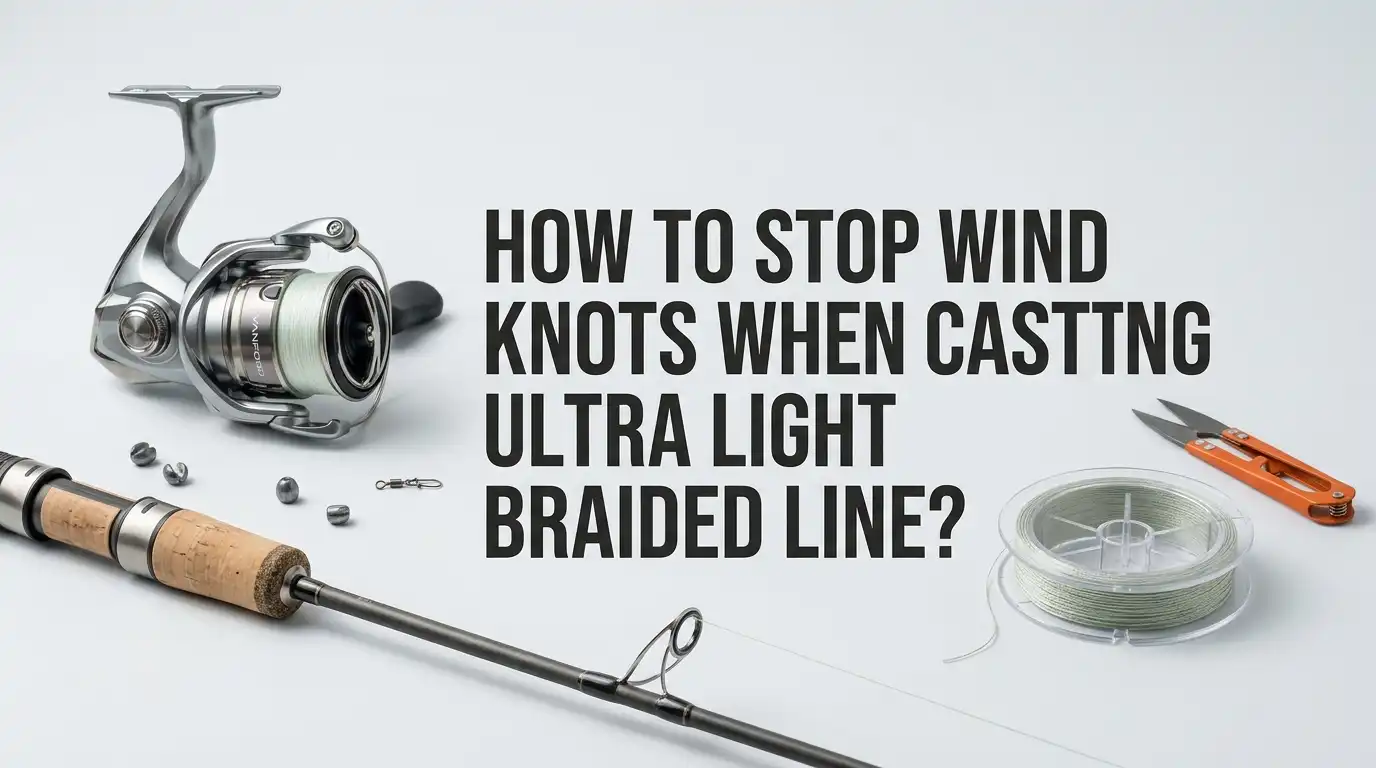
How to Stop Wind Knots When Casting Ultra Light Braided Line?
Wind knots can turn a perfect fishing day into a frustrating mess. You make one smooth cast with your ultra light braid, and suddenly your line looks like a bird’s nest exploded on your spool. Sound familiar?
If you fish with thin braided line on a spinning reel, you have probably battled this problem more times than you can count.
Ultra light braid is amazing for sensitivity, casting distance, and hook sets. But its thin diameter and limp nature make it more likely to tangle than mono.
In a Nutshell
- Wind knots are line speed knots. They happen when loose coils of line catch up to slower line during a cast. Any sudden change in line speed creates the perfect setup for a tangle.
- Spool tension matters more than anything. Loose line packed on your spool is the number one cause of wind knots. Always keep firm tension when spooling and after every cast.
- Close the bail by hand, not with the handle. A snapped bail creates loose coils. Manual bail closure with light finger tension on the line stops this problem before it starts.
- Do not overfill the spool. Leave a small gap from the spool lip. Overfilled spools dump multiple loops off at once, and those loops tangle in midair.
- Use a thin leader knot like the FG knot. A bulky knot slams into your rod guides and slows the leader while the braid keeps flying, which causes overlap and knots.
- Match your gear properly. A fast action rod, quality braid, and a smooth spinning reel with a good line lay all reduce the chance of wind knots forming on light braid.
What Causes Wind Knots in Ultra Light Braided Line
Wind knots form when loose coils of braid leave the spool and overlap each other in midair. The thin diameter and zero memory of ultra light braid make this worse. Light braid stays limp, so any slack on your spool creates loose loops that fly off in bunches during your next cast.
The name wind knot is a bit misleading. Wind makes things worse, but the real cause is inconsistent line speed. When line near the spool moves faster than line past the rod tip, the fast coils catch up to the slow ones and tangle.
Once you understand this single principle, every solution in this guide will make sense. Fix the line speed problem and you fix the knot problem.
Choose the Right Ultra Light Braid for the Job
Not all braided lines behave the same way. Cheap braid often has an uneven weave, rough coatings, and poor roundness. These flaws cause the line to dig into itself on the spool and create loose coils that turn into knots.
Look for 8 carrier or 12 carrier braids in the 4 to 10 pound test range for ultra light setups. These weaves are tighter, smoother, and rounder than 4 carrier options. A rounder line sits better on the spool and slides through guides with less friction.
Pros of premium braid: smoother casts, longer life, fewer tangles, better knot strength, and consistent diameter from end to end.
Cons of premium braid: higher cost per spool and slightly thicker coating on some brands that can wear faster on rough rod guides.
Pick a trusted brand, and your knot problems will drop right away.
Spool Your Reel Correctly From the Start
How you put braid on your reel decides how it behaves for its entire life. Loose line on a spool is the biggest single cause of wind knots, and most loose line gets there during the spooling process.
Lay the filler spool flat on the floor with the label facing up. Run the braid through the first rod guide. Hold the line above the reel with a damp cloth or a band aid wrapped finger to keep firm pressure. Reel slowly and steadily. Do not rush this step.
Stop every fifty turns and check the tension. If you can press your thumb into the line and it sinks easily, the tension is too low. Strip the line off and start again with more pressure.
Pros of careful spooling: fewer knots forever, even line lay, and better casting performance.
Cons: it takes longer and your fingers may feel sore.
Do Not Overfill Your Spool
This is one of the most common mistakes anglers make with light braid. Filling the spool right up to the lip feels like more line means more casting distance. In reality, it creates more tangles than you can count.
Spinning reels are built with a spool lip that creates friction as line peels off. When braid sits above this lip, that friction disappears. Multiple loops of line jump off the spool at the same time, and they tangle in the air before they ever reach your guides.
Leave about 2 to 3 millimeters of space between the line and the edge of the spool. Test it by opening the bail and giving the line a sharp pull. If line falls off the spool, you have too much on there.
Pros: smoother casts, fewer knots, easier to control the line during a cast.
Cons: slightly less line capacity, which rarely matters in ultra light fishing.
Close the Bail by Hand After Every Cast
This single habit prevents more wind knots than almost any other tip. Most anglers turn the reel handle to flip the bail closed. That snap creates a loose coil on the spool, and that loose coil becomes the wind knot on your next cast.
Instead, close the bail with your free hand. Use your index finger to pinch the line lightly against the rod blank as you flip the bail over. This keeps tension on the line and locks it firmly into the line roller.
Practice this until it becomes automatic. It feels slower at first, but it saves you ten times more time than it costs because you never stop to pick out a knot.
Pros: drastically fewer knots, better line lay, longer reel life.
Cons: takes a few trips to build the habit, slightly slower start to the retrieve.
Stop Your Cast With Your Finger Before the Lure Lands
If you let your lure hit the water with the bail still open, line keeps peeling off the spool for a split second after the lure stops. That extra line falls onto the spool with zero tension. Loose coils form, and your next cast pays the price.
Right before your lure lands, feather the spool with the thumb or index finger of your free hand. This stops the line at the same moment the lure touches down. Then close the bail by hand and reel up any slack.
This trick also gives you better lure presentation. A feathered cast lands soft and natural instead of slapping the water hard.
Pros: prevents loose line on the spool, improves lure presentation, scares fewer fish.
Cons: requires good timing and practice with light lures that travel fast.
Avoid Casting Directly Into the Wind
Casting into the wind is the classic recipe for tangles with ultra light braid. The light lure slows down fast in the air, but the line keeps flying off the spool at full speed. The result is loose coils piling up between the spool and the first guide.
When you can, position yourself so the wind is at your back or off your casting shoulder. If the wind forces you to cast into it, keep your cast low and flat to the water. A low trajectory cuts through the wind better than a high arc.
You can also switch to a slightly heavier lure when the wind picks up. Extra weight keeps the line tight and reduces the speed mismatch that causes knots.
Pros: smoother casts, longer distance, fewer tangles.
Cons: sometimes the wind direction limits where you can fish from.
Use a Fast Action Rod With Quality Guides
Your rod plays a bigger role than most anglers think. A slow or moderate action rod has a flimsy tip that bounces after every cast. That bounce shakes the line and creates waves, which slow the line near the tip while it keeps racing off the spool.
A fast action or extra fast action rod has a stiffer tip that recovers quickly. This keeps the line moving in a straight, steady path and reduces the speed mismatch that causes knots.
Look for rods with K series style guides or other tangle reducing guide frames. The angled stripper guide on these rods catches loose loops before they wrap around the rod tip.
Pros of fast action rods: better sensitivity, fewer tangles, stronger hook sets.
Cons: less forgiving on light lures and harder to load on short casts.
Use a Thin Leader Knot Like the FG Knot
Most ultra light anglers tie a fluorocarbon leader to their braid for stealth and abrasion resistance. The knot you use to join them matters a lot. A bulky knot slams into your rod guides during the cast and slows the leader instantly. The braid behind it keeps flying and piles up in a tangle.
The FG knot is the gold standard for braid to leader connections. It is thin enough to slide through guides smoothly and strong enough to handle hard fights. It takes practice to tie, but it pays off every time you cast.
Other slim options include the Alberto knot and the double uni with extra wraps trimmed close.
Pros of the FG knot: super thin, very strong, slides through guides easily.
Cons: takes practice to tie quickly, harder to learn than basic knots.
Keep Tension on Your Line During Every Retrieve
Slack line during retrieval is another silent knot maker. When you reel in a topwater lure with pauses or a soft plastic with twitches, the line packs onto the spool with very little tension. Those loose wraps wait quietly until your next cast, then they explode off the spool together.
After every cast, lift the rod tip up and reel down to keep the line tight. If you feel slack, stop reeling and pinch the line between your finger and the rod until it goes tight. Then continue your retrieve.
This matters most when you fish ultra light jigs, weightless plastics, or any lure that does not pull hard on the line.
Pros: tight line lay, fewer knots, better hookups because you stay in contact with your lure.
Cons: requires constant attention and slows down a lazy retrieve.
Avoid Heavy Leaders With Light Lures
Pairing a 30 pound leader with a 1/32 ounce jig is asking for trouble. The thick leader creates wind resistance in the air and slows down fast after the cast. The light lure does not have enough mass to pull it through the air smoothly.
Match your leader pound test to your lure weight. For ultra light fishing with 6 pound braid, a 8 to 12 pound fluorocarbon leader is plenty. Save the heavy leaders for bigger lures and stronger fish.
If toothy fish or structure force you into a heavier leader, keep it short. A leader of 18 to 24 inches has less air resistance than a 4 foot leader.
Pros of matched leaders: longer casts, fewer tangles, more natural lure action.
Cons: less abrasion protection around heavy cover or sharp gill plates.
Check and Fix Uneven Line Lay on Your Spool
Look at your spool after spooling fresh braid. Is the line piled higher at the top or bottom? An uneven cone shape on the spool causes uneven line release, which creates knots during long casts.
Most spinning reels include small washers under the spool that adjust the line lay. Adding or removing a washer shifts the spool position and evens out the lay. Your reel manual shows how to do this in a few minutes.
A perfectly even spool releases line in consistent coils. Combined with proper tension, this stops most wind knots before they form.
Pros: smoother casts, even wear on the line, longer braid life.
Cons: requires basic reel maintenance knowledge and small tools to swap washers.
Apply a Line Conditioner to Reduce Friction
A light coating of line conditioner on your braid does two helpful things. It reduces friction as the line leaves the spool and passes through the guides, and it makes any knots that do form easier to pick out.
Spray a small amount onto a cloth and run the cloth along the first few feet of line on your spool. Do this before every fishing trip or after rinsing your reel. Make sure the product is safe for braid and not just for monofilament.
Avoid using oils, silicone sprays, or anything thick. These can attract dirt and gunk up the line over time.
Pros: smoother casting, easier knot removal, longer line life.
Cons: an extra step before fishing and an extra product to carry.
FAQs
Why does my braid keep getting wind knots even when there is no wind?
Wind is rarely the actual cause. Most wind knots come from loose line on your spool, sloppy bail closure, or sudden changes in line speed during the cast. Check your spool tension and bail closure habits first.
Can I untangle a wind knot in ultra light braid?
Sometimes you can pick it out with a needle or the point of a hook if you catch it early. Bad tangles usually need to be cut out. Always check the line for fraying after a wind knot and retie your leader if needed.
Does spraying water on my reel help prevent wind knots?
Wetting your braid before the first cast of the day can help. Damp braid lays tighter on the spool and slides more smoothly through the guides. Some anglers dunk the spool in water before fishing for this reason.
Is heavier braid less likely to tangle than ultra light braid?
Yes. Thicker braid is stiffer and holds its shape better on the spool. If you fight constant tangles with 4 pound braid, try bumping up to 8 or 10 pound. You will give up a little casting distance but gain a lot of peace of mind.
How often should I replace ultra light braided line?
Inspect your braid before every trip. Replace it once or twice a year for heavy use, or whenever you see fraying, color fading, or weak spots. Worn braid tangles more easily and breaks at the worst moments.
Does the brand of spinning reel really matter for wind knots?
Yes. Reels with better line lay systems, smoother bail mechanisms, and balanced spools handle braid much better than cheap models. You do not need the most expensive reel, but a quality midrange model pays off in fewer tangles.

Hi, I’m Ivy Webb, the passionate angler and creator behind BaitHookVault.com. I spend my days out on the water personally testing and reviewing a wide variety of fishing tools and gear.