Pflueger President Spinning Reel Review 2026: Still Worth It?
The Pflueger President has quietly held its spot as one of the most recommended budget spinning reels for over a decade. Ask any group of anglers what reel they trust under $80, and this name shows up fast.
But 2026 is a crowded year for value reels. Shimano, Okuma, Daiwa, and a dozen newer brands all want your money. So does the President still deserve the hype, or has it coasted on reputation for too long?
I fished the current generation President across trout streams, bass ponds, and one salty jetty trip. This review covers the good, the mediocre, and the parts nobody advertises.
In A Nutshell:
- The President delivers smoothness that punches above its price. The 10 stainless steel bearing system in sizes 25 through 40 gives you a retrieve that feels closer to a $150 reel than a $70 one. The size 20 drops to 7 bearings.
- The sealed oil felt front drag is the standout feature. It starts up smoothly, holds steady under load, and does not develop the sticky jerkiness that kills cheap reels. Max drag runs from 6 pounds on the size 20 up to 14 pounds on the size 40.
- Weight is genuinely low. The smallest model sits near 6.2 ounces, which makes long days with an ultralight rod comfortable rather than tiring.
- It is a freshwater reel first. The graphite body resists corrosion, but this reel is not sealed for heavy saltwater duty. Rinse it or regret it.
- The weak points are real. The bail wire feels light, the line roller needs regular grease, and the spool lip can scuff braid over time.
- Value in 2026 remains strong at around $60 to $75. You get more refinement than most reels at this price, though newer rivals have closed the gap.
Pflueger President Spinning Reel

Last update on 2026-10-10 / Affiliate links / Images from Amazon Product Advertising API
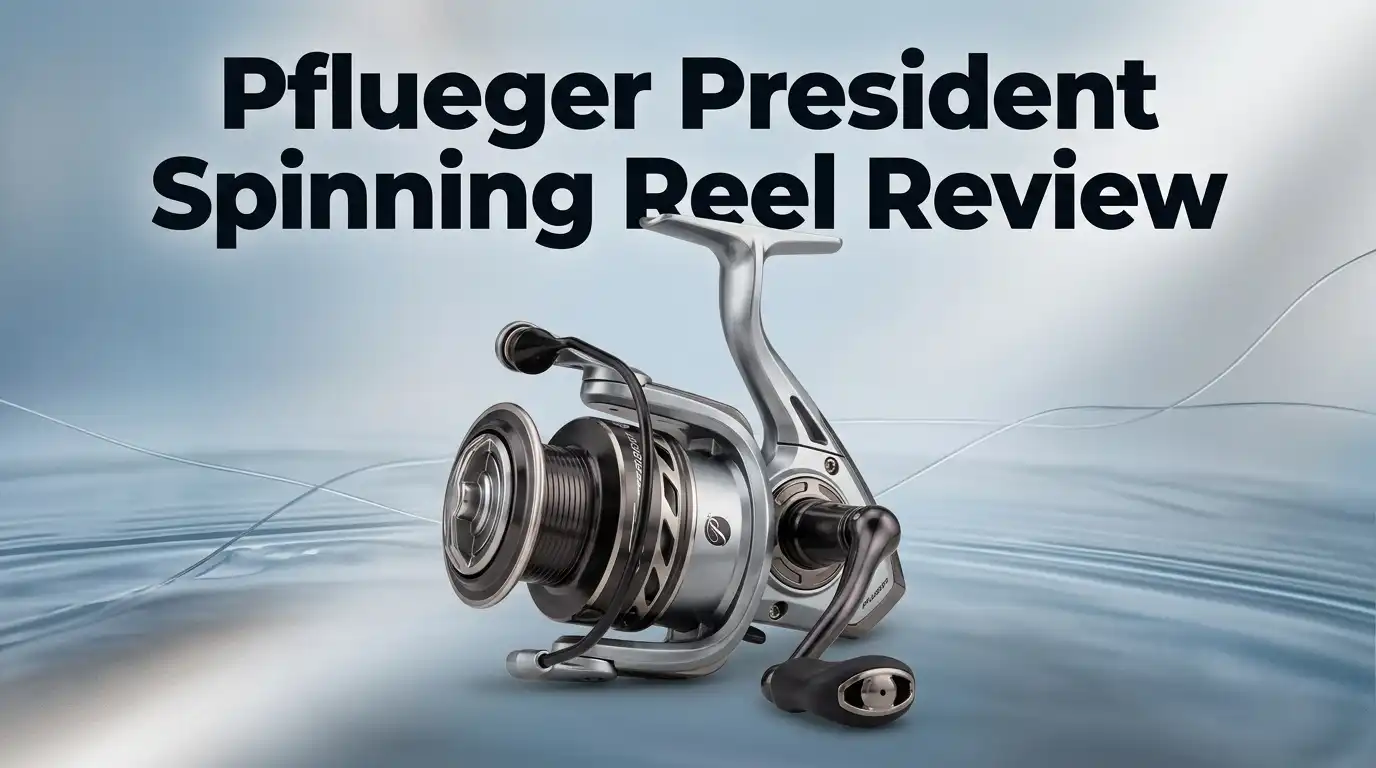
The President sits in the middle of Pflueger’s lineup. It is the reel the brand built its modern reputation on. The current version uses a graphite body and rotor, a machined and double anodized aluminum spool, and a sealed oil felt front drag stack. Gear ratio is 5.2:1 across every size, which gives you a steady, moderate retrieve rather than a burner.
What makes the President interesting is what Pflueger chose to spend money on. Instead of flashy paint or a carbon fiber body, the budget went into bearings and drag material. That choice shows the first time you turn the handle. The retrieve is quiet and even, with no gritty spots or clicking.
Pflueger offers five sizes: 20, 25, 30, 35, and 40. Line capacity ranges from 200 yards of 2 pound mono on the smallest to 285 yards of 8 pound on the largest. Braid capacity is generous too, which matters since most anglers now spool braid with a fluorocarbon leader.
The handle position swaps from right to left in under a minute. You unscrew the retainer cap, pull the handle, and thread it into the other side. No tools required. Small touches like this explain why the reel keeps showing up in beginner recommendations and in the hands of anglers who have fished for thirty years.
Unboxing Experience: What Actually Arrives
The box is plain cardboard with a window and a spec sheet printed on the side. No fancy foam cradle, no drawstring reel bag, no spare spool. Pflueger clearly put the money into the reel instead of the packaging, and that feels like the right trade at this price.
Inside you get the reel, a small instruction leaflet, and a schematic diagram. The schematic is genuinely useful. It labels every internal part with a number so you can order a replacement bail spring or drag washer without guessing. Few brands at this price include that.
The reel comes with the handle detached and packed alongside. Threading it in takes about thirty seconds. My first impression when I picked it up was how light it felt for the size. The size 30 I tested balanced nicely on a 7 foot medium power rod with no nose heavy droop.
Turning the handle out of the box, the retrieve was smooth but slightly stiff from fresh grease. After roughly twenty minutes of cranking, it loosened into a buttery spin. This is normal and worth knowing so you do not assume something is wrong.
One minor gripe: the spool arrives with no line and no monofilament backing. You will need line before your first cast. Budget an extra $10 to $20 for that.
Build Quality And Materials Explained
The frame and rotor use graphite rather than aluminum. Graphite keeps weight down and shrugs off corrosion, but it flexes more under heavy load than metal. For panfish, trout, walleye, and bass, you will never notice. Hook into a big redfish and you may feel slight frame give under maximum drag.
The spool is machined aluminum with a double anodized finish. This is the part I would call genuinely premium for the price. The lip is smooth, the edges are clean, and the anodizing resists the pitting that ruins painted spools.
The main gear is brass. Brass wears slower than the zinc alloys common in cheaper reels, which directly affects how long the retrieve stays smooth. Pflueger also uses slow oscillation gearing, meaning the spool moves up and down slowly while the rotor spins fast. This lays line in tighter, more even wraps and cuts down on wind knots with braid.
The bail is aluminum wire and this is the weakest visible component. It feels thin. Drop the reel on rocks and the bail is what bends first. The bail spring mechanism also loses some snap after a season of heavy use.
Fit and finish overall is tidy. Panel gaps are tight, the drag knob clicks with decent feedback, and nothing rattles.
Top 3 Alternative for Pflueger President Spinning Reel

Last update on 2026-11-21 / Affiliate links / Images from Amazon Product Advertising API
Shimano Sedona FJ Spinning Reel

Last update on 2026-11-21 / Affiliate links / Images from Amazon Product Advertising API
Okuma Ceymar A Spinning Reel

Last update on 2026-11-21 / Affiliate links / Images from Amazon Product Advertising API
Daiwa BG MQ Spinning Reel
Drag System Performance On The Water
The sealed oil felt drag is the reason people keep buying this reel. Felt washers soaked in oil produce low startup inertia, which means the drag begins slipping at close to the pressure you set rather than lurching.
I tested the size 30 on a scale. Set to roughly 4 pounds, it held within about half a pound through repeated pulls. That consistency is what protects light leaders. A jerky drag snaps 4 pound fluorocarbon. A smooth one lets the fish run.
On the water, this showed up during a smallmouth fight in current. The fish made three hard runs and the drag paid out evenly each time with no sticking or squealing. The knob has enough travel to make fine adjustments instead of jumping from loose to locked.
The sealing keeps water and grit out of the washer stack. Note that sealed does not mean waterproof. Submerge the reel and water will eventually find its way in.
The honest limitation is total power. Fourteen pounds of max drag on the largest size is modest. For inshore species, tuna, or big catfish, you want more. Also, felt drags benefit from a drop of oil roughly once a season. Carbon fiber drags in reels like the Penn Battle need less attention and deliver more raw stopping force.
Casting Distance And Line Management
Casting performance depends heavily on the spool and the line lay. The President’s aluminum spool has a tapered lip that lets coils leave with minimal friction. Paired with 10 pound braid, I was throwing a quarter ounce jig about as far as I could with any reel in this class.
Light lures are where the President shines. On a size 20 with 4 pound mono, a 1/16 ounce jig still flew respectably. Lightweight rotors and small diameter spools handle finesse presentations well.
The Total Line Control system combines the slow oscillation gearing with the spool design. In practice this means fewer loops jumping off the spool between casts. Over three trips with braid, I dealt with one wind knot. That is a good result.
The line roller is a bearing supported design and it spins freely when clean. Here is the catch. Sand and salt collect at the roller faster than anywhere else on the reel. When it gums up, line twist increases sharply. A quick rinse and a dab of grease every few trips prevents it.
Casting into wind exposes the graphite rotor’s lightness. The bail can occasionally trip early on a hard, violent cast. It happened twice in about four hundred casts, so it is uncommon but not impossible.
Size Guide: Which President Fits Your Fishing
Picking the right size matters more than most people think. Here is how the five options break down in real fishing terms.
The size 20 suits ultralight work. Think trout in small streams, crappie, bluegill, and perch. It takes 2 to 6 pound mono and weighs about 6.2 ounces. It is the only size with 7 bearings rather than 10.
The size 25 is the most popular choice overall. It handles 4 to 8 pound line, gives you 8 pounds of drag, and pairs with light and medium light rods. Trout, crappie, and finesse bass tactics all fit here.
The size 30 is my pick for a single do everything freshwater reel. Ten pounds of drag, 255 yards of 4 pound mono, and enough backbone for largemouth, walleye, and channel cats.
The size 35 steps up to 12 pounds of drag and handles 6 to 10 pound line comfortably. Good for pike, hybrid striper, and light inshore duty.
The size 40 tops out at 14 pounds of drag and 11.5 ounces of weight. This is the practical ceiling for the platform. Use it for carp, big catfish, salmon, and light surf work, but understand you are near the limit of a graphite body.
Pflueger President XT: Worth The Extra Money?

Last update on 2026-11-21 / Affiliate links / Images from Amazon Product Advertising API
The President XT sits one step above the standard President. Pflueger charges roughly $20 to $30 more. So what changes?
The XT uses a carbon body and rotor instead of graphite, which cuts weight noticeably. It adds a machined aluminum main gear rather than brass, and the higher speed models jump to a 6.2:1 gear ratio. You also get a braid ready spool and a slightly more refined handle knob.
Is the upgrade worth it? If you fish techniques that demand fast line pickup, such as working topwater frogs or burning spinnerbaits, the 6.2:1 ratio earns its keep. If you fish all day with an ultralight, the weight savings genuinely reduces fatigue.
For everyone else, the answer is probably no. The standard President’s drag and smoothness are nearly identical. The XT is lighter and quicker, not fundamentally better where it counts.
One caveat worth mentioning: some anglers report the XT’s aluminum main gear develops a slight rough feel sooner than the standard model’s brass gear under heavy load. Aluminum saves weight but wears differently. Reports vary and my own testing period was too short to confirm this either way.
Saltwater Use: Read This First
Pflueger markets the President as corrosion resistant. That phrasing is accurate and also easy to misread. Graphite does not rust. The stainless bearings resist corrosion. But the reel body is not sealed against saltwater intrusion.
I fished the size 35 off a jetty for two days targeting schoolie striped bass. It performed fine. Casting was clean, the drag handled the fish, and nothing seized. The key was rinsing the reel with fresh water after each session.
If you skip the rinse, salt crystals form inside the line roller and around the rotor. The retrieve gets noisy within a few trips. Within a season, you may be replacing bearings.
My honest recommendation: treat the President as a freshwater reel that tolerates occasional saltwater trips. For regular inshore fishing, buy something built for it. A Penn Battle or Daiwa BG has sealed drag, metal construction, and much higher drag ceilings. Those reels weigh more and cost more, and they last in salt.
The President in brackish water, bay fishing from a dock, or light pier work is fine with proper care. The President as your everyday surf reel is a mistake that will cost you money.
What The President Does Not Do Well
Every honest review needs this section, so here it is without softening.
Heavy drag pressure is not its strength. Fourteen pounds at the top end is modest. Reels at similar prices from Daiwa and Penn deliver 20 pounds or more. If you fight big fish in heavy cover, this reel will not stop them.
Body flex appears under load. Push the drag near maximum with a strong fish and you can feel the graphite frame give slightly. Gears under a flexing frame wear faster.
The bail assembly feels cheap. Thin aluminum wire, a spring that softens over time, and occasional early trips on hard casts. It works, but it does not inspire confidence.
Felt drags need maintenance. A drop of oil each season keeps things smooth. Neglect it and startup inertia climbs.
Quality control varies. Some units arrive perfectly smooth. Others have a faint tick or slightly gritty feel. Check yours immediately and return it if it is not right. This inconsistency is the most common complaint I found across owner reports.
Braid can scuff the spool lip over a couple of seasons of heavy use, which eventually affects casting distance.
None of these flaws are unusual at $70. They are worth knowing before you buy.
Pros And Cons
Pros
- Smooth retrieve thanks to the 10 bearing stainless system in sizes 25 and up.
- Sealed oil felt front drag offers low startup inertia and steady pressure.
- Machined and double anodized aluminum spool feels premium for the price.
- Very light for its class, starting near 6.2 ounces.
- Brass main gear resists wear better than zinc alloys used in cheaper reels.
- Handle swaps sides without tools in under a minute.
- Slow oscillation gearing reduces wind knots with braid.
- Parts schematic included, and replacement parts are easy to source.
- Five sizes cover ultralight through light salmon and catfish work.
- Strong resale value and a long track record of reliability.
Cons
- Max drag tops out at 14 pounds, which limits big fish applications.
- Graphite body flexes under heavy load.
- Bail wire is thin and bends easily on impact.
- Not sealed for regular saltwater use.
- Felt drag washers require periodic oiling.
- Quality control inconsistency means some units feel rougher than others.
- No spare spool or reel bag included.
- Gear ratio of 5.2:1 is slow for fast retrieve techniques.
Maintenance: Keeping It Smooth For Years
The President rewards simple care. After every freshwater trip, wipe the reel down with a damp cloth and dry it. After saltwater, rinse with a gentle stream of fresh water with the drag tightened, then loosen the drag and let it dry.
Every ten to fifteen trips, put a single drop of reel oil on the line roller and the handle knob bearings. The line roller is the single most important spot to maintain. A dry roller causes line twist, and line twist causes wind knots.
Once a season, remove the spool and put one drop of oil on the felt drag washers. Do not soak them. Too much oil reduces drag pressure.
Grease the main gear every year or two if you fish hard. Pop the side plate, apply a thin layer of marine grease to the gear teeth, and reassemble. The included schematic makes this straightforward even for a first time attempt.
Store the reel with the drag backed off. Leaving drag pressure on compresses the felt washers and flattens them, which permanently reduces performance.
Replacement parts including bail springs, drag washers, and handles are available from Pflueger and aftermarket sellers. This repairability is a quiet advantage over sealed budget reels that get thrown away when something breaks.
Price And Value In 2026
Street price sits around $60 to $75 depending on size and retailer. Sales during spring fishing season and holiday periods often drop it closer to $50.
At that price, the competition is real. The Shimano Sedona FJ costs slightly less and offers a stronger drag with a Hagane gear, though it feels heavier and less refined. The Okuma Ceymar A undercuts the President on price with solid smoothness but a less impressive drag. The Daiwa BG MQ costs more and delivers a metal body plus far higher drag power for anglers who need it.
The President’s edge remains the combination of smoothness, low weight, and drag quality in one package. Nothing at this price does all three as well.
Prices shift constantly, so check current listings before you decide. My knowledge of pricing reflects information available in early 2026.
Value also includes longevity. Owners routinely report five to ten years of service with basic care. Spread $70 across eight seasons and the cost per trip becomes trivial. That is where the President justifies itself.
Who Should Buy It And Who Should Skip It
Buy the President if you fish freshwater, want a smooth reel without spending $150, and value light weight. Trout anglers, panfish anglers, bass anglers using finesse techniques, and beginners building a first quality setup all get excellent results here. It is also a smart choice as a backup reel for experienced anglers.
Skip the President if you fish saltwater regularly, target fish that require heavy drag pressure, or need a fast gear ratio for reaction baits. In those cases, spend more on a metal bodied reel with sealed components.
My overall verdict: the Pflueger President remains one of the best value spinning reels available in 2026. It is not the strongest, the fastest, or the most durable. It is the smoothest and lightest reel you can buy for around $70, and for most freshwater fishing, those are the qualities that matter most.
Frequently Asked Questions
Is the Pflueger President good for saltwater?
It handles occasional saltwater trips if you rinse it thoroughly afterward. It is not sealed for regular inshore or surf use. For that, choose a reel built specifically for salt.
What size Pflueger President should I buy?
The size 25 fits most trout and panfish work. The size 30 is the best all purpose freshwater choice. Go 35 or 40 only for larger species like pike, salmon, or catfish.
How many bearings does the President have?
Sizes 25 through 40 use a 10 bearing stainless steel system. The size 20 uses 7 bearings.
What is the gear ratio?
Every size runs 5.2:1. That is a moderate ratio suited to jigs, soft plastics, and live bait rather than fast moving lures.
Can I use braid on it?
Yes. The aluminum spool handles braid well, and the slow oscillation gearing lays it evenly. Adding a mono backing layer prevents slippage on the spool.
President or President XT?
Choose the XT for lighter weight and a faster 6.2:1 option. Choose the standard President to save money with nearly identical drag and smoothness.
How long does a Pflueger President last?
With routine rinsing and annual oiling, many owners report five to ten years of regular use. The brass main gear and replaceable parts support that lifespan.

Hi, I’m Ivy Webb, the passionate angler and creator behind BaitHookVault.com. I spend my days out on the water personally testing and reviewing a wide variety of fishing tools and gear.