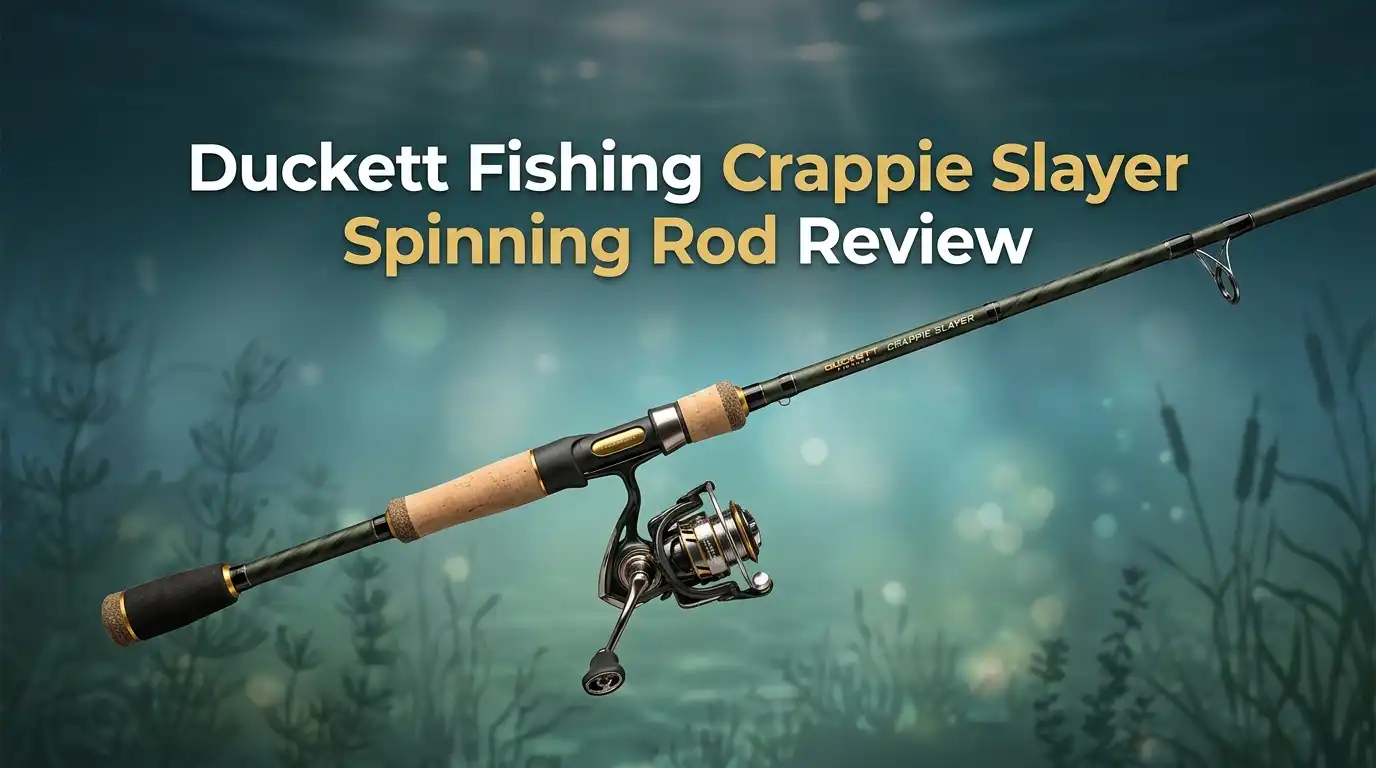
Duckett Fishing Crappie Slayer Spinning Rod Review 2026: Worth It?
Crappie anglers chase one thing above everything else, and that is feel. You want to know the second a slab breathes on your jig.
The Duckett Fishing Crappie Slayer promises that kind of feedback at a price that sits far below premium rods. I fished this rod across brush piles, bridge pilings, and shallow spring flats to see if the hype holds up.
This review covers the real stuff. You will learn how the blank behaves, how the handle feels after four hours, and where this rod falls short. I will not sugarcoat the weak points, because a rod that fits one angler can frustrate another.
In a Nutshell:
- Sensitivity is the headline feature. The Sensi Touch blank transmits light taps with surprising clarity. I detected bites through eight feet of water that I would have missed on a cheaper graphite rod. This is the rod’s strongest selling point by a wide margin.
- The price sits in a sweet spot. Most lengths land between $70 and $90. That places the Crappie Slayer above entry level rods but well under the $200 premium tier. You get roughly 80 percent of a high end rod for 40 percent of the cost.
- Six models cover almost every crappie technique. Lengths run from 5’6″ up to 7’0″, with Light and Medium Light power options. Short models shine for vertical jigging. Longer models cast floats and small jigs farther.
- One piece construction helps feel but hurts travel. There is no ferrule to dampen vibration, which is great. Transporting a 7 foot one piece rod in a sedan is not great.
- It is not a flawless rod. The EVA grip picks up stains, the micro guides can ice up in winter, and the tip is delicate enough that careless storage will snap it. Expect to baby the tip section.
- Best fit: serious crappie anglers who fish often and want real sensitivity without spending premium money.
Duckett Fishing Crappie Slayer Spinning Rod


Last update on 2026-10-26 / Affiliate links / Images from Amazon Product Advertising API
The Crappie Slayer is a species specific rod built around one goal, which is detecting soft crappie bites. Duckett uses what they call Sensi Touch blanks, made from multi modulus prepreg carbon. In plain language, different grades of carbon fiber sit in different zones of the blank. The butt section stays stiff for hooksets. The tip stays soft for feel.
Every model uses one piece construction. The guides are stainless steel micro guides, six or seven plus the tip depending on length. Duckett also claims their guide spacing came from computer modeling rather than guesswork. Whether that marketing claim matters is debatable, but the line flow on my sample was smooth and loop free.
The rod carries a limited lifetime warranty through Duckett, which adds confidence at this price.
Unboxing Experience and First Impressions
The rod arrived in a plastic sleeve inside a cardboard tube. No fancy rod sock, which is the first small disappointment. At this price point, a cloth sleeve would be a nice touch.
Pulling the rod out, the first thing I noticed was weight, or rather the lack of it. The 6’6″ Light model feels close to weightless in hand. I actually checked twice to make sure I was holding the whole rod.
The finish impressed me more than I expected. The blank wears a clean matte gray with subtle orange accents. The wraps are tight and even. No glue blobs, no crooked guides, no bubbles in the epoxy.
The EVA grip felt firmer than foam grips on competing rods. It has a slight texture that grabs your palm. The reel seat hood threads smoothly with no grit. For a rod under $90, the assembly quality genuinely surprised me.
Build Quality and Blank Technology
The Sensi Touch blank is where your money goes. Duckett blends carbon grades so the rod flexes progressively instead of hinging at one point. On the water, this means the rod loads evenly during a cast and bends into the butt when a fish pulls.
The action is Moderate Fast across all models. That is a smart choice for crappie. A true fast action rod rips hooks out of paper thin crappie mouths. The softer tip on this rod cushions headshakes and keeps thin wire hooks buried.
I tested the blank by loading it hard against a dock post. It bent deep without creaking or groaning. Cheap graphite often makes an unsettling noise under load. This one stayed silent.
Durability over one season has been solid. I have banged it against gunwales and dropped it once on concrete with no damage beyond a scuff.
Handle, Reel Seat and Balance
The handle uses a split grip EVA design with an 8.6 inch overall handle length. That short rear grip keeps weight low and lets you tuck the butt against your forearm during long jigging sessions.
The semi exposed reel seat deserves attention. Your index finger touches bare blank through a cutout in the seat. This single design detail boosts perceived sensitivity more than any marketing claim. Vibrations travel straight to your fingertip instead of through plastic.
Balance depends on your reel. With a size 1000 reel the rod feels tip heavy. With a 2000 size reel the balance point sits right at the reel foot, which feels perfect. I recommend a 1000 to 2000 size reel weighing between 6 and 8 ounces.
The EVA does show dirt. After a muddy spring trip, my grip picked up stains that soap could not fully remove.
Top 3 Alternative for Duckett Crappie Slayer Spinning Rod

Last update on 2026-10-26 / Affiliate links / Images from Amazon Product Advertising API
St. Croix Rods Panfish Series Spinning Rod

Last update on 2026-10-26 / Affiliate links / Images from Amazon Product Advertising API
Lew’s Crappie Thunder Spinning Fishing Rod

Last update on 2026-10-26 / Affiliate links / Images from Amazon Product Advertising API
Lew’s Wally Marshall Speed Shooter Spinning Rod
Guides and Casting Performance
Micro guides divide anglers into two camps. The small diameter rings reduce weight and keep line closer to the blank, which improves sensitivity. They also restrict line flow slightly on long casts.
In real fishing, the tradeoff works. I cast 1/16 ounce jigs on 6 pound monofilament and reached roughly 50 feet with easy effort. That covers nearly every crappie situation. Where micro guides struggle is with heavy line and knots. A bulky knot connecting braid to fluorocarbon leader will click through the guides.
My advice is simple. Use 4 to 8 pound monofilament or straight fluorocarbon and skip the leader knot entirely. If you must use braid, keep your leader knot small with an FG or Alberto connection.
Cold weather is another issue. Micro guides freeze faster than standard guides during winter fishing.
Sensitivity Test on the Water
This is where the rod earns its name. I fished a 1/32 ounce hair jig over a brush pile in 12 feet of water. I felt the jig touch each individual branch. That level of feedback normally costs twice as much.
Light biting crappie often inhale a jig and swim upward, creating slack. The Crappie Slayer telegraphs that weightless sensation clearly enough that I set the hook on pressure changes alone. Four of those fish would have spit the jig on a duller rod.
Bottom composition reads clearly too. Gravel feels sharp. Mud feels mushy. Submerged timber feels solid and dead.
Side by side against a $40 rod of similar length, the difference was not subtle. Side by side against a $200 rod, the difference narrowed to maybe a 10 percent edge for the premium stick.
Size Options and Which One to Pick
Six models cover the lineup. The 5’6″ Light handles vertical jigging and tight dock work. The 6’0″ Light gives the best all around balance for boat fishing. The 6’3″ Medium Light adds backbone for deeper water and bigger fish.
The 6’6″ Light casts floats and jigs with good distance. The 7’0″ Light covers water from the bank. The 7’0″ Medium Light targets trophy crappie around deep brush.
My pick for most anglers is the 6’6″ Light. It casts well, jigs well, and shoots docks acceptably. If you shoot docks exclusively, buy the 5’6″ model instead because the short length loads faster for underhand shots.
Line ratings run 2 to 6 pounds on Light models and 2 to 8 pounds on Medium Light models. Lure ratings start at 1/64 ounce.
Performance for Dock Shooting
Dock shooting demands a rod that loads instantly with a 1/16 ounce jig. The Crappie Slayer does this well in the shorter lengths. The Moderate Fast tip compresses when you pull the jig back and springs forward cleanly.
I shot jigs roughly 15 feet under floating docks with consistent accuracy. The light tip reduces the stinging snapback that heavier rods deliver to your fingers.
The 7 foot models are poor shooters. The extra length makes the release point awkward and the jig often clips the water early. Stick with 5’6″ or 6’0″ for this technique.
One complaint stands out. The micro guides catch the jig hook during the pullback motion if you are careless. You learn to position the jig below the first guide.
Performance for Spider Rigging and Trolling
Spider rigging uses long rods in holders, usually 10 to 16 feet. The Crappie Slayer is not built for that job. These are casting and jigging rods.
That said, the 7 foot models work for slow pitch pulling of small crankbaits or long line trolling of jigs. The soft tip loads nicely against a trolled bait and signals strikes with a clear bend. The rod acts as a shock absorber, which keeps trebles from tearing free.
Rod holder use reveals one weakness. The slim butt diameter means the rod can slip in loose holders. I added a rubber shim to mine.
For serious spider rigging, buy a dedicated long rod. For casual pulling with two or four rods, the Crappie Slayer handles the work.
What the Rod Does Not Do Well
Honest reviews list failures, so here they are.
The tip is fragile. I know two anglers who snapped the tip section, both from closing a rod locker lid on it. This is not a rod you can treat roughly.
One piece construction limits transport. A 7 foot one piece rod will not fit inside most cars. You need roof racks, a truck bed, or a rod tube.
The rod lacks backbone for anything beyond crappie. Hook a four pound bass and you will fight it carefully for several minutes. Hook a catfish and you may lose the fish.
The EVA grip stains permanently. The micro guides ice up in winter. There is no hook keeper on some models, which frustrates me every trip.
Finally, availability fluctuates. Popular lengths sell out during spring.
Pros and Cons
Pros
- Exceptional sensitivity for the price class, with clear feedback from light bites and bottom structure
- Very low weight that reduces fatigue during long jigging sessions
- Semi exposed reel seat places your finger directly on the blank
- Six length and power combinations cover most crappie techniques
- Clean build quality with even wraps and smooth guide inserts
- Moderate Fast action protects thin crappie mouths during the fight
- Limited lifetime warranty backs the purchase
Cons
- Fragile tip section that breaks easily from careless storage or transport
- One piece construction creates real transport problems with longer models
- Micro guides restrict leader knots and freeze in cold weather
- EVA grip stains and will not clean back to original color
- No rod sock or protective sleeve included in the box
- Limited versatility outside crappie and panfish applications
- Needs a 2000 size reel to balance properly, which adds weight
Price and Value for 2026
Current pricing runs roughly $70 to $90 depending on length and retailer. That puts the Crappie Slayer in the middle tier of crappie rods.
Compare that against the field. Entry level crappie rods cost $30 to $45 and feel noticeably duller. Premium rods from St. Croix cost $200 and up and deliver modest gains over this one.
The value proposition is strong. You pay roughly double an entry rod and receive a large sensitivity upgrade. You pay less than half a premium rod and give up only a small amount of refinement.
Watch for sales around late winter. Retailers discount crappie rods before spring demand arrives, and I have seen prices drop near $60.
The lifetime warranty improves long term value considerably, especially given the delicate tip.
Who Should Buy the Crappie Slayer
Buy this rod if you fish for crappie more than a few times a year and care about feeling light bites. Anglers upgrading from a $35 combo will notice the difference immediately.
Last update on 2026-10-26 / Affiliate links / Images from Amazon Product Advertising API
Dock shooters, brush pile jiggers, and vertical anglers get the most benefit. Bank anglers who walk long distances will appreciate the low weight too.
Skip this rod if you need one stick for multiple species. The light power limits you to crappie, bluegill, perch, and small trout. Bass anglers need something stronger.
Also skip it if you transport rods inside a small car. The one piece build creates genuine headaches. Look for a two piece alternative instead.
Beginners on tight budgets should start cheaper and upgrade later.
Final Verdict
The Duckett Fishing Crappie Slayer earns a recommendation for 2026. The sensitivity justifies the price, the build quality exceeds expectations, and the model range covers real fishing situations.
My overall score is 4.3 out of 5. Points come off for the fragile tip, the transport hassle, and the missing rod sock.
This rod will make you a better crappie angler by showing you bites you never knew you were missing. That is a real benefit, not marketing talk.
Pair it with a 2000 size reel and 6 pound monofilament. Store it carefully. Treat the tip with respect. Do those three things and this rod will serve you for many seasons.
It is not perfect, but it is honest value.
Frequently Asked Questions
Is the Duckett Crappie Slayer worth the money?
Yes, for anglers who fish crappie regularly. The sensitivity jump over budget rods is large and immediately noticeable. Casual anglers who fish twice a year will not benefit enough to justify the cost.
What reel size works best with this rod?
A 2000 size spinning reel balances the rod properly. A 1000 size works but leaves the rod feeling tip heavy. Keep reel weight between 6 and 8 ounces for the best feel.
Is the Crappie Slayer one piece or two piece?
All current Crappie Slayer models use one piece construction. This improves sensitivity because no ferrule interrupts vibration transfer. It does create transport challenges with the 6’6″ and 7’0″ models.
What line should I use on the Crappie Slayer?
Use 4 to 8 pound monofilament or fluorocarbon for simplicity. Braid works for sensitivity but requires a small leader knot because the micro guides restrict bulky connections. Many anglers prefer straight 6 pound monofilament.
Can I use this rod for bass fishing?
You can catch bass on it, but the light power makes the fight long and risky. The rod is built for fish under two pounds. Larger bass will overload the blank and threaten the tip.
Which length should I buy first?
The 6’6″ Light model is the most versatile choice. It casts jigs and floats well, jigs vertically with good control, and handles most crappie situations. Choose 5’6″ only if you shoot docks exclusively.
Does the rod come with a warranty?
Duckett offers a limited lifetime warranty on the Crappie Slayer. This covers manufacturing defects rather than breakage from misuse. Keep your receipt and register the rod after purchase.

Hi, I’m Ivy Webb, the passionate angler and creator behind BaitHookVault.com. I spend my days out on the water personally testing and reviewing a wide variety of fishing tools and gear.