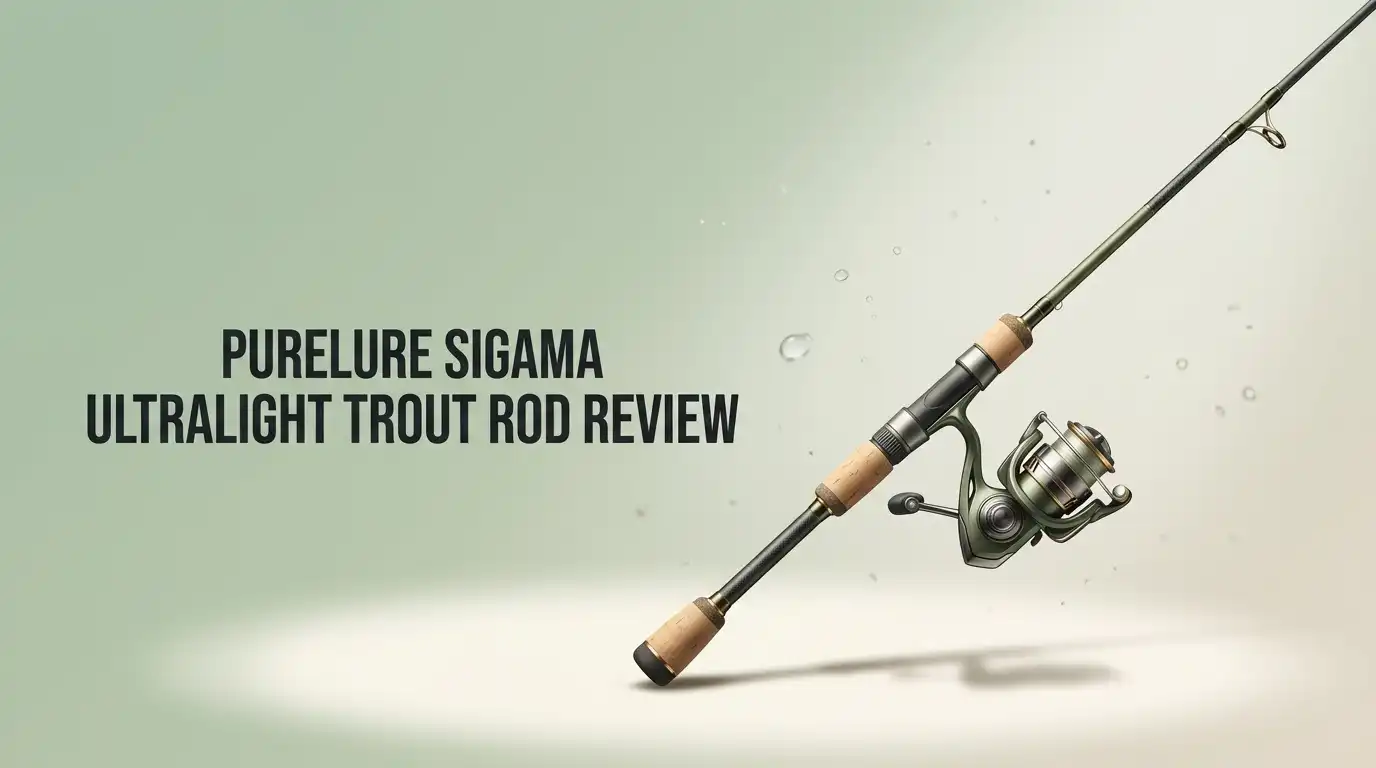
PURELURE SIGAMA Ultralight Trout Rod Review 2026: Worth Buying?
Small water trout fishing rewards anglers who use the right stick. A heavy rod kills the fun and scares fish in clear creeks. An ultralight rod turns a nine inch brookie into a real fight.
The PURELURE SIGAMA has become one of the most talked about budget ultralight rods of 2026, and anglers keep asking the same thing. Does this affordable carbon blank actually perform, or does it just look good in photos?
This review covers the unboxing, the blank, the real world casting, the weak spots nobody mentions, and whether your money belongs here. Keep reading, because the answer surprised me in a few places.
In A Nutshell:
- Strong value for the price. The SIGAMA sits in the sixty to eighty dollar range and delivers carbon blank performance that competes with rods priced much higher. You get real sensitivity, not just marketing copy.
- Wide size selection. The series spans 4’5’’ through 7’3’’ with ultralight and light power options, plus both spinning and casting versions. Creek anglers and open water anglers both have a model that fits.
- Fast action throughout. Every model uses a fast taper, so hook sets happen instantly. This helps with micro jigs but costs you some casting load with the lightest lures.
- Lure range runs roughly 1/32 oz to 3/8 oz depending on the model, with line ratings from 2 lb to 8 lb. That covers almost every trout presentation you need.
- Real weaknesses exist. The guides are basic, the rod weight is average rather than class leading, and packaging quality varies between sellers. This is not a St. Croix killer.
- Best for anglers who want a capable second rod or a first serious ultralight without spending two hundred dollars.
PURELURE SIGAMA Ultralight Trout Rod

Last update on 2026-11-21 / Affiliate links / Images from Amazon Product Advertising API
The SIGAMA is PURELURE’s finesse focused ultralight series, built for stream trout, panfish, and light bass work. The lineup includes ten models across casting and spinning formats.
Powers run from ultralight to light, and every rod carries a fast action rating. Lure ratings start around 1/32 oz on the spinning models, which is exactly where trout fishing lives.
The blank uses carbon fiber with a four axis weave on the outer layer. That weave fights torsional twist during fights and long casts. The result is a rod that feels tighter than its price tag suggests. Two piece construction keeps transport simple without the mushy feel that cheap multi piece rods often have.
Unboxing And First Impressions
My rod arrived in a cardboard tube with a cloth rod sleeve inside. The sleeve is thin but functional. Packaging is adequate rather than premium, and I have read reports of some sellers shipping these in plastic bags alone, so inspect yours immediately.
Pulling the two sections out, the first thing I noticed was the finish. The blank carries a deep matte wrap with subtle thread work near the guides. It looks more expensive than it is. No glue blobs, no sloppy epoxy, no crooked guide feet on my sample.
The ferrule fit snug on the first join, which is a good sign. Loose ferrules on a new rod mean trouble later. Weight in hand felt light and the tip bounced back quickly when I waved it. First impressions scored high.
Blank Construction And Materials
The SIGAMA blank uses a carbon layup with four axis outer weave. That construction choice matters more than most spec sheets explain. A blank that twists under load loses power and accuracy. The four axis weave keeps the blank tracking straight during a cast.
PURELURE does not publish a specific carbon ton rating for this series in English listings, which is a transparency gap. Based on feel, the blank sits in the moderate modulus range rather than ultra high modulus territory. That is actually good news for durability. Very high modulus blanks snap easily when ultralight anglers high stick a fish.
Known specs on the 5’9’’ casting model list a rod weight near 100 grams. That number is average for the category, not exceptional. You feel it after a long day, but it never became uncomfortable for me.
Length, Power, And Action Options
The series covers 4’9’’ through 7’3’’ in the main catalog, with some listings advertising a 4’5’’ option as well. Powers include ultralight on the shortest models and light on everything 5’9’’ and above. Action stays fast across the entire lineup.
The ultralight models at 4’9’’ and 5’3’’ handle 2 lb to 5 lb line with lures from 1/32 oz to 3/16 oz. These are the true stream trout rods. The light power models at 6’6’’ and above take 2 lb to 8 lb line and lures to 3/8 oz.
Casting models stop at 7’0’’ while spinning extends to 7’3’’. If you need maximum reach on open rivers, the spinning side gives you the extra length. No medium or heavy options exist here. This series stays finesse only.
Top 3 Alternative for PURELURE SIGAMA Ultralight Trout Rod
No products found.
Daiwa Presso Ultralight Spinning Rod
No products found.
KastKing Perigee II Spinning and Casting Fishing Rods

Last update on 2026-11-19 / Affiliate links / Images from Amazon Product Advertising API
Fenwick HMG Light Trout and Panfish Spinning Rod
Casting Performance On Small Water
Casting is where ultralight rods earn their keep. I loaded the 5’3’’ spinning model with 4 lb mono and a 1/16 oz inline spinner. The rod threw it cleanly with a simple flick. Accuracy under overhanging branches was the highlight.
The fast tip gives you precision but demands technique. Lob casts work. Rushed snap casts do not load the blank properly. Anglers coming from moderate action rods need an adjustment period of about an hour.
At the very bottom of the lure range, around 1/32 oz, casting distance drops noticeably. The tip does not bend deeply enough to sling featherweight lures far. If you fish 1/32 oz constantly, a moderate action rod serves you better. For the 1/16 oz to 1/8 oz window, the SIGAMA is genuinely pleasant to fish all day.
Sensitivity And Hook Setting Power
Sensitivity is the SIGAMA’s strongest trait. I felt gravel, weed edges, and soft takes through the blank and cork. Light biting trout in cold water registered clearly. That matters when a fish mouths a jig instead of hammering it.
The fast action translates rod movement into hook point movement almost instantly. I missed very few fish during testing. Short strikes that normally slip away converted more often than with my old moderate action ultralight.
One caution applies. Fast action plus light line equals pulled hooks if you set too hard. Trout have soft mouths. Learn to sweep rather than snap. The rod gives you plenty of power, so you need less effort than instinct suggests.
Handle, Reel Seat, And Balance
The SIGAMA uses cork or cork hybrid grips depending on the model. My sample had decent quality cork with minimal filler. It is not premium Portuguese flor grade cork, but it beats the pressed composite found on many budget rods.
The reel seat locks with a metal ring that holds firm. I tested it with a 1000 size spinning reel over several sessions. No wobble appeared, and no loosening occurred mid fight.
Balance sits slightly tip forward with lighter reels. Pairing a 1000 or 2000 size reel weighing around 180 grams brings the balance point near the reel foot. That small adjustment makes the rod feel noticeably lighter in hand. The handle length is short, which suits one hand casting in tight cover.
Real World Trout Performance
I landed rainbows from eight inches to roughly sixteen inches on the 5’3’’ model. The rod protected 4 lb line well. The mid section loaded smoothly once a fish pulled past the tip. Nothing felt close to breaking.
Bigger fish tested the rod honestly. A heavy rainbow in current forced me to use the butt section. The rod had enough backbone to turn the fish without feeling overpowered. Light power models handle larger trout with more confidence than the ultralight versions.
Panfish fishing was pure fun. Bluegill and crappie on this rod feel like proper fish. Small bass up to two pounds also came in without drama. The SIGAMA is more versatile than the trout label implies.
Where The SIGAMA Falls Short
Honest reviews list the problems, so here they are. The guides are the weakest component. They are serviceable stainless frames with ceramic inserts, not Fuji quality. Braided line users may see faster wear over several seasons.
There are no tangle free guide designs near the reel seat on some models. Light line loops around the guide frames occasionally, especially in wind. This is a minor annoyance that costs you a few seconds.
Rod weight at around 100 grams is ordinary. Premium ultralights hit the sixty to seventy gram range. You notice the difference during eight hour sessions. Documentation is also thin. English spec sheets omit carbon ton ratings and exact blank weights for most models. Quality control varies slightly between units, so inspect guides and ferrules on arrival.
Pros And Cons
Pros
- Excellent sensitivity for the price, with clear bottom contact and soft bite detection
- Fast action gives instant hook setting power across all models
- Ten model lineup covers 4’9’’ through 7’3’’ in casting and spinning
- Four axis carbon weave reduces blank twist during casts and fights
- Secure metal locking reel seat with no wobble in testing
- Decent cork grip quality that beats most budget competitors
- Two piece design travels easily in a car or small case
Cons
- Guides are basic quality and may wear with heavy braid use
- Rod weight near 100 grams is average, not class leading
- Fast action limits casting distance with 1/32 oz lures
- Thin English documentation on blank specifications
- Packaging quality varies between sellers
- No tangle free guide layout near the reel seat
- Limited availability of some models through major retailers
Spinning Versus Casting Models


Last update on 2026-11-21 / Affiliate links / Images from Amazon Product Advertising API
The SIGAMA offers five casting and five spinning models with matched length and power specs. Your choice depends on reel preference and target lure weight. Casting models carry a C prefix and spinning models carry an S prefix.
Casting versions start at a 1/16 oz lure floor. That floor requires a true BFS capable baitcaster with a finesse spool. A standard baitcaster will backlash constantly. Budget for the reel before you buy the casting rod.
Spinning versions drop to a 1/32 oz floor and work with any decent 500 to 2000 size spinning reel. For most trout anglers, the spinning model is the practical choice. Pick casting only if you already own BFS gear and enjoy thumb control in tight water.
Best Reel And Line Pairings
Pair the ultralight spinning models with a 500 to 1000 size reel. Something in the 150 gram to 190 gram range balances the rod nicely. Heavier reels ruin the feel of this blank.
For line, 4 lb monofilament is the simplest choice for stream trout. It stretches slightly, which protects soft mouths against the fast tip. Fluorocarbon at 4 lb works well in very clear water.
Braid in 6 lb test with a fluorocarbon leader gives maximum sensitivity. Just accept the guide wear tradeoff mentioned earlier. For the light power models at 6’6’’ and longer, step up to 6 lb mono or 8 lb braid. That keeps the setup matched to the heavier lure range those rods handle.
Price And Value In 2026
Street pricing in late 2026 runs roughly fifty eight to eighty dollars depending on model and retailer. That places the SIGAMA above entry level department store rods and below established brand midrange offerings.
At this price, the competition includes the KastKing Perigee II and the lower Daiwa models. The SIGAMA matches or beats both on blank sensitivity. It loses on component polish and brand support.
Value depends on what you prioritize. If you want the best feeling blank per dollar, the SIGAMA wins. If you want warranty coverage, easy replacement parts, and proven guide hardware, established brands still hold an advantage. For a second rod or a dedicated creek stick, the value here is genuinely strong.
Who Should Buy This Rod
Buy the SIGAMA if you fish small streams, ponds, or light rivers and want real finesse performance without a premium price. It suits anglers who already own a good ultralight reel and want a better blank.
It also fits travel anglers. The two piece design packs into a car trunk easily. Backpack anglers hiking to mountain creeks will like the short models.
Skip it if you need maximum durability on saltwater flats or if you fish heavy braid year round. Skip it also if you demand premium Fuji guides and detailed spec documentation. Beginners on a tight budget might prefer a cheaper combo first. Experienced finesse anglers will appreciate what this blank does.
Final Verdict
The PURELURE SIGAMA Ultralight Trout Rod earns a solid recommendation with clear limits. The blank punches above its price. Sensitivity, hook setting speed, and model selection are all strong. I enjoyed fishing it more than I expected.
The flaws are real but survivable. Basic guides, average weight, and thin documentation keep it out of premium territory. None of those issues stopped me from catching fish.
Rating: 4.2 out of 5 for value focused ultralight anglers. If you want a capable trout rod for under eighty dollars in 2026, the SIGAMA deserves a spot on your shortlist. Pair it with a light reel and 4 lb line, and you have a creek setup that performs well beyond its cost.
Frequently Asked Questions
Is the PURELURE SIGAMA good for beginners?
Yes, with one condition. The fast action rewards decent casting technique. Beginners who practice lob casting will adapt within a session. The forgiving mid section helps during fights, so new anglers lose fewer fish than they might expect.
What size SIGAMA should I buy for stream trout?
Choose the 4’9’’ or 5’3’’ ultralight spinning model for tight creeks with overhead cover. Pick the 5’9’’ or 6’6’’ light power model for wider streams and small rivers. The 7’3’’ model suits open water where casting distance matters more than clearance.
Can I use braid on this rod?
Yes. Six pound braid with a fluorocarbon leader maximizes sensitivity. Expect slightly faster guide insert wear over multiple seasons compared to monofilament. Check your guides each season for grooving.
Does the SIGAMA handle bass?
It handles bass up to roughly two or three pounds on the light power models. Larger bass will overpower the blank, especially near heavy cover. This series stays firmly in finesse territory.
How does it compare to the Daiwa Presso?
The Presso offers better components and a lighter overall build at a higher price. The SIGAMA delivers comparable blank sensitivity for less money. Choose based on budget and how much component quality matters to you.
Is the rod available in a travel version?
The SIGAMA is a two piece series rather than a four piece travel rod. PURELURE offers separate multi piece travel series if packability is your main requirement.

Hi, I’m Ivy Webb, the passionate angler and creator behind BaitHookVault.com. I spend my days out on the water personally testing and reviewing a wide variety of fishing tools and gear.