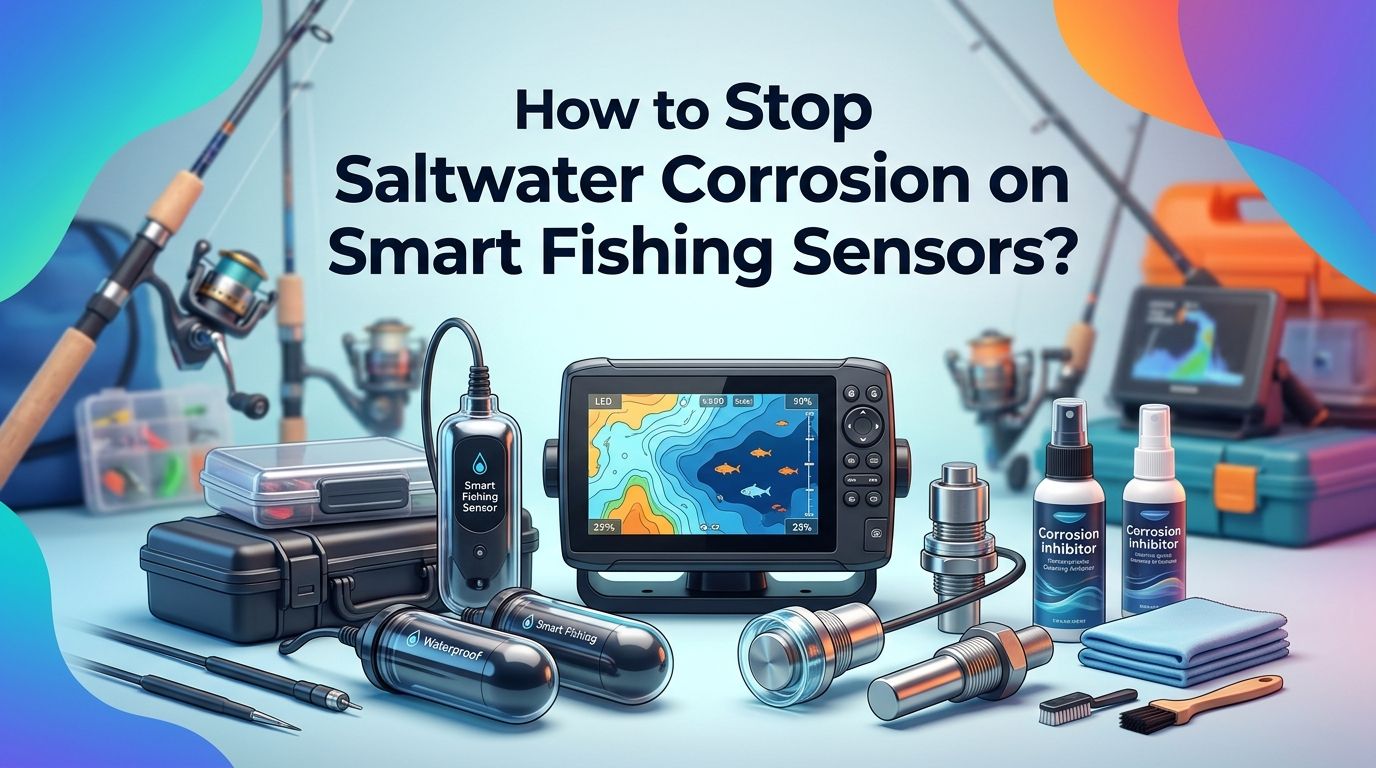
How to Stop Saltwater Corrosion on Smart Fishing Sensors?
You just invested in a smart fishing sensor to track water temperature, depth, and fish activity. A few saltwater trips later, you notice green buildup on the connectors, spotty readings, and a sensor that barely works.
Saltwater is one of the most destructive forces on any electronic device. The dissolved sodium chloride creates an electrolyte solution that aggressively attacks metals, circuit boards, and wiring. Smart fishing sensors sit right in the danger zone because they make direct contact with ocean water.
The good news? You can protect your smart fishing sensors and dramatically extend their lifespan with the right care routine and protective measures.
In a Nutshell
- Always rinse your smart fishing sensors with fresh water immediately after every saltwater trip. Warm water works best because it dissolves salt crystals faster than cold water. This single habit prevents most early corrosion damage.
- Choose sensors built with corrosion resistant materials like titanium, 316L stainless steel, or marine grade plastics. These materials form protective oxide layers that resist chloride ion attack. Spending more upfront on the right material saves you from frequent replacements.
- Apply conformal coatings or anti corrosion sprays to exposed circuit boards and electrical connectors. Silicone and parylene coatings create a physical barrier between saltwater and sensitive electronics. Reapply these coatings on a regular schedule for best results.
- Store your sensors in dry, climate controlled spaces between uses. Moisture left on a sensor continues to cause damage even after you leave the water. A sealed container with silica gel packets removes residual moisture effectively.
- Inspect your sensors regularly for early signs of corrosion such as discoloration, white powder, or green buildup on metal contacts. Catching corrosion early lets you clean and treat the affected area before it spreads to internal components.
- Consider using sacrificial anodes or dielectric grease on metal connections to add an extra layer of electrochemical protection. These methods are inexpensive and easy to apply at home without special tools.
How Does Saltwater Actually Damage Smart Fishing Sensors?
Saltwater contains roughly 3.5% dissolved salts, mostly sodium chloride. When this solution contacts metal surfaces, it creates an electrochemical cell. Electrons flow from one metal to another, and the losing metal corrodes. This process is called galvanic corrosion, and it accelerates when two different metals sit close together on a circuit board.
Smart fishing sensors are especially vulnerable because they have exposed probes, connectors, and housings that must contact water to function. The salt residue left behind after water evaporates continues the corrosion process. High humidity and warm temperatures speed things up even further.
Chloride ions in saltwater are particularly aggressive. They break through protective oxide layers on metals like aluminum and standard stainless steel. Once the oxide layer fails, corrosion spreads quickly beneath the surface.
How to Choose Corrosion Resistant Sensor Materials?
Material selection is your first and strongest defense against saltwater damage. Titanium is the gold standard for marine electronics. It forms a stable titanium oxide film that resists chloride ion attack even at high temperatures. Many premium marine sensors use titanium housings and probes for this reason.
316L stainless steel is another solid choice. The “L” means low carbon, which reduces the risk of intergranular corrosion. It contains molybdenum, which adds pitting resistance in chloride environments. This material costs less than titanium and performs well for most recreational fishing applications.
Marine grade plastics and composite housings eliminate metal corrosion entirely on the outer shell. Look for sensors with polycarbonate or reinforced nylon casings.
Pros: Long term savings, less maintenance required, proven performance in ocean conditions.
Cons: Higher upfront cost, limited options on budget sensors, titanium components can be hard to find for replacements.
How to Rinse and Clean Sensors After Every Saltwater Trip?
A freshwater rinse is the simplest and most effective habit you can build. Do this within 30 minutes of leaving the water. The longer salt sits on your sensor, the more damage it does.
Use lukewarm fresh water and a gentle stream from a hose or faucet. Warm water dissolves salt crystals more effectively than cold water. Avoid high pressure spray directly on seals and gaskets because it can force water past the seals and into the housing.
After rinsing, pat the sensor dry with a clean microfiber cloth. Do not use paper towels because they can leave fibers in small crevices. Pay extra attention to connector pins, threaded areas, and any joints where salt can hide.
For stubborn salt buildup, use a soft brush with a mild soap solution. Rinse again with fresh water and dry completely before storage.
Pros: Free, fast, and extremely effective at preventing salt deposits.
Cons: Requires discipline after every trip, not effective against corrosion that has already started.
How to Apply Conformal Coatings to Sensor Electronics?
Conformal coatings are thin protective films applied directly to circuit boards and electronic components. They create a moisture barrier that prevents saltwater from reaching copper traces and solder joints. This method is widely used in military and commercial marine electronics.
The most common types include acrylic, silicone, urethane, and parylene coatings. Silicone coatings offer excellent flexibility and temperature resistance. Parylene provides superior moisture barrier properties and covers every surface uniformly, including sharp edges and tight spaces.
To apply a conformal coating at home, you need to carefully disassemble the sensor housing and spray or brush the coating onto the exposed PCB. Let it cure fully according to the product instructions before reassembling.
Pros: Outstanding protection for internal electronics, long lasting, proven in military marine applications.
Cons: Voids the warranty on most consumer sensors, requires careful application, parylene needs professional vacuum deposition equipment.
How to Use Anti Corrosion Sprays on Connectors and Wiring?
Anti corrosion sprays form a thin protective film on metal surfaces. They displace moisture and leave a waxy or oily barrier that blocks salt and oxygen from reaching the metal. These products are popular among boaters for protecting battery terminals, wiring harnesses, and plug connections.
Apply the spray to all exposed connectors, pins, and terminals on your smart fishing sensor. Focus on the areas where the sensor cable meets the plug because this junction is a common failure point. Let the spray dry completely before reconnecting anything.
Reapply the spray every two to four weeks during heavy saltwater use. Some formulas last longer than others, so check the label for reapplication intervals.
Pros: Easy to apply, inexpensive, works well on connectors and exposed metal.
Cons: Needs regular reapplication, can attract dust and dirt, some sprays leave a sticky residue.
How to Seal and Waterproof Sensor Housings Properly?
Even sensors rated IP68 are not fully protected against saltwater over time. IP68 means the device can survive continuous freshwater submersion beyond one meter. But saltwater is far more aggressive. The dissolved salts degrade rubber seals and gaskets faster than fresh water does.
Check all O rings and gaskets on your sensor housing before every trip. Replace any O ring that looks cracked, flattened, or discolored. Apply a thin layer of silicone grease to each O ring to keep it supple and maintain its seal.
For sensors without replaceable seals, apply marine grade silicone sealant around housing joints. Use a product rated for saltwater exposure. Avoid standard bathroom silicone because it often contains acetic acid that corrodes metal.
Pros: Prevents water ingress at the source, extends seal life, inexpensive silicone grease lasts a long time.
Cons: Over tightening can deform O rings, silicone sealant is hard to remove if you need internal access later.
How to Use Sacrificial Anodes for Sensor Protection?
Sacrificial anodes are small pieces of reactive metal, usually zinc, magnesium, or aluminum, that corrode in place of your sensor’s metal components. This is the same cathodic protection method used on boat hulls, ship propellers, and underwater pipelines around the world.
You can attach a small zinc anode near your sensor’s mounting location. The zinc will preferentially give up electrons to the saltwater, protecting the less reactive metals in your sensor. The anode slowly dissolves over time and needs periodic replacement.
This method works best for sensors that remain submerged for extended periods, like those mounted on a boat hull or on a permanent dock installation.
Pros: Proven electrochemical protection, inexpensive, easy to install.
Cons: Requires periodic replacement, adds weight, less practical for portable sensors used on short trips.
How to Store Smart Fishing Sensors Between Uses?
Proper storage prevents ongoing corrosion between fishing trips. After rinsing and drying your sensor, store it in a cool, dry environment away from direct sunlight. Heat and humidity accelerate any remaining corrosion processes.
Use a sealed container or a zip lock bag with silica gel desiccant packets inside. These packets absorb residual moisture from the air around the sensor. Replace the desiccant every few weeks or when the indicator beads change color.
Never store a wet sensor in a closed tackle box or gear bag. The trapped moisture creates a humid microenvironment that promotes both corrosion and mold growth. If you cannot dry the sensor completely before leaving the boat, leave the container open until you get home.
Pros: Prevents between trip corrosion, desiccants are cheap and reusable, simple routine.
Cons: Requires a storage container, desiccants need regular replacement, easy to forget this step.
How to Inspect Sensors for Early Signs of Corrosion?
Regular inspection catches corrosion before it causes permanent damage. Look for green or white powdery deposits on copper and brass components. Check for pitting, which appears as small holes or rough spots on metal surfaces. Examine connector pins under a magnifying glass for discoloration.
Test the sensor’s readings against a known reference after every few saltwater trips. Drifting readings often indicate internal corrosion affecting the sensing elements. A pH sensor that reads 0.2 units off or a temperature probe with new inconsistencies may have corroded contacts inside.
Create a simple inspection checklist: housing integrity, O ring condition, connector appearance, cable jacket condition, and reading accuracy. Run through this list every five to ten saltwater uses.
Pros: Catches problems early, prevents expensive failures, builds awareness of your equipment condition.
Cons: Takes time, requires a reference device for reading checks, small internal corrosion can be invisible externally.
How to Use Dielectric Grease on Electrical Connections?
Dielectric grease is a non conductive silicone based lubricant that seals out moisture from electrical connections. Apply a small amount to connector pins, plug housings, and threaded fittings on your sensor. The grease fills microscopic gaps where saltwater would otherwise collect.
Do not apply dielectric grease to the contact surfaces themselves if the connection relies on metal to metal contact for signal transfer. Instead, apply it around the outside of the connection and on the housing threads. This keeps water out without blocking the electrical path.
Dielectric grease also prevents connectors from seizing or corroding shut. This makes disassembly much easier during maintenance.
Pros: Inexpensive, widely available, prevents moisture intrusion at connection points, makes future maintenance easier.
Cons: Can attract dirt if over applied, needs reapplication after cleaning, messy to work with in small spaces.
How to Build a Long Term Maintenance Schedule?
Consistency beats intensity with corrosion prevention. Build a schedule that matches your fishing frequency. After every trip: rinse with fresh water, dry completely, and store properly. Every month during active season: inspect O rings, reapply anti corrosion spray, and check reading accuracy.
Every three to six months: do a deep inspection. Open the housing if possible. Look at the circuit board for signs of moisture or corrosion. Reapply conformal coating if needed. Replace sacrificial anodes if they are more than half consumed.
At the end of each season: perform a full service. Replace all O rings and gaskets. Clean all connectors with electronic contact cleaner. Apply fresh dielectric grease. Store with desiccant in a climate controlled space.
Pros: Prevents surprise failures, extends sensor life by years, creates good habits.
Cons: Requires planning, some maintenance steps require tools and spare parts, time commitment adds up.
How to Handle Sensors That Are Already Corroded?
If corrosion has already started, act fast. Remove the sensor from use and rinse it thoroughly with fresh water. Use a soft brass brush or a toothbrush to gently scrub away surface corrosion. For stubborn deposits, soak the affected area in white vinegar for 15 to 30 minutes, then scrub and rinse again.
For corroded electrical contacts, use electronic contact cleaner spray. This dissolves oxidation without damaging the underlying metal or surrounding plastics. Dry the contacts completely before reconnecting.
If internal corrosion has affected the circuit board, you may need professional repair. A qualified marine electronics technician can clean, reflow solder joints, and apply conformal coating to restore the board. Evaluate the repair cost against the replacement cost before proceeding.
Pros: Can save an expensive sensor, clears surface corrosion effectively, vinegar method is safe and cheap.
Cons: Deep corrosion may be irreversible, warranty is void once you open the housing, professional repair can be costly.
Frequently Asked Questions
How often should I rinse my smart fishing sensor after saltwater use?
Rinse your sensor with fresh water after every single saltwater trip. Do not skip this step even if the trip was short. Salt starts corroding metal surfaces within hours of exposure. Lukewarm water works best for dissolving salt residue quickly. A quick rinse takes less than two minutes and is the most effective corrosion prevention method available.
Can I use my freshwater rated sensor in saltwater?
You can, but you accept a much higher risk of corrosion. Freshwater sensors are not built with saltwater resistant materials or seals. If you must use one in salt, apply anti corrosion spray to all connectors, rinse immediately after use, and inspect frequently. Expect a shorter lifespan compared to a sensor designed for marine saltwater use.
Does an IP68 rating mean my sensor is safe in saltwater?
No. IP68 ratings are tested in fresh water, not saltwater. Saltwater contains dissolved salts that attack seals, gaskets, and metals much faster than fresh water. An IP68 sensor will resist initial water ingress, but the seals will degrade sooner in a saltwater environment. You still need to rinse, dry, and maintain the sensor properly.
What is the best material for saltwater fishing sensors?
Titanium is the best overall material for saltwater resistance. It forms a protective oxide layer that resists chloride attack. 316L stainless steel is a strong second choice with good corrosion resistance at a lower price. Marine grade composite plastics are also excellent for housings because they do not corrode at all.
Is it worth applying conformal coating to a consumer fishing sensor?
It depends on the sensor’s value and how often you fish in saltwater. For expensive smart sensors used frequently in ocean conditions, a conformal coating can add years to the sensor’s life. However, applying it yourself requires opening the housing, which typically voids the manufacturer’s warranty. Weigh the cost of the coating against the warranty coverage before deciding.

Hi, I’m Ivy Webb, the passionate angler and creator behind BaitHookVault.com. I spend my days out on the water personally testing and reviewing a wide variety of fishing tools and gear.