13 Fishing Tickle Stick Ice Rod Review 2026: Still Worth It?
Ice anglers argue about a lot of things. Augers, shelters, line brands. But mention the 13 Fishing Tickle Stick in a bait shop, and heads turn.
This little rod built a cult following on one strange feature: a flat tip that shows you bites instead of just letting you feel them.
I have fished a Tickle Stick through three winters now. I have landed slab crappies on it. I have also watched a buddy snap one in a sled. This review covers both sides honestly, so you know exactly what you are buying before winter hits.
Key Takeaways
- The flat tip is the real deal. The PC2 Parallel Composite Construction blank creates a tip that bends flat instead of rolling over. You see bites load the tip before you feel them in your hand. Many owners drop their spring bobber entirely after switching.
- Panfish are its home turf. Bluegill, crappie, and perch anglers get the most value. The ultra light models handle tungsten jigs from 1/64 to 1/16 ounce with excellent balance.
- Durability is the weak spot. Tips break. Reports of this are common enough that you should treat storage as part of ownership. A hard rod case is not optional.
- The price stays friendly. Most models sit under 50 dollars, which puts custom style bite detection in a budget package.
- Quality control varies. Some rods arrive flawless. Others have guide alignment issues or a tip that fails early. Buy from a seller with easy returns.
- It is not a heavy fish rod. Big pike and lake trout will overpower the light models. Match the power rating to your target species or you will be disappointed.
What Is the 13 Fishing Tickle Stick Ice Rod?


Last update on 2026-10-21 / Affiliate links / Images from Amazon Product Advertising API
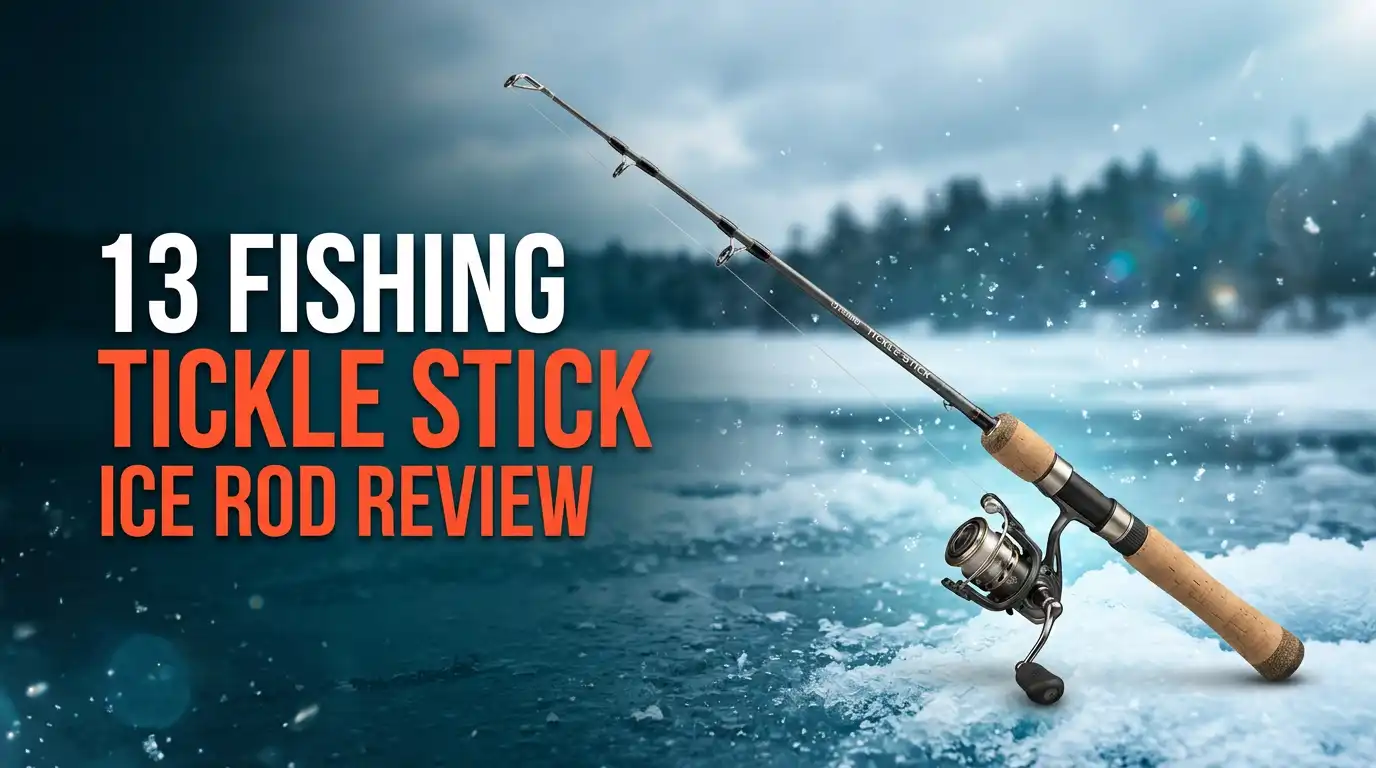
The Tickle Stick is a dedicated ice jigging rod built by 13 Fishing. It launched years ago as the first production ice rod with a genuinely flat tip section. That design is still its signature today in the Gen 3 version.
The blank uses PC2 construction, which means parallel composite fibers run the length of the rod. Those linear fibers let the designers press the tip flat instead of leaving it round. A round tip rolls over under load. A flat tip resists that roll, so it telegraphs movement cleanly in one plane.
The result is a rod that works almost like a built in strike indicator. You watch the tip. It twitches up or down. You set the hook. Ascending bites, the ones where a fish lifts your jig, become visible instead of invisible. That single trait explains the rod’s reputation.
The Unboxing Experience
The Tickle Stick arrives in a long slim sleeve, usually with a simple hang tag and a plastic tip protector. There is nothing fancy here. No padded tube, no soft sock, no premium presentation. You slide the rod out and that is it.
First impression is weight, or the lack of it. The rod feels almost hollow in your hand. The Evolve reel seat is clean and low profile. The Hi Vis tip section stands out immediately against a dark background, which is exactly the point.
My honest reaction the first time was mild concern. The tip looks fragile because it is thin and flat. Flex it gently and you understand the design right away. Check the guide alignment before your first trip. Sight down the blank. If anything looks twisted, start a return immediately rather than on the ice.
Breaking Down the PC2 Flat Tip
The flat tip does two jobs at once. First, it increases visible sensitivity. A thin flat section loads with very little pressure, so a 1/64 ounce tungsten jig puts a slight bend in it at rest. When a bluegill lifts that jig, the bend relaxes. You see it instantly.
Second, the flat shape adds rigidity in one axis. The blank cannot twist sideways under a hookset. That translates to better hook penetration with light wire hooks.
This matters most for negative bites. Cold front panfish often rise and exhale a jig without ever pulling down. A round tip rod misses those. The Tickle Stick shows them clearly. The Hi Vis paint helps in low light, which is when most crappie action happens anyway.
Build Quality, Guides, and Reel Seat
The Gen 3 uses ALPS thin wire guides. These are light, which keeps the tip responsive. They also ice up less than older heavy frame guides. Earlier generations had tiny eyelets that packed with slush constantly. 13 Fishing enlarged them on newer runs, which was a genuine improvement.
The reel seat is a custom Evolve design. It holds small inline reels and compact spinning reels securely. The handle is compact EVA or split grip depending on model. Nothing is plush, but nothing rattles either.
Quality control is where opinions split. Most rods are fine. A noticeable minority show glued guide wraps that lift, or finish flaws near the tip. Inspect yours carefully within the return window. Once you are past that, the rod generally holds up fine if you store it properly.
Top 3 Alternatives for the 13 Fishing Tickle Stick Ice Rod

Last update on 2026-10-21 / Affiliate links / Images from Amazon Product Advertising API
13 Fishing Widow Maker Ice Rod

Last update on 2026-10-21 / Affiliate links / Images from Amazon Product Advertising API
Fenwick HMG Ice Fishing Spinning Rod

Last update on 2026-10-21 / Affiliate links / Images from Amazon Product Advertising API
13 Fishing The Snitch Pro Ice Fishing Rod
Length and Power Options Explained
The Tickle Stick comes in several lengths, most commonly 23, 25, 27, and 30 inch versions. Power ratings run from super ultra light through medium light.
A 23 inch ultra light is the shelter rod. Short, quick, and perfect for sight fishing or tight quarters. The 27 inch models give you more reach and better shock absorption, which helps on hard charging perch.
Match the jig rating carefully. The rod rating is printed right on the blank. Overloading an ultra light with a heavy spoon kills the flat tip advantage completely. The tip simply bottoms out and stops telegraphing anything.
For a single rod that covers most panfish work, the 27 inch ultra light is the sweet spot. It handles 1/32 ounce jigs beautifully and still has enough backbone for a surprise walleye.
Real World Performance on Panfish
This is where the Tickle Stick earns its money. Drop a tungsten jig on 2 pound line and watch the tip settle. The bend is obvious. Then a crappie inhales it, and the tip pops straight.
I fished mine in eight feet of water over a weed edge last February. Bluegills were finicky. My partner used a standard graphite rod with a spring bobber. I outfished him roughly two to one, purely because I was seeing bites he never registered.
The rod also jigs well. A short snap of the wrist produces a crisp pop followed by fast recovery. The jig settles quickly instead of wobbling forever. That quick recovery matters for triggering neutral fish.
Hooksets at depth are solid for panfish. Beyond 25 feet, the light blank starts losing some power.
How It Handles Walleye and Larger Fish
Honest answer: it depends entirely on which model you buy. The medium light and medium power Tickle Sticks can handle walleye in the two to four pound range without drama. The tip absorbs headshakes while the lower blank provides lift.
The ultra light models are a different story. Hook a good walleye on one and you are in for a long, nervous fight. The rod will land the fish if your drag is set correctly, but you have no control.
Pike and lake trout are out of bounds for every Tickle Stick model. Do not buy this rod as your big fish stick. It was built for finesse presentations with tiny baits, and pushing past that is how most tips get broken. Buy a dedicated heavier rod for those species instead.
Pros and Cons of the 13 Fishing Tickle Stick
Pros
- The flat tip shows faint bites that round tip rods never register, especially ascending strikes from panfish.
- Hi Vis tip paint is easy to track in low light and inside dark shelters.
- Light overall weight makes long jigging sessions comfortable on the wrist and forearm.
- Price usually lands under 50 dollars, which is strong value for this level of bite detection.
- Many anglers can remove their spring bobber entirely, simplifying the setup.
- ALPS thin wire guides on Gen 3 resist ice buildup better than older versions.
Cons
- Tip breakage is a recurring complaint across multiple seasons and generations.
- Quality control is inconsistent, with some rods arriving with guide or finish defects.
- Soft bag storage almost guarantees damage eventually, so a hard case is required.
- Ultra light models lack the power for walleye over four pounds.
- Guides still demand careful ice clearing because thin wire bends easily.
- No premium packaging or included rod sleeve at this price.
What the Tickle Stick Does Not Do Well
Let me be blunt about the failures, because the glowing reviews skip them.
The tip is genuinely fragile. Not delicate in a theoretical way. Fragile in a real way. Anglers report tips snapping on the first fish, inside sleds, in truck beds, and while clearing ice from guides. Some report a replacement rod breaking before its first use.
Clearing ice is a hazard. Most people tap or flick the rod tip to shed slush. Do that hard with a Tickle Stick and you will hear a crack. Warm the guides with your hand instead.
The rod also hates heavy lures. Hang a half ounce spoon on an ultra light model and the action collapses. Finally, hooksets beyond 30 feet feel mushy on the lightest versions.
Best Reel Pairings for the Tickle Stick
Inline reels pair naturally with this rod. The 13 Fishing Black Betty FreeFall series was designed alongside it, and the balance point sits right at the reel seat. Inline reels also reduce line twist, which protects the light presentations this rod favors.
If you prefer spinning reels, stay small. A size 500 or 1000 keeps the setup balanced. Anything larger makes the rod feel tip light and ruins the visual sensitivity.
Balance matters more than you think here. A heavy reel masks the subtle tip movement you bought this rod to see. Hold the combo at the reel seat with one finger. It should sit roughly level.
Smooth drag is important too. With 2 pound line, a sticky drag loses fish on the hookset.
Line and Jig Recommendations
Use light line. Two to four pound monofilament works well for panfish. Fluorocarbon leaders help in clear water. Braid with a fluorocarbon leader gives the sharpest bite transmission but can freeze in guides faster.
Tungsten jigs are the natural match. They sink fast, stay small, and load the tip properly. A 1/32 ounce tungsten jig is the workhorse size for the ultra light models. Drop to 1/64 for pressured bluegills.
Avoid heavy spoons on light models. The jig rating printed on the blank is a performance guideline, not a safety limit. Exceeding it will not snap the rod immediately, but it eliminates the flat tip benefit.
For perch, a 1/16 ounce jigging spoon on a medium light Tickle Stick is an excellent combination.
Care, Storage, and Transport
This section matters more for this rod than almost any other. Buy a hard rod case before your first trip. A padded tube or a hard shell case with foam dividers prevents the vast majority of breakages.
Never store a Tickle Stick loose in a sled. Never lay it under other gear in a flip over shelter. Soft canvas bags allow the rods to slide, cross, and snap.
Dry the rod before storage. Water inside guide wraps freezes and expands, which loosens the thread finish over time.
Clear ice from guides by warming them with your fingers or breathing on them. Never tap the rod against the hole or your auger. Small habits here are the difference between one season and five seasons of use.
Price and Value in 2026
The Tickle Stick typically sells between 40 and 60 dollars depending on model and retailer. That places it in the middle of the ice rod market, well below premium custom builds that run well past 100 dollars.
For the money, the bite detection is outstanding. You are buying a feature that custom rod builders charge a premium for. That is genuine value.
The value equation weakens if you break one. Replacing a 50 dollar rod every season turns a budget pick into an expensive habit. Factor in a 30 dollar hard case as part of the purchase price.
Compared to a cheaper combo rod, the Tickle Stick catches more fish. Compared to a St. Croix custom blank, it gives up durability and polish but saves real money.
Who Should Buy This Rod
Buy the Tickle Stick if you chase panfish with small tungsten jigs and want to see bites you currently miss. Crappie anglers, bluegill specialists, and perch hunters get the clearest benefit.
It is also a strong pick for newer ice anglers. The visual bite indication teaches you what a bite looks like before you learn what one feels like.
Skip it if you fish aggressively or carelessly. Anglers who toss rods in a sled and drive across the lake will break this rod. Skip it also if you target pike, lakers, or heavy walleye.
Buy a second one if you love the first. Many dedicated panfish anglers own three or four in different lengths and powers for different depths and species.
Final Verdict
Last update on 2026-10-21 / Affiliate links / Images from Amazon Product Advertising API
The 13 Fishing Tickle Stick remains one of the best bite detection values in ice fishing. The flat tip is not a gimmick. It genuinely reveals strikes that standard rods miss, and that translates into more fish in the bucket on tough days.
The tradeoff is durability. This rod demands respect and a hard case. Quality control can be hit or miss, so inspect yours on arrival.
My overall rating sits around 8 out of 10 for panfish anglers. It is a specialist tool that performs beautifully inside its lane and poorly outside it. Know that going in, treat it gently, and it will become your favorite rod on the ice this winter.
Frequently Asked Questions
Is the Tickle Stick good for walleye?
The medium light and medium power models handle walleye up to about four pounds well. Ultra light models are underpowered for consistent walleye fishing. Choose the power rating based on your main target species rather than buying one rod for everything.
Do I still need a spring bobber?
Usually no. The flat tip provides visual bite detection similar to a spring bobber. Most owners remove their spring bobber after switching. Some anglers still add one for extremely light biting bluegills in deep water.
Why do Tickle Stick tips break so often?
The tip is thin and flat by design, which trades strength for sensitivity. Most breaks happen during storage and transport rather than while fighting fish. A hard rod case solves the majority of these problems.
What length should I buy?
A 27 inch ultra light covers most panfish situations. Choose 23 inch for tight shelters and sight fishing. Choose 30 inch for more reach and deeper water hooksets.
Is the Gen 3 better than older versions?
Yes, modestly. The Gen 3 has larger guide eyelets that ice up less and an improved reel seat. The core flat tip design remains the same across generations.
What reel works best with it?
An inline reel such as the Black Betty FreeFall balances best. A size 500 or 1000 spinning reel also works. Avoid heavy reels that mask the tip movement.

Hi, I’m Ivy Webb, the passionate angler and creator behind BaitHookVault.com. I spend my days out on the water personally testing and reviewing a wide variety of fishing tools and gear.