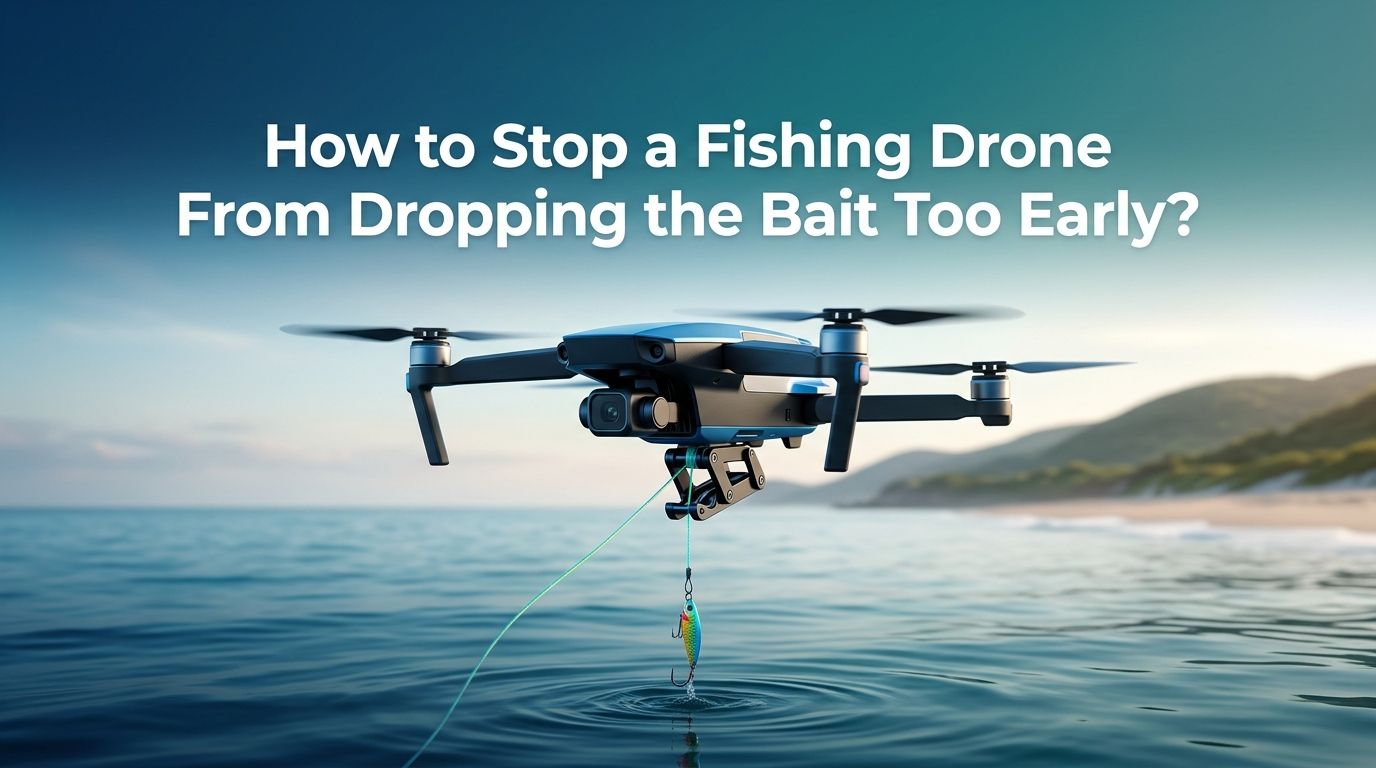
How to Stop a Fishing Drone From Dropping the Bait Too Early?
You spent time rigging the perfect bait. You launched your fishing drone into the sky. Then, halfway to the drop zone, the bait fell straight into the water at the worst possible spot. Sound familiar?
Premature bait drops are one of the most frustrating problems drone anglers face. The good news is that this issue almost always has a fixable cause.
Whether your release mechanism is faulty, your sensor needs adjustment, or your setup is fighting the wind, there is a solution waiting for you.
In a Nutshell
- Release mechanism issues are the top cause. Most premature bait drops happen because the release mechanism is dirty, damaged, or improperly loaded. A quick inspection and cleaning before each flight can prevent the majority of early drops.
- Light sensors can trigger false releases. Some popular release systems use light sensors that react to bright sunlight or reflections. You may need to desensitize the sensor or shield it from ambient light to stop unwanted releases during flight.
- Wind and payload weight matter more than you think. Strong gusts can swing your bait and line, creating enough tension to pop it free. Matching your bait weight to the release tension setting and avoiding flights in winds above 15 mph will reduce early drops significantly.
- Firmware and software glitches cause random releases. Outdated firmware on your drone or controller can send false signals to the release pin or servo. Always update your drone’s firmware before heading out and check the release function on the ground first.
- Proper line management keeps everything secure. A tangled or dragging fishing line adds unexpected force to the release clip. Using a drop loop and keeping slack out of the line eliminates a hidden trigger for early bait drops.
- Ground testing saves you time on the water. Running a full test of the release mechanism before every fishing session catches problems early. Load your bait, hover the drone at low altitude, and confirm the release only fires on your command.
Understanding Why Your Fishing Drone Drops Bait Too Early
Before you can fix the problem, you need to understand what causes it. A fishing drone drops bait too early for one of several reasons. The most common is a faulty or poorly adjusted release mechanism. The second most common is environmental interference, such as wind gusts or bright sunlight triggering a sensor.
Many drone anglers also overlook simple setup mistakes. Placing the bait clip incorrectly, overloading the release beyond its rated weight, or using a worn out clip can all cause early drops. Electrical issues like low battery voltage or signal interference between the controller and drone can also send a premature release command.
The key is to work through each possible cause in order. Start with the release mechanism itself, then check your setup process, and finally look at environmental factors. This systematic approach saves you from guessing and gets you back to fishing faster.
Inspecting and Cleaning the Release Mechanism
The release mechanism is the single most important part of your drone fishing setup. If it fails, everything else is useless. Start every troubleshooting session here.
Remove the release device from the drone and examine it closely. Look for sand, salt buildup, or small debris stuck in the moving parts. Saltwater environments are especially harsh on these components. Even a tiny grain of sand can prevent a clip from closing fully, which leads to an early drop under tension.
Use a soft brush to clean all surfaces. A paintbrush works well for this task. For salt deposits, wipe the mechanism with warm soapy water and let it dry completely. Avoid using dishwashing liquid because some brands contain salt that can leave residue.
Pros of regular cleaning: Extends the life of your release device, prevents most mechanical failures, and takes less than five minutes.
Cons: You need to carry cleaning supplies to the beach, and some mechanisms are difficult to disassemble for deep cleaning.
Adjusting the Release Tension Settings
Most bait release systems have an adjustable tension setting. This controls how much force is needed to open the release and drop the bait. If the tension is set too low, even a small gust of wind or a slight swing of the bait can trigger a release.
Increase the tension gradually until the bait holds securely during flight but still releases cleanly on command. For tension clip systems like modified clothespin designs, you can add a rubber band around the clip to increase grip strength. For servo based systems, adjust the servo arm position through your controller or app.
The right tension setting depends on your bait weight and local wind conditions. A heavier bait rig in calm conditions needs less tension than a light bait in 12 mph winds. Test different settings on the ground before committing to a flight.
Pros of tension adjustment: Gives you precise control over release behavior, adapts to different bait weights, and costs nothing to do.
Cons: Over tightening can make the release fail to open on command, requiring you to fly the drone back with bait still attached.
Dealing With Light Sensor Sensitivity Issues
Several popular release devices, including models from well known drone fishing brands, use light sensors to trigger the bait drop. The drone’s LED or navigation light activates the sensor, which then opens the release mechanism.
The problem arises on bright, sunny days. Ambient sunlight or reflections off the water can confuse the sensor and trigger a premature release. This is especially common during midday fishing sessions when the sun is directly overhead.
To fix this, you need to desensitize the light sensor. Many manufacturers provide instructions for this process. It usually involves covering the sensor partially with tape or adjusting a sensitivity dial on the device. You can also shield the sensor area with a small piece of dark material to block ambient light from reaching it.
Pros of sensor desensitization: Eliminates false releases caused by sunlight, simple to perform, and reversible if you need higher sensitivity later.
Cons: If you desensitize too much, the sensor may not respond to the drone’s actual release signal, so careful calibration is needed.
Updating Firmware and Software
Firmware bugs are a surprisingly common cause of unexpected bait releases. Multiple drone fishing communities have reported release pins and servos activating randomly after firmware updates or due to outdated software.
Before every fishing trip, check if your drone manufacturer has released new firmware. Connect your drone to its companion app and look for available updates. Pay close attention to the release notes. If other users report release mechanism problems with a specific firmware version, you may want to wait for a patch before updating.
After any firmware update, always test the release function on the ground. Power on the drone without flying, load a test weight onto the release, and press the release button several times. Confirm the release responds only to your command and does not activate on its own.
Pros of firmware updates: Can fix known bugs, improve flight stability, and enhance release timing accuracy.
Cons: New firmware sometimes introduces new bugs, and the update process requires a stable internet connection and some technical comfort.
Proper Bait Loading Techniques
How you load the bait onto the release mechanism matters more than most anglers realize. Incorrect bait placement is one of the easiest problems to fix and one of the most overlooked.
The bait and sinker should hang directly below the drone’s center of gravity. If the load hangs off to one side, the drone tilts during flight. This tilt creates uneven tension on the release clip, which can pop it open. Use a drop loop to keep the bait centered and to prevent the fishing line from swinging into the propellers.
Make sure the hook and sinker are secure before takeoff. Double check that the line is seated properly in the release clip or mechanism. A loose placement might hold during hover but fail the moment the drone accelerates forward or hits a gust of wind.
Pros of proper loading: Prevents most early drops caused by uneven weight, protects propellers from line tangles, and improves flight stability.
Cons: Takes a few extra minutes during setup, and you may need to practice the technique several times before it becomes second nature.
Managing Wind and Weather Conditions
Wind is the invisible enemy of every drone angler. Even moderate wind can cause your bait to swing like a pendulum beneath the drone. That swinging motion creates sudden tension spikes on the release mechanism that can trigger an early drop.
As a general rule, avoid flying your fishing drone in winds above 15 mph. If you must fly in moderate wind, increase the release tension and use a heavier sinker to reduce bait swing. Fly the drone at a consistent altitude and speed rather than making sudden direction changes, which amplify the pendulum effect.
Check weather conditions before every session. Use a wind speed app or a handheld anemometer at the beach. Winds are usually calmest in the early morning and late evening, which are also prime fishing times.
Pros of flying in calm conditions: Nearly eliminates wind related early drops, reduces battery drain, and provides smoother drone control.
Cons: You may need to adjust your fishing schedule, and calm wind windows can be short in coastal areas.
Using the Right Payload Weight
Every fishing drone has a maximum payload capacity. Exceeding this limit strains the motors, drains the battery faster, and puts excessive force on the release mechanism. But using too little weight can also cause problems.
A bait rig that is too light will swing wildly in even mild wind. A rig that is too heavy may cause the release clip to slip under the load. The sweet spot is usually 50 to 75 percent of the drone’s rated payload capacity. This gives the drone enough reserve power for stable flight while keeping the bait heavy enough to hang straight.
Weigh your bait rig at home before heading to the water. Include the sinker, hook, bait, and any leader material in your calculation. If your rig is at the upper limit, consider switching to a lighter sinker or smaller bait.
Pros of correct payload matching: Optimizes flight time, reduces strain on release hardware, and keeps the bait stable during transit.
Cons: Requires a small scale and some pre trip planning, and heavier rigs may reduce your maximum drop distance.
Ground Testing Before Every Flight
This step is the single easiest way to prevent early bait drops, yet many drone anglers skip it. A quick ground test takes less than three minutes and can save you an entire session of frustration.
Here is the process. First, power on the drone and controller. Second, load your bait rig onto the release mechanism exactly as you would for a real flight. Third, hover the drone at two to three feet above the ground. Fourth, let it hover for 30 seconds and confirm the bait stays in place. Fifth, press the release button and verify the bait drops on command.
If the bait drops during the hover phase, you have a problem to fix before you fly over water. This test catches 90 percent of release issues before they ruin your fishing spot.
Pros of ground testing: Fast, simple, and catches nearly all mechanical and electronic issues early.
Cons: Uses a small amount of battery life, and you need a flat, open area for safe testing.
Choosing Between Servo, Tension Clip, and Electromagnetic Release Systems
Not all release mechanisms are created equal. The three main types each have strengths and weaknesses for preventing early bait drops.
Servo release systems use a small motor to open a latch on command from the controller. They offer precise control and reliable timing. However, servo mechanisms can fail if the servo motor burns out or if firmware sends a false signal.
Tension clip systems are the simplest design. They hold the line with a spring loaded clip that releases when the line tension exceeds a set threshold. These are cheap and easy to replace but are the most prone to early releases in windy conditions.
Electromagnetic release systems use a magnet to hold the payload and release it when the electrical current stops. These offer strong holding force and clean releases. The downside is they draw extra power from the drone’s battery and add weight to the setup.
Choose the system that best matches your fishing conditions. Servo systems work well in moderate wind. Tension clips are fine for calm days. Electromagnetic systems are best for heavy payloads and rough conditions.
Preventing Line Tangles That Cause False Releases
A tangled fishing line can pull on the release mechanism in unexpected ways. If the line wraps around a propeller arm or catches on the drone’s landing gear, it creates a sudden jerk that can pop the bait free.
Prevent tangles by using a drop loop setup. A drop loop is a short length of line that connects the main fishing line to the release clip. It keeps the line away from the drone body and propellers. Make your drop loop at least 12 to 18 inches long for the best clearance.
Before takeoff, ensure the fishing line runs cleanly from the reel to the drone without crossing over itself. Have a fishing partner hold the rod and maintain slight tension on the line as the drone ascends. This keeps the line straight and prevents it from blowing into the propellers.
Battery Voltage and Its Effect on Release Performance
Low battery voltage does more than shorten your flight time. In many fishing drone models, a voltage drop can trigger the failsafe system, which may command the drone to release its payload and return home.
Most fishing drones activate failsafe at around 22V for a 6S battery pack. If your battery drops below this threshold during flight, the drone may automatically release the bait and head back. This looks like a premature drop but is actually a safety feature working as intended.
The fix is simple. Always start your flight with a fully charged battery. For most 6S packs, that means 25.2V. Monitor the voltage during flight through your controller screen or app. Plan your bait drop to happen well before the battery reaches the failsafe threshold.
Pros of full charge discipline: Prevents failsafe triggered drops, gives you maximum flight time, and extends overall battery lifespan.
Cons: Requires a reliable charger and some patience between flights, especially if you run multiple sessions.
Building a Pre Flight Checklist for Reliable Bait Drops
The best way to prevent early bait drops is to follow the same process every single time. A written pre flight checklist removes the chance of forgetting a step when you are excited to get fishing.
Your checklist should include these items: confirm battery is fully charged, inspect release mechanism for debris, load bait and verify secure placement, test release on the ground, check wind speed and direction, confirm firmware is up to date, and verify controller connection is strong.
Print this checklist or save it on your phone. Run through it before every flight without exception. Over time, it will become automatic. Professional drone pilots in every industry use checklists, and drone anglers should too. A two minute routine on the ground prevents a lost bait and a wasted flight every time.
Frequently Asked Questions
Why does my fishing drone release bait on its own without pressing the button?
This usually happens because of a light sensor being triggered by sunlight, a firmware glitch sending a false release command, or debris in the release mechanism preventing it from closing fully. Start by cleaning the mechanism, desensitizing the sensor, and updating your firmware. Ground test the drone before flying over water.
Can wind really cause my bait to drop early from a drone?
Yes. Wind causes the bait and sinker to swing beneath the drone, which creates tension spikes on the release clip. If those spikes exceed the clip’s holding force, the bait drops. Flying in calmer conditions or increasing your release tension setting solves this problem in most cases.
How often should I replace the release mechanism on my fishing drone?
Inspect it before every session and replace it at the first sign of wear. Most tension clips last 50 to 100 flights in saltwater conditions if cleaned regularly. Servo mechanisms typically last longer but should be replaced if the motor feels sluggish or unresponsive. Electromagnetic systems last the longest but need periodic checks on wiring connections.
What is the best type of release mechanism to prevent early drops?
It depends on your conditions. Servo release systems offer the most reliable, controlled drops in a wide range of conditions. Electromagnetic systems provide the strongest holding force for heavy rigs. Tension clips are the simplest and cheapest but require more careful tension adjustment to prevent early releases in wind.
Should I test the bait release before every single flight?
Absolutely. A quick ground test with your actual bait rig takes under three minutes and catches nearly all mechanical and electronic problems. Skipping this step is the most common mistake drone anglers make, and it is the easiest one to fix.
Does battery voltage affect when my drone drops the bait?
Yes. When battery voltage drops below the failsafe threshold (typically around 22V for 6S batteries), many fishing drones will automatically release the payload and return home. Always fly with a fully charged battery and monitor voltage during flight to avoid failsafe triggered releases.

Hi, I’m Ivy Webb, the passionate angler and creator behind BaitHookVault.com. I spend my days out on the water personally testing and reviewing a wide variety of fishing tools and gear.