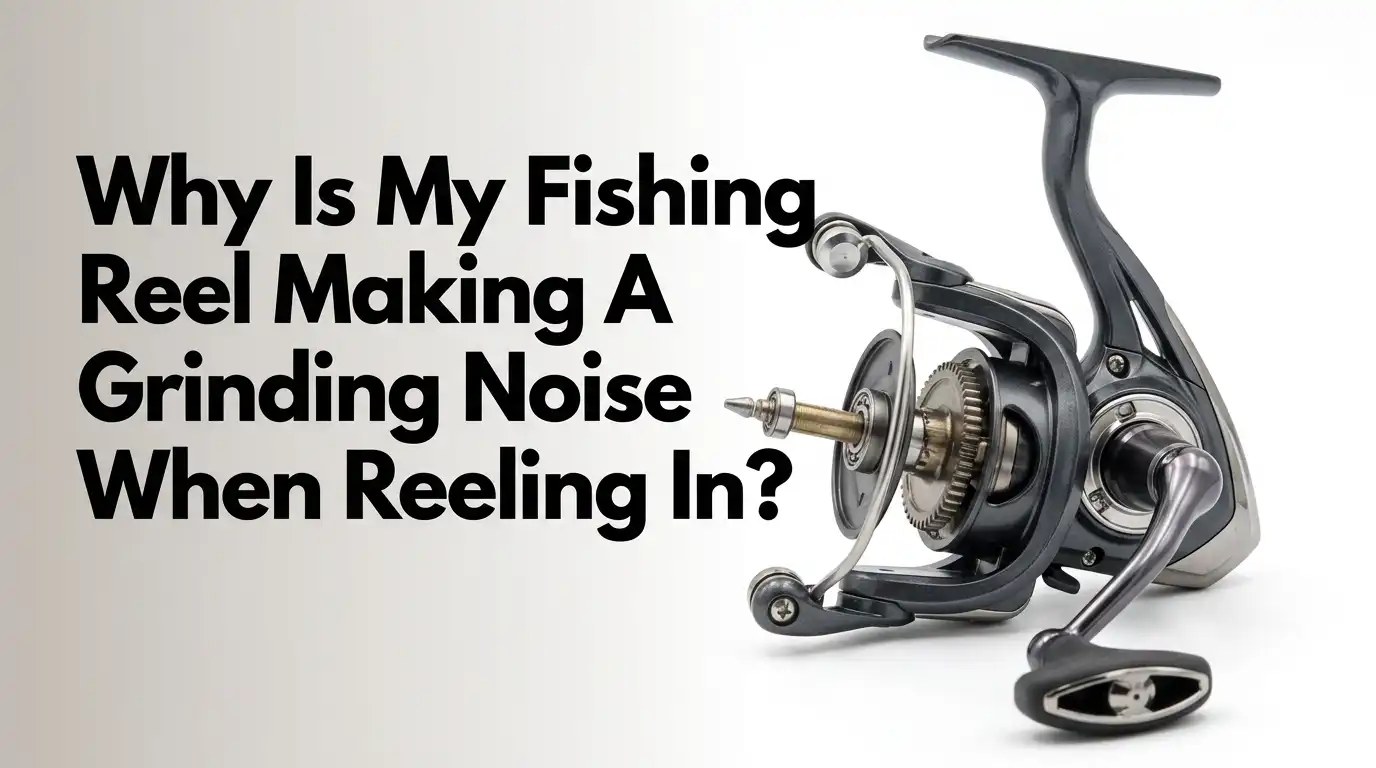
Why Is My Fishing Reel Making A Grinding Noise When Reeling In?
That grinding noise stops a good fishing trip cold. You feel it in your hand. You hear it with every crank. Something inside your reel is rubbing, scraping, or catching when it should spin smooth.
The good news is simple. Most grinding noises have clear causes. Most of them are easy to fix at home. You do not need to be a mechanic. You just need a few tools, some patience, and the right steps.
This post breaks down every common reason a fishing reel grinds. It covers spinning reels and baitcasters. It gives you step by step fixes for each problem. It also shows you how to keep the noise from coming back. Let us get your reel quiet and smooth again.
Key Takeaways
- A dry reel is the most common cause. Many reels, especially newer ones, ship with very little grease inside. Adding lube fixes the grind in many cases.
- The line roller bearing is a frequent troublemaker on spinning reels. A gritty or rusted roller makes a steady scraping sound that follows the line, not the gears.
- On baitcasters, the level wind and pawl cause most grinding. A worn worm gear, a loose pawl cap, or a damaged cog gear makes the noise during retrieve.
- Sand, salt, and water are silent killers. Even a few grains of grit between moving parts will grind. Saltwater speeds up wear fast if you do not rinse the reel.
- A bent main shaft or damaged gear teeth cause grinding under load. If the noise only shows up when fighting a fish, suspect worn gears or a bent shaft.
- Most fixes cost little or nothing. Cleaning, lubing, and tightening parts solve the majority of cases. Replacing a bearing or gear is the next step if those fail.
What The Grinding Noise Actually Tells You
The sound itself is a clue. Listen closely before you open anything. A grinding noise means metal is touching metal where it should not, or a part has lost its smooth motion.
A steady grind that never stops points to a bearing or a dry gear. A grind that only happens under load points to worn gear teeth or a bent shaft. A grind that follows the line path points to the line roller on a spinning reel.
Pay attention to when the noise appears. Does it grind on every turn, or only when a fish pulls? Does it change when you hold the spool? These answers narrow down the cause fast. Diagnosis first, repair second. This saves you time and stops you from opening parts that work fine.
Cause One: Your Reel Is Simply Dry And Needs Lube
This is the number one cause, and it is the easiest to fix. Many reels leave the factory with almost no grease inside. Daiwa reels are well known for this. The metal parts run dry, rub together, and grind. A few drops of oil and a dab of grease often solve the whole problem.
Here is what to do. Apply reel oil to the handle knob bearings, the line roller, and the spindle. Open the side plate and apply a light coat of reel grease to the main gear teeth. Turn the handle several times to spread the lube. Then test the reel.
Pros: Cheap, fast, and works in many cases. No special skill needed.
Cons: Will not help if the real problem is a broken part. Too much grease can attract dirt. Use the right product, never WD40 as a long term lube.
Cause Two: A Bad Line Roller Bearing On Spinning Reels
The line roller sits on the bail arm. Your line runs over it every time you reel. Inside that little roller is a tiny bearing. When grit or rust gets in, the roller grinds. This noise is steady and scrapes all day. It is one of the most common spinning reel complaints.
To check it, unscrew the line roller, take it apart, and spin the bearing with your finger. A bad bearing feels rough or crunchy. Try cleaning it first. Soak the bearing in solvent, dry it, then add a drop of oil. Reassemble and test.
Pros: Cleaning is free and often restores smooth motion. A replacement bearing is cheap.
Cons: Tiny parts are easy to lose. Work over a tray. Some sealed rollers are harder to service and may need full replacement.
Cause Three: The Level Wind And Pawl On Baitcasters
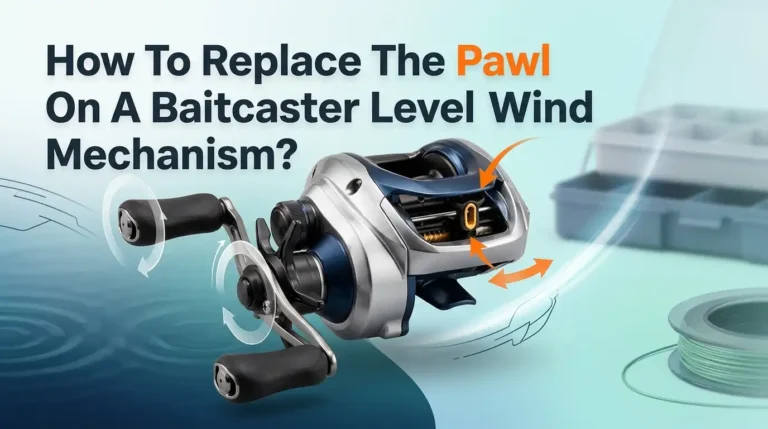
Baitcasters have a level wind that guides line back and forth across the spool. It uses a worm gear and a small part called a pawl. The pawl rides in the worm gear groove. When the pawl wears, the worm gear damages, or the pawl cap loosens, you get a grind during retrieve.
Start with the simplest check. Make sure the pawl cap is tight. If the noise stays, remove the level wind cover and inspect the pawl and worm gear. Look for worn teeth, flat spots, or damage. Clean the worm gear groove and add light oil.
Pros: A loose cap fix takes seconds. Pawls are cheap and easy to swap.
Cons: A damaged worm gear or cog gear costs more and takes more skill. Match the exact part to your reel model.
Cause Four: Sand, Salt, And Grit Inside The Reel
Even a few grains of sand will grind. Beach fishing, surf casting, and dropping your reel in the sand all invite trouble. Grit works its way between the spool and rotor, into the gears, and around the bearings. Salt is worse. It dries into crystals and corrodes metal fast.
The fix is a deep clean. Open the reel, wash the parts in warm water or solvent, dry everything fully, then regrease and reassemble. For a reel that fell in saltwater, do this the same day if you can. Salt does not wait. The longer it sits, the more damage it causes.
Pros: Restores a reel that feels ruined. Removes the root cause completely.
Cons: Takes time and care. Opening a reel for the first time feels scary, so take photos as you go to help with reassembly.
Cause Five: A Bent Main Shaft
The main shaft runs through the center of a spinning reel and holds the spool. If you drop the reel hard or step on the rod, the shaft can bend. A bent shaft makes the spool wobble and rub against the rotor. You feel a grind and see uneven spool motion.
To check, watch the spool as you turn the handle. A bent shaft makes it tilt or move in a circle. You can also remove the shaft and roll it on a flat surface. A bend will be obvious. A bent shaft must be replaced, not straightened, because straightening rarely holds.
Pros: Replacing the shaft fully fixes the problem and restores smooth action.
Cons: The part can be hard to find for older reels. It costs more than a simple clean. Some budget reels are not worth the repair price.
Cause Six: Worn Or Damaged Gear Teeth
Inside every reel sit the main gear and the pinion gear. They mesh together to turn your spool. When the teeth wear down or chip, they grind, especially under load. If your reel runs fine empty but grinds hard when a fish pulls, suspect the gears. Hard fishing and skipped maintenance speed up this wear.
Open the side cover and inspect the gear teeth. Look for flat spots, chips, or a deformed edge. Sometimes only the pinion is worn. Try swapping just that part first. If both gears are damaged, replace the set together so they mesh cleanly.
Pros: New gears bring back factory smoothness and strength.
Cons: Gear sets cost more than other parts. Replacement takes patience and the right tools. On cheap reels, a new reel may cost about the same.
Cause Seven: The Spool Rubbing The Rotor
Sometimes the spool sits too close to the rotor and scrapes it at the bottom of each turn. This often happens after a service if a washer is left out or a part goes back wrong. The noise sounds like a grind but comes from the spool edge, not the gears.
To test, tighten the drag knob fully and turn the handle. If the noise changes or stops, the spool height is the issue. Check the washers under the spool and the spool seating. A missing or wrong washer changes the gap. Add the correct washer to lift the spool clear.
Pros: Often a quick washer adjustment with no new parts needed.
Cons: Hard to spot if you did not service the reel yourself. Trial and error with washers takes a little patience.
Cause Eight: Damaged Or Rough Drive Bearings
Reels use several ball bearings to spin smooth. When a bearing rusts, dries out, or breaks apart, it grinds. The main shaft bearing and the handle bearings are common offenders. A rough bearing feels gritty when you spin it by hand, unlike a smooth one that glides freely.
To find the bad bearing, remove each one and spin it on your finger. The grinding one will feel rough. Clean it in solvent first and add oil. If it still feels rough, replace it. Bearings are cheap and standard sizes are easy to match.
Pros: Cleaning often revives a bearing. Replacements cost little and are widely available.
Cons: You must open the reel and handle small parts. A rusted bearing usually needs full replacement, not just cleaning.
How To Do A Full Reel Service Step By Step
A full service fixes most grinding for good. Set aside an hour and work in a clean, well lit space. Lay a towel down to catch parts. Grab a screwdriver set, reel oil, reel grease, solvent, cotton swabs, and a small brush.
Start by removing the spool and handle. Open the side cover and expose the gears. Take photos at each step. Remove the gears, bearings, and other parts. Wash everything in solvent and dry it fully. Apply fresh grease to the gear teeth and oil to the bearings. Reassemble in reverse order, checking smoothness as you go.
Pros: Solves dry parts, grit, and old grease all at once. Builds your skill and saves money.
Cons: Takes time and care. First timers may feel nervous, so go slow and keep your photos handy.
How To Prevent The Grinding Noise From Coming Back
Prevention beats repair every time. A little care after each trip keeps your reel quiet for years. Rinse the reel with fresh water after saltwater use, but use a gentle spray, never a hard blast that drives salt inside. Wipe it dry with a cloth.
Lube the reel on a schedule. Light oil on the moving parts every few trips and a full service once or twice a year works well for most anglers. Store the reel in a dry place with the drag loosened. Keep it out of the sand. Use a reel cover during transport. These small habits stop most problems before they start.
Pros: Cheap, fast, and extends reel life dramatically.
Cons: Requires consistent effort. It is easy to forget after a long day, so build it into your pack up routine.
When To Repair The Reel Yourself Versus Calling A Pro
Some fixes suit a beginner. Cleaning, lubing, swapping a bearing, and tightening a pawl cap are all doable at home. These need basic tools and a little patience. If you enjoy tinkering, start here and learn as you go.
Other jobs call for a pro. A bent main shaft, a full gear replacement, or a reel with deep saltwater corrosion can be tricky. A reel repair shop has the parts, tools, and experience to do it fast. Weigh the cost too. If the repair nears the price of a new reel, a replacement may make more sense.
Pros of DIY: Saves money, builds skill, fast turnaround at home.
Cons of DIY: Risk of losing parts or wrong reassembly. A pro guarantees the work, but costs more and takes time.
Common Mistakes That Make The Grinding Worse
People often make the same errors. The biggest one is using WD40 as a lubricant. It is a solvent, not a long term oil. It strips grease and leaves parts dry, which brings back the grind. Use proper reel oil and grease instead.
Another mistake is over greasing. Too much grease attracts dirt and slows the reel. A thin, even coat is enough. Forcing parts during reassembly can bend or break them.
Skipping the rinse after saltwater lets salt eat the metal. Reeling against a tight drag while a fish runs grinds the gears. Avoid these and your reel stays healthy.
Frequently Asked Questions
Is it safe to keep fishing with a grinding reel?
It is not a good idea. A grinding reel is wearing itself down with every turn. Light dryness may be fine for one trip, but ongoing grinding damages gears and bearings. Stop, find the cause, and fix it before the small problem turns into an expensive one.
Can I use household oil instead of reel oil?
You can in a pinch, but it is not ideal. Reel oil and grease are made for the loads and conditions reels face. Household oils may be too thick, too thin, or may gum up over time. For best results and a long reel life, use products made for fishing reels.
Why does my new reel grind right out of the box?
Many new reels ship with very little lube inside. This is common with several brands. The dry parts grind until you add oil and grease. Give a new reel a quick lube before its first trip. This simple step prevents the grind and protects the gears from day one.
How often should I service my fishing reel?
Light oiling every few trips keeps things smooth. A full service once or twice a year suits most anglers. If you fish saltwater often or fish hard, service it more. Rinse after every saltwater trip. The exact schedule depends on how much and where you fish.
My reel grinds only when a fish pulls hard, what does that mean?
That points to worn gear teeth or a bent shaft. Parts that mesh fine with no load can grind under pressure when they are damaged. Open the reel and inspect the gears and shaft. Replacing the worn part restores smooth, strong cranking under load.
Will rinsing my reel under the tap cause the grinding?
A hard blast can. Strong water pressure drives salt and grit deeper inside. Use a gentle spray or a damp cloth instead. Rinse the outside, wipe it dry, and let the reel air out. Gentle care removes salt without pushing it into the gears.

Hi, I’m Ivy Webb, the passionate angler and creator behind BaitHookVault.com. I spend my days out on the water personally testing and reviewing a wide variety of fishing tools and gear.