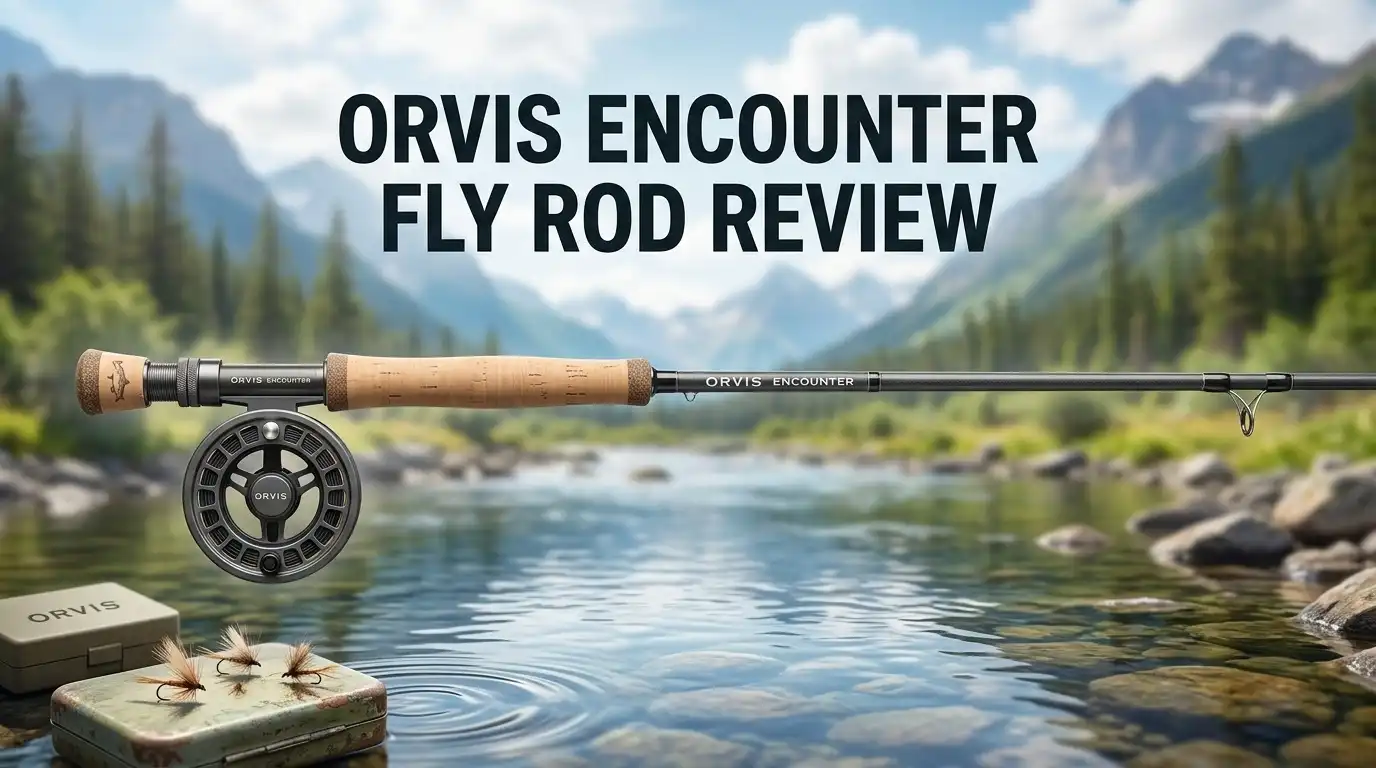
Orvis Encounter Fly Rod Review 2026: Still Worth It?
Buying your first fly rod feels like a big decision. You want something that casts well, survives mistakes, and does not drain your bank account.
The Orvis Encounter has sat at the top of beginner shopping lists for years, and in 2026 it still shows up in almost every “first fly rod” conversation.
This review covers the good parts, the weak parts, and the parts nobody mentions in the product listing.
In a Nutshell:
- The Encounter is a complete outfit, not just a rod. You get a 4 piece graphite rod, a large arbor reel, weight forward floating line, backing, a leader, and a case. You only need flies, tippet, and a fishing license to start.
- Price sits near $169 to $198 depending on the weight and length you pick. That places it just above the cheapest kits on Amazon and well below the Clearwater tier.
- Casting feel is medium fast and forgiving. Short and medium casts between 15 and 50 feet feel smooth and accurate. Long distance casting in wind is where this rod struggles.
- The reel is composite plastic, not machined aluminum. It works, it holds up, and the disc drag is adjustable. It simply does not feel premium, and that is the honest tradeoff at this price.
- The warranty is limited, not the famous Orvis 25 year rod warranty. You can buy replacement rod sections, which softens the blow, but this point matters for buyers comparing it to the Clearwater.
- Best fit: new anglers, teens, backup rod buyers, and anyone who wants one simple package for trout, panfish, and bass.
Orvis Encounter Fly Rod Outfit Review

Last update on 2026-09-26 / Affiliate links / Images from Amazon Product Advertising API
The Encounter sits at the entry point of the Orvis rod family. Orvis builds it to bring new anglers into the sport without scaring them off with a $500 price tag. The blank is graphite with a medium fast action. The finish is a clean matte black with silver accents.
The design goal here is forgiveness. A medium fast blank loads deeper and slower than a stiff competition rod. That gives beginners more feedback in the hand, so they can feel when the line has straightened behind them. Timing improves faster with a rod like this.
Orvis offers the outfit in several sizes. The 9 foot 5 weight is the classic all purpose trout choice. The 8 foot 6 inch 4 weight suits small streams and panfish. The 9 foot 6 weight handles bass and bigger flies. The 9 foot 8 weight and 10 foot versions cover salmon, pike, and light saltwater work.
The whole package arrives ready to fish. Line is already spooled. Backing is already attached. A tapered leader sits in the box with a loop connection. For a first timer, that removes three separate chances to get something wrong.
Is it a professional grade rod? No. Is it a rod that can teach you to cast and land real fish for several seasons? Yes, and that is exactly what it was built for.
Unboxing the Orvis Encounter
The box arrives compact and heavily padded. Orvis does not waste money on fancy presentation here, and honestly that feels right for a value outfit. No magnetic flap, no tissue paper, no branded stickers.
Inside you find a black cloth rod sleeve with four separate pockets. Each rod section slides into its own slot, which prevents the sections from rubbing during transport. The sleeve then slides into a firm rod tube with a screw cap.
The tube is the first pleasant surprise. It feels solid, it survived a checked bag flight for me, and it fits in overhead airplane storage. It also stands up on its own in a truck bed, which sounds trivial until you have chased a rolling rod tube across a parking lot.
The reel comes in its own small padded pouch. Line is already loaded and the drag knob turns freely out of the box. One small annoyance appears immediately: the tube has no room for the reel. You have to store the reel separately every single time you break down the outfit.
Assembly takes under two minutes. The ferrules seat firmly with a slight twist, and the alignment dots make lining up the guides simple. First impression in the hand is better than the price suggests. The cork feels dense with only a few filled spots, and the reel seat locks tight.
Orvis Encounter Specifications and Sizes
The Encounter family covers a wide range of water. Here is what Orvis lists for the current versions.
Rod material: graphite blank with a matte black finish. Action: medium fast. Pieces: 4. Grip: cork with a half wells style shape on trout weights. Guides: chrome snake guides with a stripping guide above the grip. Reel seat: anodized aluminum with double locking rings on heavier models.
Lengths and weights available include 8 foot 6 inch in 4 weight, 9 foot in 5 weight, 9 foot in 6 weight, 9 foot in 8 weight, and 10 foot options for nymphing and switch style work. Rod weight sits around 3 to 4.5 ounces depending on the model.
Reel: large arbor composite frame with a disc drag and a click free retrieve. Capacity runs generous, and the 8 weight version holds around 150 yards of backing plus line.
Line: weight forward floating line in bright green or yellow depending on size. High visibility color helps beginners track the line in flight, and that is a real teaching advantage.
One honest note on true weight: many anglers report the Encounter feels about one line weight softer than marked. The 8 weight fishes like a strong 7 weight. That is not a defect. It simply means you should not expect a cannon.
Top 3 Alternative for Orvis Encounter Fly Rod

Last update on 2026-09-25 / Affiliate links / Images from Amazon Product Advertising API
Orvis Clearwater Fly Rod Outfit

Last update on 2026-09-26 / Affiliate links / Images from Amazon Product Advertising API
Temple Fork Outfitters NXT Black Label Fly Rod Kit

Last update on 2026-09-25 / Affiliate links / Images from Amazon Product Advertising API
ECHO Lift Fly Fishing Kit
How the Orvis Encounter Casts
Casting is where a rod earns its keep. The Encounter loads early, which means you feel the bend without needing a long stroke. That feedback teaches rhythm quickly.
Short casts feel excellent. Between 10 and 30 feet the rod delivers a fly softly and accurately. Roll casts come easy. River loading works well. If you fish pocket water, brushy creeks, or tight seams, this rod fits that job better than many stiffer sticks.
Medium casts in the 30 to 50 foot range still behave. You may need an extra false cast to set up, but accuracy holds. This is the sweet spot of the rod, and most trout fishing happens inside that window.
Past 55 feet the story changes. The soft tip loses authority. Loops open up. Tight loops require very precise timing, and any sloppiness shows up immediately as a pile of line on the water.
Wind punishes this rod. A 15 mile per hour headwind will flatten your loop and drop your fly short. Heavy weighted streamers and large indicator rigs also feel clumsy because the tip cannot pop them over cleanly.
Bottom line on casting: the Encounter rewards a relaxed, patient stroke and punishes a rushed, powerful one. For a learning angler that trade is a gift, because the rod forces good habits early.
Rod Build Quality and Components
Orvis kept the parts list simple, and simple parts break less often. The blank uses a mid grade graphite. It is heavier than premium blanks, and you notice that during long casting sessions.
Guides are chrome plated snake guides. They are not the lightweight titanium recoil style found on premium rods, but they resist corrosion and stay aligned. I have not had one loosen or crack.
The cork grip is the weak visual point. You will see filler putty in some spots. It does not affect fishing, yet buyers who expect flawless cork will notice. Function beats cosmetics here, and after a season of hand oil the grip actually feels better.
The reel seat on trout models uses an anodized aluminum insert with a wood or composite spacer depending on the run. Locking rings hold the reel without slipping, even after a long day of casting vibration.
Durability has been the pleasant surprise for me. I have knocked this rod against rocks, closed a car door on the tube, and dragged it through willows. No cracks, no ferrule wobble, no guide failures. The blank shows scratches and nothing worse.
The ferrules stay tight through a full day, though I still give them a twist check every hour. That habit applies to any 4 piece rod, not just this one.
Orvis Encounter Reel Performance
The reel divides opinion more than the rod. Orvis uses a composite plastic frame instead of machined aluminum. That single choice keeps the price low.
What works: the large arbor design retrieves line fast, which matters when a fish runs at you. The disc drag adjusts smoothly with a solid knob and does not slip under pressure. Capacity is generous, so getting spooled is unlikely.
The drag performs better than the price suggests. On a strong run it applied steady resistance without the stutter you get from cheap click drags. I fought fish in the double digit pound range and the drag never grabbed or freewheeled.
What does not work: the reel is not sealed. Grit and sand find their way inside. Saltwater use is possible because the composite resists corrosion, but you must rinse it with fresh water the same day.
The plastic feel is real. Hold an aluminum reel afterwards and the difference is obvious in your palm. The frame also flexes slightly under heavy drag pressure, which can let line bed unevenly.
Spare spools exist but are limited. If you want to swap between floating and sinking lines, you are better off with a different reel down the road.
For a first reel, though, it does the job. It is simple, it is balanced to the rod, and it comes ready to fish.
Fly Line, Backing, and Leader Included
This part deserves its own section because it saves beginners real money and real confusion. Rigging a fly reel from scratch involves arbor knots, nail knots, and loop connections. Most newcomers get one of them wrong.
The Encounter arrives fully rigged. Backing is attached to the spool. The weight forward floating line is attached to the backing. A welded loop sits at the front of the line, and the included tapered leader has a matching loop. You connect them with a simple loop to loop link.
The line itself is serviceable rather than special. It is a general purpose weight forward taper with a slightly aggressive front end. That heavy front helps beginners feel the load and turn over bulky flies.
Here is the honest limitation. The line coating is not premium. After a full season it picks up dirt, loses some slickness, and develops memory in cold weather. Stretching it before fishing helps a lot.
Many experienced anglers upgrade the line first. A quality line in the $80 range transforms how this rod casts, arguably more than upgrading the rod itself would. If your budget allows a line upgrade in year two, do that before you buy a new rod.
The included leader gets you through one or two trips. Buy a pack of spare leaders and a spool of tippet on day one.
Best Fish Species for the Encounter
The Encounter covers a surprising range of fish once you match the right weight to the job.
Trout: the 9 foot 5 weight is the natural fit. Brook trout, browns, rainbows, and cutthroat all fall within its comfort zone. The soft tip protects light tippet during a hookset, which means fewer break offs for beginners.
Panfish and bluegill: the 8 foot 6 inch 4 weight turns a pond into a playground. Small poppers and foam beetles cast easily, and the light blank makes a six inch fish feel exciting.
Bass: the 6 weight handles small poppers and unweighted streamers well. Large deer hair bugs push its limits, since wind resistant flies expose the soft tip.
Salmon, pike, and carp: the 8 weight manages these fish, though not quickly. You will win the fight with technique rather than raw power. Expect longer battles and tired forearms.
Light saltwater: redfish, schoolie stripers, and small snook are realistic targets from shore. Rinse everything afterwards without exception.
What the Encounter cannot do is bully large fish away from structure. If you fish around docks, mangroves, or heavy current where you must turn a fish immediately, you want a stiffer rod. That is a limitation of design, not quality.
What the Orvis Encounter Does Not Do Well
Authentic reviews name the weak spots, so here they are plainly.
Wind is the biggest problem. The soft tip cannot punch a tight loop through a breeze. On a gusty day you will shorten your casts and lose accuracy. Anglers on open lakes and coastal flats feel this most.
Long distance casting falls short. Past 55 or 60 feet the rod runs out of authority. You can get there with excellent timing, but the rod will not help you.
Heavy rigs feel awkward. A two fly nymph rig with a large indicator and heavy tungsten beads hinges the tip. Big weighted streamers do the same. Casts feel clunky and tailing loops appear.
The reel is plastic. It functions well and still feels like a budget component. It also lacks a sealed drag, so grit and salt require cleanup.
The warranty is limited. This is the point that stings most for value shoppers. Clearwater and higher Orvis rods carry the 25 year covered warranty. The Encounter does not, though replacement sections are purchasable.
Swing weight is noticeable. After four hours of casting you feel this rod in your shoulder. Premium blanks weigh less and recover faster. That is the honest cost of a $169 price tag.
None of these flaws make the outfit a bad buy. They simply define its boundaries.
Pros and Cons of the Orvis Encounter
Pros
- Complete ready to fish package with rod, reel, line, backing, leader, sleeve, and tube included, so beginners skip all rigging guesswork.
- Forgiving medium fast action that teaches casting rhythm faster than a stiff fast action blank.
- Excellent accuracy inside 50 feet, especially on roll casts and tight stream lanes.
- Genuinely durable blank that survives rocks, brush, and car doors without cracking.
- Large arbor reel with a smooth adjustable disc drag and generous backing capacity.
- Wide size range from 4 weight through 8 weight, plus 10 foot nymphing options.
- Bright high visibility line that helps new casters watch and correct their loops.
- Solid rod tube that travels well and fits airline overhead storage.
- Strong value at the $169 to $198 range compared to similar branded outfits.
Cons
- Struggles badly in wind due to the soft tip section.
- Long casts past 55 feet require expert timing and still open up.
- Composite plastic reel that lacks the feel and sealing of machined aluminum.
- Limited warranty instead of the full Orvis 25 year rod coverage.
- Rod tube has no space to store the reel while assembled.
- Included fly line loses slickness after roughly one full season.
- Heavy nymph rigs and bulky streamers cast awkwardly.
- Cork grip shows filler spots and looks budget grade.
- Noticeable swing weight during long casting sessions.
Orvis Encounter vs Orvis Clearwater
This is the comparison most buyers face, and the answer depends on your commitment level.
Price gap: the Encounter outfit runs around $169 to $198. The Clearwater outfit sits closer to $400 to $500. That is a serious jump for a first purchase.
Blank quality: the Clearwater uses a better graphite with faster recovery. It generates higher line speed, cuts wind more effectively, and reaches long distance with less effort. You feel the difference most on windy days and casts past 60 feet.
Reel quality: the Clearwater reel is machined aluminum with a sealed drag. It is a reel you keep long after you upgrade rods. The Encounter reel is a reel you eventually retire.
Warranty: the Clearwater carries the Orvis 25 year covered warranty. Break it on a rock and Orvis repairs or replaces it for a small handling fee. The Encounter lacks this coverage, which shifts long term risk to you.
My take: if you are unsure whether fly fishing will stick, buy the Encounter. It teaches you everything and costs a fraction. If you already know you are hooked, or you fish windy open water, the Clearwater is the smarter long term buy.
A middle path also works well. Buy the Encounter, fish it for a season, then upgrade the line. That combination performs far above its price.
Who Should Buy the Orvis Encounter in 2026
Complete beginners get the most value here. The outfit removes every rigging barrier and the forgiving action shortens the learning curve. You can fish the same afternoon the box arrives.
Teens and younger anglers fit this rod well. Orvis specifically positions the Encounter for newer and younger hands, and the lighter line weights are easy to manage.
Gift buyers have an easy decision. One box, one price, nothing missing. That beats assembling a rod, reel, line, and backing from separate listings.
Anglers wanting a backup rod find real use here too. A spare 5 weight in the truck saves a trip when your main rod snaps. At this price, keeping one in reserve makes sense.
Travelers benefit from the 4 piece design and the airline friendly tube. If a rod might get lost or crushed in transit, losing a $169 outfit hurts far less than losing a $900 one.
Who should skip it? Experienced casters who want their primary rod, anglers who mostly fish windy open water or saltwater flats, and competitive nymph fishers who need a long stiff tip for tight line tactics.
If you already own two or three quality rods, the Encounter will not impress you. It was never meant to.
Setup Tips to Get More From Your Encounter
Small adjustments make this outfit perform above its price. Try these.
Stretch your line before fishing. Pull off 30 feet and stretch it in sections. This removes coil memory and improves shooting distance noticeably, especially in cold weather.
Slow your casting stroke. The medium fast action needs time to load. Rushing creates tailing loops. Pause slightly longer on the back cast and the rod does the work for you.
Keep casts inside 50 feet. Move your feet instead of adding line. Most fish sit closer than beginners assume, and the Encounter shines at short range.
Downsize your rigs. Use one fly instead of three. Use a small yarn indicator instead of a bulky plastic bobber. The tip stays lively and your loops stay clean.
Rinse the reel after every saltwater trip. Fresh water, soft brush, then air dry with the drag backed off. This single habit doubles reel life.
Upgrade the line in year two. A quality weight forward trout line transforms this rod. It is the best $80 you can spend on the outfit.
Check ferrules hourly. A quick twist keeps sections seated and prevents the dry ferrule breakage that ends fishing days.
Store it strung loosely, with the drag light and the rod broken down. Constant tension shortens line and drag life.
Final Verdict
The Orvis Encounter remains one of the best first fly fishing outfits available in 2026. It gives you a capable rod, a functional reel, usable line, and a real rod tube for well under $200.
It is not a rod you keep forever. The soft tip limits distance, wind exposes its weaknesses, the reel is plastic, and the warranty is thin. Those are genuine drawbacks and buyers deserve to hear them plainly.
What the Encounter does brilliantly is get you fishing. It teaches timing, protects light tippet, survives abuse, and lands real fish. Two seasons in, you will know exactly what you want next, and you will have earned that knowledge on the water instead of in a forum thread.
Buy it if you are starting out, gifting a setup, or want a durable backup. Choose the Clearwater instead if you fish windy open water often or you already know this sport will be a long term hobby.
For everyone else, the Encounter is still an easy recommendation and still hard to beat at its price.
Frequently Asked Questions
Is the Orvis Encounter good for beginners?
Yes. The medium fast action loads early, which helps new casters feel timing. The outfit arrives fully rigged with line, backing, and a leader, so you can fish immediately.
What weight Orvis Encounter should I buy?
The 9 foot 5 weight covers the widest range of trout fishing. Pick the 8 foot 6 inch 4 weight for small streams and panfish, the 6 weight for bass, and the 8 weight for salmon or light saltwater.
Does the Orvis Encounter come with the 25 year warranty?
No. The Encounter carries a limited warranty rather than the full Orvis 25 year rod coverage. You can buy individual replacement sections if you break one.
How much does the Orvis Encounter cost?
The outfit typically sells between $169 and $198 depending on length and line weight. Sales appear periodically and sometimes include a starter fly selection.
Can you use the Orvis Encounter in saltwater?
Yes, with care. The composite reel resists corrosion but is not sealed. Rinse the reel and rod with fresh water after every saltwater trip.
Is the Encounter reel worth keeping after upgrading?
It makes a fine backup or a second reel for a spare rod. Most anglers replace it with a machined aluminum reel once they commit to the sport.
How does the Encounter handle wind?
Poorly. The soft tip cannot generate high line speed, so loops open up in a breeze. Shorten your casts and use heavier flies when wind picks up.
Should I upgrade the fly line?
Yes, eventually. The included line works fine for the first season. A quality weight forward line afterwards improves casting more than most other upgrades at this level.

Hi, I’m Ivy Webb, the passionate angler and creator behind BaitHookVault.com. I spend my days out on the water personally testing and reviewing a wide variety of fishing tools and gear.