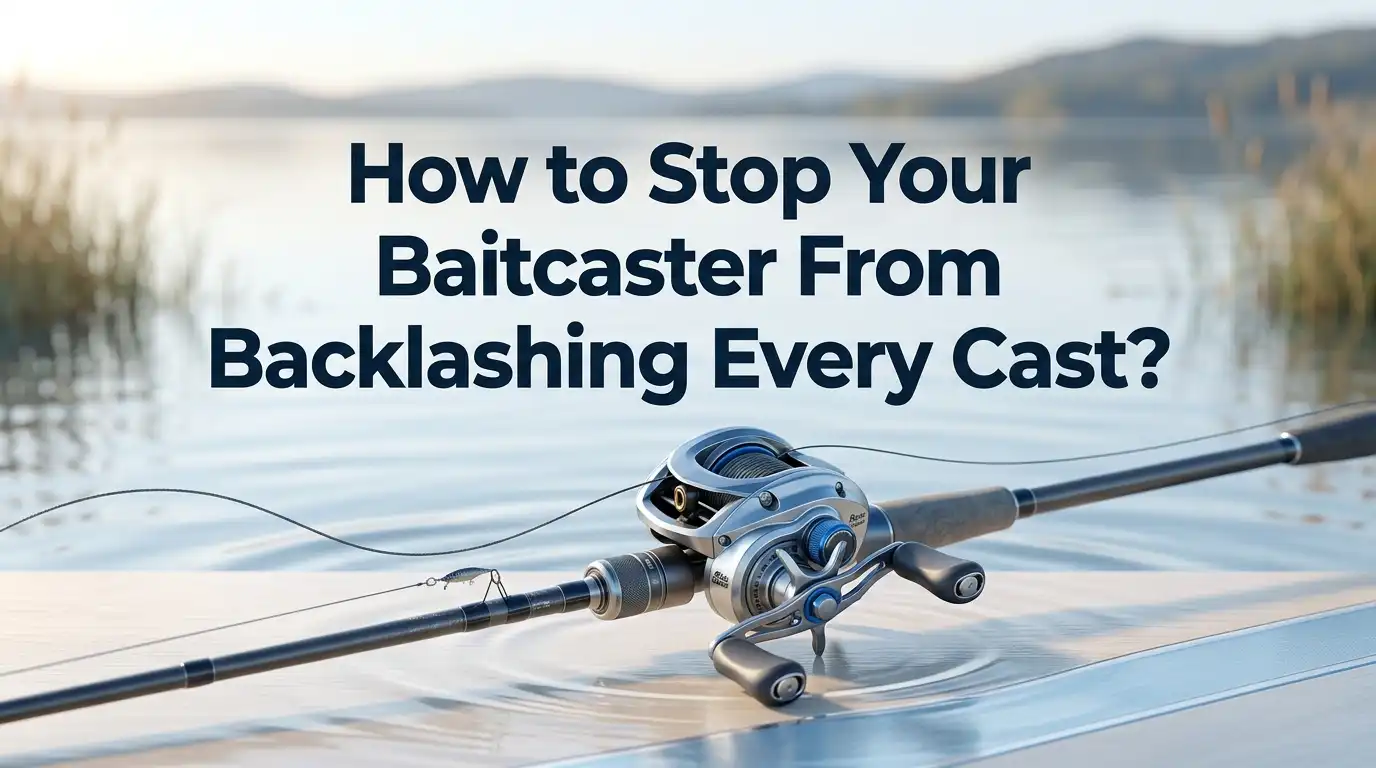
How to Stop Your Baitcaster From Backlashing Every Cast?
Few things kill the fun of a fishing trip faster than a baitcaster that backlashes on every single cast. You wind up, you fire, and instead of watching your lure sail across the water, you stare down at a tangled mess of line stuffed inside your reel.
The dreaded bird’s nest strikes again. If this keeps happening to you, take a breath. You are not bad at fishing, and your reel is not broken. The truth is simple. Your reel just is not set up the way it should be, and your casting motion needs a small tweak.
This guide walks you through every cause and every fix in plain steps. By the end, you will understand exactly why your line tangles and how to make it stop for good.
In a Nutshell
- Backlash happens when your spool spins faster than your line leaves the reel. The extra line has nowhere to go, so it piles up inside the reel and tangles into a bird’s nest.
- Your spool tension knob controls the first burst of the cast. Set it so your lure drops slowly to the ground when you press the thumb bar. This single adjustment fixes most beginner backlashes.
- Your brake system controls the spool during flight. Magnetic and centrifugal brakes slow the spool down so it does not outrun the lure near the end of the cast.
- Your thumb is the most powerful brake on the reel. Learning to feather the spool with light thumb pressure gives you control that no knob can replace.
- Lure weight and rod match matter a lot. Light lures, wind, and a mismatched rod all make backlash worse. Start with heavier lures while you learn.
- Practice is the real secret. Even pro anglers backlash sometimes. Repetition builds the muscle memory that stops it.
What Backlash Really Is and Why It Happens
Backlash is simple once you understand it. When you cast, your spool spins to release line. The spool keeps spinning at high speed, but your lure slows down as it flies through the air.
When the lure slows and the spool does not, extra line comes off the spool faster than the lure can pull it away. That loose line bunches up and tangles into the knot anglers call a bird’s nest.
The backlash often hits right after you release the lure, but it can happen at any point in the cast. This is normal physics, not a defect. Every baitcaster does this if the settings and your thumb do not control the spool speed. Once you grasp this idea, every fix below makes total sense.
Step One: Set Your Spool Tension Knob Correctly
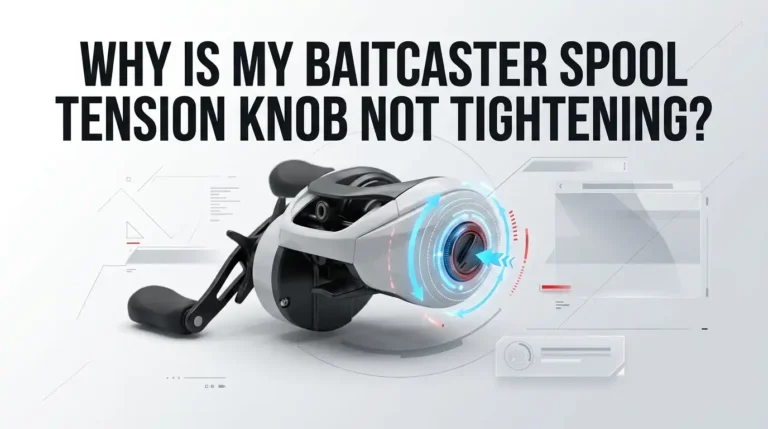
The spool tension knob is your first line of defense. You will find it on the same side as the reel handle, usually tucked under the star drag. This knob controls the initial burst of energy when the spool releases.
Here is the easy setup method. Tie on the lure you plan to throw. Hold the rod at the 2 o’clock position. Press the thumb bar to free the spool, and let the lure hang. Adjust the knob until the lure falls slowly to the ground and the spool stops the moment it lands.
If the lure does not fall, the knob is too tight. If the lure crashes down and the spool keeps spinning, the knob is too loose. This balance point gives you a safe starting place for almost any cast.
Pros: This method is fast, beginner friendly, and works with any lure weight. It dramatically cuts down on early cast backlashes.
Cons: A tight tension setting reduces your casting distance. You must reset it every time you change to a heavier or lighter lure.
Step Two: Dial In Your Brake System
Your brake system lives on the opposite side from the handle, on the palming plate. Think of the brakes as the fine tuning for spool speed throughout the cast. There are two common types.
Magnetic brakes use a dial you turn to move magnets closer or farther from the spool. The closer the magnets sit, the more they slow the spool down. Centrifugal brakes use small pins or weights inside the side plate.
You push more pins out to add braking force and push them in to reduce it. Start with your brakes set high, around 70 to 80 percent.
This gives you maximum control while you learn. As your thumb gets better, lower the brakes a little at a time to gain distance. Make changes in small steps so you can feel the difference.
Pros: Brakes manage the middle and end of your cast, where many backlashes form. They let you fine tune for different conditions.
Cons: Heavy braking shortens your casting distance. Centrifugal brakes require you to open the side plate to adjust them, which slows you down on the water.
Step Three: Master Thumb Control on the Spool
Your thumb is the single most important tool for stopping backlash. No knob or brake replaces it. A skilled thumb can do what no mechanical setting can. Rest your thumb lightly on the spool before you cast.
As the lure flies, hover your thumb just above the spinning line. Apply gentle pressure to slow the spool when the line starts to balloon or puff up. This is called feathering. Right before the lure hits the water, press down firmly to stop the spool completely.
This stops the line from overrunning when the lure lands. At first this feels awkward, but your hand learns fast. Within a few dozen casts, your thumb starts reacting on its own. This skill is the difference between an angler who backlashes and one who casts smoothly all day.
Pros: Thumb control is instant, free, and adjusts in real time to wind, distance, and lure weight. It is the ultimate backlash fix.
Cons: It takes practice to master. Early on, you may overcorrect and stop the lure too soon, which kills your distance.
Step Four: Match Your Lure Weight to Your Rod
A mismatched lure and rod cause backlash even with perfect settings. Look at the side of your rod for the recommended lure weight range. Throwing a lure outside that range forces bad casting habits.
If your lure is too light for the rod, the rod cannot flex and load properly. You then swing harder to make up for it, and that extra power feeds the backlash. If your lure is too heavy, it overpowers the rod and flies off line.
Pick a lure that sits comfortably in the middle of your rod’s rated range. For learning, heavier lures around half an ounce or more cast easier and tangle less. They pull line off the spool steadily and resist wind. Lighter lures are the hardest to cast and should wait until your skills improve.
Pros: A matched lure casts farther, lands on target, and backlashes far less. It also protects your rod from stress.
Cons: You may need different rods for very light or very heavy lures. Stocking the right gear costs more money over time.
Step Five: Slow Down and Smooth Out Your Cast
Many backlashes come from one habit. Casting too hard. New anglers think raw power equals distance, but a baitcaster rewards smoothness instead. A smooth, controlled cast lets the rod do the work for you.
Load the rod with a steady motion and release the lure with a flick, not a violent swing. A hard, jerky cast sends the spool spinning at a speed your lure cannot match, and that gap creates the tangle.
Try this drill. Cast at about 60 percent of your full power and focus on a clean release point around the 11 o’clock position. You will be surprised how far the lure travels with less effort. Speed and force are the enemies of a clean cast. Control and timing are your friends.
Pros: A smooth cast reduces backlash, improves accuracy, and saves your energy across a long day on the water.
Cons: It feels slower at first and may reduce your maximum distance until your timing improves with practice.
Step Six: Watch the Wind and Adjust
Wind is a hidden backlash trigger that catches many anglers off guard. A headwind slows your lure in mid air while your spool keeps spinning. That mismatch dumps loose line into the reel instantly.
When you cast into the wind, your lure decelerates fast, and the spool overruns it. On windy days, tighten your brakes and add a touch of spool tension. This keeps the spool speed closer to the lure speed. You can also cast lower and flatter to keep the lure under the wind.
Sidearm casts work well here because they keep the lure on a tight, low path. Heavier and more aerodynamic lures cut through the wind better than light, bulky ones. Reading the wind before you cast saves you from picking apart tangles all afternoon.
Pros: Adjusting for wind prevents some of the worst surprise backlashes and keeps you fishing in tough conditions.
Cons: Tighter brakes and tension cost you distance. You must keep adjusting your settings as the wind shifts during the day.
Step Seven: Use the Right Line for Your Reel
The line you choose affects how often you backlash. Heavier and thicker lines resist tangling better than thin, limp lines. Thicker line has more memory and stiffness, so it does not bunch up as easily inside the reel.
For learning, a monofilament line in the 12 to 17 pound range works great. Mono has stretch and stiffness that forgive small mistakes. Braided line is thin and slick, which makes backlashes harder to pick out and easier to create.
Save braid for after you build confidence. Also, do not overfill your spool. Fill the spool to about an eighth of an inch below the rim. An overfilled spool throws loose loops and causes constant tangles. Spooling your reel correctly removes a common cause of mystery backlashes that no setting can fix.
Pros: The right line and fill level reduce tangles and make any backlash easier to untangle when it does happen.
Cons: Heavier mono casts shorter than thin braid. Choosing forgiving line over performance line is a tradeoff in distance and sensitivity.
Step Eight: How to Quickly Untangle a Bird’s Nest
When a backlash does hit, do not panic and do not yank the line. Pulling hard only tightens the knot and may snap your line. Here is the proven fix. First, tighten down your drag so the spool will not spin freely.
Next, place your thumb firmly on the spool and apply pressure. Then turn the handle slowly while keeping pressure on the spool, and run the tangled section under your thumb. This loosens the loops. Pull the slack line gently to free it.
Once the line clears, reel everything back in while pinching the line between your fingers above the reel. This lays the line down tight and stops the tangle from happening again on your next cast. Most bird’s nests come out in under a minute with this method. Stay calm and work it loose.
Pros: This technique saves your line, saves time, and stops a repeat tangle on the very next cast.
Cons: Severe nests may still need a few tries or, in rare cases, cutting some line. It takes patience to learn the feel of it.
Step Nine: The Tape Trick for Bad Backlashes
Here is a clever trick anglers use to limit damage from deep backlashes. Tape acts as a safety net inside your spool. Cast your lure out to a normal distance. Then pull off another 10 feet or so of line and cover that point on the spool with a strip of electrical tape.
The tape stops the backlash from digging deeper than the taped layer. This means even your worst tangle only reaches the tape and never buries itself into the core of your line.
You keep fishing with the line above the tape, and the deep nests simply cannot form. This trick is popular with anglers who are still learning thumb control and want to avoid losing huge sections of line. It is a smart, cheap fix while you build your skills.
Pros: The tape limits how bad a backlash can get and saves you from cutting away large amounts of line.
Cons: It slightly reduces your usable casting distance. You must redo the tape when you respool, and it is a temporary crutch, not a real fix.
Step Ten: Practice in Your Yard Before the Water
The fastest way to beat backlash is to practice where fish are not watching. Open practice removes the pressure and lets you focus on technique. Tie a casting plug or a rubber weight to your line and head to your backyard or a park.
Set up a few targets like buckets or hula hoops at different distances. Cast at them over and over. Start with your brakes high and tension snug, then slowly loosen both as you improve. Pay attention to your thumb and your release timing on every throw.
Twenty minutes of yard practice teaches you more than a frustrating day on the lake. You build muscle memory without losing fishing time or scaring off fish. Pro anglers and beginners alike use this method to dial in a new reel before they ever wet a line.
Pros: Yard practice builds skills fast, costs nothing, and lets you make mistakes without ruining a fishing trip.
Cons: It takes dedicated time off the water. A practice plug behaves a little differently than a real lure with hooks and water resistance.
Step Eleven: Maintain and Clean Your Reel Regularly
A dirty or dry reel can cause backlash all on its own. Grit, old grease, and worn bearings make your spool spin unevenly. When the spool does not turn smoothly, it speeds up and slows down at random, which throws loose loops into your line.
Clean your reel every few trips and add a drop of reel oil to the spool bearings. Smooth bearings give you consistent spool behavior that your thumb can predict and control. Also check for any loose loops, kinks, or weak spots on your line. Damaged line tangles far more easily than fresh line.
Replace your line when it shows wear or develops too much memory. A clean, well oiled reel with good line responds the way you expect, and that consistency makes backlash much easier to prevent.
Pros: Regular maintenance keeps your reel performing smoothly and extends its lifespan for years.
Cons: It takes time and a few simple tools. Over oiling can attract dirt and actually make spool behavior worse if you overdo it.
Step Twelve: Build a Pre Cast Routine
A simple routine ties all these fixes together and stops backlash before it starts. Consistency in your setup creates consistency in your casts. Before each cast, run through a quick mental checklist.
Check that your tension knob matches your current lure. Confirm your brakes suit the wind and distance. Rest your thumb lightly on the spool. Pick your release point and commit to a smooth, controlled motion.
This routine takes only a couple of seconds, but it keeps your habits sharp all day long. When something feels off, stop and recheck your settings instead of casting harder.
Over time, this routine becomes automatic, and your backlashes drop to almost zero. The best anglers are not lucky. They are consistent, and a steady pre cast routine is what makes that consistency possible.
Pros: A routine prevents most backlashes, builds reliable habits, and keeps you focused on good technique.
Cons: It requires discipline to follow every time. Skipping the routine when you rush often leads right back to tangles.
Frequently Asked Questions
Why does my baitcaster backlash even with the brakes maxed out?
If your brakes are maxed and you still backlash, the problem is usually your spool tension knob or your thumb. Tighten the tension knob until your lure falls slowly. Then focus on feathering the spool with your thumb during the cast. Casting too hard also overwhelms even maxed brakes, so smooth your motion.
Will a more expensive baitcaster stop backlash completely?
No reel stops backlash by itself. A higher end reel has better brakes and smoother bearings that help, but the spool still outruns the lure if your thumb and settings are wrong. Skill matters far more than price. A skilled angler casts a cheap reel cleanly, while a beginner backlashes the best reel made.
How tight should my spool tension knob be?
Set it so your lure drops slowly to the ground when you press the thumb bar, and the spool stops the moment the lure lands. If the lure does not fall, loosen it. If the spool keeps spinning after the lure lands, tighten it. Reset this every time you change lure weight.
Is backlash worse with braided line?
Yes, braided line backlashes more easily for beginners. Braid is thin and slick, so it digs into itself and creates tighter, harder tangles. It is also tougher to pick out. Start with 12 to 17 pound monofilament while you learn. Switch to braid once your thumb control becomes second nature.
How long does it take to stop backlashing?
Most people get the hang of it within a few practice sessions. Spend 20 minutes in your yard casting at targets, and you will feel real improvement fast. Full muscle memory takes a few weeks of regular casting. Even then, occasional backlash is normal. Every angler tangles their line sometimes.
Does wind really cause backlash?
Yes, wind is a major cause. A headwind slows your lure while the spool keeps spinning at full speed, and that gap dumps loose line into the reel. On windy days, tighten your brakes and tension, cast low and flat, and use heavier lures that cut through the wind better.

Hi, I’m Ivy Webb, the passionate angler and creator behind BaitHookVault.com. I spend my days out on the water personally testing and reviewing a wide variety of fishing tools and gear.