St. Croix Imperial Fly Rod Review 2026: Worth Buying?
Fly anglers ask one question before they spend serious money on a rod. Does it cast better than the rod already in the garage? The St. Croix Imperial USA sits in that awkward middle price zone where expectations run high and patience runs thin.
It carries a famous name, a Park Falls, Wisconsin build address, and a price tag that makes people pause.
I fished it, cast it in wind, dropped it in a canoe, and pushed it past what a mid price rod should handle. This review shares what I found, including the parts St. Croix will not advertise.
In A Nutshell:
- Made in the USA at a fair price. The Imperial USA is handcrafted in Park Falls, Wisconsin, and retails around $395. Very few American built fly rods land under $400, which is the single biggest reason this rod keeps selling.
- The action is labeled fast, but it feels medium fast. Most anglers describe it as smooth rather than stiff. That makes it friendlier for average casters than the marketing copy suggests.
- Components punch above the price. You get Kigan Master Hand 3D stripper guides, Sea Guide snake guides with black PVD coating, a machined aluminum reel seat, and premium grade cork.
- The 15 year transferable warranty is a real asset. St. Croix Superstar Service has a strong reputation for quick turnaround and fair replacements.
- It is a generalist, not a specialist. The Imperial USA does many jobs well and no single job perfectly. Dedicated dry fly rods and dedicated streamer cannons will beat it in their own lane.
- Weak spots exist. The rod tube design draws complaints, the black reel seat looks plain next to prettier rods, and swing weight in the 9 foot models is average rather than impressive.
What Is the St. Croix Imperial USA Fly Rod?

Last update on 2026-11-20 / Affiliate links / Images from Amazon Product Advertising API
The Imperial name goes back more than sixty years. St. Croix has now carried it through eight generations of fly rod design, which makes it one of the longest running series in the sport. The current Imperial USA version moved production back to the company factory in Park Falls, Wisconsin.
The blank uses a dynamic blend of high modulus SCIV graphite and premium SCII graphite. That mix gives the rod strength in the butt section and recovery speed in the tip. St. Croix lists the action as fast across the whole lineup.
The series covers a wide range. You can buy a 6 foot 2 weight for small brook trout creeks, a 9 foot 5 weight for everyday trout work, or a 9 foot 8 weight for bass and pike. There is also a switch model at 11 feet for two handed casting. Every model ships as a 4 piece rod, which suits travel.
Pricing sits at $395 for most freshwater models. The switch version costs a little more.
St. Croix Imperial USA Fly Rod
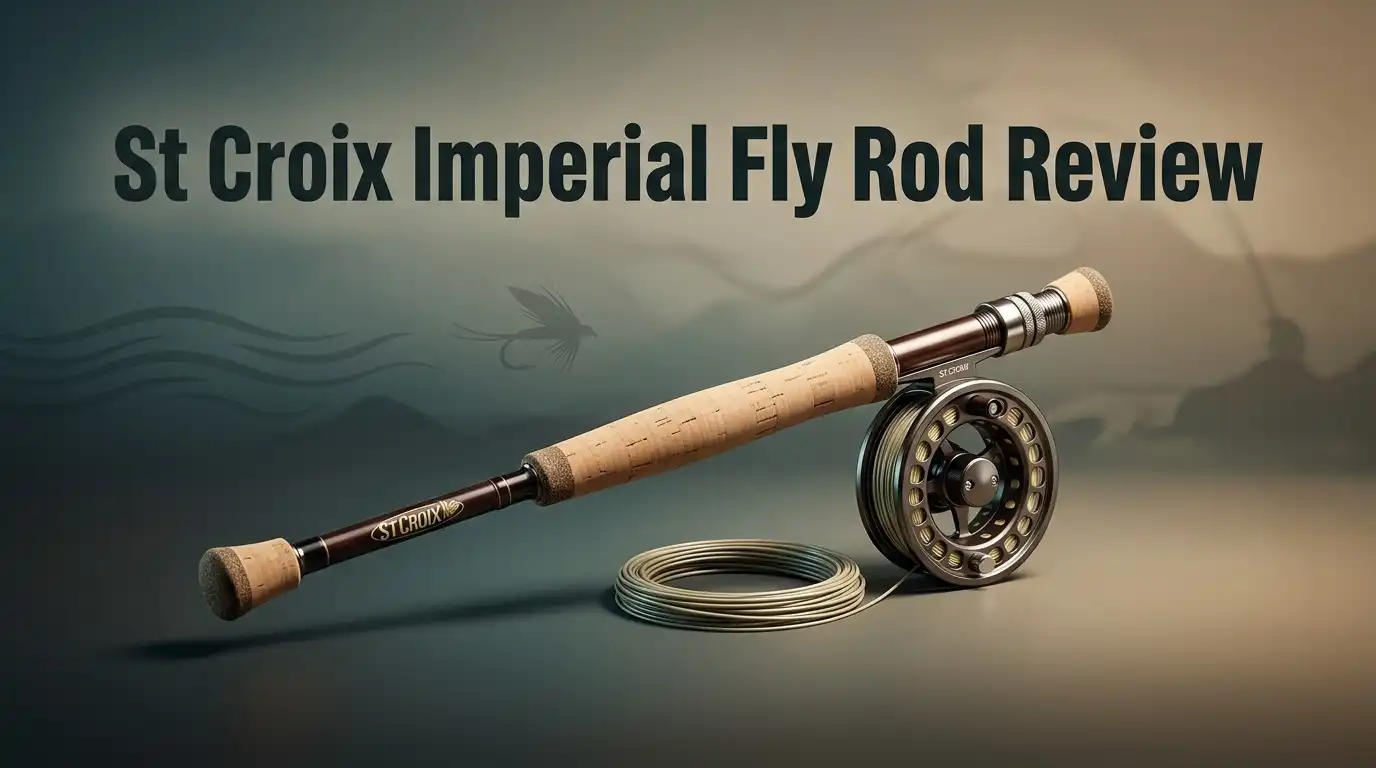
The rod arrives with the pieces you expect and nothing wasted. St. Croix keeps the presentation simple. You get the four sections, a divided liner, and a hard case.
The blank finish is a deep, understated tone rather than a flashy gloss. Two coats of Flex Coat slow cure finish cover the wraps, and the wraps themselves are tidy. I inspected all four sections under bright light and found no bubbles, no gaps, and no crooked guide feet.
The cork grip is the detail most buyers notice first. It is premium grade with very few fillers. On my sample I counted three small filled spots across the entire handle, which is better than most rods at this price. The cork feels dense and dry rather than soft and spongy.
The reel seat uses machined aluminum with a wood insert on the 2 through 6 weight models. Heavier models use bare machined aluminum for saltwater resistance. A Kigan hook keeper sits above the grip.
Unboxing Experience: First Impressions
Opening the package is a quiet pleasure rather than a theatrical event. St. Croix does not add ribbon, glossy inserts, or a printed thank you card. The cardboard shipping box holds the rod tube and nothing else.
The tube itself is the weak link. It is rugged and it protects the rod, but the cap thread and overall shape feel utilitarian. Several owners have said the same thing. It works, and it is not pretty. If you like a handsome aluminum tube that looks good in a truck rack, this one will underwhelm you.
Sliding the sections out is where the rod redeems itself. The slim profile ferrules seat with a firm, confident push. There is no grinding and no loose wobble. I lined the rod up by the alignment dots and everything matched.
My first wiggle test in the living room told me the action felt smoother than expected. Holding it at eye level, the blank looked thin for a 5 weight. That slim diameter is a good sign for line speed.
Build Quality and Components Up Close
Component choice separates a good rod from a forgettable one. St. Croix spent money in the right places here.
The stripper guides are Kigan Master Hand 3D units with aluminum oxide rings and black frames. They are smooth, they resist grooving, and the black finish cuts glare on bright water. The snake guides come from Sea Guide with a black PVD coating for hardness.
Guide wraps are consistent across every rod I handled in shops. The epoxy is even and does not pool. This is factory work with real quality control behind it.
The reel seat hardware deserves praise. The locking nuts are thick, they thread smoothly, and they do not feel thin or flimsy. I tested it with three different reels and all seated firmly with no rattle after a full day of casting.
One small gripe. The black anodized seat looks plain. Some anglers prefer a bright silver or a warmer tone, and at this price the plain look feels like a missed chance to add character.
Top 3 Alternative for St. Croix Imperial USA Fly Rod

Last update on 2026-11-21 / Affiliate links / Images from Amazon Product Advertising API
Orvis Clearwater Fly Rod Outfit

Last update on 2026-11-20 / Affiliate links / Images from Amazon Product Advertising API
Redington Classic Trout Fly Rod

Last update on 2026-11-21 / Affiliate links / Images from Amazon Product Advertising API
Echo Lift Fly Fishing Kit
Casting Performance on the Water
I fished the 9 foot 5 weight most, which is the model that matters to the largest group of buyers.
At short range, roughly 20 to 30 feet, the rod loads easily. This surprised me. Rods labeled fast often feel dead when you only have a leader and a few feet of line out. The Imperial USA does not. It loads with a normal casting stroke and rewards a relaxed tempo.
At mid range, from 30 to 50 feet, the rod is at its best. Loops stay tight, tracking is clean, and accuracy is very good. I could drop a size 16 parachute inside a dinner plate at 40 feet with steady consistency.
Push past 60 feet and the rod still performs, though it asks for a firmer stroke and a double haul. It will muscle out long line with good tip control.
Wind handling is solid but not elite. A stiffer premium rod will cut breeze better. In a steady 12 mile per hour crosswind, I had to work harder than I would with a top shelf stick.
How It Feels for Trout Fishing
Trout anglers are the main audience for this rod, so this section matters most.
Dry fly work feels natural. The tip has enough softness to protect light tippet. I fished 6X down to size 18 flies and lost no fish to break offs. The rod bends where it should when a fish runs.
Nymphing with an indicator and split shot works well too. The 9 foot length gives decent reach for high sticking. The butt section has enough backbone to set the hook at distance, which is where soft rods fail.
Streamer fishing is acceptable. A weighted size 6 bugger with a sink tip is near the upper limit for the 5 weight. Move up to the 6 weight if streamers are your main game.
Playing fish is the best part. The blend of graphite gives the rod a cushioned feel under load. A 17 inch rainbow bent it into a pleasant arc without ever feeling out of control.
Saltwater Option: The Imperial Salt Series

Last update on 2026-11-20 / Affiliate links / Images from Amazon Product Advertising API
St. Croix builds a separate Imperial Salt line for anglers chasing redfish, bonefish, striped bass, and jacks. The blank uses high modulus SCIII carbon with a more aggressive taper.
The saltwater version gets bigger stripper guides, an uplocking machined aluminum reel seat with a wood insert on some models, and a fighting butt on the heavier weights. The action is noticeably stiffer than the freshwater Imperial USA.
Sizes run from 8 weight through 12 weight, which covers most flats and inshore work. Lengths sit around 9 feet, with a few 7 foot 11 inch and 9 foot 2 inch options for specific presentations.
Honest note. The Imperial Salt is not made in the USA the way the Imperial USA is. It is a different series with a different build origin and a lower price, often in the $299 to $399 range.
For anglers who fish salt a few times a year, it is a sensible buy. For someone on the flats 50 days a season, a dedicated saltwater rod from a specialist brand may serve better.
Which Line Should You Pair With It?
Line choice changes how any rod feels, and this one is no exception.
A true to weight line works if you mostly fish at distance. The rod tracks beautifully with a standard weight forward 5 weight taper.
A half size heavy line makes the rod feel even better at close range. If you fish small streams or spooky water inside 35 feet, overlining by a half size is the single best upgrade you can make.
For dry fly work, a long front taper line gives soft turnover and delicate presentation. For nymphing and streamers, a shorter aggressive head loads the rod faster with less false casting.
Avoid heavy shooting head lines on the lighter models. The rod handles them, but the feel turns clunky and the tip loses its pleasant recovery.
Leader advice. A 9 foot 5X leader is the default for trout. Go to 12 feet on flat spring creeks. Drop to 7.5 feet with streamers.
What the Imperial USA Does Not Do Well
Every honest review needs this section, so here it is without softening.
Swing weight is average. The 9 foot models feel slightly tip heavy after two hours of casting. Premium rods in the $800 range feel lighter in hand even when the scale says otherwise.
The rod tube disappoints. It protects the rod and that is all it does. The design feels like an afterthought compared to the blank inside it.
The action label is misleading. St. Croix calls it fast. Most anglers who cast it call it medium fast. That is a positive for feel, but buyers who want a stiff distance cannon will be let down.
Cosmetics are conservative. Plain black seat, plain finish, nothing that makes you stare. Some people love that. Others want their $395 rod to look expensive.
Tip top diameter runs small. Knots and small tangles can hang up at the tip instead of passing through. It is a minor annoyance that repeats itself often.
Pros and Cons
Pros
- Handcrafted in Park Falls, Wisconsin, which is rare at this price point
- Smooth medium fast feel that suits average casters and skilled casters alike
- Excellent accuracy from 20 to 50 feet, the range where most fish are caught
- Premium grade cork with very few fillers and a dense, comfortable texture
- Machined aluminum reel seat with thick, solid locking hardware
- Kigan and Sea Guide components that usually appear on pricier rods
- 15 year transferable warranty backed by St. Croix Superstar Service
- Wide model range covering 2 weight through 10 weight plus a switch rod
- 4 piece design that fits travel bags and overhead bins
Cons
- Rod tube design feels cheap next to the rod itself
- Swing weight is only average in the 9 foot models
- Marketed as fast action but casts softer than that label implies
- Black reel seat looks plain and lacks visual warmth
- Small tip top can catch knots and leader debris
- Price climbed significantly from earlier Imperial generations
- Not the best choice for heavy streamer or big wind specialists
Price and Value in 2026
The Imperial USA sits at $395 for nearly every freshwater model. That number is the whole debate.
Ten years ago an Imperial cost around $200. Older anglers remember that figure and feel the sting. The current rod is a different product built in a different place, but the price jump still stings.
Compare it to the field. The Orvis Clearwater lands near $298. The Redington Classic Trout sits around $170. The Douglas LRS and Echo Lift come in lower still. All of those are built overseas.
Move up and the Orvis Recon and Sage Foundation start near $549. Those rods offer lighter swing weight and slightly better wind performance.
So where does value sit? The Imperial USA is the cheapest way to own a genuinely American made fly rod from a respected factory with a long warranty. If domestic manufacturing matters to you, the value is clear. If it does not, cheaper rods cast nearly as well.
Warranty and Customer Service
St. Croix backs the Imperial USA with a 15 year transferable warranty. The transferable part matters. If you sell the rod, the coverage follows it, which protects resale value.
The company calls its repair program Superstar Service. Anglers report turnaround times measured in weeks rather than months, and replacement sections arrive when a repair is not practical.
There is a service fee for handling and shipping. Most brands charge something similar. Expect to pay a modest amount plus return postage.
Coverage applies to defects and to normal fishing breakage. It does not cover car doors, ceiling fans, or a rod left leaning against the tailgate. Those cases usually fall under a paid replacement instead.
Registration is straightforward through the St. Croix website. Do it the week your rod arrives, not the week you break it. Keep your receipt in a photo folder on your phone.
Who Should Buy the Imperial USA?
This rod fits a specific angler very well.
Buy it if you fish trout water regularly, you want one rod that handles dries, nymphs, and light streamers, and you care about buying American made gear. It is also a smart pick for anglers upgrading from a first rod who are not ready to spend $800.
Buy it if you travel. The 4 piece build and hard case handle airline treatment without trouble.
Skip it if you already own a good mid price rod that you like. The Imperial USA is a lateral move from an Orvis Recon or a Winston Air Salt.
Skip it if your budget is tight.* A Redington Classic Trout or an Echo Lift will catch the same fish for less than half the money.*
Skip it if you chase distance records or fish in constant heavy wind. Stiffer premium rods win that contest.
Care and Maintenance Tips
Good care doubles the life of any fly rod, and these habits take almost no time.
Rinse the rod with fresh water after saltwater trips. Pay attention to the reel seat threads and the guide feet, since salt hides there and corrodes quietly.
Clean the cork grip with mild soap and a soft brush every few months. Never use solvents on cork. They dry it out and cause crumbling at the edges.
Check the ferrules before each trip. A light coat of paraffin wax on the male ferrule prevents sticking and reduces wear. Twist gently when separating sections rather than yanking straight apart.
Store the rod in its tube with the sections dry. Trapped moisture damages finish over time and encourages corrosion under the guide wraps.
Inspect guides for grooves twice a season. Run a cotton swab through each one. If the cotton snags, the ring is worn and needs replacing before it cuts your line.
Final Verdict
The St. Croix Imperial USA is a very good fly rod that asks a fair but not cheap price. It casts smoothly, it builds confidence at practical fishing distances, and its components belong on a rod costing more.
It is not perfect. The tube is forgettable, the swing weight is ordinary, and the fast action label oversells the stiffness. Anglers who want the lightest, fastest rod money can buy should look higher up the ladder.
For everyone else, this rod does the job. It is a workhorse built by people in Wisconsin who make rods for a living, backed by a warranty that lasts longer than most marriages.
My rating sits at 8.5 out of 10. The score would rise a full point if St. Croix shaved the swing weight and packaged it in a tube worth showing off.
Recommendation. Buy the 9 foot 5 weight if you want one rod. Buy the 8 foot 6 inch 4 weight if you fish small water.
FAQs
Is the St. Croix Imperial USA made in America?
Yes. The Imperial USA series is designed and handcrafted at the St. Croix factory in Park Falls, Wisconsin. Note that the Imperial Salt series is a separate line with a different build origin, so check the exact model name before buying if domestic production matters to you.
How much does the St. Croix Imperial USA cost?
Most freshwater models retail at $395. The switch model runs closer to $425. Prices shift with dealer promotions and seasonal sales, so watch for discounts in late winter when shops clear inventory.
Is the Imperial USA good for beginners?
It works well for beginners who are committed to the sport, because the medium fast feel forgives timing mistakes. That said, a $395 rod is a lot to spend on a first purchase. A Redington Classic Trout or Echo Lift makes more sense for someone still deciding.
What line weight should I buy?
A 9 foot 5 weight covers the widest range of trout fishing. Choose a 4 weight for small streams and delicate dry flies. Choose a 6 weight for bass, larger streamers, and windy lake days.
How does it compare to the Orvis Clearwater?
The Clearwater costs about $100 less and casts very well. The Imperial USA offers American production, nicer cork, and a slightly smoother feel under load. The Clearwater carries a 25 year warranty compared with 15 years on the St. Croix.
Does the warranty cover breaking the rod in a car door?
No. Accidents like car doors and ceiling fans usually fall outside warranty coverage. St. Croix typically offers a paid replacement section instead, which still costs far less than a new rod.
Can I use the Imperial USA in saltwater?
The heavier freshwater models will survive occasional saltwater trips if you rinse them thoroughly afterward. For regular saltwater fishing, the Imperial Salt series with its corrosion resistant hardware is the better choice.

Hi, I’m Ivy Webb, the passionate angler and creator behind BaitHookVault.com. I spend my days out on the water personally testing and reviewing a wide variety of fishing tools and gear.