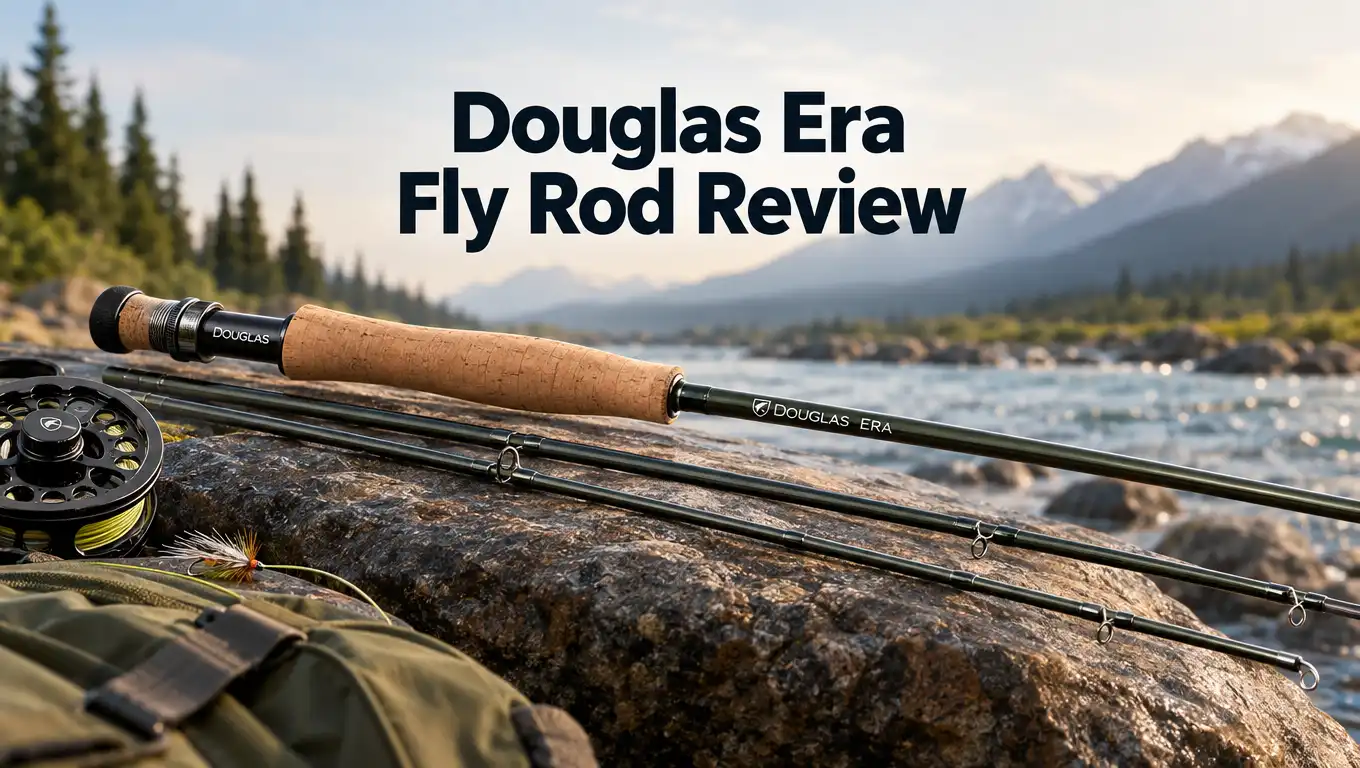
Douglas Era Fly Rod Review 2026: Worth Buying?
Fly rod prices keep climbing. Many trout rods now cost more than a weekend trip. That reality pushes a lot of anglers to hunt for value, and the Douglas Era keeps showing up in that search. Douglas Outdoors built this rod with one promise: real performance at a price that does not hurt.
I fished the Era across small creeks, a wide tailwater, and a warm local pond. I cast it next to rods that cost four times as much. Some results surprised me. Others reminded me that every budget rod makes trade offs somewhere.
This review covers the unboxing, the blank, the hardware, the casting feel, and the honest weak spots. You will also find line pairings, reel pairings, alternatives, and answers to common buyer questions.
In A Nutshell:
- Price is the headline. The Era starts around $149 and tops out near $199 depending on the model and the shop. That puts it squarely in beginner and backup rod territory, yet the casting feel punches above that bracket.
- Action is honest, not extreme. Douglas calls it fast. In hand it feels medium fast. That softer flex helps new casters load the rod and helps everyone fish inside 45 feet.
- Accuracy shines close in. At 30 and 45 feet the Era places flies with real confidence. Past 60 feet it loses steam and loops start to fall apart.
- Swing weight is the main flaw. This is one of the heavier 5wt rods in its class. Long days of streamer chucking will remind your forearm about that.
- Build quality beats the price tag. Anodized aluminum reel seat, decent cork, single foot guides, alignment dots, and a Cordura tube with a sock. Nothing feels cheap or sloppy.
- Warranty support is strong. Douglas backs the Era with a limited lifetime warranty, which removes most of the risk for a first time buyer.
Douglas Era Fly Rod: Quick Verdict

Last update on 2026-09-25 / Affiliate links / Images from Amazon Product Advertising API
The Douglas Era is a four piece graphite rod built for anglers who want performance without a painful receipt. It comes in 4wt, 5wt, 6wt, and 8wt. The 4wt measures 8’8″. The rest measure a full 9’0″. Blank weight runs roughly 3.1 to 4.0 ounces depending on the model.
My verdict is simple. The Era is one of the best fly rods under $200 right now. It casts smoothly, tracks straight, and handles dry flies, nymph rigs, and small streamers without complaint. It will not win a distance contest and it is not a feather in the hand.
If your fishing happens inside 50 feet, which covers most trout water in America, this rod gives you very little to complain about. For the money, that is an easy recommendation.
Unboxing The Douglas Era
The Era arrives in a plain cardboard sleeve. Inside sits a black Cordura covered tube with a zipper along one side. That zipper detail feels generous at this price, since many rods under $200 ship with a simple screw cap tube or no tube at all.
Slide the rod sock out and you get four sections in labeled pockets. The sock stitching is clean. No loose threads, no glue smears.
My first impression of the blank was the color. Douglas went with a matte grey finish and bright white thread wraps. It looks modern rather than generic. The alignment dots make assembly fast, even in low light at dawn.
The whole experience feels deliberate. Nothing about the packaging screams entry level, which sets a good tone before the first cast.
Build Quality And Components
The reel seat uses anodized aluminum with double uplocking rings. It held my reel tight through a full season with no creep or rattle. The insert is simple black, not burl wood, and that is fine at this price.
The grip is a half wells shape on the 5wt. Cork quality is average. You will spot filler patches if you look closely. Nobody should expect flor grade cork for $149.
Guides are the interesting part. Douglas used single foot snake guides with an oversized stripping guide, which keeps weight low and lets line shoot freely. Wraps are even and well coated.
Is this rod built like a $900 flagship? No. But every component works, and nothing on my sample loosened, cracked, or failed.
Top 3 Alternative for Douglas Era Fly Rod

Last update on 2026-09-25 / Affiliate links / Images from Amazon Product Advertising API
Redington Classic Trout Fly Rod

Last update on 2026-09-22 / Affiliate links / Images from Amazon Product Advertising API
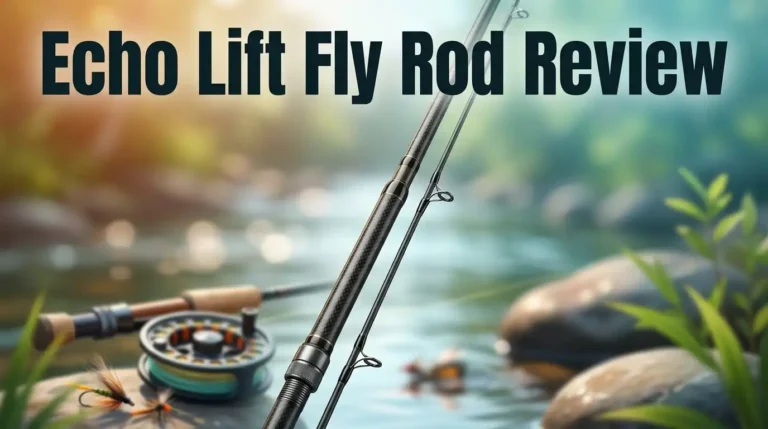
Echo Lift Fly Rod

Last update on 2026-09-22 / Affiliate links / Images from Amazon Product Advertising API
Redington Path Fly Rod
Casting Feel And Action
Douglas advertises fast action. On the lawn and on the water, the Era behaves more like a medium fast rod. The tip flexes into the mid section under a normal load. That is good news for most buyers.
A true fast rod punishes a beginner. It demands sharp timing and a tight stroke. The Era forgives a slow tempo and still delivers a tidy loop.
The rod tracks well, meaning the tip travels a straight path when you keep your stroke honest. Wobble is minimal. That translates directly into fewer tailing loops.
Roll casts feel especially good. The flex loads deep enough to lift line off the water without a false cast.
Intermediate anglers who like moderate rods will enjoy this blank. Anglers who love stiff, rocket launcher tapers will find it too soft for their taste.
Accuracy At Short And Mid Range
Accuracy is where the Era earns its reputation. At 30 feet I could drop a size 16 parachute into a dinner plate target repeatedly. Feedback through the grip is clear, so you always know where the line is.
At 45 feet the story stays the same. Loops hold shape, and the rod carries a nymph rig with a split shot without collapsing. That distance covers a huge share of real trout fishing.
Presentation is soft enough for spooky fish in moving water. On flat, glassy spring creeks it lands slightly harder than a premium rod, so leader length matters more.
The Era rewards a relaxed casting stroke. Push it and accuracy suffers. Slow down and it behaves like a rod costing twice as much.
Distance Casting Limits
Here comes the honest part. The Era is not a distance machine. At 60 feet the blank runs out of reserve power, loops widen, and tight control disappears.
If you fish big western rivers, throw long streamer casts to far banks, or need to punch line into a hard wind, this rod will frustrate you. A heavier line helps a little but does not fix the ceiling.
Beginners should not worry about this at all. Very few new anglers cast 80 feet with any rod, and most trout are caught inside 40 feet anyway.
Think of the Era as a precision tool for close and medium range work, not a cannon. Buy it with that expectation and you will be happy.
Swing Weight And Fatigue
The Era is heavier than most modern rods in its weight class. Static weight is reasonable, but swing weight, which is how heavy the rod feels while casting, is where you notice it.
My 9’0″ 5wt sample felt closer to some 6wt rods in the hand. After three hours of nymphing with a heavy indicator rig, my wrist noticed.
This is the single biggest trade off with the Era. Douglas kept the price low by using a less exotic graphite, and that shows up as mass in the tip section.
Does it ruin the rod? Not even close. But if you fish twelve hour days or you have wrist issues, test cast one before buying, or step up to the Douglas DXF for a lighter feel.
Douglas Era 9ft 8wt For Bass And Saltwater

Last update on 2026-09-25 / Affiliate links / Images from Amazon Product Advertising API
The 8wt Era serves a different crowd. Bass anglers, pike hunters, and travelers who want a cheap backup for a flats trip all look at this model.
The extra stiffness suits the heavier line better than the 5wt suits its line. Throwing a bulky popper or a weighted clouser feels natural. The rod generates enough power to turn over a short, heavy leader.
Lifting power on bigger fish is solid. I put a strong carp on it and the butt section did its job.
Saltwater use requires care. The hardware is anodized but this is not a dedicated saltwater build, so rinse it thoroughly after every trip.
As a first 8wt or a travel spare, it makes plenty of sense.
Best Fly Line Pairings
Line choice changes this rod more than any accessory. The Era loads best with a slightly heavier taper.
For the 5wt, a Scientific Anglers Amplitude MPX works beautifully. It runs half a size heavy, which loads the mid section early and helps short casts.
For delicate dry fly work, a Rio Gold or a standard weight forward trout taper gives a softer landing with a small loss of close range punch.
For the 8wt, a bass or warmwater taper with an aggressive front end carries big flies well.
Skip cheap bargain bin lines. A $40 line on a $149 rod will make the rod feel dead and you will blame the blank unfairly.
Spending on line is the highest value upgrade you can make with this rod.
Best Reel Pairings
The Era does not need an expensive reel, but a little balance helps offset its swing weight. Aim for a reel on the slightly heavier side.
For the 4wt and 5wt, the Redington Rise or the Orvis Clearwater reel both sit in a sensible price range and offer a smooth sealed or semi sealed drag.
For the 6wt, look at the Echo Bravo or the Lamson Liquid. Both handle trout and light bass duty easily.
For the 8wt, pick a sealed drag reel with enough backing capacity for a running fish. The Lamson Liquid or the Redington Behemoth both fit.
Balance matters more than brand here. A reel that sits a half ounce heavy will make the whole outfit feel lighter in your hand.
Where The Era Falls Short
Every honest review needs this section. The Era has real weaknesses.
First, swing weight. It is the heaviest feeling rod I have cast in this bracket.
Second, distance. Beyond 60 feet it simply gives up.
Third, cork quality. Filler patches appear on most samples, and heavy use will pit the grip faster than a premium rod.
Fourth, delicate presentations. On glassy water with size 20 flies, the rod lands slightly hard.
Fifth, limited options. You get four line weights and two lengths. There is no 3wt creek rod and no 10 foot nymphing model.
None of these break the rod. They are the cost of a $149 price tag, and Douglas made smart choices about where to save money.
Douglas Era Compared With Rivals
The Orvis Clearwater costs more, around $250, and gives you a lighter feel and more model choices. It also carries the Orvis 25 year warranty and huge dealer support.
The Redington Classic Trout is softer and more forgiving. It excels with dry flies on small water but struggles with heavy nymph rigs.
The Echo Lift costs a bit less and feels slightly lighter, though its finish work is plainer.
The TFO NXT Black Label is a close price match with a similar moderate feel and a strong warranty record.
The Era wins on feel and finish for the dollar. It loses on weight. Pick the Clearwater if budget allows. Pick the Era if you want maximum casting quality per dollar spent.
Who Should Buy The Douglas Era
This rod fits several types of anglers well. New fly fishers get a forgiving action, a full lifetime warranty, and a tube that protects the investment.
Budget minded intermediates get a real casting tool rather than a toy. Guides and instructors get a durable loaner rod that survives clumsy hands.
Traveling anglers get a spare rod they can stuff in a duffel without worrying about a $900 loss.
Who should skip it? Anglers who fish long days with heavy rigs, anglers who need serious distance, and technical dry fly specialists chasing picky fish on flat water.
If most of your casts land inside 50 feet, the Era covers you completely. If your fishing lives at the extremes, spend more.
Pros And Cons
Here is the summary in plain terms.
Pros
- Outstanding value at roughly $149 to $199 for the blank and tube.
- Excellent accuracy and feedback at 30 and 45 feet.
- Forgiving medium fast action that helps beginners build a clean stroke.
- Clean cosmetics with a matte grey blank, white wraps, and alignment dots.
- Zippered Cordura tube and rod sock included, which is rare at this price.
- Limited lifetime warranty from Douglas Outdoors.
- Available in 4wt, 5wt, 6wt, and 8wt for trout through bass.
Cons
- Heavy swing weight compared with rivals in the same price band.
- Power fades noticeably past 60 feet.
- Cork grip shows filler and will wear over time.
- Presentations land slightly hard on very calm water.
- Only four line weights and two lengths available.
- No dedicated saltwater build despite the 8wt option.
Warranty And Long Term Durability
Douglas covers the Era with a limited lifetime warranty for the original owner. Broken sections are repaired or replaced for a service fee, which is standard across the industry.
Turnaround times from Douglas have been reasonable in reports I have seen, generally a few weeks rather than months. The company is small, and that often means a real person answers the phone.
Durability on my sample has been good. Ferrules stayed tight through a full season with only occasional twisting. Guide wraps show no cracking. The reel seat threads still run smooth.
Store the rod dry, wipe the ferrules, and avoid high stick pressure on big fish. Do that and this blank should last many years of regular use.
Final Verdict
The Douglas Era does exactly what Douglas claims. It delivers genuine casting quality at a price most anglers can accept without a second thought.
It is not perfect. The swing weight is real and the distance ceiling is low. Those flaws are visible within ten minutes of casting, and I would rather tell you about them now than let you discover them on the river.
But the trade is fair. You get accuracy, forgiveness, clean build quality, and a lifetime warranty for under $200. Very few rods match that combination in 2026.
My rating is 4.3 out of 5 for value, 3.8 out of 5 for outright performance. For a first rod, a backup, or a loaner, the Era is an easy yes.
Frequently Asked Questions
Is the Douglas Era good for beginners?
Yes. The medium fast action loads easily and forgives timing mistakes. The rod also gives clear feedback through the grip, which helps new casters learn the stroke faster. The included tube and lifetime warranty protect the purchase.
What line weight should I buy first?
A 9’0″ 5wt covers the widest range of trout fishing in North America. It handles dry flies, nymph rigs, and small streamers. Choose the 8’8″ 4wt for small creeks and the 8wt for bass or coastal work.
Is the Douglas Era really a fast action rod?
Douglas markets it as fast action. Most testers, myself included, feel it closer to medium fast. The tip flexes into the middle of the blank under load, which is why it performs so well at short range.
How does the Era compare with the Douglas DXF?
The DXF costs more, weighs less, and offers more line weight and length options. It is the better rod overall. The Era captures most of the casting quality for a significantly lower price.
Does the Douglas Era come with a tube?
Yes. Every Era ships with a zippered Cordura covered rod tube and a fabric rod sock. That inclusion is unusual in this price bracket and adds real value.
Can I use the Era 8wt in saltwater?
You can, with care. The reel seat is anodized aluminum, but this is a freshwater focused build. Rinse the rod with fresh water after every saltwater outing to prevent corrosion at the seat and guides.
Where is the Douglas Era made?
Douglas Outdoors is based in New York and designs the Era in house. The Era blanks are produced overseas to keep the price low, while higher tier Douglas models use different production.

Hi, I’m Ivy Webb, the passionate angler and creator behind BaitHookVault.com. I spend my days out on the water personally testing and reviewing a wide variety of fishing tools and gear.