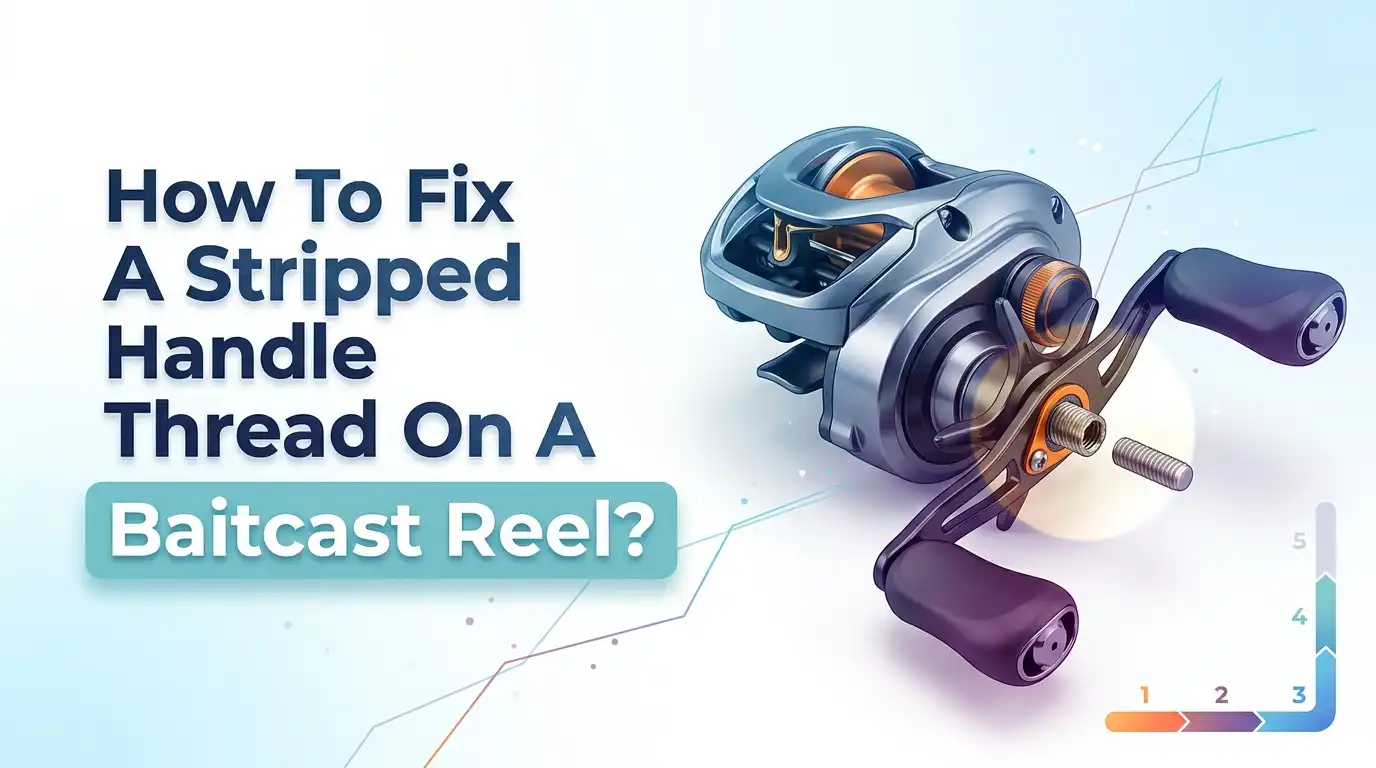
How To Fix A Stripped Handle Thread On A Baitcast Reel?
A baitcast reel feels useless when the handle spins loose. You turn the handle, but the reel does not catch. The handle wobbles, slips, or falls off completely.
This usually means the handle thread has stripped. The good news is simple. You can fix most stripped handle threads at home. You do not always need a new reel. You do not always need a repair shop either.
This guide walks you through every fix in plain steps. You will learn why threads strip, how to spot the damage, and which repair method fits your situation. Some fixes take five minutes. Others need a few tools and a little patience. Stick with me, and your reel will turn smoothly again.
Key Takeaways
- Stripped threads usually start small. A loose handle that wobbles is the first warning sign. Fix it early, and you avoid bigger damage.
- Check the thread direction first. Many baitcast handle nuts use reverse threads. You turn them the opposite way you expect. Forcing the wrong direction can strip threads fast.
- The cheapest fix is often a new handle nut or retainer. These small parts cost little and solve most loose handle problems without major repair.
- Thread inserts like a Heli-Coil rebuild metal threads. This method is strong and lasts long, but it needs a drill, a tap, and steady hands.
- Epoxy and retapping work for plastic or worn parts. These are budget repairs. They hold for casual use but may not survive heavy fishing.
- Replacement is sometimes the smartest choice. If the drive shaft or reel frame is stripped, a new part or a pro repair saves time and frustration.
What Causes A Stripped Handle Thread On A Baitcast Reel?
Threads strip when metal or plastic wears down past its limit. The most common cause is overtightening the handle nut. People crank it hard, thinking tighter means safer. Instead, the force shaves the threads flat.
Cross threading is another big reason. This happens when you start the nut at a slight angle. The threads grind against each other and tear. Sand, salt, and grit speed up the damage too. They act like sandpaper inside the reel.
Old age also plays a role. A reel used for years builds up wear with every cast. Cheap reels with soft metal or plastic parts strip faster than quality ones. Knowing the cause helps you pick the right fix and stop it from happening again.
How To Tell If Your Handle Thread Is Really Stripped?
You need to confirm the problem before you start any repair. Sometimes a loose handle is just a loose nut, not a stripped thread. Spin the handle and watch closely. If the handle turns but the spool does not move, something inside has failed.
Try tightening the handle nut. If it never feels snug no matter how far you turn it, the threads are likely stripped. A grinding or skipping feeling as you tighten is a clear sign.
Look at the nut and the shaft with good light. Stripped threads look smooth, flattened, or shredded instead of sharp and even. Remove the handle and inspect the drive shaft end. If the metal looks worn smooth, you have found your culprit. This quick check saves you from fixing the wrong part.
Check The Thread Direction Before You Touch Anything
This step trips up many anglers. Not all reel handle nuts turn the same way. Right hand retrieve reels often use reverse threads. That means you loosen by turning clockwise and tighten counterclockwise. It feels backward, and that is normal.
Forcing a nut the wrong way is one of the top causes of stripping. You think you are tightening when you are actually loosening, or you grind the threads against the stop.
Check your reel manual or the markings near the nut. Many reels stamp a small arrow or letter to show the direction. When in doubt, turn gently and feel which way moves freely. Never force it. A few seconds of checking direction can save you from creating a stripped thread or making an existing one worse.
Gather The Right Tools For The Job
A good repair starts with the right gear on your bench. You do not need a full workshop, but a few tools make the work clean and safe. Lay everything out before you begin so you do not lose tiny parts.
Here is what helps most for a handle thread fix:
- Small screwdriver set: Phillips and flathead in fine sizes for the retainer screw and cap.
- Pliers or a small wrench: For gripping the handle nut without slipping.
- Reel grease and oil: To protect threads and keep parts moving smoothly.
- Thread repair kit or Heli-Coil: For rebuilding stripped metal threads.
- Two part epoxy or JB Weld: For budget repairs on worn or plastic threads.
- A clean cloth and a small tray: To stay organized and avoid lost screws.
Good lighting and a magnetic mat also help a lot. They keep your tiny parts from rolling away.
Method 1: Replace The Handle Nut Or Retainer
This is the easiest and cheapest fix, so try it first. Often the handle nut itself strips, not the shaft. That is great news because a new nut costs only a few dollars.
Start by removing the small retainer screw and cap that hold the nut in place. Lift off the old nut and inspect the shaft threads. If the shaft still looks sharp and even, the shaft is fine. You just need a fresh nut and retainer.
Match the new nut to your reel brand and model. Many makers sell these parts directly. Thread the new nut on by hand first to avoid cross threading.
Pros: Cheap, fast, and beginner friendly. No drilling or special skills needed.
Cons: Only works if the shaft threads are still good. Finding the exact part can take time for older reels.
Method 2: Use A Thread Repair Insert (Heli-Coil)
When the shaft or frame threads strip, a thread insert rebuilds them. A Heli-Coil is a coiled metal sleeve that creates fresh, strong threads inside the worn hole. This is the most durable repair for metal parts.
First, drill out the damaged threads with the bit from the kit. Then cut new threads using the matching tap. Wind the insert in with the install tool until it sits just below the surface. Snap off the small tang at the bottom, and your new threads are ready.
Work slowly and keep the drill straight. A crooked hole ruins the repair.
Pros: Very strong and long lasting. Restores threads close to factory strength.
Cons: Needs a drill, tap, and steady hands. Small reel parts leave little room for error. Buying the right size kit matters.
Method 3: Retap The Hole To A Larger Size
If the threads stripped but the surrounding metal is thick enough, you can cut bigger threads. This method works when a slightly larger bolt or nut can replace the old one. You drill the hole a touch wider, then run a larger tap through it.
The new larger thread grips fresh metal that was never worn. You then use a matching larger screw or nut to hold the handle.
This fix suits frame screw holes more than the main drive shaft. Measure carefully before you drill. Going too large can crack thin metal.
Pros: No special insert needed. Uses common taps and hardware.
Cons: Changes the part size, so you must find matching hardware. Not safe on thin or fragile sections. The repair is permanent and hard to undo.
Method 4: Repair Threads With Epoxy Or JB Weld
This budget fix works well for plastic parts or lightly worn metal. Epoxy fills the stripped gaps and forms new grip around the screw. It is a favorite trick for anglers who want a quick, low cost solution.
Clean the hole well so no oil remains. Coat the screw or bolt threads with a release agent like a thin film of grease or silicone. Pack the hole with epoxy, then thread the greased screw in gently. Let it cure fully, often overnight.
Once hard, back the screw out. The epoxy holds the new thread shape.
Pros: Cheap and simple. Great for plastic handle seats and minor wear.
Cons: Weaker than metal repairs. It may fail under heavy fishing pressure. If you skip the release agent, the screw glues in place for good.
Method 5: The Quick Field Fix With Thread Tape Or A Washer
Sometimes you strip a thread on the water and need a fix right now. A field repair gets you through the day until you do a proper job at home. Wrap the worn threads with plumber thread tape to add bulk and grip.
Another trick uses an extra washer or a lock washer under the nut. The washer takes up the slack so the nut bites again. Some anglers run a small bolt with a lock nut straight through the handle to hold it tight.
These are temporary fixes, not lasting repairs.
Pros: Fast, cheap, and done with tiny items in your tackle bag.
Cons: Will not hold long under strong fish. You still need a real repair later. Tape can slip if the threads are badly chewed.
How To Replace The Whole Handle Assembly
If the handle, nut, and shaft are all damaged, a full replacement makes sense. Many reel makers sell complete handle assemblies that bolt right on. This restores your reel to like new condition.
Order the part using your exact reel model number. Remove the retainer screw, cap, and old nut. Slide off the worn handle and any washers. Note the order of every washer and spacer as you remove them. Reverse the steps with the new handle.
A photo of the layout before you start helps a lot.
Pros: Restores full strength and smooth turning. Often easier than fixing tiny threads.
Cons: Costs more than a single nut. Finding the right part for old or rare reels can be hard. Some reels need the shaft replaced too, which is harder.
How To Prevent Stripped Handle Threads In The Future
Prevention beats repair every time. The best habit is simple. Do not overtighten the handle nut. Snug is enough. Cranking it hard only invites stripped threads down the road.
Always start the nut by hand to make sure it threads straight. If it feels rough or angled, back it off and try again. This stops cross threading before it starts.
Keep your reel clean. Rinse off salt and sand after each trip, then dry it well. Add a thin coat of reel grease to the threads now and then. Store your reel in a dry place away from grit. Check the handle nut for tightness before each outing, but only gently. These small habits keep your threads sharp for years.
When Should You Take Your Reel To A Professional?
Some repairs are beyond a home bench, and that is okay. Call a pro when the main drive shaft strips deep inside the gear box. That repair often needs the reel fully taken apart. One wrong move can damage the gears.
A repair shop also helps when you cannot find the right part. They keep parts for many brands and models. High value reels deserve expert care since a botched home fix can cost you the whole reel.
Most brands run authorized service centers. Sending the reel in costs a fee, but you get a proper repair with the correct parts.
Pros: Expert work, correct parts, and peace of mind.
Cons: Costs more and takes time. You lose the reel for days or weeks during shipping and service.
Frequently Asked Questions (FAQs)
Why does my baitcast reel handle keep coming loose?
Your handle keeps loosening because the handle nut or its threads are worn. The drag turning can also nudge the nut loose during use. Check the retainer screw and cap first. If the nut never feels snug, the threads have likely stripped and need repair or replacement.
Can I fix a stripped reel thread without buying new parts?
Yes, in many cases. Epoxy repairs, retapping, and thread inserts rebuild threads using basic tools. A field fix with thread tape or an extra washer also works for a while. Still, if the drive shaft is badly stripped, a new part gives the most reliable result.
Which way do I turn a baitcast reel handle nut?
It depends on your reel. Many right hand reels use reverse threads, so you tighten counterclockwise. Always check your manual or feel which way turns freely. Forcing the wrong direction strips threads fast, so turn gently until you are sure.
How much does it cost to fix a stripped handle thread?
A new handle nut costs only a few dollars. A thread repair kit runs a bit more but fixes several parts. Professional service costs the most, often a service fee plus shipping. Most home repairs stay cheap if you have basic tools.
Will a Heli-Coil hold up to heavy fishing?
Yes. A properly installed Heli-Coil restores threads close to factory strength. It handles strong fish and hard fighting well. The key is a straight, clean install with the correct size kit. Done right, it often outlasts the original threads.
Is it worth fixing an old baitcast reel or should I replace it?
It depends on the reel value and the damage. A simple nut swap is always worth it. For a cheap reel with deep shaft damage, a new reel may cost less than parts and labor. For a quality reel, repair almost always makes sense.

Hi, I’m Ivy Webb, the passionate angler and creator behind BaitHookVault.com. I spend my days out on the water personally testing and reviewing a wide variety of fishing tools and gear.