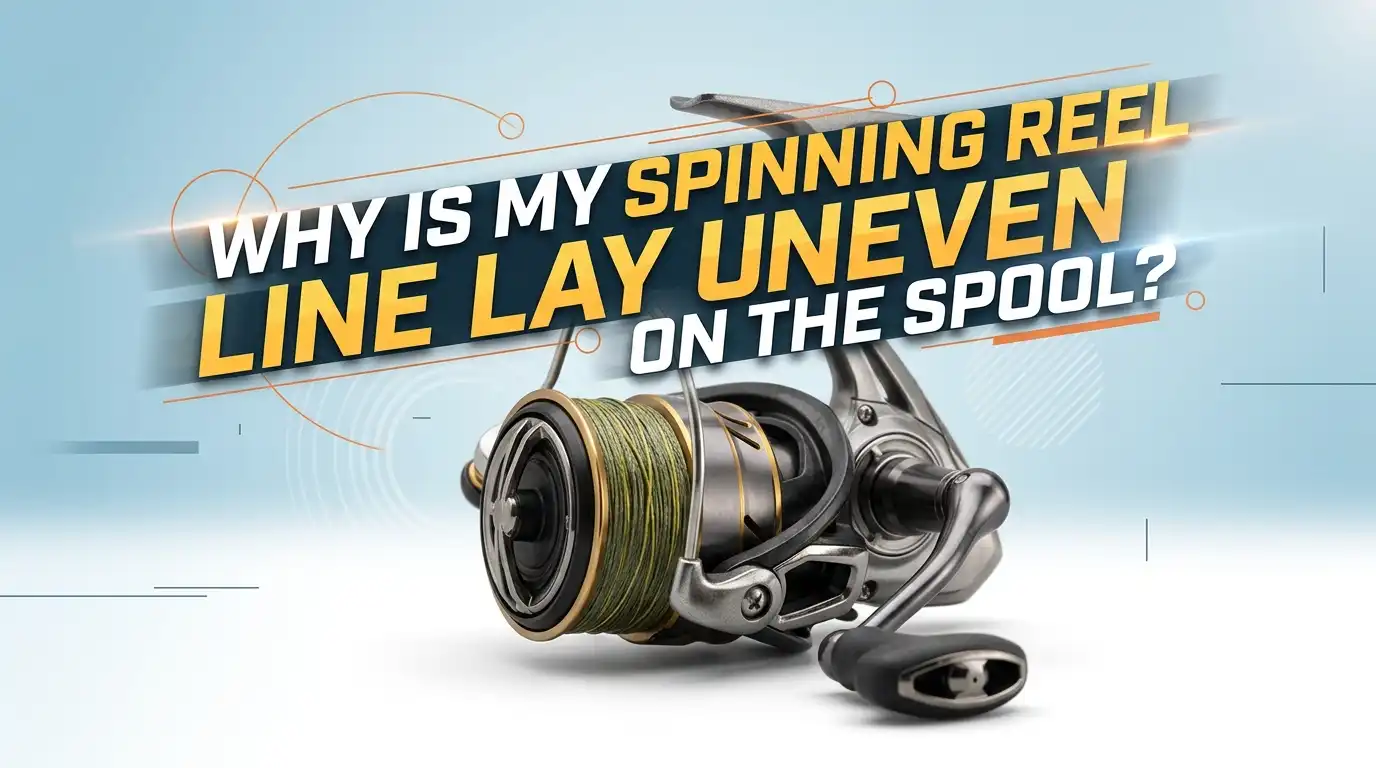
Why Is My Spinning Reel Line Lay Uneven On The Spool?
Have you ever reeled in your line and noticed it stacking up like a tiny mountain on one side of the spool? You are not alone. Uneven line lay is one of the most common headaches anglers face.
It causes wind knots, shortens your casting distance, and makes a fresh spool look sloppy. The good news is that this problem is almost always fixable at home. You do not need a new reel.
In most cases, a few small washers and a little patience solve everything. This guide walks you through every cause and gives you clear, step by step fixes you can use today.
Key Takeaways
- Spool height is the main cause. Most uneven line lay comes from the spool sitting too high or too low on the main shaft. Adding or removing thin washers (called shims) fixes this fast.
- Line stacking at the top means add shims. When line bunches near the front lip, place one or two washers under the spool to lower it slightly.
- Line stacking at the bottom means remove shims. When line builds up at the rear, take a washer out to raise the spool.
- Bad spooling habits create twist and bumps. How you load the line matters as much as the reel itself. Keep tension steady and let line come off the filler spool the correct way.
- A small taper is normal. Many reels, especially Daiwa models, are built to taper line down from the top on purpose. Do not chase perfection that the reel was never designed to give.
- Worn parts can be the culprit. A damaged oscillation gear, worn worm shaft, or missing washer sometimes causes the issue, so inspect before you respool.
What Even Line Lay Actually Looks Like
Let me start by clearing up confusion. Even line lay does not always mean a perfectly flat surface. A good spool of line should be filled to about one eighth of an inch below the lip.
The line should sit in a smooth, slightly crisscrossed pattern across the whole spool width. A small taper toward the rear is completely normal on many reels. The problem only exists when line piles heavily on one side, creating a bulge or an hourglass shape.
That bulge is what causes trouble. It traps loops, leads to wind knots, and reduces how far you can cast. Knowing the difference between normal taper and a real defect saves you from worrying over nothing.
Why Your Spinning Reel Lays Line Unevenly
Several things create uneven line lay, but they fall into a few clear groups. The biggest reason is spool height. When the spool sits too high or too low on the shaft, line collects at one end.
The second reason is poor spooling technique. If you load line with uneven tension or let it twist, it never settles flat. The third group involves worn internal parts. The oscillation system, which moves the spool up and down as you crank, can wear out over time.
A worn worm gear or a missing factory washer changes how the spool travels. Once you know which group your problem belongs to, the fix becomes simple and direct.
How To Diagnose Top Stacking Versus Bottom Stacking
Before you fix anything, you must read the spool. This step decides everything else. Reel in a steady amount of line, then look at the spool from the side. If the line bulges near the front lip of the spool, you have top stacking.
If the line builds up near the back, near the reel body, you have bottom stacking. Sometimes the line forms an hourglass shape, fat at top and bottom with a pinch in the middle. That shape tells you the spool travel is off.
Write down what you see. A simple note like “stacks at top” guides your next move. Diagnosing first stops you from adding washers when you should remove them.
Pros: This costs nothing and takes two minutes. Cons: You must respool to confirm the fix worked, which uses time.
The Washer And Shim Fix For Spool Height
This is the fix that solves most cases. Spinning reels use thin washers, often called shims, that sit on the main shaft under the spool. These set the spool height. If your line stacks at the top, add one or two washers under the spool to lower it.
If your line stacks at the bottom, remove a washer to raise the spool. Most reels ship with a small set of these washers in the box. They come in different thicknesses, often a couple of thick ones and one thin one.
Change only one washer at a time. Big jumps can flip the problem to the other side. After each change, wind on a few wraps and check the pattern before committing.
Pros: Cheap, fast, and reversible. Cons: Requires trial and error and removing the spool repeatedly.
Step By Step: Adjusting Your Spool Washers
Here is the clear method. Follow it in order and you will not get lost. First, loosen the drag knob fully and lift the spool straight off the shaft. Second, find the small washers sitting on the shaft beneath where the spool rests.
Third, based on your diagnosis, add a washer for top stacking or remove one for bottom stacking. Fourth, place the spool back and tighten the drag. Fifth, wind on five to ten wraps of line under tension and check the lay.
Repeat until the line spreads evenly across the spool width. Keep your removed washers in a small dish so none roll away. This whole process takes most people fifteen minutes once they get comfortable with it.
Pros: Gives you full control over the result. Cons: You may need several attempts to dial it in.
When You Run Out Of Washers: Shimming The Rotor
Sometimes you remove every washer under the spool and the line still stacks at the bottom. Do not panic. There is a second adjustment point. The rotor itself sits on a set of shims, and raising the rotor moves the line lay higher up the spool.
A repair specialist can add thin washers under the rotor to lift it. This trick comes straight from reel technicians who service many brands. It works when the standard spool shims reach their limit.
This step takes a little more skill because you must remove the rotor nut and rotor. If you feel unsure, a local tackle shop can do it quickly. Still, knowing the option exists saves you from buying a new reel.
Pros: Solves stubborn cases the spool shims cannot. Cons: More complex and may need basic reel disassembly.
Spooling Technique Mistakes That Cause Uneven Lay
Your reel may be fine while your loading method causes the mess. How line transfers from the filler spool to your reel matters a great deal. If you let line come off in loose loops without tension, it lands unevenly and twists.
Always keep firm, steady pressure on the line as you crank. Pinch the line lightly between your fingers above the reel to hold tension. Lay the filler spool flat on the floor so the line peels off in the same direction the reel winds it.
This single habit prevents most twist problems. Do not overfill either. Stop about one eighth of an inch below the lip. An overfilled spool throws loops and looks lumpy no matter how perfect your washers are.
Pros: Free and prevents twist and bumps. Cons: Needs a helper or a spooling tool for best results.
How To Spool A Spinning Reel The Right Way
Let me give you the full, reliable routine. Doing this correctly stops uneven lay before it starts. First, run the line through the rod guide closest to the reel. Second, open the bail and tie the line to the spool with an arbor knot, then close the bail.
Third, lay the filler spool flat on the ground with the label facing up. Crank slowly and keep steady tension with your free hand. Fourth, after twenty turns, lower the rod tip toward the line.
If the line goes slack and twists, flip the filler spool over. Line should come off counterclockwise to match the reel. Fifth, fill to just below the lip and cut the line. This method keeps the lay flat and the line twist free.
Pros: Reliable and works for mono, fluoro, and braid. Cons: Takes patience and a steady hand.
Checking For Worn Oscillation Parts
If washers and good technique fail, look inside. The oscillation system drives the spool up and down as you turn the handle. In many reels this uses a worm shaft and a pawl. Over time these parts wear, and a worn worm gear changes the spool travel, causing uneven lay.
Open the side plate and inspect the worm shaft for grooves or rough spots. Check that the pawl moves smoothly along it. Look for any missing or broken factory washers too.
A single missing spacer can shift everything. If you find worn parts, replacement is the only true fix. Many brands sell these parts, or a repair shop can source them. Clean and grease the gear while you are in there.
Pros: Fixes the root cause for good. Cons: Requires tools, parts, and some mechanical confidence.
Understanding Oscillation Speed And Crisscross Patterns
Here is something many anglers never learn. Reels use either fast or slow oscillation, and this changes the look of your line lay. A fast oscillating reel lays line in a tight crisscross pattern with many crossing wraps.
A slow oscillating reel lays line in long, gentle diagonals with fewer crosses. Neither one is broken. They are simply different designs. Slow oscillation often gives a flatter, tighter lay that many anglers prefer for casting distance.
The crisscross is intentional. It stops the line from digging into itself and snapping when you set the hook. So if your line crosses over itself, that is good engineering, not a fault. Recognizing your reel type helps you set realistic expectations.
Pros: Helps you judge your reel fairly. Cons: You cannot change oscillation speed without swapping reels.
Brand Specific Quirks To Know About
Different brands behave differently, and this trips up a lot of people. Daiwa reels, for example, are built to taper the line down from the top on purpose. This is part of their casting design, so a flat lay is not the goal.
Shimano reels often use a specific washer set, commonly two thick washers and one thin one, to fine tune the lay. Penn reels respond well to the rotor shim trick mentioned earlier. Read your reel manual before you start swapping parts.
It often lists the washers included and how to use them. Chasing a perfectly flat lay on a reel engineered to taper only wastes your time. Knowing your brand’s intended behavior saves frustration and keeps you from over adjusting.
Pros: Prevents wasted effort and over correction. Cons: Manuals can be vague or hard to find online.
Preventing Uneven Line Lay In The Future
Once you fix the problem, keep it fixed. A few simple habits protect your work. Always store your reel washers in a labeled bag so you never lose them. Respool with steady tension every single time, since lazy spooling brings the bumps right back.
Avoid overfilling, and stop just below the lip. Rinse your reel with fresh water after saltwater trips to keep the oscillation gear clean and smooth. Grease the worm shaft once or twice a season.
Check your line lay after the first cast of each trip so you catch problems early. These small routines cost almost nothing. They keep your spool smooth, your casts long, and your wind knots far away for years to come.
Pros: Saves time and money over the long run. Cons: Requires consistent maintenance habits.
When To Stop Adjusting And Just Fish
Here is a friendly truth to end on. Some line lay is never going to be perfect, and that is okay. If you have shimmed the spool, fixed your technique, and checked the gears, a tiny bit of taper will not hurt your fishing one bit.
A small, even slope across the spool casts fine and rarely causes problems. Chasing absolute perfection can drive you a little crazy and waste good fishing days. Trust your fixes once the heavy stacking is gone.
The goal is smooth performance, not a photo finish. If your line peels off cleanly and you are not getting wind knots, you have won. Pack up the washers, tie on a lure, and go enjoy the water.
Frequently Asked Questions
Why does my line stack at the top of the spool?
Your spool sits too high on the shaft. Add one or two thin washers under the spool to lower it slightly. Change only one washer at a time, then wind on a few wraps and check the lay before adding more.
Is some uneven line lay normal on a spinning reel?
Yes. A small, even taper toward the rear is normal on many reels, especially Daiwa models built that way on purpose. The crisscross pattern is also intentional. Only heavy stacking or an hourglass shape signals a real problem worth fixing.
Can bad spooling cause uneven line lay?
Absolutely. Loose tension and incorrect line direction create twist and bumps. Keep firm pressure on the line as you crank, lay the filler spool flat so line peels off counterclockwise, and fill to just below the lip.
What if I removed all the washers and line still stacks at the bottom?
Try the rotor shim trick. Adding thin washers under the rotor raises it and moves the line lay higher up the spool. This needs basic disassembly, so a tackle shop can help if you feel unsure.
Do worn parts cause uneven line lay?
They can. A worn worm shaft, damaged oscillation gear, or missing factory washer changes the spool travel. Open the side plate, inspect for grooves or rough spots, and replace worn parts. Clean and grease the gear while it is open.
Does line lay affect casting distance?
Yes. Heavy stacking and bulges trap loops and shorten your casts. A smooth, even lay lets line flow off the spool freely. Fixing the lay with washers and good technique restores your full casting range and cuts down wind knots.

Hi, I’m Ivy Webb, the passionate angler and creator behind BaitHookVault.com. I spend my days out on the water personally testing and reviewing a wide variety of fishing tools and gear.