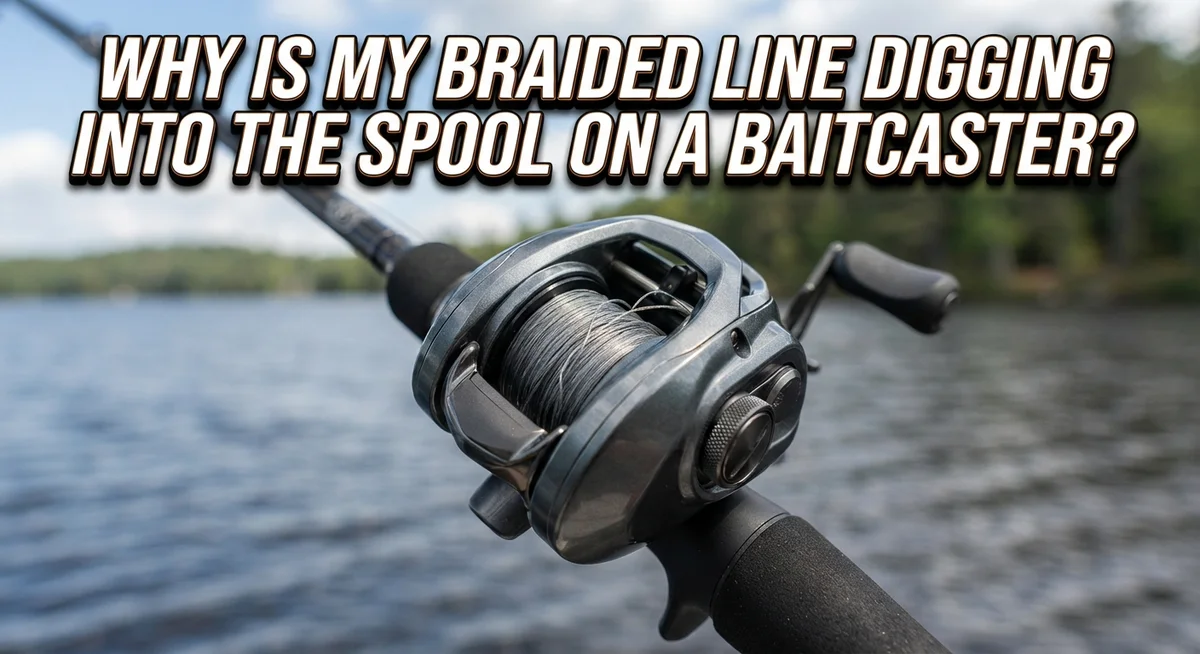
Why Is My Braided Line Digging Into The Spool On A Baitcaster?
You cast out, feel a big bite, and suddenly your line stops moving. It feels stuck. You check your baitcaster and see your braided line has dug deep into the spool.
This problem frustrates many anglers. It happens fast and ruins good moments on the water. You lose casting distance and sometimes even lose your catch.
Braided line digging into your spool is common. It happens when tight coils of line cut into looser layers underneath. Big fish, snags, and sudden pressure all make this worse.
The good news is you can control this problem. Small changes in how you spool your reel make a real difference.
In a Nutshell
- Loose spooling is the main reason braid digs in. Tight line on top cuts into looser coils below.
- Braided line has no stretch. This makes it dig into itself more than mono under heavy load.
- Thinner braid cuts deeper than thicker braid. Less material means less resistance against pressure.
- A mono backing under your braid gives it a softer base. This simple step reduces digging by a lot.
- Your drag setting matters too. High drag adds extra tension, and that tension makes digging worse.
- Spool your braid as tight as you possibly can. This will not stop digging completely, but it helps a great deal.
- Even with perfect setup, some digging can still happen. Braid under heavy strain will always behave this way to some degree.
- Wet or expanded line can also raise the risk. Line condition changes how it settles on the spool.
What Causes Braided Line to Dig Into a Baitcaster Spool
Braided line digs into your baitcaster spool because of how the line behaves under pressure. When you set the hook or fight a fish, your braid experiences tension that causes it to compress downward. Unlike monofilament, braid has virtually no stretch to absorb this force. Instead, the tight upper layers of line push down into the looser sections below them.
This digging action happens progressively as you use your reel. Each time you apply heavy pressure, the braid wedges deeper into the gaps between previous wraps. The problem becomes worse as your spool level drops because the line has less support underneath it. Think of it like pressing your finger into sand that keeps getting softer the deeper you go.
Thinner braid is more prone to digging than thicker varieties. A lighter gauge line cuts through loose sections more easily because it concentrates force into a smaller area. Heavier braid distributes that same pressure across a wider surface, reducing penetration depth.
Your line’s condition also plays a role. Wet or swollen braid takes up more space on the spool. When it dries out later, gaps form between wraps. These gaps become perfect places for tighter sections to sink into during your next fishing session.
The spool design itself contributes too. Baitcaster spools are cylindrical and smooth, offering no grip to hold line in place. This smooth surface allows braid to slide downward more easily than rougher alternatives would.
The core issue is that braided line’s strength works against you here. That same no stretch quality that makes braid excellent for sensitivity and hooksets also means it transmits pressure directly to lower layers without any cushioning. Understanding this mechanical reality helps explain why digging happens and why prevention requires deliberate spooling techniques and proper backing line underneath your braid.
Why Braided Line Is More Prone to Digging Than Monofilament
Braided line digs into your spool more easily than monofilament because of its unique construction and physical properties. Understanding these differences helps you see why this problem happens so often.
Braided line is made from multiple strands woven together. This creates a line that is thinner and more compact than monofilament of the same breaking strength. When you apply pressure during a fight or snag, this thin braid can slip between the loose wraps below it on your spool. Once it finds that gap, it penetrates deeper with each rotation.
Monofilament is a single solid strand. It has natural stretch and cushioning properties. When you set the hook or fight a fish, monofilament absorbs some of that energy. Braided line has virtually no stretch. All that force transfers directly into the line itself, pushing it downward into the wraps beneath.
The material composition matters too. Braided line is denser and less forgiving than mono. It does not conform to the spool as smoothly. Instead, it maintains its shape and can wedge into gaps between layers. Monofilament naturally molds to the spool surface, creating a more uniform base.
Line diameter also plays a role. Thinner braids are especially prone to digging because they can fit into smaller gaps between wraps. Heavier gauge braid has more bulk and resists penetration better, though it still digs under enough pressure.
The spool itself contributes to this problem. Most baitcaster spools have a smooth surface. Braided line grips this surface differently than mono does. Without friction to hold it in place, braid shifts more easily when pressure increases.
This is why spooling tension becomes critical. When you apply maximum tension during the spooling process, you compress the braid tightly against the spool. This reduces the gaps where digging can occur. However, even perfect spooling cannot completely prevent this issue under extreme loads.
How to Properly Spool Braid to Minimize Digging
Proper spooling technique is your first defense against braid digging into your spool. The key is understanding that tension during the spooling process directly controls how deep your line will sink into loose layers below.
Start by applying maximum tension while spooling your braid onto the reel. You want the line pulled tight enough that it barely gives when you press it with your finger. This compression keeps each wrap snug against the previous one. Loose wraps create valleys where the line can settle and dig during casting or when fighting fish.
Use a mono backing line underneath your braid. This backing serves as a cushion that prevents the braid from making direct contact with the bare spool. The softer mono backing absorbs pressure better than metal spool surfaces. Typically, 50 to 100 yards of monofilament backing is sufficient for most baitcasters.
Adjust your drag setting to the minimum functional level for your fishing situation. A drag that’s too tight forces excessive pressure on the line during casts and fights. This pressure drives the braid deeper into the spool. Find the lowest drag setting that still lets you set the hook effectively.
Pay attention to line condition before spooling. Wet or expanded braid takes up more space and creates larger gaps between wraps. Allow your line to dry completely if it has absorbed water. Store your braid in a cool, dry place to maintain its original diameter.
Fill your spool completely or nearly completely. A fuller spool means less depth for the line to dig into. The line sits closer to the spool’s edge, reducing the distance it can penetrate downward.
These steps work together to minimize digging. Even with perfect execution, some penetration may still occur with braided line. The goal is reducing it to a manageable level that won’t compromise your fishing performance.
The Role of Monofilament Backing in Preventing Line Dig
Monofilament backing serves a critical function in protecting your spool from braid dig. Think of it as a cushion layer that sits between your spool and the braided line above it.
When you place mono backing underneath your braid, you create a softer foundation. Braided line can’t penetrate mono as easily as it penetrates itself. This simple layering system reduces how deep your braid can sink into the spool during heavy tension or when fighting a fish.
The backing line absorbs pressure differently than braid does. Mono has some give to it, while braid is rigid and unforgiving. When your braid tightens under load, the mono backing compresses slightly rather than allowing the braid to cut through. This protective barrier keeps your braided line from reaching the bare spool underneath.
How much backing should you use? Most anglers recommend filling your spool about one third to one half with monofilament before adding braid on top. This gives you enough backing to provide real protection without wasting spool space. The exact amount depends on your reel size and how much braid capacity you need.
Backing line also improves your overall setup in another way. It gives your braid something to grip during the initial cast. Braid alone on a bare spool can sometimes slip, especially when you’re applying maximum spooling tension. The mono provides friction that keeps everything stable.
One important note: backing doesn’t eliminate digging entirely. It significantly reduces the problem, but braided line under extreme pressure can still work its way down over time. Think of backing as damage control rather than a complete solution. Combined with tight spooling and proper drag settings, backing becomes part of a complete strategy to manage this common baitcaster challenge.
Drag Settings and Their Impact on Line Digging
Your drag setting directly controls how much pressure your line experiences during casting and fighting fish. When drag is too tight, it forces your braid deeper into the spool’s surface. This pressure makes the line cut through looser sections underneath, creating the digging problem.
Keep your drag at the minimum functional setting for your fishing style. This means setting it just tight enough to prevent backlashes and handle your target fish. You don’t need maximum tension during normal casting. Save higher drag settings only for fighting large fish or dealing with snags.
The relationship between drag and line digging is simple: tighter drag equals more line pressure equals deeper digging. Loose drag reduces this pressure significantly. Your line stays higher on the spool surface instead of forcing its way down.
Test your drag before each fishing trip. Set it so a steady pull removes line with slight resistance. Your thumb should feel gentle pressure, not extreme force. This balance prevents both backlashes and unnecessary spool damage.
During a fight with a large fish, your drag will naturally increase tension as needed. This is normal and acceptable. The key is avoiding unnecessarily high drag during regular casting when you don’t need it.
Many anglers make the mistake of setting drag once and forgetting about it. Water temperature affects line condition. Wet braid expands slightly, making digging worse. Check your drag regularly throughout your fishing day.
Combine your proper drag setting with tight spooling and monofilament backing for best results. These three elements work together to minimize digging. Your drag setting is the easiest adjustment you can make right now. Lower it slightly and you’ll notice immediate improvement in how your line sits on the spool.
Common Mistakes That Make Digging Worse
Loose spooling is the biggest mistake you can make. When you wind braid onto your reel without tension, the line sits loosely on the spool. As you cast and fight fish, tight upper layers press down into these loose sections below. The braid cuts through like a knife, creating those frustrating grooves.
Many anglers spool braid at casual speeds, thinking speed matters more than pressure. Wrong. Speed doesn’t help. Tension is everything. You need maximum pressure while winding. Use your fingers, a line tensioner, or have someone help you apply steady force. This keeps each wrap compressed tightly against the previous one.
Another common error is skipping the monofilament backing layer. Some fishermen think braid alone fills the spool fine. But braid on bare spool creates a hard surface with no give. When pressure builds, the braid digs in immediately. Mono backing absorbs force differently and provides cushioning underneath.
Setting your drag too high makes digging worse. High drag means maximum pressure transfers to your line during casts and fights. The tighter the drag, the deeper your braid cuts into lower layers. Many anglers crank their drag thinking it improves performance. It actually accelerates the digging problem.
Using thin diameter braid is also problematic. Lighter braid penetrates easier than heavier gauge. If you’re experiencing severe digging, thicker braid helps somewhat, though it won’t solve the issue completely.
Wet or expanded line digs more readily than dry line. If you’ve been fishing in humid conditions or just pulled your reel from water, the braid absorbs moisture and swells slightly. This expansion pushes existing wraps outward, making them more vulnerable to digging.
The key is combining all prevention methods. Spool tight. Add mono backing. Keep drag minimal. Choose appropriate line diameter. Work together, these steps minimize digging significantly, even though you can’t eliminate it entirely with braided line.
Troubleshooting Persistent Digging Issues Despite Proper Setup
Even with proper setup, braided line can still dig into your spool. This happens because braid has unique properties that make it vulnerable to penetrating loose layers below, especially when you’re under heavy load.
The main reason digging persists is that braid is thinner and more aggressive than monofilament. When you set your hook or fight a large fish, the line tightens dramatically. This sudden pressure forces the braid downward through any gaps in the layer above it, where it locks into place as your spool level drops during casting.
Wet or expanded line makes this problem worse. If you’ve been fishing in humid conditions or your line absorbed water, it swells slightly and becomes more prone to digging. The solution is simple: let your line dry between fishing sessions. Store your reel in a cool, dry place overnight.
Another persistent issue is drag creep during extended fights. Your drag setting might feel correct at the start, but as your spool empties and the fish pulls harder, the effective drag pressure increases. This extra tension forces the braid deeper into lower layers. Check your drag midway through a long fight to ensure it hasn’t shifted.
Spool diameter also plays a role. As you cast and retrieve, your braid layer gets thinner. The smaller diameter creates tighter wraps, which increases pressure on the line below. This is largely unavoidable with braid.
The reality is that some digging is inevitable with braided line under load. You can minimize it through tight spooling, adequate monofilament backing, and proper drag settings, but you cannot eliminate it completely. Accept this as a characteristic of braid and focus on keeping the problem manageable rather than expecting a perfect solution.
Final Thoughts
Braided line digging into your spool is frustrating. But now you understand why it happens. The good news is you can control most of it.
Spool your braid tight. This single step makes the biggest difference. A loose spool almost guarantees digging problems.
Add a mono backing layer every time you respool. This gives your braid a stable base to sit on. Skipping this step invites trouble.
Keep your drag setting reasonable. High drag pulls harder on your line during fights. That extra pressure pushes braid deeper into the spool.
Remember that some digging is normal. Braided line behaves differently than monofilament. Its thin design and low stretch make it prone to cutting into itself.
Don’t panic when you see minor digging. Small amounts won’t ruin your fishing trip. The real problem starts when it locks your spool completely.
Check your gear regularly. Look at your line condition before each outing. Wet or old line digs more easily than fresh, dry line.
If digging becomes severe, try respooling with fresh braid. Sometimes a clean start solves persistent issues. Pair this with proper backing and tight winding.
Think of these fixes as a system, not a single solution. Tight spooling, mono backing, and smart drag control work together. Skip one piece, and the others work harder to compensate.
Braided line offers real advantages. It’s strong, sensitive, and lasts longer than mono. The digging issue is a small tradeoff for these benefits.
With the right setup, you can fish confidently. Your line won’t be perfect every time. But it will perform well enough to land more fish.
Practice good habits every time you respool. Your baitcaster will reward you with smoother casts and fewer tangles.
Frequently Asked Questions
Why does braided line dig into my spool more than monofilament?
Braided line is thinner and more aggressive than monofilament. It penetrates loose sections of line below it, especially under heavy load. When you fight a big fish or hit a snag, the tension increases. The tight upper layers of braid press down into the looser layers beneath, causing that digging effect. Monofilament stretches and compresses differently, so it resists this problem better.
Can I completely prevent digging from happening?
No. Some digging is inevitable with braided line under load. You can reduce it significantly, but you cannot eliminate it entirely. The thinner your braid diameter, the more readily it will dig. Tight spooling helps a lot. Adding monofilament backing underneath also helps. Keeping your drag set reasonably low reduces the problem. Think of these as ways to minimize the issue, not eliminate it.
Does the condition of my line affect how much digging occurs?
Yes. Wet or expanded line digs more readily than dry line. If you’ve been fishing in humid conditions or just pulled your line from the water, the braid absorbs moisture. This causes it to swell slightly. The expanded line penetrates loose sections below even more easily. Dry your line when possible, and store your reel in a cool, dry place between trips.
What happens if digging becomes severe despite my best efforts?
Severe digging means your line is degrading faster and your casting distance may suffer. Respooled with fresh braid. Check that your spool diameter matches your reel properly. Verify your drag setting isn’t creeping upward during long fights. If the problem persists, you may need thicker diameter braid, though this affects casting performance.

Hi, I’m Ivy Webb, the passionate angler and creator behind BaitHookVault.com. I spend my days out on the water personally testing and reviewing a wide variety of fishing tools and gear.