Redington Behemoth Fly Reel Review 2026: Still Worth It?
Big fish break cheap reels. That is the simple truth that pushed Redington to build the Behemoth. This reel promises a 30 pound drag, a deep spool, and a price that sits far below premium saltwater gear. On paper it looks too good. In hand, it feels heavier and chunkier than you expect.
I fished this reel across trout rivers, bass ponds, and a few salty flats. I also dropped it, soaked it, and forgot to rinse it once.
This review covers what the Behemoth does well, what it does poorly, and whether it still deserves your money in 2026. No fluff. Just honest notes from the water.
In a Nutshell:
- The drag is the headline feature. Redington rates it at 30 pounds of stopping power. That number normally shows up on reels costing five times more. In practice, the drag starts smoothly and locks down hard enough to stop running salmon, albies, and bulldogging bass.
- Die cast construction keeps the price low. The frame and spool are poured into a mould, not machined from bar stock. That is why you pay roughly $150 instead of $600. The tradeoff is extra weight and slightly looser tolerances.
- The deep V spool swallows backing. The 7/8 size holds 200 yards of 20 pound backing plus a full line. Line also stacks evenly, which matters during fast runs.
- It is not sealed. The drag is capped, not sealed. Saltwater anglers must rinse it after every trip or the system will grind.
- Weight is the biggest complaint. The 9/10 model runs 10.8 ounces. On a light trout rod, the 4/5 and 5/6 feel balanced. On fast saltwater rods, heavier reels can feel nose heavy.
- Best value choice under $200. For anglers stepping up from a combo kit reel, the Behemoth gives real drag power and a lifetime warranty.
Redington Behemoth Fly Reel

Last update on 2026-10-22 / Affiliate links / Images from Amazon Product Advertising API
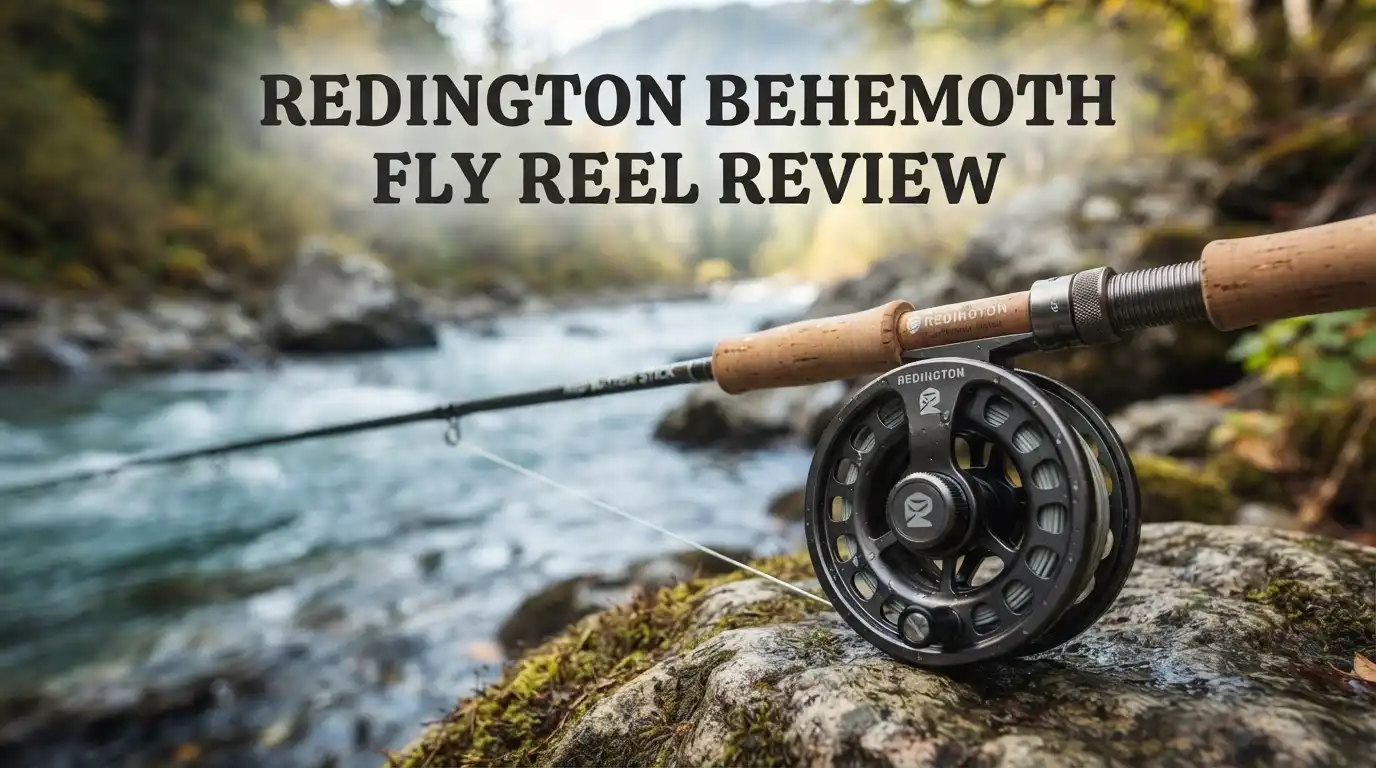
The Behemoth sits in Redington’s value lineup, but it behaves like a mid tier reel. Redington built it around one idea: maximum drag force for minimum money. The reel uses a carbon fiber and stainless steel braking stack, a large arbor frame, and an oversized drag knob you can turn with cold fingers or gloves.
Five sizes cover almost every use case. The 4/5 handles trout. The 5/6 works for bigger trout and smallmouth. The 7/8 covers bass, pike, light salt, and switch rods. The 9/10 and 11/12 handle salmon, muskie, tarpon, and spey duty.
Every size shares the same drag package. That is unusual. Most brands shrink the drag along with the frame. Redington did not. A 4/5 Behemoth has more stopping force than a trout angler will ever need, which is either overkill or cheap insurance depending on your view.
Unboxing Experience: What Arrives in the Box
The box is plain cardboard with reel photos on the front. Nothing fancy. Inside you get the reel, a black nylon reel pouch, and a small owner’s manual.
The pouch surprised me. At this price many brands skip it entirely. The stitching is clean and the padding is thin but adequate. It will survive a tackle bag and stop the reel foot from scratching a rod blank. Use it. The painted finish marks easily when the reel rattles against metal.
The manual covers drag care and the left to right hand retrieve swap. Most people will toss it. The swap itself takes about a minute, no tools needed, and the instructions help if you have never done it before.
First impression out of the pouch: this thing feels dense. The drag knob is huge. The handle has a soft rubbery coating. The spool shows that criss cross spoke pattern that Redington loves to talk about. It looks aggressive, almost like a car wheel.
Build Quality and Die Cast Construction Explained
Die cast has a bad reputation in fly fishing, and sometimes that reputation is earned. Cheap cast reels crack, bind, and corrode. The Behemoth is a better execution of the same process.
Redington poured the spool so the spokes merge into one continuous structure instead of separate arms. That design resists twisting under heavy drag pressure. The frame also carries extra material at the rear, because lab testing showed the strong drag could flex a thinner frame.
My reel has been through cold mornings near zero degrees and summer days over 100. It has landed in sand, mud, and river water. The internals still run clean.
One honest failure: the handle sheared off when the reel landed handle first on pavement. It stayed fishable, but that is the weakness of cast parts. They break before they bend. A machined reel would likely have scuffed instead.
Top 3 Alternative for Redington Behemoth Fly Reel

Last update on 2026-10-22 / Affiliate links / Images from Amazon Product Advertising API
LAMSON Liquid S Series Fly Fishing Reel 3 Pack

Last update on 2026-10-21 / Affiliate links / Images from Amazon Product Advertising API
Orvis Clearwater Reel and Spools 3 Pack

Last update on 2026-10-21 / Affiliate links / Images from Amazon Product Advertising API
Piscifun Sword Fly Fishing Reel
Drag System Performance on the Water
The drag is why you buy this reel. Redington claims 30 pounds of maximum pressure. I never needed anywhere near that, and neither will you. What matters is how the drag behaves in the first half second of a run.
Startup inertia on the Behemoth is low enough that light tippet survives. I fished 5X on the 5/6 and never popped a knot on a hookset or a sudden surge. It is not as glass smooth as a $500 sealed reel, but it is close enough that most anglers will not notice.
The oversized knob gives fine control. You can feel the difference between light and medium settings by feel alone. Turning the knob under load is easy, which helps when a fish suddenly changes direction.
The sound is a soft zip rather than a loud screech. Some anglers want drama. I prefer quiet.
Deep V Spool and Line Capacity
The spool uses a V shaped cavity instead of a flat bed. This holds more backing in the same diameter. The 4/5 and 5/6 take 125 yards of 20 pound backing. The 7/8 takes 200 yards of 20 pound. The 9/10 takes 200 yards of 30 pound, and the 11/12 takes 250 yards of 30 pound.
Those numbers beat many reels one size larger. I loaded a 7/8 with 150 yards of backing, a running line, and a heavy Skagit head with sink tip. It all fit with room left. Some of my 10 weight reels cannot do that.
Line also lays evenly across the spool. During fast runs it never piled on one side. Uneven stacking causes jams and lost fish, so this detail matters more than it sounds.
Sizes, Weights, and Honest Specs
Here is what you need to know before choosing a size. The 4/5 weighs 5.2 ounces with a 3.4 inch diameter. The 5/6 weighs 5.7 ounces at 3.6 inches. The 7/8 jumps to 7.5 ounces and 4 inches. The 9/10 hits 10.8 ounces at 4.4 inches. The 11/12 tops out at 11.4 ounces and 4.7 inches.
Retrieve rate sits around 9 inches per turn on the mid sizes. That is average for a large arbor reel in this class.
Notice the weight jump between the 7/8 and the 9/10. Three extra ounces is significant on a fast action 9 weight. Many anglers pair the 7/8 with an 8 weight rod and skip the 9/10 unless they need the backing. Match the reel to your rod, not just to your line number.
What the Behemoth Does Not Do Well
Honest reviews list the flaws. Here are mine.
The drag is capped, not sealed. Sand and salt can work inside. If you fish the flats, rinse the reel in fresh water after every single session. Skip that step and the drag will feel gritty within a season.
The reel runs heavy for its size. Anglers chasing small trout with light rods will feel the imbalance on the 4/5. There is no size smaller than a 4/5, so ultralight and glass rod fans must look elsewhere.
The handle coating grabs fly line occasionally. It happened to me during sloppy spey casts. Annoying rather than serious.
The painted finish chips. My reel shows wear on the foot and rim after a few seasons. Cosmetic only, but worth knowing.
Pros and Cons
Pros
- Exceptional drag power for the price, rated at 30 pounds with a smooth start
- Deep V spool holds more backing than most reels of the same diameter
- Oversized drag knob adjusts easily with cold or gloved hands
- Even line lay during fast runs, which prevents jams
- Tool free conversion between left and right hand retrieve
- Lifetime warranty on manufacturer defects
- Protective nylon pouch included at no extra cost
- Six color options for matching your rod
Cons
- Drag is capped, not sealed, so saltwater use demands rinsing
- Heavier than machined reels in the same size range
- Cast parts can crack instead of bend if dropped hard
- No sizes below 4/5 for ultralight anglers
- Handle coating sometimes catches fly line
- Finish chips with normal use
Redington Behemoth vs Lamson Liquid
This is the comparison most buyers ask about. Both reels sit near $100 to $160. Both use pressure cast frames.
The Lamson Liquid has a sealed conical drag, which gives it the edge for saltwater and sandy conditions. It also runs lighter, so it balances better on fast rods. The Liquid sounds quieter and feels smoother at very light settings.
The Behemoth wins on raw stopping power and backing capacity. It also wins on the drag knob, which is far easier to adjust than the Liquid’s smaller dial.
My simple rule: choose the Liquid for salt and light trout work. Choose the Behemoth for streamers, big freshwater fish, spey rods, and anyone who wants maximum drag force per dollar. Neither choice is wrong.
Setup Tips for Your Behemoth
Load plenty of backing. The deep spool needs it. Running a bare spool with only fly line leaves a huge gap and kills your retrieve rate. Fill the spool until the fly line sits within about a quarter inch of the rim.
Use a line winder or ask your fly shop to spool it. Hand winding 200 yards of backing is slow and uneven.
Set your drag by feel before you fish. Pull line off the spool with your hand. You want steady resistance, not a lock. Most anglers overtighten.
Swap the retrieve direction before your first trip if needed. Pop the spool, flip the clutch bearing, and reassemble. Do this at home, not streamside in the dark.
Maintenance and Long Term Care
Care is simple but necessary. After freshwater trips, wipe the reel dry and store it in the pouch. After saltwater, rinse under a gentle freshwater stream with the drag backed off, then dry it fully before storage.
Never blast the reel with high pressure water. That forces salt past the cap and into the drag stack.
Back off the drag tension during storage. Leaving carbon discs compressed for months flattens them over time.
Check the drag knob and handle screws each season. Cast threads can loosen.
If something does fail, Redington’s lifetime warranty covers manufacturer defects for the original owner. Damage from drops and accidents is not covered, but replacement parts are usually available for a modest fee. That support network is part of the value here.
Price and Value in 2026
Pricing has climbed since launch. The Behemoth started around $109. Today you will usually see it between roughly $150 and $185 depending on size and retailer. Always check the current listing price, since it shifts often.
Even at the higher number, the value proposition holds. Nothing else near this price offers the same drag force with this much backing capacity. Machined reels with comparable stopping power start near $400.
Is it a lifetime reel? Honestly, maybe not. Cast construction and an unsealed drag mean it will not outlive a premium machined reel. But it will handle years of hard fishing, and the warranty softens the risk.
For anglers upgrading from a starter combo, this is one of the smartest purchases available.
Final Verdict: Should You Buy It?
Last update on 2026-10-22 / Affiliate links / Images from Amazon Product Advertising API
The Redington Behemoth remains a strong buy in 2026. It delivers drag performance that embarrasses reels at twice the price. The deep spool, even line lay, and giant drag knob are genuinely useful features, not marketing talk.
It is not perfect. It is heavy. The drag is not sealed. Cast parts break if you abuse them. Ultralight anglers should shop elsewhere.
Buy the Behemoth if you chase fish that pull hard, fish streamers, run a spey or switch rod, or want insurance on a budget. Skip it if you fish tiny trout streams with light rods or spend most of your time on salty flats without a rinse station.
For most anglers, the value here is still hard to beat.
Frequently Asked Questions
Is the Redington Behemoth good for saltwater?
Yes, with one condition. The larger sizes handle saltwater species well, and the drag has the power for bonefish, redfish, and false albacore. The drag is capped rather than sealed, so you must rinse the reel in fresh water after every saltwater session. Skip the rinse and salt will reach the drag stack.
What size Behemoth should I buy?
Match the reel to your rod weight and your backing needs. Choose the 4/5 for light trout rods, the 5/6 for all around trout and bass, the 7/8 for bass, pike, light salt, and switch rods, and the 9/10 or 11/12 for salmon, muskie, tarpon, and spey setups.
How much drag does the Behemoth really have?
Redington rates the maximum at 30 pounds. Independent testers have not always confirmed the exact number, but everyone agrees the drag is far stronger than anything else in this price class. Practical fishing rarely needs more than a few pounds of pressure.
Is the Behemoth too heavy for a 5 weight rod?
The 5/6 weighs 5.7 ounces, which balances fine on most modern 5 weight rods. It feels slightly heavier than a machined reel of the same size. Anglers who prefer very light setups or fish glass rods may want a lighter option.
Does the Behemoth come with a reel case?
Yes. A padded nylon reel pouch is included in the box. It offers basic protection during transport and storage.
Can I switch the Behemoth to left hand retrieve?
Yes. The conversion takes about a minute and requires no tools. Remove the spool, flip the clutch bearing, and reassemble. The included manual explains the steps.

Hi, I’m Ivy Webb, the passionate angler and creator behind BaitHookVault.com. I spend my days out on the water personally testing and reviewing a wide variety of fishing tools and gear.