Sage Sonic Fly Rod Review 2026: Worth It?
The Sage Sonic sits in a strange spot in 2026. It is a genuine American made rod with a lifetime warranty, and right now it is selling for hundreds less than its old sticker price.
Shops are clearing the last of their stock because Sage replaced it with the Arrow. That creates an unusual window for anglers who care more about how a rod casts than how new it looks.
This review covers what the Sonic does beautifully, what it does poorly, and whether a closeout price makes it the smartest buy of the year or a rod you should skip.
In a Nutshell:
- The Sonic is a medium fast rod wearing a fast action label. Sage markets it as fast, but most casters rate it around a 7 out of 10 in stiffness. It bends deep into the blank and gives clear feedback, which makes it far friendlier than the old Sage ONE.
- It is handcrafted in the USA with Konnetic Technology and a lifetime original owner warranty. You get a hard rod tube, a cloth sock, Fuji ceramic stripping guides, and real cork. That combination is rare under 500 dollars.
- Closeout pricing is the headline story of 2026. The Sonic launched around 550 to 675 dollars. Shops now list it between roughly 399 and 500 dollars while stock lasts.
- Swing weight is its weak point. Next to the newer Sage Arrow, the Sonic feels slightly tip heavy and damps slower. Long sessions ask more from your shoulder.
- Model choice matters more than usual. The 8’6″ 4 weight, 8’6″ 5 weight, and 9’ 5 weight are the stars. The 9’ 4 weight feels bouncy inside 30 feet and only shines past 40.
- Best for one rod anglers. If you want a single trout rod that throws dries, nymphs, and light streamers, the Sonic still delivers serious value.
First Look at the Sage Sonic Fly Rod

Last update on 2026-11-18 / Affiliate links / Images from Amazon Product Advertising API
The Sonic arrived as Sage’s mid priced workhorse, built to bridge the gap between entry level graphite and the flagship X and R8 Core series. Sage’s design team, led by Peter Knox, wrote all new tapers for it rather than recycling old ones. The goal was simple. They wanted feel, feedback, and predictable power.
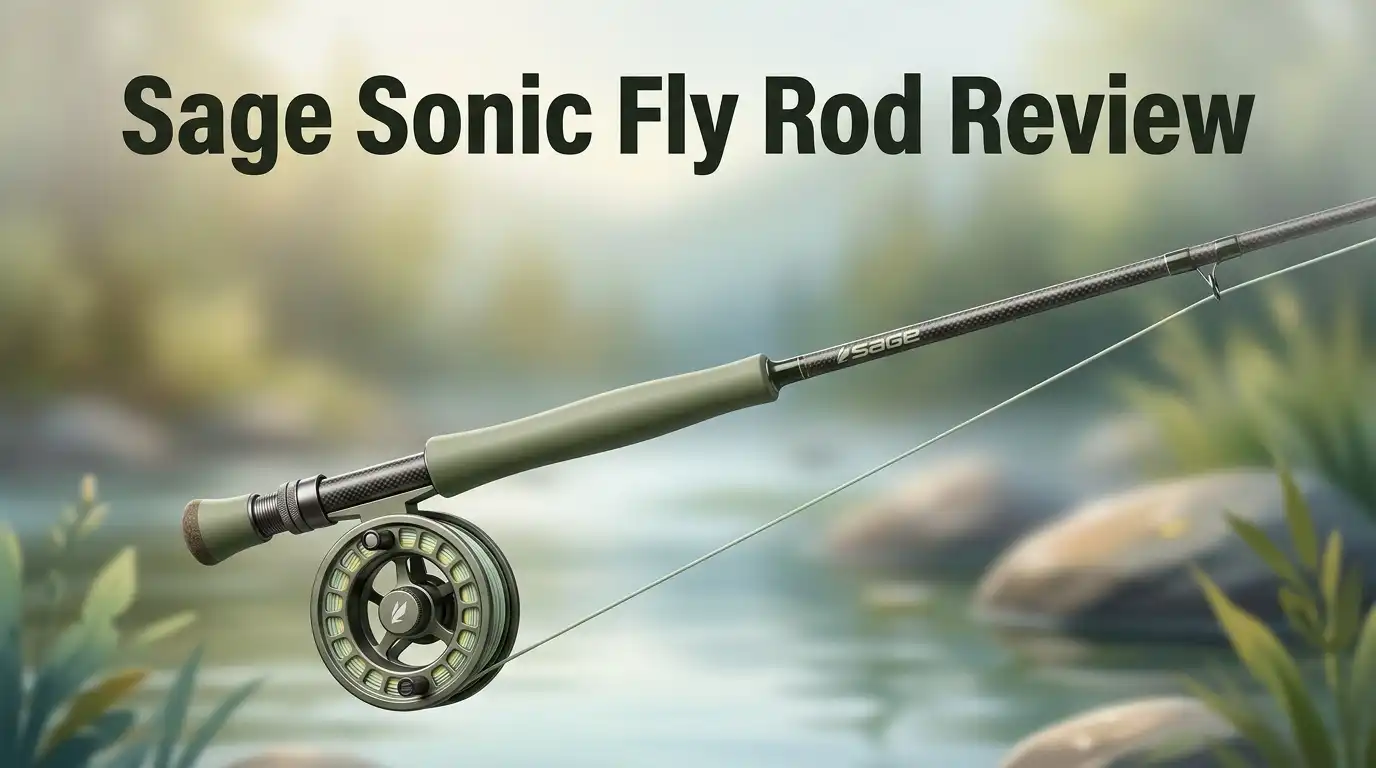
The blank wears a deep juniper green finish with charcoal thread wraps and gunmetal trim. It looks understated in a good way. On the water the color reads as dark olive and does not flash at spooky fish. The cosmetics feel more expensive than the price tag suggests.
Sage built the Sonic in 16 models, from a 7’6″ 3 weight up to a 9’6″ 8 weight. Lighter models use a snub nose half wells cork grip with a walnut reel seat insert. Heavier models get a full wells grip, an anodized aluminum seat, and a fighting butt.
Physical weight on the 9 foot 5 weight measures about 2.8 ounces. That is light by any standard. The rod feels slim in hand, with thin ferrules and no clubby butt section.
Every Sonic uses Konnetic Technology, the same material platform that made the Sage ONE famous a decade ago. The difference is the taper. Where the ONE punished sloppy timing, the Sonic forgives it. That single change turned a specialist into an all arounder.
The Unboxing Experience
The box is plain cardboard with a Sage label. Nothing fancy. What sits inside is the part that matters, and Sage got the presentation right for a rod at this price.
You pull out a rigid black aluminum tube with a screw cap and a molded Sage badge. The cap threads smoothly and seals tight. This is a real travel tube, not the flimsy cloth roll some brands ship at this level. Inside the tube sits a cloth sock with individual dividers for all four sections.
Sliding the sections out, the first thing I noticed was the smell of fresh cork and epoxy. The cork rings are tight and pale, with only a few tiny filled pits. The grip has a slight matte texture rather than the glossy sanded feel of cheap rods.
The ferrules fit with a firm push and a quiet click. No wobble, no grinding. A light twist and they seat perfectly aligned with the guide spine. Sage marks alignment dots on each section, which speeds up rigging in low light.
The guide wraps look clean under close inspection. Epoxy coating is even, with no bubbles or sags. The hook keeper sits just above the grip and holds a size 18 fly without stretching the leader.
One small gripe. There is no warranty card or setup guide in the tube. You register online instead. It takes two minutes, but a printed card would be a nice touch on a rod that costs this much.
Build Quality and Components
Sage builds the Sonic in Bainbridge Island, Washington. That matters because the rod goes through hand rolling, hand wrapping, and hand finishing by people who make Sage’s flagship rods. Quality control on my samples was excellent across three different models.
The stripping guides are Fuji ceramic. They shed water fast and cut friction on long shoots. Above them sit hard chrome snake guides in a black finish that resists salt and scratching. Guide spacing is generous enough that a nail knot slides through without catching.
Reel seats differ by model. The 3 weight through 5 weight rods without fighting butts use a walnut insert with a matte black uplocking hardware set. The heavier models switch to full anodized aluminum. Both versions lock a reel foot down tight and stay tight all day.
Cork grade is strong. Sage calls it super grade, and the rings show far fewer fills than Redington or TFO rods in the same price bracket. After a full season the grip darkens slightly but does not crumble at the edges.
Durability deserves a mention. Konnetic blanks have a reputation for breaking less than earlier Sage graphite. I have not snapped one. Anecdotally, guides who fish Sonics hard report fewer tip failures than they saw with the Pulse.
The blank does show scuffs. The juniper finish marks easily when a weighted fly clips it. Cosmetic wear appears faster on the Sonic than on rods with gloss coats. It does not affect performance, but collectors should know.
Casting Feel and Rod Action
Sage lists the Sonic as fast action. In practice it casts like a well behaved medium fast rod. The blank flexes progressively down into the mid and lower sections, then recovers with authority. That progressive bend is what makes it approachable.
Load it in close and the rod tells you exactly where the line is. Push harder and the butt section kicks in without any dead spot. There is no sudden wall of stiffness that forces you to speed up your stroke.
Loops come out level and predictable. Line speed is adequate rather than explosive. The Sonic will not win a distance shootout, and it does not need to. Most trout fishing happens inside 50 feet, and that is where this rod lives.
Accuracy is strong once you settle into its tempo. The stroke it wants is relaxed and slightly longer than what an Igniter or NRX+ demands. Anglers who cast with a quick wrist snap may find the Sonic feels slow at first.
Tracking is clean. The rod stays in plane through the stroke, so tight loops come easily and tailing loops stay rare. Mending is a genuine highlight. The 9 foot models pick line off water with almost no effort and reposition a nymph rig with a single flick.
Dampening is the honest weak spot. Give the rod a wiggle test and the vibration lingers longer than on newer blanks. That translates into a touch more tip bounce on rushed casts and slightly more fatigue over a long day.
Top 3 Alternative for Sage Sonic Fly Rod

Last update on 2026-11-18 / Affiliate links / Images from Amazon Product Advertising API
Orvis Clearwater Fly Rod Outfit

Last update on 2026-11-18 / Affiliate links / Images from Amazon Product Advertising API
Redington VICE Fly Fishing Rod

Last update on 2026-11-18 / Affiliate links / Images from Amazon Product Advertising API
ECHO Carbon XL Fly Rod
Model by Model Guide to the Sonic Lineup
Not every Sonic is equally good. Testing across the range revealed clear winners and one clear underachiever. Picking the right model changes your entire experience with this rod.
The 7’6″ 3 weight surprised almost everyone who cast it. Short graphite 3 weights usually feel tight and clubby. This one bends easily in close, throws level loops with a few feet of line out, and still reaches the head of a plunge pool. It is one of the sweetest short rods Sage has produced.
The 8’6″ 4 weight works automatically from 15 to 30 feet. Tempo is even and relaxed. The blank diameter runs slightly larger than a Trout LL, so it feels solid rather than featherlight, but it never feels sluggish.
The 9 foot 4 weight is the odd one out. It needs a heavier line like a Rio Gold or MPX to load inside 30 feet, and even then it feels bouncy and a little unrefined up close. Past 40 feet it transforms and wants to keep going. Buy it for big tailwaters, not small freestones.
The 8’6″ 5 weight is a favorite. It flexes evenly like a premium Scott or Winston while keeping a medium fast pulse. It still turns over a loop at 60 to 70 feet with no extra input.
The 9 foot 5 weight is the all arounder. It loads from 10 feet and delivers cleanly past 70. Stability is excellent and the action stays relaxing.
The 9’1″ 6 weight generates the highest line speed in the family. It handles aggressive hauls, big terrestrials, and medium streamers without bouncing.
Best Fly Lines for the Sage Sonic
Last update on 2026-11-18 / Affiliate links / Images from Amazon Product Advertising API
Line choice makes or breaks this rod. Sage officially recommends the Rio Gold across the Sonic range, and that advice holds up for most models. The Gold gives the Sonic enough mass to load in close while still shooting line at distance.
On the 9 foot 5 weight the Gold is close to perfect. It requires no extra power, no hard stops, and no caution. The rod simply does what you ask. Pair those two and you have a setup that covers dries, nymphs, and hopper dropper rigs all season.
For technical dry fly work, a Rio Technical Trout or a Scientific Anglers Trout Taper sharpens things up. These lighter, longer front taper designs let the Sonic throw a laser tight loop and drop a size 20 midge without slapping the surface. The 9 foot 4 weight in particular loves the Technical Trout.
The 8’6″ 4 weight is the exception where opinions split. Some casters prefer the Gold for its extra load in close. Others find the Gold introduces bounciness and go with the Trout Taper instead. Try both if you can.
Avoid heavily front loaded lines on the light models. Aggressive tapers like the SA Titan or Rio Big Nasty overload the tip and kill the feedback that makes this rod fun. Save those for the 6 weight and up.
For streamer duty on the 6 weight, a Rio Perception adds punch without wrecking presentation. Match the line to the model, not just the line weight number.
On the Water Performance for Trout
The Sonic earns its keep on trout water. My first full day with the 9 foot 5 weight was supposed to include testing other rods. I never picked them up.
Line pickup is effortless. The rod lifts 40 feet of line off the water with a smooth sweep and no strain. Line control is the quality that shapes everything else about fishing this rod. Mends go exactly where you aim them.
On flat, clear pools the Sonic presents with real delicacy. Loops unroll and the leader lays out straight without kicking. I fished 6X tippet and size 18 dries without a single break off on the strike. The soft tip protects light tippet better than most fast action rods at this price.
Fighting fish is a pleasure. The blank bends deep and cushions runs, yet the butt section has enough backbone to steer a heavy brown out of fast current. A 20 inch rainbow on the 5 weight never felt out of control.
Wind performance is decent, not outstanding. The rod pushes through a moderate breeze if you tighten your loop and add a haul. Strong gusts expose the modest line speed, and you will work harder than you would with an Igniter or R8 Core.
Reach is good on the 9 foot and 9’6″ models. Deep wading in big water favors the longer options. On brushy creeks the 7’6″ 3 weight and 8’6″ 4 weight are the right tools.
Nymphing and Streamer Work
Nymphing with the Sonic is genuinely strong. The 9 foot and 9’6″ models carry a weighted double nymph rig with an indicator without collapsing. The medium fast action loads under weight instead of fighting it.
Casting a heavy rig is smooth. Open your loop slightly, slow your stroke, and the rod lobs the whole setup with no tangles. Tuck casts land the flies upstream of the indicator reliably. Hook sets at 40 feet come with a firm lift rather than a violent strip.
Indicator control benefits from the rod’s line handling. High sticking through a seam is easy with the 9’6″ 5 weight. Drift control feels intuitive because the tip telegraphs when the flies drag.
Euro nymphing is not a strength. The Sonic has no dedicated euro model and the tip lacks the extreme sensitivity of a purpose built rod. It works in a pinch. It does not compete with an ESN or a Carbon XL euro stick.
Streamers depend on the model. The 9’1″ 6 weight handles medium sized streamers and heavy nymph rigs well, especially with a Perception line. The tip follows through, which adds swing weight but finishes the cast with authority.
Large articulated flies are a bridge too far. The Sonic does not have the tip stiffness to turn over a six inch bug on a sink tip. Buy a Payload or a dedicated streamer rod for that job.
Pros and Cons of the Sage Sonic
Pros
- Handcrafted in the USA with the same build process as Sage flagship rods, which is almost unheard of at current closeout pricing.
- Lifetime original owner warranty through Far Bank, with affordable repair fees even for damage outside coverage.
- Medium fast action with real feedback, making it far more approachable than the old Sage ONE or a stiff modern cannon.
- Outstanding line control and mending, especially in the 9 foot and 9’6″ models.
- Excellent short rod options. The 7’6″ 3 weight and 8’6″ 4 weight are class leaders for creek work.
- Quality components including Fuji ceramic stripping guides, super grade cork, and walnut or anodized aluminum seats.
- Hard aluminum rod tube and divided cloth sock included, not sold separately.
- Strong tippet protection thanks to a soft, responsive tip section.
- Slim, light blanks with a physical weight around 2.8 ounces on the 9 foot 5 weight.
- Genuine versatility, covering dries, nymphs, and light streamers with one rod.
Cons
- Higher swing weight than newer rods. It feels slightly tip heavy and more tiring over a long day.
- Slower dampening. The blank keeps vibrating longer after the stroke than a KonneticHD blank does.
- The 9 foot 4 weight is bouncy and unrefined inside 30 feet. It only performs well past 40 feet.
- Modest line speed. Heavy wind and long distance casting expose its limits.
- Discontinued status means shrinking stock, fewer size choices, and no future model updates.
- No euro nymphing or dedicated streamer models in the range.
- The juniper finish scuffs easily when struck by weighted flies.
- No printed warranty card or documentation in the tube.
- Requires a matched line. The wrong taper makes it feel either bouncy or dead.
- Resale value now sits lower because buyers know it has been replaced.
What the Sage Sonic Does Not Do Well
Honest reviews name the failures, so here they are. The Sonic is not a distance machine. If your fishing involves regular 80 foot casts into wind, this rod will frustrate you. Line speed simply tops out earlier than a premium fast action blank.
Swing weight is the complaint I hear most. Side by side against the Sage Arrow, the Sonic feels heavier in motion even though the scale weight differs by only a tenth of an ounce. You notice it in your shoulder after four hours of nymphing.
Dampening lags behind current technology. Shake a Sonic and the wobble lingers. That vibration shows up as tip bounce when your timing slips, and it widens loops on rushed casts.
The 9 foot 4 weight deserves a specific warning. Tip and butt sections do not feel equally tuned. Inside 30 feet you get bounce and wide loops. It is a fine nymphing 4 weight and a superb long range dry fly rod, but a poor small stream choice.
Specialist work is off the table. There is no euro nymph model, no big streamer model, and no true saltwater flats model in the series. The Sonic is a generalist and nothing more.
Availability is now a real problem. Shops are selling through remaining inventory, so your preferred length and weight may not exist. Amazon listings go in and out of stock without warning.
Finally, it is not a beginner bargain. At 400 dollars it still costs more than a Clearwater outfit that includes a reel and line. Newcomers get better total value elsewhere.
Sage Sonic vs Sage Arrow
The Arrow is the direct replacement, and comparing them explains why the Sonic went on closeout. The Arrow is a distinct upgrade in feel, and it is honest to say so.
Both rods weigh nearly the same on a scale. The 9 foot 5 weight Arrow measures 2.7 ounces against the Sonic’s 2.8 ounces. In hand they feel similar, though the Sonic reads slightly tip heavier.
The difference appears the moment you cast. The Arrow uses KonneticHD, a higher density fiber composite, and it damps vibration noticeably faster. Swing weight feels lighter, responsiveness improves, and the rod demands less effort at every distance.
Accuracy at 50 feet was good with both rods. The Sonic needed more input to hit the target and required a harder forward drive to tighten loops. The Arrow got there with less work.
Flex profile is closer than you might expect. The Arrow is not dramatically slower or faster. The flavor differs more than the speed. The Arrow feels alive where the Sonic feels solid.
Price is the counterargument. The Arrow lists around 1100 dollars in Sage’s current freshwater range. The Sonic sells for roughly a third of that on closeout. You are paying triple for better dampening and lighter swing weight.
My take is straightforward. If budget is open and you cast a lot, buy the Arrow. If you want maximum rod for minimum money, the Sonic is the smarter purchase in 2026.
Sage Sonic vs Other Mid Priced Rods
The mid price bracket is crowded, and the Sonic’s closeout tag drops it into company it used to outrank. Comparisons now cut both ways.
Against the Sage Foundation, the Sonic wins on blank technology and refinement. The Foundation is a solid, honest rod with a slightly simpler taper. The Sonic feels smoother and gives more feedback, especially in the lighter line weights.
Against the Orvis Clearwater, the Sonic wins on feel and loses on value. The Clearwater outfit includes a reel and line for less money than a bare Sonic. Beginners get a complete kit. Experienced casters will prefer the Sonic blank.
Against the Redington VICE, the story is similar. The VICE is a fast, stiff, durable rod that punches wind and throws streamers for bass. It lacks the Sonic’s delicacy and its cork grade is noticeably lower.
Against the Echo Carbon XL, the Sonic costs more than double and delivers better components, better cork, and a more refined action. The Carbon XL remains the value pick if your budget stops near 200 dollars.
Against the TFO Pro III, the Sonic offers a nicer build and a friendlier taper. The Pro III counters with wider model selection and strong availability.
Against the Loomis IMX Pro, the comparison gets close. The Sonic leans slightly more toward power. Both are true mid tier performers. Choose the Sonic for feedback and the IMX Pro for crispness.
Price, Warranty and Value in 2026
Pricing changed everything about this rod. The Sonic launched around 550 dollars for the 9 foot 5 weight, and later listings climbed to 675 dollars. Closeout pricing now runs roughly 399 to 500 dollars depending on the shop and model.
Some retailers have posted the Sonic at 405 dollars down from 675. Others advertise 399 dollars for remaining 4 weight through 6 weight stock. That is close to half price on an American made rod.
The warranty adds real value. Every new Sage rod bought from an authorized dealer carries an original owner warranty against defects in materials and workmanship. Far Bank handles repairs directly.
Damage outside warranty coverage is not free, but it is reasonable. Current models run about 50 dollars for repair. Recent models cost around 95 dollars. Legacy rods sit near 195 dollars. The Sonic will move from current to recent status now that it is discontinued.
Buy from an authorized dealer. Warranty coverage depends on it, and grey market listings on marketplaces may not qualify. Check the serial number and keep your receipt.
Resale value has softened. Used Sonics now trade well below their original price because buyers know the Arrow replaced them. That hurts if you flip rods often and helps if you buy used.
Overall value is strong. For roughly 400 dollars you get a handcrafted rod, a hard tube, premium components, and a warranty that outlasts most anglers’ careers.
Who Should Buy the Sage Sonic
This rod suits specific anglers very well and others poorly. Match yourself honestly before you buy.
Buy the Sonic if you want one trout rod that does everything competently. It throws dries, carries nymph rigs, and handles light streamers. The 9 foot 5 weight or 8’6″ 5 weight covers most trout fishing in North America.
Buy it if you value feedback over raw speed. Casters with relaxed timing will love how the blank talks back. Anglers stepping up from an entry level rod will feel an immediate jump in control.
Buy it if you want American manufacturing and a lifetime warranty without spending 1000 dollars. That combination barely exists anymore at this price.
Buy the 7’6″ 3 weight if you fish small mountain creeks. It is the standout model in the range and a rod you will keep for decades.
Skip it if you fish windy saltwater flats or throw large articulated streamers. The Sonic lacks the tip power and line speed those jobs need.
Skip it if you euro nymph seriously. A dedicated euro rod will outperform it by a wide margin.
Skip it if you are brand new to fly fishing and need a full outfit. A Clearwater or Echo Carbon XL combo gets you fishing for less total money.
Skip it if lightest possible swing weight is your priority. The Arrow, the X, or the R8 Core all beat it there.
Final Verdict
The Sage Sonic is a very good rod at a very good price, and that sentence carries an asterisk. It is no longer the newest or the smoothest mid priced Sage, but it may be the best value Sage has ever put on clearance.
What I liked most was the honesty of the casting stroke. The rod bends where you expect, recovers when you expect, and tells you what the line is doing. That feedback builds better casters. Line control and mending on the 9 foot models are genuinely excellent.
What held it back was swing weight and dampening. The Sonic feels heavier in motion than modern blanks and keeps vibrating a beat too long. Over a full day that costs you energy and a little accuracy.
Model selection matters more than with most series. The 3 weight, both 8’6″ models, the 9 foot 5 weight, and the 6 weight are all strong. The 9 foot 4 weight is the one to approach carefully.
My rating sits at 4 out of 5 stars at closeout pricing and 3.5 out of 5 at the original retail price. The discount is what makes this an easy recommendation.
If you can find your size in stock, buy it. Pair it with a Rio Gold, register the warranty, and fish it for twenty years. Stock is finite, and when it is gone the value proposition disappears with it.
Frequently Asked Questions
Is the Sage Sonic discontinued?
Yes. Sage replaced the Sonic with the Arrow series in early 2026. Shops are selling remaining inventory at closeout prices, typically between 399 and 500 dollars. Availability shrinks every month, so specific lengths and line weights sell out quickly.
Is the Sage Sonic made in the USA?
Yes. Sage handcrafts the Sonic at its facility on Bainbridge Island, Washington. The rod goes through the same hand rolling, wrapping, and finishing process used for Sage flagship models.
What action is the Sage Sonic?
Sage lists it as fast action. Most experienced casters describe it as medium fast, around a 7 out of 10 in stiffness. The blank flexes progressively into the butt section and recovers with authority.
What fly line works best on the Sage Sonic?
Rio Gold is the safest all around choice and the one Sage recommends. For technical dry fly fishing, try a Rio Technical Trout or a Scientific Anglers Trout Taper. Avoid heavily front loaded tapers on the lighter models.
Does the Sage Sonic come with a warranty?
Yes. Every new Sonic purchased from an authorized dealer carries a Sage original owner warranty against defects in materials and workmanship. Repairs for damage outside coverage cost roughly 50 to 95 dollars depending on model status.
Which Sage Sonic model should I buy first?
The 9 foot 5 weight is the best single choice for general trout fishing. The 8’6″ 5 weight suits smaller water. The 7’6″ 3 weight is the standout for tight mountain creeks.
Is the Sage Arrow better than the Sonic?
In casting feel, yes. The Arrow damps faster, carries lighter swing weight, and requires less effort at all distances. It also costs roughly triple the current Sonic closeout price, so value favors the Sonic.
Can the Sage Sonic handle saltwater?
The 7 weight and 8 weight models can manage light inshore work and will survive if rinsed properly. The series was designed for freshwater, and dedicated saltwater rods like the Sage Signal handle wind and big flies far better.

Hi, I’m Ivy Webb, the passionate angler and creator behind BaitHookVault.com. I spend my days out on the water personally testing and reviewing a wide variety of fishing tools and gear.