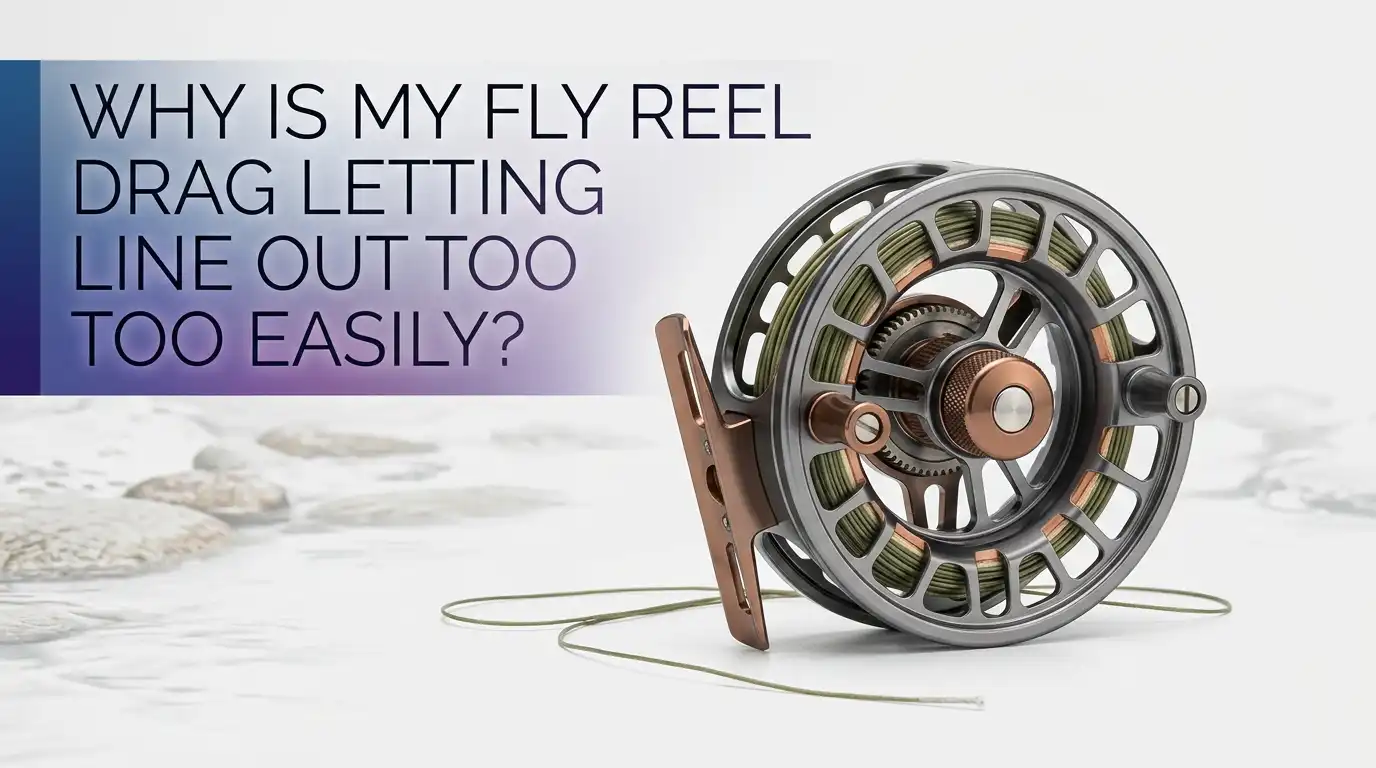
Why Is My Fly Reel Drag Letting Line Out Too Easily?
Few things ruin a great day on the water faster than a fly reel that gives up line without a fight. You hook a fish, the reel spins free, and your line peels off with almost no resistance.
The fish runs, your slack grows, and your control slips away. A weak or slipping drag turns an exciting moment into a frustrating one.
The good news is simple. Most drag problems have clear causes and easy fixes. You do not always need a new reel. You often just need a clean, an adjustment, or a small repair.
Key Takeaways
- A loose drag knob is the most common cause. Many anglers forget to tighten it or back it off without remembering. Always check your knob setting before you fish.
- Dirty or worn drag washers cause slipping. Grit, salt, and old grease build up inside your reel. A simple clean often restores full drag power.
- The wrong lubricant ruins a drag system. Heavy grease or silicone oil can make washers slick and weak. Use only the lube your reel maker recommends.
- Loose backing makes the spool spin under the line. If your backing was not wound tight, the whole spool slips and line feels free. Re-spooling fixes this fast.
- A good drag setting equals about a quarter to a third of your tippet strength. Set it right and the fish runs without breaking off.
- Click and pawl reels work differently from disc drag reels. Knowing your type helps you fix the right part. Each system needs its own care.
Understanding How Your Fly Reel Drag Actually Works
Before you fix the problem, you should know what the drag does. The drag is a braking system. It controls how easily line leaves your spool when a fish pulls. A tight drag makes line hard to pull. A loose drag lets line out with little effort.
Most modern reels use a disc drag system. This system presses two or more washers together. The pressure between them creates friction. When you turn the drag knob, you increase or decrease that pressure.
Older or simpler reels use a click and pawl system. A small spring loaded part clicks against a gear. This gives light resistance and that classic sound.
When your drag lets line out too easily, the friction is failing. Your job is to find where that friction is being lost. Knowing the system points you to the right part.
Reason One: Your Drag Knob Is Set Too Loose
This sounds basic, but it is the number one cause. Many anglers simply forget to tighten the drag knob. You may have backed it off after your last trip to protect the washers. That is a smart habit, but it means you start with almost no drag.
Some knobs also loosen on their own. Vibration during casting or travel can turn them. A knob that drifts even a quarter turn changes your drag a lot.
Here is your quick fix. Hold the reel and pull line by hand. Turn the knob clockwise in small steps. Pull again after each turn. Stop when the line pulls out smoothly but with steady resistance.
Pros: This costs nothing and takes seconds.
Cons: It only helps if the knob itself works. If you tighten fully and still feel no drag, the problem lies deeper inside the reel.
Reason Two: Dirty Drag Washers Are Slipping
Drag washers need clean, even contact to grip. Dirt, sand, salt, and old grease build up between them over time. This buildup acts like a lubricant. The washers slide past each other instead of gripping. Your line then peels off too easily.
Salt water anglers face this most. Salt crystals dry inside the reel and break down the friction surface. Even fresh water grit causes the same trouble after many trips.
To fix it, open your reel. Remove the spool and the drag stack. Wipe each washer with a dry cloth. Use a soft brush for stubborn grit. Avoid soaking cork washers in water.
Pros: Cleaning often fully restores your drag power. It is cheap and effective.
Cons: It takes time and care. You must reassemble the parts in the correct order, so take photos as you go.
Reason Three: You Used the Wrong Lubricant
Lubricant matters more than most anglers think. The wrong grease or oil can destroy your drag. Heavy grease, silicone spray, or general purpose oil can coat the washers. This makes them slippery and weak.
Cork drags suffer the most here. Some oils dissolve the glue that holds the cork in place. The cork then lifts, shifts, or loses its grip on the spool.
Always use the lubricant your reel maker recommends. Many disc drags need a special drag grease applied in a thin layer. Some sealed drags need no lube at all. Cork drags often want neatsfoot oil, used sparingly.
Pros: Correct lube keeps your drag smooth and strong for years.
Cons: Removing the wrong lube takes work. You must degrease the parts fully before adding the right product, or the slipping continues.
Reason Four: Worn Out Drag Washers
Washers do not last forever. Years of pressure and friction wear them down. Cork can crack, dry out, or flatten. Carbon and felt washers can glaze over and lose their grip. When this happens, even a fully tight knob gives weak drag.
You can spot worn washers by eye. Look for cracks, shiny patches, uneven thickness, or crumbling edges. A healthy cork washer feels slightly soft and even. A glazed washer feels hard and slick.
The fix is replacement. Many reel makers sell drag kits for their models. You remove the old washer and fit the new one in the same spot.
Pros: New washers bring back full, smooth drag like a new reel.
Cons: You must find the right part for your exact model. Some older reels have no parts available, which may force a creative repair.
Reason Five: Loose Backing Lets the Spool Slip
This one fools a lot of people. If your backing was wound on loosely, the whole spool can spin under the line. You pull the fly line and it feels free. But the drag works fine. The line is just slipping around a loose backing base.
This often happens when backing is not tied tight to the arbor. An arbor knot with a half hitch stops the backing from spinning at the start. Loose first wraps cause every layer above to slip.
To fix it, strip the line off and re-spool it. Tie the backing tight to the arbor. Wind it on with firm, steady tension. Then add your fly line over the snug backing.
Pros: Re-spooling solves the slipping and improves casting too.
Cons: It takes time and patience. You also risk tangles if you strip line onto the ground without care.
Reason Six: The Drag System Needs a Full Cleaning Service
Sometimes one clean of the washers is not enough. The whole drag mechanism may need a service. This means a deeper clean of the spindle, the bearings, the clutch, and every contact surface. Old grease can stiffen and then break down into a slick film.
Sealed drags need less of this. But open drags collect grime in every gap. A roller clutch with stiff old grease can also slip when it should hold.
Here is the process. Disassemble the reel fully. Degrease every metal part with a proper cleaner. Dry it all. Then relube with the correct light oil or drag grease.
Pros: A full service restores like new performance and extends reel life.
Cons: It is the most involved fix. Beginners may feel unsure, so a shop service is a safe choice if you doubt yourself.
Reason Seven: A Damaged or Broken Drag Part
If you have cleaned, lubed, and adjusted with no luck, a part may be broken. Springs, clutches, pawls, and bearings can all fail. A weak click and pawl spring gives almost no resistance. A failed one way clutch lets the spool spin both ways.
Open the reel and inspect each moving part. A coiled spring that has lost tension feels limp and floppy. A worn pawl tip looks rounded instead of sharp.
For a click and pawl reel, you can sometimes stretch the spring gently to add tension. For a broken clutch, you usually need a replacement part.
Pros: Replacing one small part is cheaper than a new reel.
Cons: Some parts are hard to find for older models. Precision parts may also need careful fitting to work right.
Reason Eight: Setting Your Drag the Right Way
A working reel still fails you if you set the drag wrong. The goal is enough pressure to fight the fish without breaking the tippet. A common rule sets the drag at about one quarter to one third of your tippet breaking strength. Some anglers go up to half for big fish.
Here is a simple field method. Thread your line through the rod guides. Pull line straight off the reel by hand. It should pull smoothly with firm, steady resistance and no sudden jerks.
Start loose and tighten in small steps. Test after each turn. Too tight risks a snapped tippet. Too loose lets fish run wild.
Pros: A correct setting protects your tippet and lands more fish.
Cons: It takes practice to feel the right pressure. Conditions and fish size change what you need each day.
How to Clean Your Drag System Step by Step
Let us put the cleaning into a clear order. Follow these steps and you will fix most slipping drags at home. Work over a clean towel so small parts do not roll away.
First, remove the spool from the frame. Second, take out the drag knob and the washer stack. Lay the parts in order so you remember how they fit. Take a photo with your phone for safety.
Third, wipe each washer and surface with a dry cloth. Use a soft brush for grit. Fourth, degrease metal parts if old grease is sticky. Fifth, apply the correct lube in a thin layer. Sixth, reassemble in the exact reverse order.
Pros: This routine restores drag power and costs almost nothing.
Cons: Rushing causes lost parts or wrong assembly, so move slowly and stay organized.
Disc Drag Versus Click and Pawl: Knowing Your System
Your fix depends on your drag type. Disc drags use friction washers and adjustable knobs. They give strong, smooth braking and handle big fish well. They need cleaning and correct lube to stay strong.
Click and pawl reels use a spring and gear. They give light resistance and a loud, fun click. They suit small streams and small fish. They cannot apply heavy drag, so you palm the spool to add pressure.
If your click and pawl reel feels too free, that may be normal. These reels are meant to be light. You control extra braking with your hand on the rim.
Pros of disc drag: Strong, smooth, low maintenance for big fish.
Cons of disc drag: More parts to fail and service.
Pros of click and pawl: Simple, reliable, and easy to fix.
Cons of click and pawl: Weak braking that depends on your palming skill.
Preventing Drag Problems Before They Start
The best fix is one you never need. Good habits keep your drag strong for years. A few minutes of care after each trip saves you trouble on the water.
Rinse your reel with fresh water after salt water trips. Salt is the worst enemy of any drag system. Dry the reel before you store it. Back off the drag knob fully when you put the reel away. This takes pressure off the washers so they keep their shape.
Store your reel in a dry bag or case. Service the drag once a year, or more if you fish hard. Keep grit and sand away from the open parts.
Pros: Prevention costs little time and avoids most repairs.
Cons: It needs steady discipline, and many anglers forget after a long day.
When to Repair It Yourself or Send It to a Shop
Not every job suits a home fix. Simple cleaning and adjustment are safe for anyone. You can tighten a knob, clean washers, and re-spool backing with basic care. These jobs need no special tools.
Deeper work is harder. A full service, a clutch swap, or a sealed drag repair needs skill and the right parts. Sealed drags often should not be opened by the owner at all, since this voids the warranty and lets water in.
Send it to a shop or the maker when you feel unsure. A pro service is cheap next to a new reel.
Pros of DIY: Cheaper, faster, and you learn your gear.
Cons of DIY: You risk damage or lost parts if the job is complex, so know your limits.
Frequently Asked Questions
Why does my fly reel let line out even when the drag is fully tight?
This usually means your washers are dirty, worn, or coated in the wrong lube. Slippery washers cannot grip even at full pressure. Clean the drag stack first. If that fails, inspect for worn or glazed washers and replace them. A loose backing base can also cause this, so check your spool too.
How tight should I set my fly reel drag?
A good starting point is about one quarter to one third of your tippet breaking strength. Set it firm enough to slow a fish but loose enough to protect the tippet. Pull line by hand to test. It should come off smoothly with steady tension and no sudden jerks. Adjust as fish size and conditions change.
Can I use any grease or oil on my fly reel drag?
No. The wrong lubricant can ruin your drag. Heavy grease and silicone oil make washers slick and weak. Some oils even dissolve the glue under cork drags. Use only the product your reel maker recommends. Many sealed drags need no lube at all, so check your manual first.
How often should I clean my fly reel drag?
Clean the outside after every trip, and rinse with fresh water after salt water use. Service the inside drag once a year for normal use. If you fish hard, in salt, or in gritty water, service it more often. Regular care keeps the drag smooth and prevents slipping before it starts.
Is a slipping click and pawl reel always broken?
Not always. Click and pawl reels are meant to feel light. They give only mild resistance by design. You add braking by palming the spool rim with your hand. If yours feels far too free though, check the pawl spring. A weak or stretched spring may need gentle adjusting or replacing.
Should I back off my drag knob when I store my reel?
Yes. Backing off the drag takes pressure off the washers. This helps them keep their shape and grip over time. Tighten the knob again before you fish. Just remember you did it, since a forgotten loose knob is the top reason drags feel weak on the first cast of the day.

Hi, I’m Ivy Webb, the passionate angler and creator behind BaitHookVault.com. I spend my days out on the water personally testing and reviewing a wide variety of fishing tools and gear.