How to Safely Unstick a Two Piece Fishing Rod That Will Not Come Apart?
You spent a great day on the water. The fish bit, the sun shone, and your arms felt that good kind of tired. Now you stand in the driveway, gripping your two piece rod, twisting and pulling with all your might. The two sections refuse to budge. Sound familiar?
A stuck fishing rod is one of the most frustrating problems anglers face. Heat, humidity, sand, and pressure during casting can fuse the ferrule joint tight.
Pull too hard the wrong way and you might snap the blank, ruining a rod that cost you good money. The good news is that fixing a stuck rod is usually simple once you know the right tricks.
Key Takeaways
- Pull straight, never twist hard. Twisting a graphite or fiberglass blank under pressure can crack the wall of the ferrule. Always pull in a straight line along the rod’s axis.
- The behind the knees method is the gold standard. Place the rod behind your knees, grip each section, and push your knees apart while pulling outward with your hands. This gives you safe, even force.
- Cold shrinks the male ferrule. Ice cubes wrapped in foil or a plastic bag held against the joint for five to ten minutes makes the inner piece contract and slip free.
- Grip helpers matter. Rubber gloves, bike inner tubes, or duct tape loops boost your hold without crushing the blank.
- Ask a friend for the two person pull. Two anglers pulling steadily in opposite directions often solve the issue in seconds.
- Prevention beats cure. A tiny dab of ferrule wax, paraffin, or unscented bar soap on the male ferrule keeps sections from welding together in the first place.
Why Fishing Rod Ferrules Get Stuck in the First Place
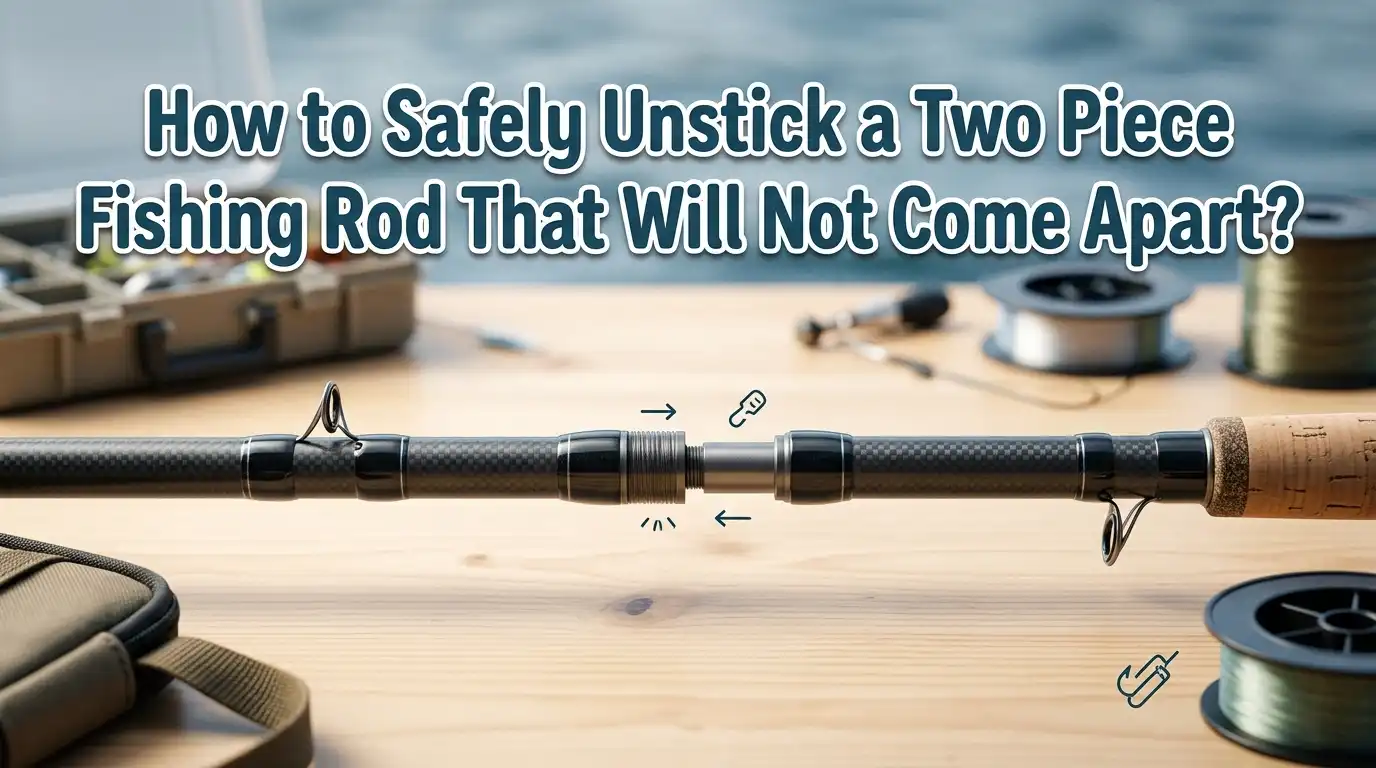
Understanding the cause helps you pick the right fix. A ferrule is the joint where the upper and lower sections of your rod meet. The male end slides into the female end with a snug friction fit.
Several things make this fit too tight. Heat expands the materials, so a long day in the sun can swell the joint. Humidity and saltwater spray add moisture that acts like glue. Sand and grit grind their way inside, creating a rough lock.
Aggressive casting also seats the joint deeper than normal. Each cast drives the male ferrule a little further into the female socket. After hours of fishing, the parts can fuse so tightly that normal pulling does nothing.
Knowing this helps you stay calm. The rod is not broken. The materials are simply gripping each other harder than you can pull with bare hands.
Safety First: What You Should Never Do
Before we get to the fixes, let us cover the moves that destroy rods every year. Skipping this section is how anglers end up with two pieces of expensive carbon fiber and a broken heart.
Never twist the rod hard. Graphite and fiberglass walls are thin. A sharp twist creates a spiral crack that runs up the blank. The rod will look fine until your next big fish snaps it in half.
Do not use pliers, vise grips, or any metal tool directly on the rod. The crushing force will splinter the blank instantly. Avoid tapping the ferrule with a hammer or hard object too.
Skip the boiling water trick that some old timers swear by. Heat softens epoxy bonds inside the rod and can loosen guides. Stay away from solvents like WD-40 as well, since they can creep into the blank and weaken finishes.
Patience is your best tool. Slow, steady, straight force always wins.
The Behind the Knees Method (Most Trusted Fix)
This is the classic move every fly fisher and surf caster learns first. It works because your legs provide steady outward pressure while your arms keep the pull aligned.
Sit on a chair or the tailgate of your truck. Place the rod horizontally behind your knees, with the stuck ferrule centered between them. Grip one section in each hand, knuckles facing forward, with your forearms resting on the outsides of your thighs.
Now slowly push your knees apart while pulling your hands outward. Keep the pressure smooth and even. Never jerk or yank. The rod sections will usually pop free with a satisfying click.
Pros: Uses leverage from your strongest muscles, keeps the pull perfectly straight, requires no tools, works alone.
Cons: Can be awkward with very long rods, may not generate enough force on extremely jammed ferrules, slightly uncomfortable on bare knees.
The Two Person Pull Technique
If you fish with a buddy, this method is fast and reliable. Two pairs of hands give you double the pulling power without doubling the risk.
Each person grips one section of the rod. Stand facing each other with the stuck ferrule in the middle. Keep your hands close to the joint, about two inches on either side, so the force concentrates where you need it.
Pull straight back in opposite directions with steady, growing pressure. Communicate clearly so neither person twists or jerks. Count to three, then pull together.
Pros: Generates strong, even force, easy to coordinate, perfect for very stubborn joints, takes only seconds.
Cons: You need a willing helper, miscommunication can lead to twisting, both people must understand the no twist rule.
A useful tip is to wrap a rag or rubber glove around each grip point so nobody’s hands slip when the joint releases.
Using Ice to Shrink the Male Ferrule
Cold contracts metal and graphite. This simple physics trick has saved countless fishing trips.
Take a handful of ice cubes and place them in a sandwich bag or wrap them in aluminum foil. Hold the ice pack against the male ferrule for five to ten minutes. The inner piece will shrink slightly, breaking the friction lock.
For best results, keep the female section warm by holding it in your hand. The temperature difference doubles the effect. Once the ferrule feels cold to the touch, try the behind the knees pull again.
Pros: Uses physics instead of brute force, very gentle on the rod, works on both graphite and fiberglass blanks, easy to do at home or in a cooler at the dock.
Cons: Takes patience, requires ice on hand, can leave moisture you must dry off, may need repeating for very tight joints.
This method is especially useful when sun heated ferrules have expanded and locked tight after a hot day.
The Rubber Glove Grip Method
Slippery hands are the silent killer of stuck rod fixes. You pull, your fingers slide, and nothing happens. Rubber gloves solve this problem instantly.
Put on a pair of dish washing gloves or mechanic’s nitrile gloves. The rubber surface grabs the smooth rod blank without crushing it. You can now apply real pulling force without slipping.
If you do not have gloves, wrap a rubber band around each hand grip area. Bicycle inner tube sections cut into short loops also work brilliantly. Even a strip of shelf liner can give you the friction you need.
Pros: Cheap, available in most homes, protects the rod finish, works with any other method on this list.
Cons: Gloves can wear thin and tear, very tight ferrules may still resist, some thin gloves do not add enough grip.
Combine gloves with the behind the knees move for a powerful one two punch.
The Duct Tape Twist Trick
This clever fix uses the sticky power of tape to multiply your grip without harming the rod. It is a favorite among guides who deal with stuck rods every season.
Tear off two strips of duct tape, each about eight inches long. Form each strip into a loop with the sticky side facing outward. Wrap one loop around the rod above the ferrule and the other below it.
Now grip each tape covered area firmly. The tape sticks to your skin and to the rod, giving you incredible hold. Pull straight outward with steady force. Some anglers add a tiny twisting motion in opposite directions, but only with very gentle pressure.
Pros: Adds huge grip strength, distributes force evenly, leaves no residue on the rod when removed carefully.
Cons: Uses up duct tape each time, can feel messy, sticky residue may need wiping if old tape is used.
This trick has rescued more rods than almost any other field method.
Warm Water Soak for Saltwater Stuck Rods
Saltwater anglers face a special problem. Salt crystals can form inside the ferrule and lock it shut like cement. A warm water soak dissolves these crystals safely.
Fill a bowl with lukewarm tap water. Never use hot water since heat can damage epoxy and finishes. Dip only the ferrule joint into the water for two to three minutes.
Wiggle the rod gently while soaking, but do not twist hard. The water seeps in, breaks down salt buildup, and lubricates the joint. Dry the area with a soft cloth, then try the behind the knees pull.
Pros: Targets salt corrosion directly, safe when done with cool water, requires no special tools.
Cons: Only helps with salt related sticking, can introduce moisture if not dried well, takes time to set up.
After freeing the rod, rinse the ferrule with fresh water and dry it completely before storing.
Adding a Lubricant to Loosen the Joint
Sometimes the ferrule needs a little help from a slippery friend. The right lubricant can sneak into microscopic gaps and break the friction seal.
A tiny dab of unscented bar soap rubbed at the joint edge often works wonders. Pure paraffin wax or candle wax is another classic choice that anglers have used for over a century. Even a smudge of nose grease, the natural oil from the side of your nose, has saved many fly rods.
Avoid petroleum products, cooking oils, and aerosol sprays. These can stain cork grips, attack epoxy, and leave gummy residue inside the ferrule.
Pros: Uses common household items, gentle on rod materials, often frees the joint within minutes.
Cons: Requires reapplication during the season, soap can attract grit if overused, wrong lubricants can cause damage.
Apply the lubricant only to the male ferrule, never inside the female socket where it can pool and harden.
When to Take Your Rod to a Professional
Some stuck rods refuse every home remedy. If you have tried two or three methods without success, it is time to call in an expert.
Most reputable tackle shops offer ferrule unsticking as a free or low cost service. Rod builders have specialized tools, including soft jaw clamps and ferrule pullers that grip without crushing. They have seen every kind of stuck rod imaginable.
Manufacturer warranty programs also cover this issue on premium rods. Brands like St. Croix, G. Loomis, and Sage will often free or repair your rod for a small fee. Check the warranty card before trying anything risky.
Pros: Saves expensive rods, no risk of breakage, fast turnaround at most shops.
Cons: Costs money or shipping time, may not be available in remote areas, requires you to be without the rod for a few days.
Knowing when to stop trying is a sign of wisdom, not weakness.
How to Prevent Your Rod From Sticking Again
Prevention is faster, cheaper, and easier than any cure. A few simple habits keep your rod sliding apart smoothly every time.
Apply ferrule wax, paraffin, or unscented bar soap to the male ferrule every five to ten fishing trips. Just a thin coat is enough. Wipe off any excess with a clean cloth. This single habit prevents most sticking problems.
Always rinse your rod with fresh water after saltwater trips. Pay extra attention to the ferrule joint where salt loves to hide. Dry every part fully before storing the rod.
Take your rod apart at the end of each fishing day. Rods left assembled overnight are far more likely to fuse. Store the two pieces in a rod sock or tube, separate from each other.
Inspect the ferrule monthly for tiny cracks, worn finish, or grit buildup. Catching wear early prevents bigger problems later.
Tools to Keep in Your Tackle Box for Stuck Rods
A small kit of helper items takes up almost no space and saves the day when ferrules jam at the boat ramp.
Pack a pair of nitrile or rubber dish gloves in a zip bag. They weigh nothing and give you instant grip. Add a small tube of ferrule wax or a stub of paraffin candle. A square of duct tape folded onto wax paper rounds out the kit.
Toss in a soft microfiber cloth for drying and cleaning the joint. A small ice pack or knowledge of where to find ice nearby completes the set. Some anglers also carry a short piece of bicycle inner tube as the ultimate grip helper.
Pros: Portable, cheap, prepares you for any sticking emergency, fits in any tackle box pocket.
Cons: Adds a few ounces to your gear, items need occasional replacement, wax can melt in hot tackle boxes.
Being prepared turns a trip ending problem into a two minute fix.
Frequently Asked Questions
Can I use WD-40 to unstick my fishing rod?
No, avoid WD-40 and similar penetrating oils. These products can damage rod finishes, attack epoxy bonds inside the blank, and leave residue that attracts dirt. Stick with bar soap, paraffin wax, or proper ferrule wax instead.
How long should I hold ice on the ferrule?
Five to ten minutes is the sweet spot. The male ferrule needs time to cool and contract. Check the joint every few minutes by feeling the temperature. Once it feels distinctly cold, try the behind the knees pull.
Will twisting the rod help break it loose?
Hard twisting is the most common cause of broken rods during unsticking. The thin walls of graphite and fiberglass blanks crack under torsion. Always pull straight along the rod’s axis instead.
Is it safe to fish with a rod that was stuck?
Yes, once you free the ferrule and inspect it for cracks, the rod is fine to use. Look for hairline fractures, splintering, or loose finish. If the joint looks clean, apply some ferrule wax and fish on.
How often should I apply ferrule wax?
A light coat every five to ten fishing trips works for most anglers. In hot, humid, or saltwater conditions, apply it more often. A small dab is all you need, since too much wax attracts grit.
What if my rod is still stuck after trying every method?
Take it to a local tackle shop or rod builder. Most offer free or cheap ferrule service. Premium rod brands also handle stuck ferrules through their warranty programs. Professionals have specialized tools that work where home methods fail.

Hi, I’m Ivy Webb, the passionate angler and creator behind BaitHookVault.com. I spend my days out on the water personally testing and reviewing a wide variety of fishing tools and gear.