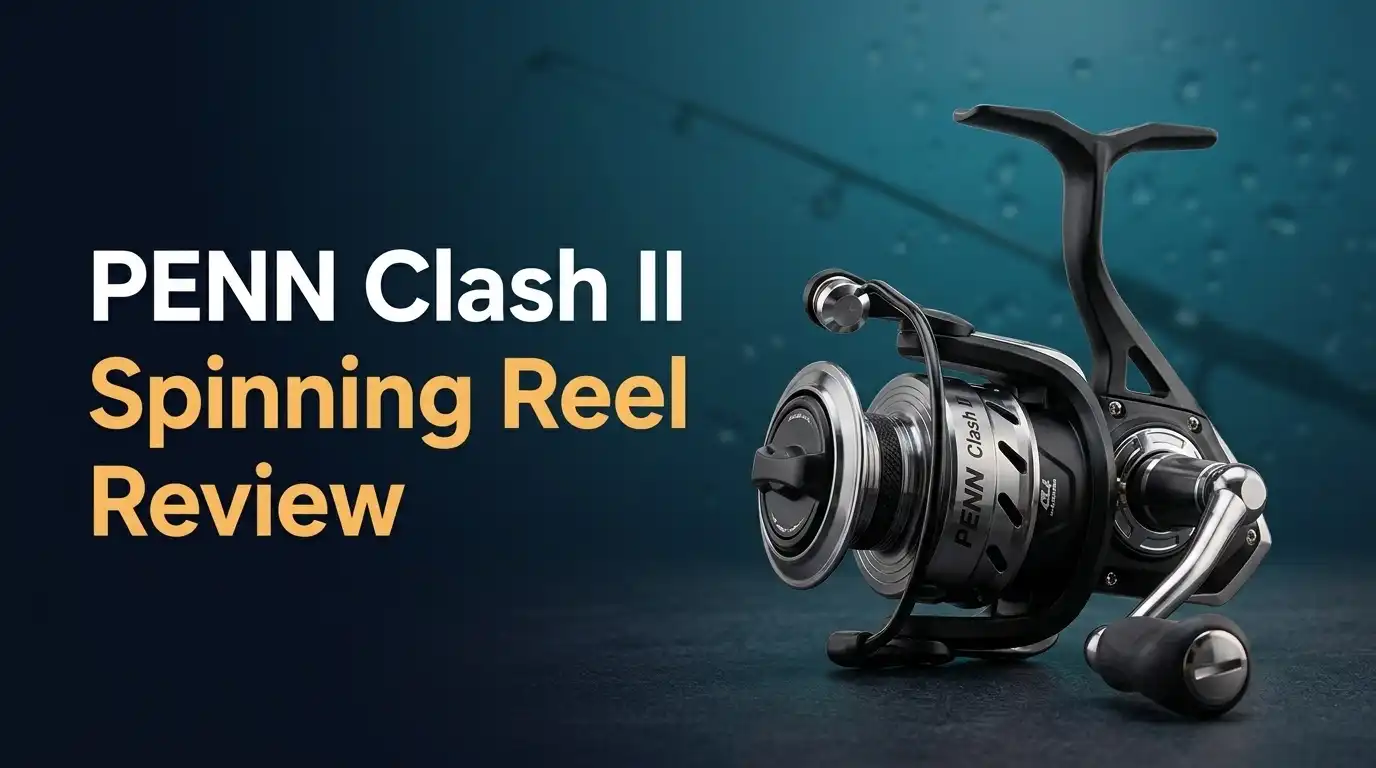
PENN Clash II Spinning Reel Review 2026: Worth Buying?
Are you hunting for an inshore reel that feels smooth, tough, and light all at once? The PENN Clash II has been on the market for a few years now. Many anglers still call it one of the best inshore reels in its price range.
But is it still worth your money in 2026? Newer reels keep showing up every season. In this review, I cover the build, the drag, the gears, and the real flaws.
By the end, you will know if this reel fits your fishing style. Let’s get into it.
Key Takeaways
- The PENN Clash II is built for inshore saltwater fishing. It handles redfish, snook, trout, flounder, striped bass, and similar species with ease. The 3000 and 4000 sizes are the most popular choices for general inshore work.
- It uses a full metal body and CNC cut gears. The frame stays rigid under heavy loads. This keeps the gears aligned, and that gives you a smooth feel even after many trips.
- The HT 100 carbon fiber drag is smooth and steady. Sizes range from 9 pounds of max drag on the 1000 up to 20 pounds on the 5000. Most users say the drag starts clean with no jerky pulses.
- It is not fully sealed. The Clutch Armor System and hydrophobic line roller bearing protect key parts. However, it has no IPX rating like the Slammer or Spinfisher. Do not dunk it in the surf.
- Line lay can need tuning out of the box. Some anglers had to adjust the spool shims to get even line lay. You should also avoid overfilling the spool with braid to prevent wind knots.
- High speed models are a strong bonus. The 3000HS and 4000HS offer a 7.0:1 gear ratio. They are great for fast moving fish like false albacore, bonito, and mackerel.
What Is the PENN Clash II Spinning Reel?


Last update on 2026-11-21 / Affiliate links / Images from Amazon Product Advertising API
The PENN Clash II is a lightweight spinning reel built for inshore saltwater fishing. PENN calls it the “ultimate inshore reel.” It sits between the budget Battle series and the heavy duty Slammer series.
PENN released the Clash II in early 2020. It replaced the original Clash with several upgrades. The biggest changes include CNC Gear Technology, a sealed clutch area, and a hydrophobic line roller bearing.
The reel comes in sizes 1000, 2000, 2500, 3000, 4000, and 5000. There are also two high speed versions in the 3000 and 4000 sizes. Each size uses a 9 bearing system, which PENN lists as 8+1.
Launch prices ran from about $210 to $250. Prices change with size and retailer, so check the current listing before you buy.
Unboxing the PENN Clash II
The Clash II arrives in a clean PENN box with the reel snug inside. My first thought was simple. This reel looks sharp. The gray and black finish feels premium without being flashy.
Inside the box, you get the reel, a manual, and a small bag of spool shims. The 3000 and 4000 standard models include two handle knobs. You get a paddle knob already installed and a bigger power knob in the box. The high speed models come with the power knob only.
Once you pick it up, the full metal body feels solid. It does not feel cheap or hollow. The handle has a chunky grip that fills your fingers well.
Turn the handle a few times and you notice the smoothness right away. There is no grinding or wobble. The bail flips over with a firm, clean snap. It feels like a reel that costs more than it does.
PENN Clash II Specifications at a Glance
Here is a quick look at the key specs for the most popular sizes. Numbers matter, so this section keeps them simple.
The 3000 size has a 6.2:1 gear ratio and a 35 inch retrieve per turn. It offers 15 pounds of max drag. It weighs about 10.1 ounces and holds 180 yards of 20 pound braid.
The 3000HS jumps to a 7.0:1 ratio and a 41 inch retrieve. The 4000HS reaches 44 inches per turn. Both still offer 15 pounds of drag.
The 2500 size offers 12 pounds of drag and a 33 inch retrieve. The 5000 size is the beast of the group with 20 pounds of drag and a 5.6:1 ratio. It holds 300 yards of 30 pound braid.
Every model shares the same core features. You get a full metal body, CNC gears, HT 100 drag, and the Leveline oscillation system.
Top 3 Alternative for PENN Clash II Spinning Reel
Daiwa BG MQ Spinning Reel

Last update on 2026-11-21 / Affiliate links / Images from Amazon Product Advertising API
PENN Slammer IV Spinning Reel

Last update on 2026-11-20 / Affiliate links / Images from Amazon Product Advertising API
Shimano Stradic FL Spinning Reel

Last update on 2026-11-20 / Affiliate links / Images from Amazon Product Advertising API
Build Quality and Full Metal Body
PENN built the Clash II with a full metal body and sideplate. This is the main reason the reel feels so stiff. A rigid frame keeps the gears lined up under pressure.
Why does this matter? When a big redfish runs hard, a weak frame can flex. That flex pushes the gears out of line. Then the reel starts to feel rough and grindy.
The Clash II avoids this problem. Anglers report that it stays smooth after long fights with big fish. One charter captain in New Jersey said it handles 40 pound stripers on lures with no trouble.
The reel still stays fairly light for a metal reel. The 3000 weighs around 10.1 ounces. That is light enough for all day casting without wearing out your wrist. It balances well on 7 foot to 7 foot 6 inch inshore rods.
CNC Gear Technology and Smoothness
The heart of this reel is PENN’s CNC Gear Technology. Most budget reels use gears made from molds or die casting. PENN cuts these gears straight from solid metal with CNC machines.
The pinion gear is brass. The main gear is aluminum. Cutting gears this way gives tighter tolerances. Tighter tolerances mean the gear teeth mesh more precisely.
What do you feel on the water? You feel a smooth, quiet retrieve with no slop. Many reviewers compare its feel to Shimano reels in the same price range. That is high praise, since Shimano is famous for smoothness.
The smoothness also lasts. A full time guide who fishes over 200 days a year praised the Clash II. He said a good reel must be “smooth that stays smooth.” The Clash II passed his test. The aluminum main gear may not be as strong as brass in the Slammer, but it keeps weight down.
HT 100 Carbon Fiber Drag Performance
The drag system is a big selling point. PENN uses its HT 100 carbon fiber drag washers in the Clash II. These washers come greased with PENN’s own grease for long life.
So how does it perform? The drag starts smooth and stays steady. It does not stick or jump when a fish takes off. Many owners describe the drag as very progressive. Small turns of the knob give small, predictable changes.
Max drag ranges from 9 pounds on the 1000 to 20 pounds on the 5000. The 3000 and 4000 sizes both offer 15 pounds. That is plenty for most inshore fish. You will rarely need more than 8 to 10 pounds for redfish or snook.
One honest note here. If you want to fight big tuna or sharks, look elsewhere. This drag is built for inshore and light nearshore fish. For heavy offshore work, a Slammer makes more sense.
Saltwater Protection: Clutch Armor and Hydrophobic Roller
Saltwater kills reels. PENN added two key features to fight corrosion in the Clash II.
First, there is the Clutch Armor System. This uses seals around the rotor and pinion gear. These seals guard the clutch, which is a weak spot on most spinning reels. When the clutch fails, your anti reverse fails too.
Second, there is the Hydrophobic Line Roller Bearing. The line roller sees constant salt spray. On most reels, this bearing rusts first and starts to squeak. This special bearing repels water and resists damage.
However, the Clash II is not a sealed reel. It has no IPX water rating. The Slammer and Spinfisher lines carry IPX ratings, but they also weigh more. PENN chose to keep the Clash II light. That means you should rinse it after every trip and avoid dunking it.
Line Lay and Casting Performance
PENN uses its Leveline Slow Oscillation System in the Clash II. The spool moves up and down slowly as you reel. This should lay the line in neat, even rows.
Even line lay helps you cast farther. It also cuts down on wind knots and line twist. On paper, this system works great.
In real use, results can vary. Some owners got perfect line lay right out of the box. Others found the line piling up more at the top or bottom of the spool. The fix is simple but takes time. You add or remove the small shim washers under the spool. PENN includes these shims and instructions in the box.
One reviewer also got a bad wind knot early on. He found the cause was too much braid on the spool. After he underfilled it a bit, the problem went away. Casting distance stays very good once you set it up right.
High Speed Models: Who Needs Them?
The 3000HS and 4000HS models use a 7.0:1 gear ratio. The 4000HS picks up 44 inches of line per turn. That is fast for a spinning reel.
Why would you want that? Speed helps you keep up with fast fish. False albacore, bonito, Spanish mackerel, and jacks often swim right at the boat. A slow reel leaves slack line, and slack line means lost fish.
High speed reels also help with popping corks. When the cork goes down, you need to pick up slack fast. A quick retrieve sets the hook before the fish spits the bait.
One guide admitted he doubted high speed inshore reels at first. After testing the Clash II HS models, he changed his mind. He said they help less experienced clients work lures at the right speed. If you throw metal jigs or spoons, the HS version is worth a look.
Which Size Should You Pick?
Picking the right size makes a big difference. Here is a simple guide based on PENN’s own size chart.
The 1000 to 2000 sizes suit light inshore work. Think pinfish, trout, flounder, and sheepshead. They pair well with light rods and 6 to 10 pound braid.
The 2500 and 3000 sizes are the sweet spot for most anglers. They handle trout, redfish, snook, and jacks. If you buy one Clash II, the 3000 is the safest choice.
The 4000 size works for inshore, pier, and nearshore fishing. It handles bigger redfish, cobia, and small tarpon.
The 5000 size steps into larger fish like king mackerel, grouper, and bigger snook. It holds the most line and has the strongest drag.
Match the reel to your rod and target fish. A balanced setup casts better and tires you less.
What the PENN Clash II Does Not Do Well
No reel is perfect. Here is where the Clash II falls short.
It is not waterproof. There is no IPX rating. If you wade deep in the surf or dunk the reel often, water can get inside. Surf anglers should look at the Slammer or Spinfisher instead.
Line lay can be hit or miss. You might need to adjust the spool shims before your first trip. This takes trial and error, and some buyers find it annoying at this price.
You cannot fill the spool to the lip. Overfilling with braid can cause wind knots. You lose a few yards of line capacity in practice.
It is not a heavy offshore reel. The aluminum main gear and 15 to 20 pound drag limit it. Big pelagic fish will push it too hard.
Prices have crept up at some retailers. Shop around, because pricing varies a lot.
Pros and Cons
Here is a clear summary of the good and the bad.
Pros
- The full metal body stays rigid and keeps the gears aligned during long, hard fights.
- CNC cut gears give a smooth, quiet retrieve that rivals reels costing more.
- The HT 100 carbon fiber drag starts smoothly and adjusts in small, predictable steps.
- The Clutch Armor System and hydrophobic line roller protect the most fragile parts from salt.
- The reel stays light for a metal reel, so all day casting feels easy.
- High speed models offer a 7.0:1 ratio for fast fish and quick slack pickup.
- The chunky handle knob gives a secure grip, even with wet hands.
Cons
- The reel has no IPX rating, so it does not tolerate full dunking in the surf.
- Line lay may need shim adjustments right out of the box.
- You need to underfill the spool with braid to avoid wind knots.
- The aluminum main gear is less tough than the all brass gears in the Slammer.
- The price sits higher than budget reels like the Battle series.
Who Should Buy the PENN Clash II?
This reel fits a clear group of anglers. Inshore saltwater anglers will love it most. If you chase redfish, snook, trout, flounder, or stripers, it fits your needs.
Kayak anglers also enjoy it. The light weight helps when you paddle and cast all day. The metal body handles bumps and drops in a kayak.
Anglers who fish from boats, piers, and jetties will also be happy. It works well for casting lures and jigs, and for working live bait.
Who should skip it? Surf anglers who wade deep should pick a sealed reel. Offshore anglers chasing tuna or big sharks need more drag and stronger gears. Anglers on a tight budget may prefer the PENN Battle series.
If you want a smooth, light, and tough reel for inshore water, the Clash II hits the mark.
Final Verdict
So, is the PENN Clash II worth buying in 2026? For most inshore anglers, yes. It still offers a great mix of smoothness, strength, and light weight.
The full metal body and CNC gears give it a refined feel. The HT 100 drag is smooth and reliable. The saltwater protection covers the parts that fail first on most reels.
It does have quirks. You might need to tune the line lay. You should not overfill the spool. You also cannot treat it like a fully sealed surf reel.
If you can accept these small flaws, you get a reel that lasts for years. Rinse it after each trip and it will reward you with steady performance. For inshore fishing, the Clash II remains one of the best values from PENN.
FAQs
Is the PENN Clash II waterproof?
No, the PENN Clash II is not fully waterproof. It has no IPX rating. It uses the Clutch Armor System and a hydrophobic line roller bearing to protect key parts. Rinse it with fresh water after every saltwater trip.
What size PENN Clash II is best for inshore fishing?
The 3000 size is the best all round choice for inshore fishing. It handles trout, redfish, snook, and flounder well. Pick the 4000 for bigger fish or heavier line.
How many bearings does the PENN Clash II have?
The PENN Clash II has 9 bearings. PENN lists this as an 8+1 stainless steel bearing system.
Can the PENN Clash II handle braid?
Yes, the Clash II handles braid well. Do not fill the spool all the way to the lip, though. Leaving a small gap helps prevent wind knots.
What is the difference between the Clash II and the Slammer?
The Clash II is lighter and built for inshore fishing. The Slammer is heavier, fully sealed, and uses all brass gears. The Slammer suits surf and offshore fishing better.
How much drag does the PENN Clash II 3000 have?
The PENN Clash II 3000 offers 15 pounds of max drag. That is more than enough for most inshore species.
Is the high speed Clash II worth it?
Yes, if you chase fast fish or use popping corks. The 7.0:1 gear ratio picks up slack quickly. For slow bait fishing, the standard model works just fine.

Hi, I’m Ivy Webb, the passionate angler and creator behind BaitHookVault.com. I spend my days out on the water personally testing and reviewing a wide variety of fishing tools and gear.