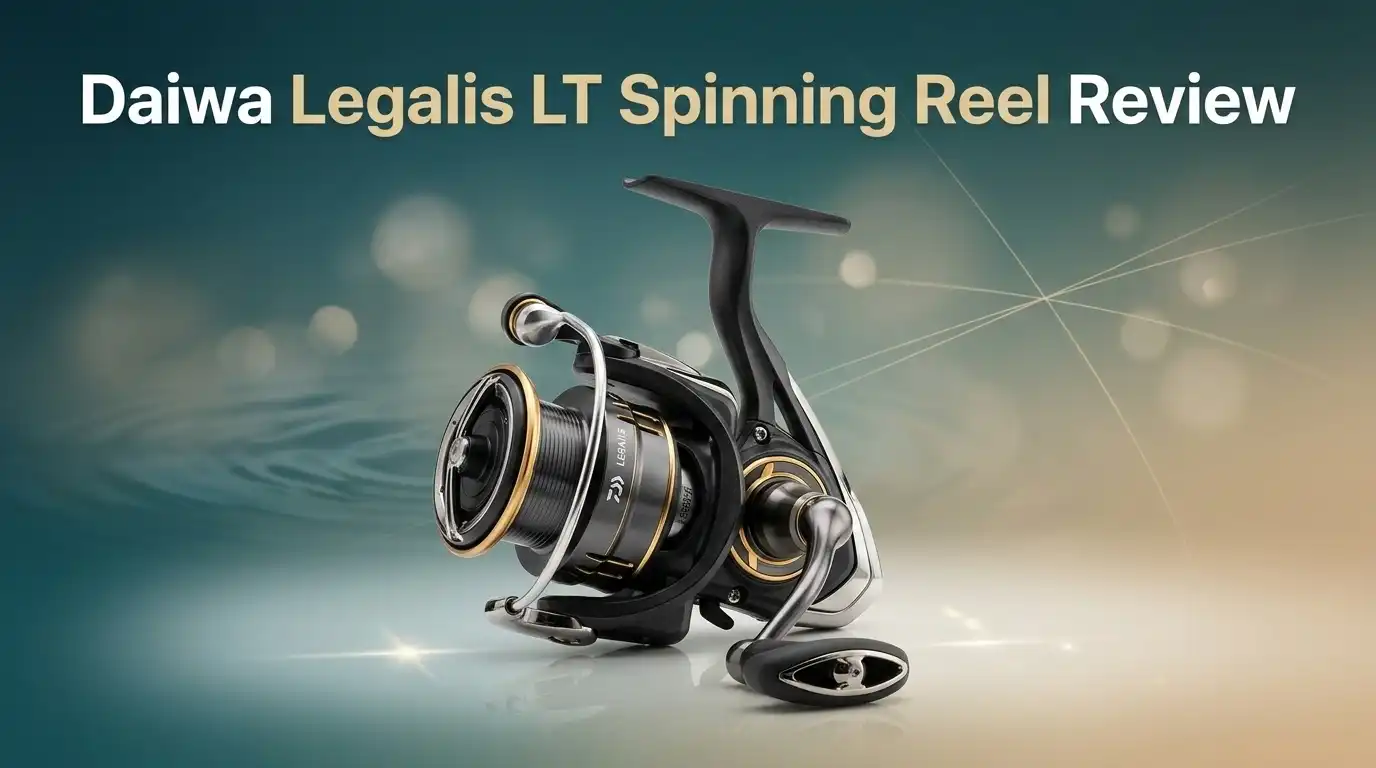
Daiwa Legalis LT Spinning Reel Review 2026: Still Worth It?
The Daiwa Legalis LT keeps showing up in tackle shops, on kayak decks, and in beginner rod and reel combos.
It costs less than a tank of gas in some sizes, yet it carries technology borrowed from reels that cost three times more. That combination makes anglers curious and a little suspicious at the same time.
I spent a full season with this reel on bass lakes, local rivers, and a few inshore flats. I loaded it with braid, dunked it, dropped it, and forgot to rinse it once or twice. This review covers what the Legalis LT does well, where it falls short, and whether it still earns a spot on your rod in 2026.
In a Nutshell:
- The price stays the headline. The Legalis LT starts around $70 and tops out near $100 depending on size. Very few reels at this price offer a carbon body and a machine cut handle.
- Weight is the biggest win. The 1000 size weighs about 6.5 ounces and the 2500 sizes sit near 7.2 ounces. Your wrist will notice this after a long day of casting.
- The ZAION V body feels stiff for carbon. Daiwa upgraded the material in the 2021 redesign, and that body still carries the current model. It flexes less than older carbon LT reels.
- The drag handles real fish. The ATD system runs from roughly 11 pounds in small sizes up to 22 pounds and beyond in larger ones. It starts smooth and stays predictable under pressure.
- It is not sealed. There is no MagSeal here. Salt spray, sand, and rain can reach the internals, so rinsing is not optional.
- The handle screws into a collar, not straight into the gear. Some owners report handle wobble over time. This is the most common complaint.
- Best fit: freshwater anglers, light inshore anglers, kayak fishers, and anyone building a second or third rod without spending much.
What Is the Daiwa Legalis LT Spinning Reel?


Last update on 2026-11-19 / Affiliate links / Images from Amazon Product Advertising API
The Legalis LT sits near the bottom of the Daiwa spinning reel lineup, just above the Crossfire and Laguna.
LT stands for Light and Tough, Daiwa’s platform that shrinks body size while keeping the spool capacity of a larger reel. The result is a reel that feels one size smaller than the number on the box.
Daiwa rebuilt this reel in 2021 with a ZAION V carbon body and rotor, and that version still ships today. You also get the Air Bail, the Digigear drive system, and the Automatic Tournament Drag.
Those features used to live on reels in the $150 range. The lineup runs from a tiny 1000 up to a surf friendly 6000, with shallow spool and high speed options sprinkled through the middle.
Unboxing Experience and First Impressions
The box is plain cardboard with a photo of the reel on the front. There is no fancy pouch, no reel bag, and no tube of grease. You get the reel, a small instruction sheet, and a spool band.
Daiwa clearly spent the budget on the reel instead of the packaging, which feels like the right choice.
Lift it out and the first reaction is almost always the same: this thing is light. The matte black body with gold accents looks far more expensive than the price tag suggests.
The handle folds in and clicks out with a positive snap. The first few cranks feel smooth but slightly dry, which is normal for a budget reel. A single turn of the handle tells you the gears mesh cleanly with no grinding or clicking.
Key Specifications at a Glance
Specs shift across the lineup, so here is the shape of it. The 1000 and 2000 sizes run a 5.2:1 gear ratio, weigh about 6.5 ounces, and offer roughly 11 pounds of maximum drag.
The 2500 sizes move up to about 7.2 ounces, with a 6.2:1 ratio on the XH versions and drag near 22 pounds.
Bearing count stays modest at five ball bearings plus one roller bearing across most models. Line retrieve runs from about 25 inches per crank in the small sizes to over 36 inches in the fastest 4000 class models.
Spools are aluminum with the ABS tapered lip. Line capacity is generous for the body size, which is the whole point of the LT concept.
Top 3 Alternative for Daiwa Legalis LT Spinning Reel

Last update on 2026-11-19 / Affiliate links / Images from Amazon Product Advertising API
Daiwa Fuego LT Spinning Reel
No products found.
Daiwa BG Saltwater Spinning Reel

Last update on 2026-11-20 / Affiliate links / Images from Amazon Product Advertising API
Shimano Sedona FJ Spinning Reel
Build Quality and the ZAION V Body
ZAION V is a carbon composite that Daiwa developed to be easier to machine than standard ZAION. In plain terms, it lets Daiwa put a carbon body on cheaper reels. The frame resists corrosion better than aluminum and weighs far less.
Squeeze the body hard and you will feel a tiny bit of give. That is the trade. An aluminum body reel like the Daiwa BG stays stiffer under heavy load. For casting lures, working soft plastics, and fighting fish up to a few pounds, the flex never becomes a problem.
Anglers who troll heavy weights or crank big deep divers will notice it. The rotor is also ZAION V, which cuts rotational weight and makes the reel feel quicker to start and stop.
Smoothness, Gearing and Retrieve Feel
Daiwa’s Digigear drive sits inside, and it is the reason this reel punches above its weight. The gear teeth are cut with a tooth profile that spreads load across a wider contact area. That means less wear and a quieter retrieve.
Out of the box the reel feels smooth but not buttery. After about ten trips the grease spreads and it improves noticeably. Under load, when a fish pulls drag and you crank back, the gears stay composed. There is no clunking and very little flex in the handle arm.
The machine cut aluminum handle gives you a solid, direct feel compared to the stamped handles on cheaper reels. The folding design is handy for storage but adds one more joint that can loosen.
ATD Drag Performance Under Pressure
The Automatic Tournament Drag uses stacked felt washers rather than carbon. ATD is tuned to drop its startup resistance quickly once a fish starts running. In practice that means fewer broken leaders on the first surge.
I tested it against a scale and the drag held steady without the jerky stepping you find on budget reels. Smoothness at low settings is the real strength here. You can fish four pound line with confidence.
The weakness shows up over time. Felt washers absorb water and grease, and after a couple of hard seasons they can get sticky. Backing the drag off after every trip helps a lot. Replacing the stack with aftermarket carbon washers is a cheap fix that many owners make.
Air Rotor, Air Bail and Casting Distance
The Air Rotor spreads stress across the whole rotor instead of concentrating it at one point. That lets Daiwa remove material without losing strength. The Air Bail is a hollow, one piece bail wire with no joints where line can catch.
Combined with the ABS spool lip, casting is genuinely good. Light lures in the quarter ounce range fly well on the 2500 size. Line peels off the tapered spool in smooth coils instead of slapping the lip.
Wind knots are rare if you spool properly and keep tension on the line. The bail flips closed with a firm snap and never once closed on its own during a cast for me. For a reel in this price class, the casting manners are a standout feature.
Which Size Should You Buy?
Size choice matters more than most people think. The 1000 and 2000 are ultralight tools for panfish, trout, and small creek work with two to six pound line. The 2500 is the sweet spot for bass, walleye, and light inshore fishing with ten to fifteen pound braid.
The 3000 steps up for bigger bass, pike, and redfish. The 4000 handles snook, striper, and heavier inshore work. The 5000 and 6000 exist for surf and heavy freshwater, though I would not pick them for regular surf duty.
If you only buy one, buy the 2500D XH. The higher gear ratio covers water fast and you can always slow your retrieve, but you cannot speed up a slow reel.
Real World Freshwater Performance
On the water is where the weight pays off. Paired with a seven foot medium spinning rod, the 2500 balances nicely and keeps the whole setup under a pound. I threw wacky rigged worms, drop shots, and small jerkbaits for hours without arm fatigue.
Hooksets feel crisp because the rotor stops quickly. Line management stayed clean across the season with fifteen pound braid and a fluorocarbon leader. The reel landed smallmouth, largemouth over four pounds, and a surprise northern pike without any drama.
The drag never chattered and the handle never slipped during a fight. For bass and multi species freshwater fishing, this reel does everything a casual to serious angler needs.
What the Legalis LT Does Not Do Well
Honest reviews list the flaws, so here they are. There is no MagSeal and no body sealing. Water, salt, and fine sand can work into the body. If you fish the surf or wade in waves, this reel will not last.
The handle threads into a collar instead of screwing directly into the drive gear. Some owners report the handle loosening during use and needing a retighten.
It is not universal, but it is common enough to mention. Felt drag washers degrade faster than carbon ones. The carbon body flexes slightly under heavy load. Finally, the bearing count is low at five plus one, so the retrieve never reaches the glassy feel of a $200 reel.
Pros and Cons
Pros
- Excellent price for the feature set, starting near $70
- Very light at 6.5 to 7.2 ounces in the popular sizes
- ZAION V carbon body resists corrosion and keeps weight down
- Smooth ATD drag with low startup inertia
- Air Bail and ABS spool deliver long, clean casts
- Machine cut aluminum handle feels solid
- Wide size range from 1000 through 6000
- Digigear drive system stays quiet under load
Cons
- No MagSeal or body sealing against water intrusion
- Felt drag washers can turn sticky after heavy use
- Handle can loosen because it is not a direct drive design
- Carbon body flexes more than an aluminum framed reel
- Only five ball bearings plus one roller
- Not suitable for surf fishing or heavy saltwater abuse
- No spare spool or reel bag included
Maintenance Tips to Make It Last
Because this reel is unsealed, care matters more than usual. Rinse it with a light freshwater spray after every saltwater trip. Never blast it with a hose, since pressure pushes water past the seals that do exist.
Always back the drag off to zero before storage. This keeps the felt washers from compressing and sticking. Dry the reel with a towel, then let it air dry with the bail open. A drop of reel oil on the line roller and handle knob every few trips keeps things quiet.
Check the handle tightness before each outing, since that is the known weak point. A full strip and grease once a year costs nothing and doubles the service life. Treat it well and three or four seasons is realistic.
Legalis LT vs Fuego LT vs Daiwa BG
The Fuego LT is the next step up. It adds MagSeal protection, a direct screw in handle, and more bearings for about $40 to $60 more. If you fish salt regularly, the Fuego is the smarter buy.
The Daiwa BG takes a different path with an aluminum body and a much heavier build. It is tougher and more powerful but weighs several ounces more. Choose the BG when durability beats comfort. The Legalis sits between the entry level Crossfire and the Fuego.
It gives you the LT body, the carbon frame, and the Air Rotor at the lowest price Daiwa offers for that package. For freshwater anglers, the extra money for a Fuego buys features you may never use.
Price and Value in 2026

Last update on 2026-11-19 / Affiliate links / Images from Amazon Product Advertising API
Pricing has crept up slightly since launch, but the Legalis LT still lands between roughly $70 and $100 depending on size and retailer. The small sizes sit at the low end and the 4000 through 6000 models sit near the top.
At that price the value is hard to argue with. You are getting a carbon body, an aluminum spool, a machine cut handle, and a drag system shared with pricier Daiwa reels. Compare it against a Shimano Sedona at a similar price and the Legalis wins on weight while the Sedona wins on sealing.
Watch for sales around spring and holiday periods, when these drop closer to $60. Buying two Legalis reels often beats buying one midrange reel for anglers who want multiple rods rigged.
Who Should Buy It and Who Should Skip It
Buy this reel if you fish freshwater, want a light setup, or need a second and third rod without stretching your budget. It suits beginners because it is forgiving and cheap enough to replace. It suits experienced anglers too, as a backup or a dedicated finesse reel.
Skip it if you fish the surf, wade in salt regularly, or chase big fish on heavy tackle. The lack of sealing will catch up with you.
Skip it also if handle slop drives you crazy, since the collar design is not for everyone. Anglers who want a lifetime reel should spend more on a Fuego, a BG, or a Shimano Stradic. For everyone else, the Legalis LT is a sensible, enjoyable tool.
Final Verdict
The Daiwa Legalis LT remains one of the strongest value picks in spinning reels in 2026. It is light, it casts far, the drag is smooth, and the gears hold up. Nothing else near $70 gives you a ZAION V carbon body and an Air Rotor.
It is not perfect. The missing seals, the felt washers, and the handle design are real compromises Daiwa made to hit the price. Knowing those limits is the key to being happy with this reel. Use it where it belongs, rinse it when you are done, and it will serve you for years.
For freshwater anglers and light inshore fishers, I rate it a confident 4.3 out of 5 and recommend the 2500D XH as the starting point.
Frequently Asked Questions
Is the Daiwa Legalis LT good for saltwater?
It works for light inshore fishing if you rinse it after every trip. There is no MagSeal or body sealing, so salt can reach the internals. Avoid surf fishing, wading in waves, and offshore use. The Daiwa BG or Fuego LT are better saltwater choices.
What size Legalis LT is best for bass fishing?
The 2500D XH is the best all around choice for bass. It holds plenty of braid, weighs about 7.2 ounces, and the 6.2:1 gear ratio picks up line fast. Anglers chasing bigger fish or using heavier line can step up to the 3000.
How many bearings does the Legalis LT have?
Most models use five ball bearings plus one roller bearing. That is modest by modern standards, but the Digigear system keeps the retrieve smooth anyway. Adding a quality bearing kit later is an inexpensive upgrade if you want more refinement.
Does the Legalis LT handle really come loose?
Some owners report it. The handle threads into a collar rather than directly into the drive gear, which allows slight play to develop. Checking the tightness before each trip usually prevents it. If yours loosens constantly, contact the seller, since that is not normal.
Can I use braid on the Daiwa Legalis LT?
Yes. The ABS aluminum spool handles braid well and casts it cleanly. Add a short mono backing layer or a piece of tape to stop the braid from slipping on the spool. Ten to fifteen pound braid suits the 2500 size perfectly.
Is the Legalis LT better than the Shimano Sedona?
They sit at the same price. The Legalis is lighter and casts a bit farther. The Sedona has better water resistance and a slightly tougher feel. Freshwater anglers usually prefer the Legalis, while anglers near salt often lean toward the Sedona.

Hi, I’m Ivy Webb, the passionate angler and creator behind BaitHookVault.com. I spend my days out on the water personally testing and reviewing a wide variety of fishing tools and gear.