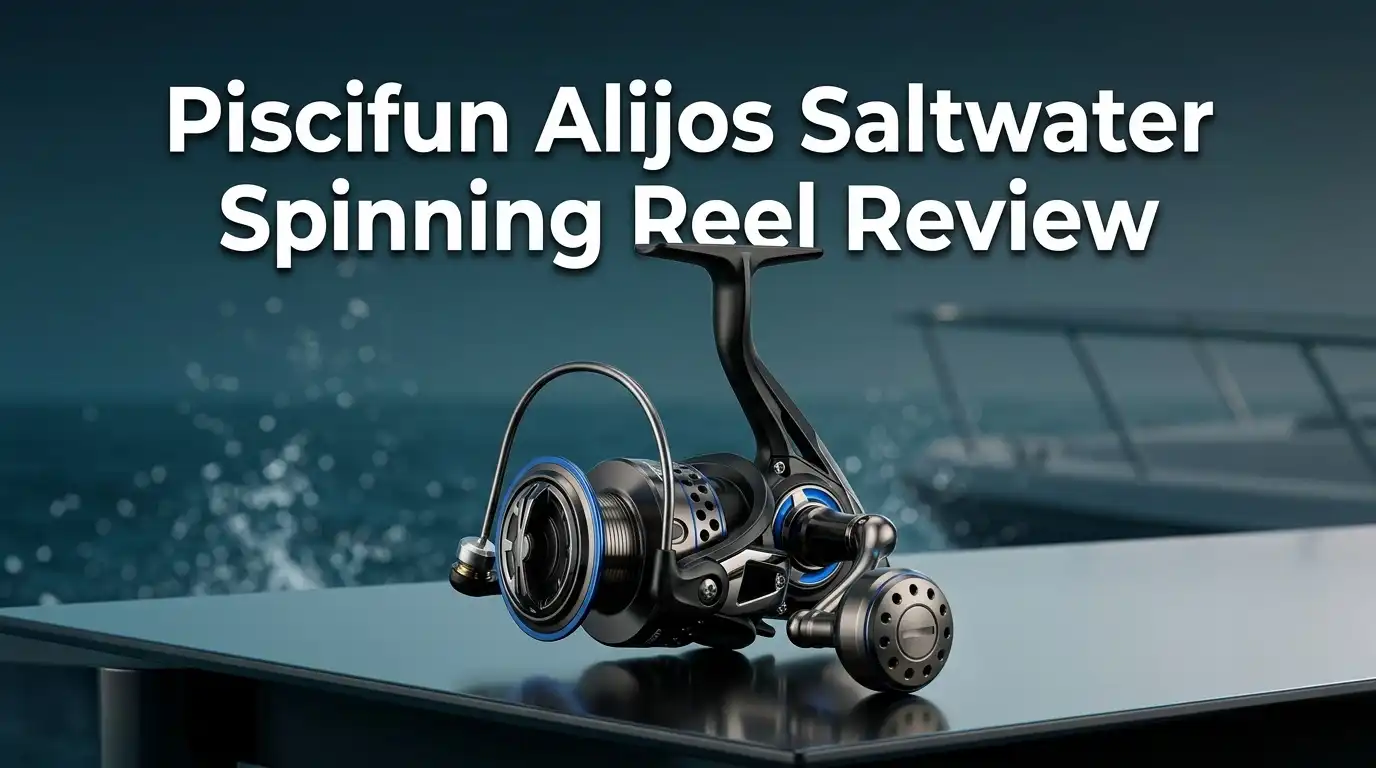
Piscifun Alijos Saltwater Spinning Reel Review 2026: Worth Buying?
Saltwater eats cheap reels alive. Salt spray creeps into the body, gears grind, and the drag turns into a sticky mess by the second season.
That is why budget anglers keep asking one question: can a reel under one hundred dollars really survive the surf, the jetty, and the inshore flats?
The Piscifun Alijos keeps showing up in that conversation. It carries an aluminum frame, a hefty drag number, and a price tag that looks almost suspicious next to premium Japanese reels. Some anglers swear it fights above its class.
Key Takeaways
- Strong drag for the money. The Alijos family is rated around 33 pounds of maximum drag, which is enough stopping power for jacks, snook, redfish, and mid size pelagic species near structure.
- Aluminum body, not plastic. Piscifun built this reel with a metal frame and side plate instead of graphite. That rigidity matters when a big fish loads the gears and the frame wants to flex.
- Smooth retrieve from stainless bearings. With nine stainless steel ball bearings and hardened brass gearing, the retrieve feels refined, especially when the reel is new and freshly greased.
- Price is the headline feature. The reel sits near the ninety to one hundred and ten dollar range, which is roughly one third of what a comparable premium saltwater reel costs.
- Durability is the weak point. Heavy daily saltwater use wears this reel faster than premium models. It rewards rinsing and regular maintenance, and it punishes neglect.
- Best fit: inshore anglers, surf casters, jetty fishers, and anyone building a second or third saltwater setup without draining the bank account.
What Is the Piscifun Alijos Saltwater Spinning Reel

Last update on 2026-11-21 / Affiliate links / Images from Amazon Product Advertising API
The Alijos is Piscifun’s heavy duty saltwater reel. The company designed it for anglers who fish salt but refuse to pay premium prices. The frame uses aluminum rather than graphite. That single choice changes how the reel behaves under load.
Piscifun targets large species with this model. Think musky, catfish, snook, jacks, redfish, and striped bass. The reel holds a generous amount of braid, which matters when a fish makes a long first run toward structure.
The design philosophy is simple. Piscifun skipped exotic coatings and flashy marketing. Instead the brand spent money on the frame, the gearing, and the drag stack. The result feels dense, heavy, and purposeful in the hand. It is a workhorse reel, not a showpiece.
Unboxing the Piscifun Alijos
The box arrives plain. A cardboard sleeve, a foam insert, and the reel sitting inside a soft cloth bag. There is no fancy presentation and no magnetic lid. Piscifun clearly spent the budget on the product instead of the packaging.
Lifting the reel out gives the first real impression. It feels heavy. Not clumsy, but solid in a way graphite reels never manage. The aluminum is cold to the touch and the finish looks even across the body.
Inside the box you also get a small wrench, a reel bag, and a basic manual. The manual is thin and the diagrams are small, so most anglers will learn more from a teardown video than from the paper.
Spinning the handle out of the box feels smooth. No grinding, no wobble, no play in the knob. For a reel at this price, the first impression lands well.
Build Quality and Materials
The aluminum frame carries the whole argument for this reel. Graphite flexes under heavy drag pressure, and flex causes gear misalignment. Metal resists that. When a thirty pound fish digs toward a bridge piling, the Alijos stays rigid.
The gearing uses hardened brass, cut for strength rather than feather weight. Brass gears wear slowly and handle shock loads well. They also add weight, which is the tradeoff you accept here.
Nine stainless steel ball bearings handle the rotation. Stainless resists salt better than standard chrome bearings, though it still needs rinsing after every trip.
The finish is the weak link. The coating looks sharp on day one, but scraped rocks and sandy surf leave marks faster than on premium reels. Function stays intact. Cosmetics do not.
Top 3 Alternative for Piscifun Alijos Saltwater Spinning Reel

Last update on 2026-11-21 / Affiliate links / Images from Amazon Product Advertising API
Piscifun NautiX Saltwater Spinning Reel

Last update on 2026-11-21 / Affiliate links / Images from Amazon Product Advertising API
KastKing Lethal Blaze Spinning Reel

Last update on 2026-11-19 / Affiliate links / Images from Amazon Product Advertising API
KastKing Centron Spinning Reel
Drag System Performance
The drag is the headline spec. Piscifun rates the Alijos near 33 pounds of maximum drag, and the stack delivers real pressure rather than a paper number.
In practice, almost nobody fishes at maximum. Most inshore anglers settle between eight and fifteen pounds. The value of a high ceiling is smoothness in the middle range, and the Alijos handles that zone well.
Startup inertia is the thing to watch. On the first run after a long pause, the drag needs a small push before it releases cleanly. Premium carbon drags break free more gently.
Once the fish runs, the drag stays consistent. Heat builds slowly during long fights. Back the drag off after a hard day and the washers last far longer. That single habit extends the life of this reel more than anything else.
Casting Distance and Line Handling
Casting is where the Alijos surprises people. The spool releases freely and heavy lures travel a long way. Three quarter ounce bucktails and heavy spoons fly off this reel with very little effort.
Line capacity is generous. The reel swallows nearly three hundred yards of thirty pound braid, which gives you a real cushion against a fish that runs hard and far.
Lighter lures are a different story. The spool is large and heavy, so very light baits do not load it well. Under half an ounce, casting distance drops noticeably and control gets fussy.
This is a heavy tackle reel. Pair it with a medium heavy or heavy rod, throw weight, and it performs. Try to finesse fish with it and you will fight the design.
Gear Ratio and Retrieve Speed
Piscifun offers the Alijos in two speeds, and the choice matters more than most buyers realize. The slower option sits near 5.9:1 and the faster option sits near 8.1:1.
The slow ratio gives torque. It cranks big swimbaits, deep lures, and heavy jigs without burning out your forearm. Pick this one if you pull fish away from rocks and pilings.
The fast ratio picks up line quickly. It shines when a fish swims at you or when you need slack gone in a hurry. Topwater anglers and jetty casters usually prefer it.
Neither ratio is better. They solve different problems. Buy the slow version for power fishing and the fast version for reaction baits and quick line pickup.
Saltwater Corrosion Resistance
Piscifun markets this reel as saltwater capable, and the aluminum frame backs that claim up. It does not seize after a season of coastal use, provided you treat it correctly.
The reel is water resistant, not waterproof. Dunk it in the surf and salt will find its way inside. Spray and splash are fine. Submersion is not.
My routine is simple. A light freshwater rinse after every trip, a towel dry, and a drop of reel oil on the handle knobs every few weeks. That schedule keeps the reel running smoothly.
Skip the rinse and the reel will tell you. Salt crystals build inside the body, the retrieve gets gritty, and the drag loses its smooth feel. This reel demands care in a way premium sealed models do not.
Comfort During Long Fishing Sessions
Comfort is the honest weak spot. The Alijos is heavy. That aluminum frame and brass gearing add real ounces compared to graphite competitors.
On a short trip you will not notice. Over a six hour session of repeated casting, your wrist and forearm will feel it. Anglers who fish all day often rotate to a lighter reel by the afternoon.
The power handle version helps. The larger knob spreads pressure across your palm and reduces pinching during long fights with strong fish.
Balance matters here. Match this reel to a rod with enough backbone and the weight disappears into the setup. Put it on a light rod and the whole combo feels nose heavy and awkward.
Real Fishing Results on the Water
Numbers only tell part of the story. On the jetty, the Alijos handled three ounce bucktails and heavy spoons without complaint. Casting distance stayed consistent across a full morning.
Snook, jacks, and small tarpon all tested the drag. The reel stopped runs that would have embarrassed a lighter freshwater model. One tarpon pulled hard and long, and the drag stayed smooth through the entire fight.
Switching lure weights mid session caused no problems. The reel adapted from heavy jigs to lighter offerings without constant adjustment, though light baits still cast short.
The takeaway is confidence. This reel does not feel fragile when a big fish turns. That confidence is exactly what budget saltwater anglers usually give up to save money.
What the Piscifun Alijos Does Not Do Well
Honest reviews list the failures, so here they are.
The reel is too heavy for all day finesse fishing. Light lure casting is genuinely poor, and anglers who throw small baits will be frustrated within one trip.
Long term durability is the biggest concern. Anglers who fish several times a week report faster wear than on premium reels. This is a reel for regular use, not punishing daily commercial use.
The finish scratches easily. Rocks, sand, and boat decks leave marks quickly.
Sealing is limited. Splash resistance is fine, but this reel is not built for submersion or heavy surf dunking.
Parts availability can also be slow. Replacement bearings and drag washers sometimes take weeks to arrive.
Pros and Cons of the Piscifun Alijos
Pros
- Aluminum frame and side plate deliver real rigidity under heavy load, which protects gear alignment during hard fights.
- Roughly 33 pounds of drag gives you stopping power that matches reels costing two or three times more.
- Nine stainless steel ball bearings produce a genuinely smooth retrieve straight out of the box.
- Generous line capacity holds close to three hundred yards of thirty pound braid for long running fish.
- Two gear ratio options let you match the reel to power fishing or fast retrieve techniques.
- Excellent casting distance with heavy lures, especially jigs, spoons, and large swimbaits.
Cons
- Noticeably heavy, which causes arm fatigue during long casting sessions.
- Poor performance with light lures under half an ounce because of spool mass.
- Water resistant only, so submersion will let salt inside the body.
- Finish scratches and scuffs faster than premium coatings.
- Long term durability trails premium reels under heavy weekly saltwater use.
- Replacement parts can take a long time to arrive.
Price and Value in 2026
The Alijos typically sits between ninety and one hundred and ten dollars, with frequent coupons pushing it lower. Prices shift through the season, so watch for discounts.
Compare that to a premium saltwater reel in the same size class, which often runs two hundred and fifty dollars or more. You are paying roughly one third of the price.
The value math is straightforward. You give up weight savings, advanced sealing, and long term refinement. You keep drag power, frame rigidity, and casting performance.
For most inshore anglers, that trade makes sense. If this reel lasts three solid seasons with proper care, the cost per trip beats almost anything else in saltwater. Treat it as a strong value tool rather than a lifetime heirloom and you will be satisfied.
Maintenance Tips That Extend Reel Life
Care determines whether this reel lasts one season or four. The routine takes under five minutes.
Rinse the reel with low pressure freshwater after every saltwater trip. Never blast it with a hose jet, because pressure drives salt past the seals.
Dry it with a towel and let it air out before storage. Trapped moisture causes more damage than the initial splash.
Back the drag off completely when you finish fishing. Compressed washers lose their smoothness over time.
Oil the handle knobs and line roller every few outings. Grease the main gears once or twice per season.
Strip and inspect the reel annually. A full service, even a basic one, catches corrosion before it spreads and keeps the retrieve smooth.
Who Should Buy the Piscifun Alijos
This reel fits specific anglers very well. Inshore fishers who throw heavy lures from jetties, piers, bridges, and beaches will get the most from it.
It also suits anglers building a second or third setup. If you already own a premium reel and need a dedicated heavy tackle option, the Alijos covers that gap cheaply.
Beginners stepping into saltwater will appreciate it too. The forgiving build means a learning mistake does not destroy an expensive investment.
Skip it if you fish light tackle. Finesse anglers, trout fishers, and anyone chasing distance with small lures should look elsewhere.
Skip it also if you fish salt five days a week. At that volume, a sealed premium reel will cost less over five years.
Final Verdict on the Piscifun Alijos Saltwater Spinning Reel
Last update on 2026-11-21 / Affiliate links / Images from Amazon Product Advertising API
The Piscifun Alijos earns its reputation. It delivers aluminum construction, serious drag pressure, and long casting distance at a price that should not make those things possible.
It is not perfect. The weight tires your arm, light lures cast badly, and the sealing cannot match premium reels. Heavy daily users will outgrow it.
But judged on what it promises, it delivers. This is a budget saltwater reel that fights like a much more expensive one.
Buy it if you fish heavy tackle inshore, rinse your gear, and want strong performance without a painful price. Pass on it if you need featherweight finesse or bulletproof sealing. For most coastal anglers in 2026, the Alijos is a smart buy.
Frequently Asked Questions
Is the Piscifun Alijos good for saltwater fishing?
Yes. The aluminum frame and stainless bearings handle salt exposure well. The reel is water resistant rather than fully sealed, so rinse it with freshwater after every trip. With that habit, it survives multiple coastal seasons comfortably.
How much drag does the Piscifun Alijos have?
The reel carries a maximum drag rating near 33 pounds. Most anglers fish between eight and fifteen pounds in practice. The high ceiling mainly gives you smooth, consistent pressure through the normal working range.
What size fish can the Alijos handle?
It handles snook, redfish, jacks, striped bass, musky, catfish, and similar mid size species confidently. Large offshore pelagics push beyond its comfortable limit. For inshore and nearshore fishing, it has plenty of power.
Is the Piscifun Alijos heavy?
Yes. The aluminum frame and brass gearing add real weight compared to graphite reels. You will feel it during long casting sessions. Pairing it with a heavier rod balances the setup and reduces the sensation.
Can I use the Alijos with light lures?
Not well. The spool mass works against light baits. Lures under half an ounce cast short and feel awkward. Stick with three quarter ounce and heavier offerings for the best results.
How long does the Piscifun Alijos last?
With weekend use and consistent rinsing, three to four seasons is realistic. Heavy weekly saltwater use shortens that significantly. Maintenance is the deciding factor, far more than fishing style.
Is the Alijos worth the price in 2026?
For inshore anglers on a budget, yes. You get metal construction and strong drag at roughly one third of premium reel pricing. The compromises are weight and long term durability, which most casual anglers accept happily.

Hi, I’m Ivy Webb, the passionate angler and creator behind BaitHookVault.com. I spend my days out on the water personally testing and reviewing a wide variety of fishing tools and gear.