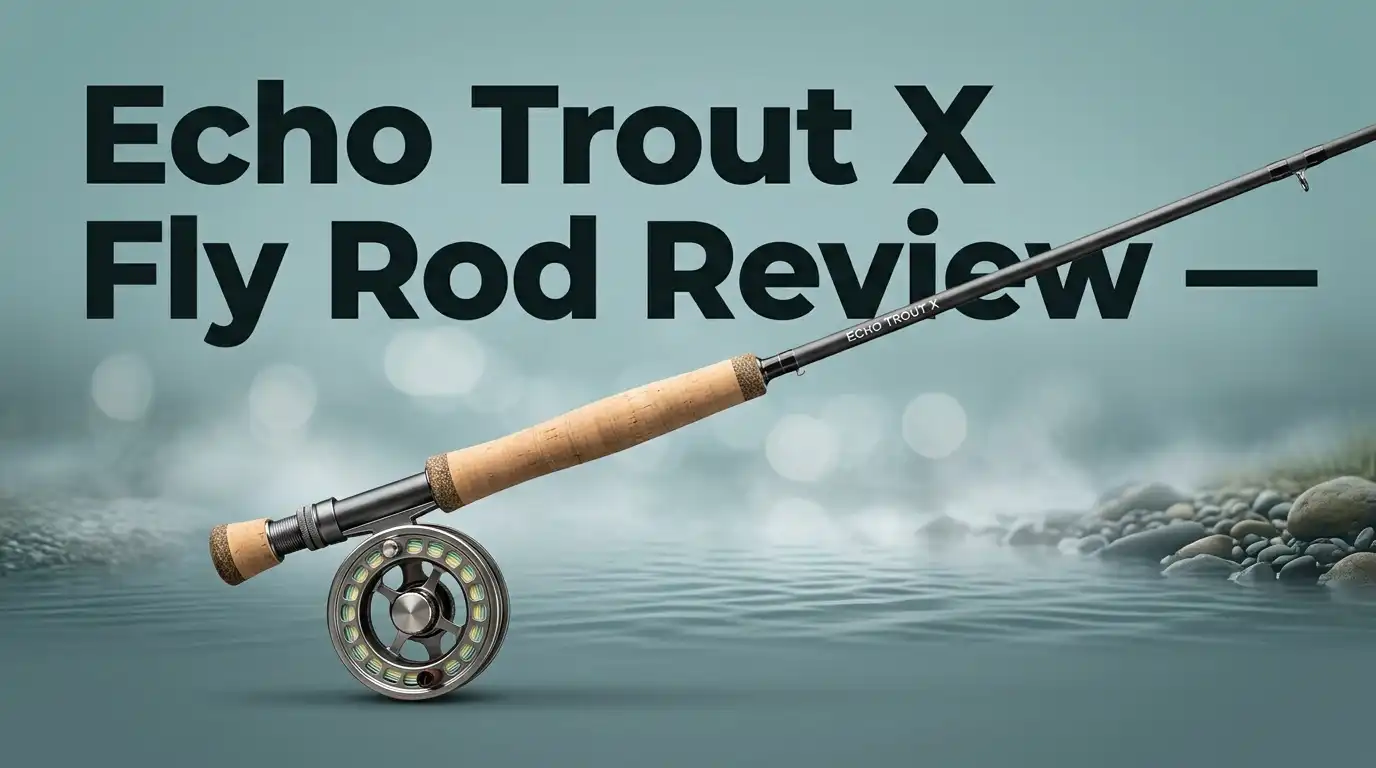
Echo Trout X Fly Rod Review 2026: Worth It?
The Echo Trout X arrived with a big promise. Tim Rajeff said this rod would cast well at every distance, not just the comfortable 30 to 50 foot window most trout rods love.
That is a bold claim for a rod that sits well under flagship money. So I fished it hard through a full season on freestone creeks, a windy lake, and one very technical tailwater. I threw dry flies, hopper dropper rigs, and small streamers.
I also tried to break it, overline it, and generally annoy it. This review covers what the Trout X does beautifully, what it handles poorly, and whether it still deserves your money in 2026. No hype, just what happened on the water.
In a Nutshell:
- The Trout X is a genuinely wide range caster. It loads with a few feet of line out the tip and still reaches 70 feet. That range is rare at any price, and it is the single best reason to buy this rod.
- The feel is the star. You sense the load in the cork from the first inch of the stroke. Testers who compared it side by side with rods costing twice as much reported more feedback from the Echo, not less.
- It is light but not the lightest swinging rod. The 9 foot 5wt weighs 2.65 ounces, yet swing weight sits around 9.2 ounces. Your wrist notices after six hours.
- Line choice changes this rod completely. A true to weight line keeps it crisp. A half size heavy line flexes it deep and slows it down. Pick your line before you judge the rod.
- It is not a streamer cannon. Big articulated flies, heavy sink tips, and bulky indicator rigs push it past its comfort zone.
- Price climbed. Launch price was 399 dollars. Current listings sit near 499 dollars, which tightens the value gap against strong rivals.
First Impressions of the Echo Trout X Fly Rod

Last update on 2026-09-29 / Affiliate links / Images from Amazon Product Advertising API
The first thing you notice is the color. Echo calls it mist green, and it reads as a deep olive that vanishes against streamside brush. The gloss finish looks expensive.
The burl wood reel seat insert looks even more expensive. Pick the rod up and it feels lighter than the specs suggest, mostly because the grip is slim and the butt section is thin.
The grip surprised me. It is an extended reverse half wells shape, longer than most trout grips. My hand slid forward and back without losing purchase.
My seven year old nephew could hold it comfortably too, which says something about how forgiving that taper is. Nothing about the first handling felt budget. It felt like a rod built by people who fish.
Unboxing Experience and What You Actually Get
The Trout X ships in a grass green fiberglass tube that matches the blank almost perfectly. The cap screws on smoothly with no grit. Inside sits a cloth rod sock with four labeled pockets, which sounds small until you have fumbled through an unlabeled sock in the dark at 5 a.m.
Sliding the sections out, the ferrules seated with a firm, quiet push. No squeak. No wobble. Echo printed alignment dots on the back of the blank, positioned exactly where your eye lands while you assemble the rod. I had never seen that before and now I want it on everything. Assembly took under a minute.
There is no reel, no line, no fly box. This is a rod only purchase. That is worth knowing if you expected an outfit, because plenty of shoppers at this price assume a kit.
Build Quality, Components, and Cosmetics
The blank uses high modulus graphite in a four piece layout. Stripping guides carry single coil ceramic inserts that shoot line cleanly. Snake guides are chrome plated, which cuts friction and resists corrosion. The winding check is nickel. Thread wraps match the blank color, so the whole rod reads as one piece rather than a parts bin build.
Now the honest part. The cork is average. You get filler in the pits, and that filler works loose over time. Mine started shedding tiny crumbs after roughly forty days on the water. It is cosmetic, not structural, but a 499 dollar rod should wear better cork.
The reel seat uses a single locking ring instead of double. With a heavier reel, I had to snug it up once or twice per session. Minor, but real.
Variable Sweet Spot Action Explained Simply
Echo built this rod around what it calls Variable Sweet Spot, or VSS. Most rods have one distance where casting feels effortless. Go shorter or longer and the rod fights you. VSS spreads that comfort zone across a wider band.
The engineering trick is the taper. The second section is actually slightly wider than the thickest point of the butt section. That unusual geometry softens the lower rod and pushes feedback down into your hand. The rod gets progressively stiffer from tip to butt with no single dominant flex point.
In plain terms, you control where the rod bends by changing your stroke. Short and punchy keeps the flex in the tip. Long and smooth pulls the bend deep into the blank. One rod behaves like three, and skilled casters will get the most from it.
Top 3 Alternative for Echo Trout X Fly Rod

Last update on 2026-09-28 / Affiliate links / Images from Amazon Product Advertising API
Echo Carbon XL Fly Rod

Last update on 2026-09-29 / Affiliate links / Images from Amazon Product Advertising API
Temple Fork Outfitters LK Legacy 9 Foot 5wt Fly Rod

Last update on 2026-09-28 / Affiliate links / Images from Amazon Product Advertising API
Orvis Clearwater Fly Rod Outfit
Casting Performance Up Close
Short range is where most fast rods embarrass themselves. The Trout X does not. With only a few feet of fly line past the tip, the rod still loads and delivers. I hit individual maple leaves at 15 feet in a parking lot test, then repeated it on a small creek with real fish watching.
At 25 feet the rod placed a fly on a paper plate cast after cast. What impressed me more was the feedback. I could feel the load through the cork the entire time, which lets you correct a sloppy stroke mid cast.
Compared against a flagship rod costing well over a thousand dollars, the Echo actually loaded easier at these close distances. The expensive rod was faster, the Echo was friendlier. For creek and spring creek work, friendlier wins.
Casting Performance at Distance
Push past 50 feet and the rod flexes into the top third. Accuracy stayed near 90 percent on a plate sized target. At 75 feet it still hit a hula hoop most attempts, though loops opened up and effort increased.
Here is the ceiling. The Trout X is not a line speed demon. Carrying a lot of line through multiple false casts feels like work. Flagship rods aerialize more line with less input, and you feel that difference immediately when you switch back and forth.
Can it dump an entire fly line plus backing? Yes, I did it, and it did not complain. Will you fish that way? Almost never. Judge this rod on the 15 to 60 foot range where trout actually live, and it performs far above its price bracket.
Best Fly Lines to Pair With the Trout X
Line choice matters more here than on most rods. The 9 foot 5wt carries a line stiffness rating of 5.4, meaning it is slightly stiffer than a true 5wt.
With a true to weight line such as a standard weight forward trout taper, the rod stays crisp, recovers fast, and throws tighter loops. This is my recommended starting point. With a half size heavy line, the rod flexes deeper, feel increases, and line speed drops. Smooth, long stroke casters will prefer the heavier option.
Avoid full size heavy lines. A full line size over felt clunky and killed the rod’s best quality, which is precision. Heavy streamer tapers are the worst match of all. Skip them entirely and use a dedicated streamer rod for that job.
Picking the Right Model for Your Water
Last update on 2026-09-29 / Affiliate links / Images from Amazon Product Advertising API
Echo offers five models and they are genuinely different tools, not just length variations. The 7 foot 6 inch 3wt suits tight mountain streams and bushy dries, with a stiffness rating of 3.3 so it still fights wind.
The 8 foot 4 inch 4wt handles pocket water and pinpoint casts under branches. The 9 foot 4wt targets spring creeks and picky fish on medium rivers, balancing accuracy with line control for mending.
The 9 foot 5wt is the one most anglers should buy. It protects 5X and 6X tippet yet handles indicators and small streamers. The 9 foot 6wt exists for wind, weight, and long nymph rigs, with a stiffness rating of 6.5. Choose by water type, not by habit.
Fishing Dries, Nymphs, and Streamers
Dry fly fishing is this rod’s happiest place. Soft enough tip protects light tippet, and the feedback lets you feather a delicate presentation. I fished 6X for weeks without a single break off on the hook set.
Nymphing works well with moderate rigs. Two small nymphs and a modest indicator cast cleanly. Add a heavy sighter, split shot, and a bobber the size of a golf ball, and the rod starts to protest. It lobs rather than casts.
Streamers are the weak spot. Small buggers and slim baitfish patterns are fine. Anything articulated or weighted heavily kills the loop. This rod is a presentation tool first and a power tool second. Match your expectations accordingly.
What the Echo Trout X Does Not Do Well
Authentic reviews name the flaws, so here they are plainly. The rod will not throw big bass bugs or large weighted streamers with any grace. It does not produce loops as tight as faster premium rods. Carrying long lengths of line through false casts feels laborious.
It also will not fix bad technique. Casters who overpower the forward stroke get a bounced, unstable delivery. The side arm cast is noticeably less comfortable than the overhead stroke.
Swing weight is moderate rather than exceptional, so long days produce some fatigue. The single locking ring loosens occasionally. The cork filler degrades. And the rod is not made in the USA, which matters to some buyers. None of these are dealbreakers, but all of them are real.
Pros and Cons
Pros
- Loads with almost no line out the tip, which makes close quarters fishing simple and accurate.
- Exceptional feedback through the cork at every distance, rare in this price bracket.
- Effective casting range spans roughly 10 to 70 feet with no obvious dead zone.
- Light physical weight at 2.65 ounces for the 9 foot 5wt model.
- Handles a wide variety of lines and casting styles, so beginners and advanced casters both benefit.
- Attractive build with burl wood seat, matching rod tube, and clever alignment dots.
Cons
- Struggles with large streamers, heavy sink tips, and bulky indicator rigs.
- Loops are wider than faster premium rods at long range.
- Cork contains visible filler that works loose over time.
- Single locking ring on the reel seat needs occasional tightening.
- Price rose from 399 dollars at launch to around 499 dollars today.
- Not made in the USA, and repairs carry a 50 dollar fee.
Echo Trout X vs Echo Carbon XL
Plenty of anglers cross shop these two, and they answer different questions. The Carbon XL is a moderate action rod at roughly 289 dollars. It is forgiving, pleasant, and excellent for anglers still building their stroke. It is also slower and less versatile at range.
The Trout X sits faster and carries more power in the butt. It reaches further, fights wind better, and gives you more control over where the rod bends. You pay about 200 dollars more for that flexibility.
My honest split is simple. If you fish small water under 40 feet and want maximum forgiveness, save money and take the Carbon XL. If you want one rod covering creeks, rivers, and lakes across a full season, the Trout X earns the upgrade.
Price, Warranty, and Value in 2026
At launch the Trout X hit shelves at 399 dollars and looked like an outright steal against flagship rods. Current pricing near 499 dollars changes the math. It is still strong value, but the margin narrowed.
Warranty coverage is practical rather than generous. Repairs cost 50 dollars, and tip sections can be ordered directly without shipping the whole rod. That direct tip replacement policy is genuinely useful, since tips break most often.
Compared against flagship rods at 1000 dollars and up, the Trout X delivers roughly 85 percent of the performance for half the money. Compared against 300 dollar rods, it delivers noticeably better feel and range. The value case holds, just less dramatically than it did in 2023.
Who Should Buy the Echo Trout X
Buy this rod if you want one trout rod that covers most situations. It suits anglers who fish varied water, from tight creeks one weekend to open rivers the next. It rewards casters who pay attention to their stroke.
Intermediate anglers get the most from it. Beginners will enjoy it immediately and will not outgrow it for years. Advanced casters will appreciate the control and the feedback.
Skip it if streamer fishing dominates your season. Skip it if you chase distance records or fish big windy lakes constantly. Skip it if you already own a moderate action rod you love and mostly fish inside 35 feet. Buying the right tool beats buying the best reviewed one.
Final Verdict
I went into this review expecting to dislike a 9 foot 5wt from a value brand. I was wrong. The Echo Trout X blends feel and power in a way that mid priced rods usually cannot manage, and the Variable Sweet Spot claim turned out to be largely true rather than marketing noise.
It is not perfect. The cork disappoints, the streamer performance is limited, and the price increase stings. But for dry flies, moderate nymph rigs, and general trout work across changing water, few rods under 500 dollars compete.
My advice stays the same as every honest reviewer’s advice. Cast one yourself at a local shop before buying. If it clicks in your hand the way it did in mine, you will fish it for a decade.
Frequently Asked Questions
Is the Echo Trout X good for beginners?
Yes, with a caveat. The rod loads easily and gives strong feedback, which helps new casters learn timing. Echo designed it with advanced casters in mind, so beginners will keep discovering new capability for years. The main barrier is price, since 499 dollars is a large first purchase.
What fly line works best on the Echo Trout X 5wt?
A true to weight weight forward trout line is the safest starting point. Aggressive casters can drop to a lighter line for more speed. Smooth, long stroke casters will prefer a line that runs about half a size heavy for extra feel. Avoid full size heavy lines and heavy streamer tapers.
How much does the Echo Trout X weigh?
The 7 foot 6 inch 3wt weighs 2.14 ounces. The 8 foot 4 inch 4wt weighs 2.46 ounces. The 9 foot 4wt weighs 2.55 ounces. The 9 foot 5wt weighs 2.65 ounces. The 9 foot 6wt weighs 2.76 ounces. All models come in four sections.
Can the Echo Trout X throw streamers?
Small and medium streamers, yes. Large articulated patterns and heavy weighted flies, no. The rod lacks the butt power and line speed for heavy streamer work. Use the 6wt model if streamers matter to you, or choose a dedicated streamer rod instead.
Is the Echo Trout X made in the USA?
No. The rod is built overseas in a factory with access to current carbon fiber materials. Echo is based in Vancouver, Washington, and Tim Rajeff leads the design work. Warranty repairs cost 50 dollars, and replacement tip sections can be ordered directly from Echo.
How does the Trout X compare to rods costing twice as much?
Flagship rods produce higher line speed, tighter loops, and easier long line carry. The Trout X matches them on close range accuracy and often beats them on feel. For fishing distances between 15 and 60 feet, the performance gap is small enough that most anglers will not notice it.

Hi, I’m Ivy Webb, the passionate angler and creator behind BaitHookVault.com. I spend my days out on the water personally testing and reviewing a wide variety of fishing tools and gear.